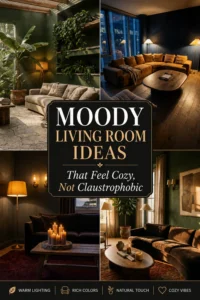

Why Some “Cozy” Living Rooms Are Really Comfortable A lot of living rooms try to look cozy.
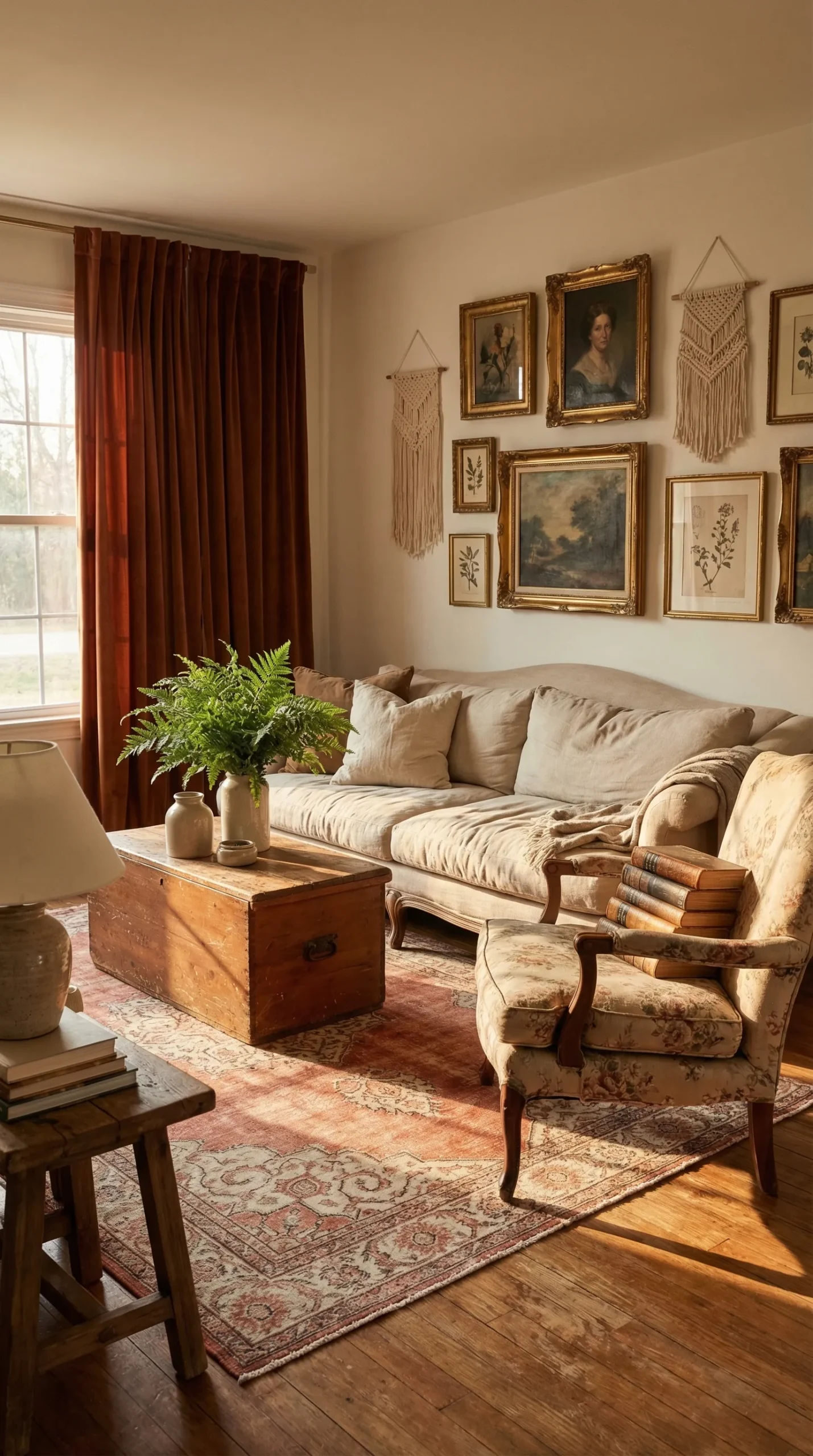
Not as many people really feel that way. Most of the time, the difference has nothing to do with the decorations and everything to do with how the room is built
Cottagecore interiors work because they focus on warmth, material depth, and emotional comfort instead of how things look. The most convincing spaces don’t look staged very often.
They feel like the room has come together over time. Wood has small signs of wear. Someone left books where they are. Textiles are more than just things that fill space; they invite touch. The quiet feeling of life is what cottagecore design is all about.
1 • Stone Fireplace with Warm Rustic Textures
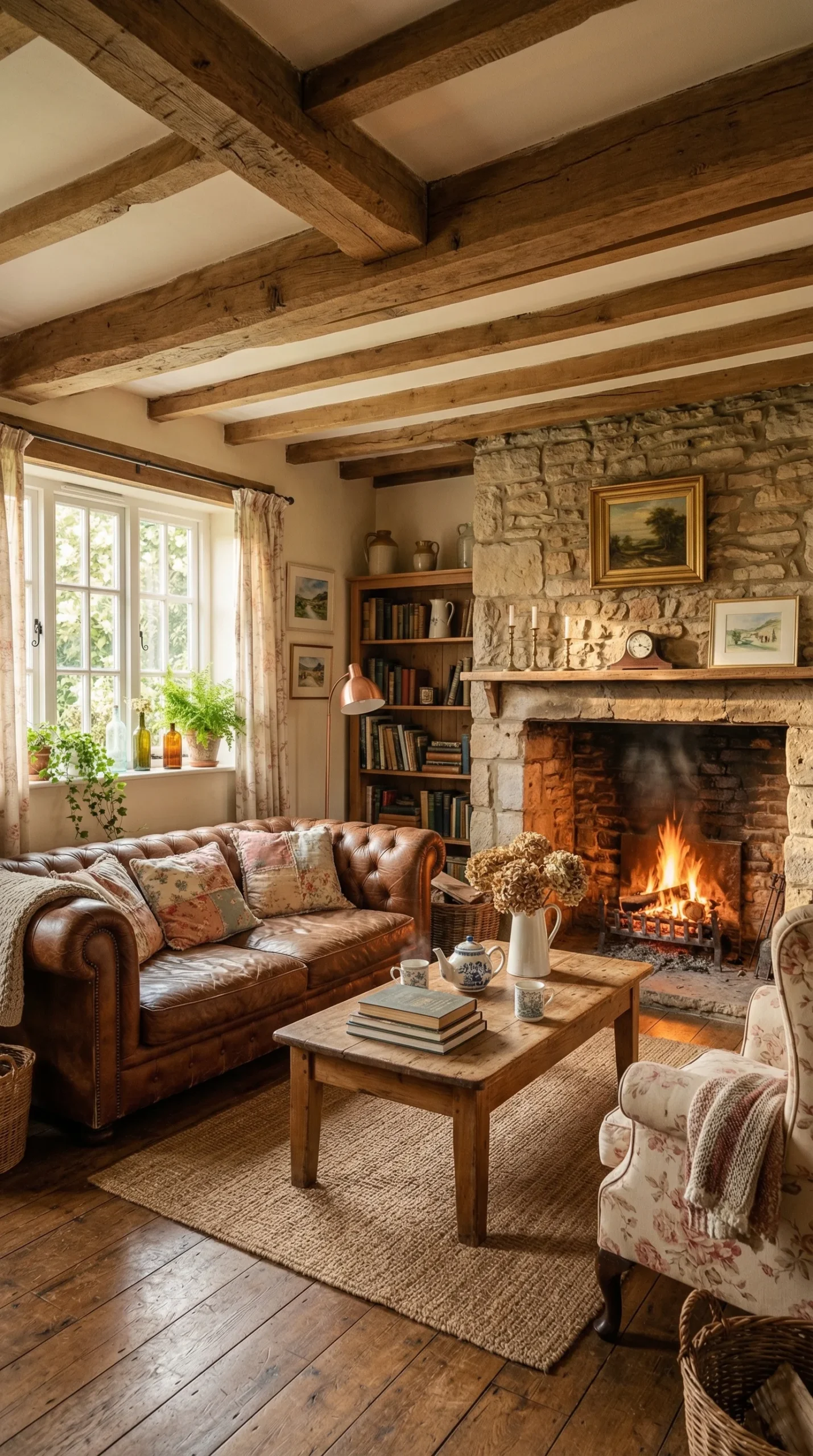
One thing that holds the whole space together in many cottagecore living rooms.
A fireplace is often that thing. A fireplace made of stone or brick adds visual weight right away. The weight balances out the soft fabrics, cushions, and throws that are all over the room. A room with a lot of textiles can start to feel shapeless without it. Designers often make the fireplace look stronger.
Wooden ceiling beams, rustic mantels, or darker floors all use the same grounded material language.
The room starts to feel like a whole instead of a bunch of separate parts. People don’t realize how important the fire itself is. Flickering light makes surfaces softer in a way that overhead lighting doesn’t often do.
A small flame can change how things look in a room.
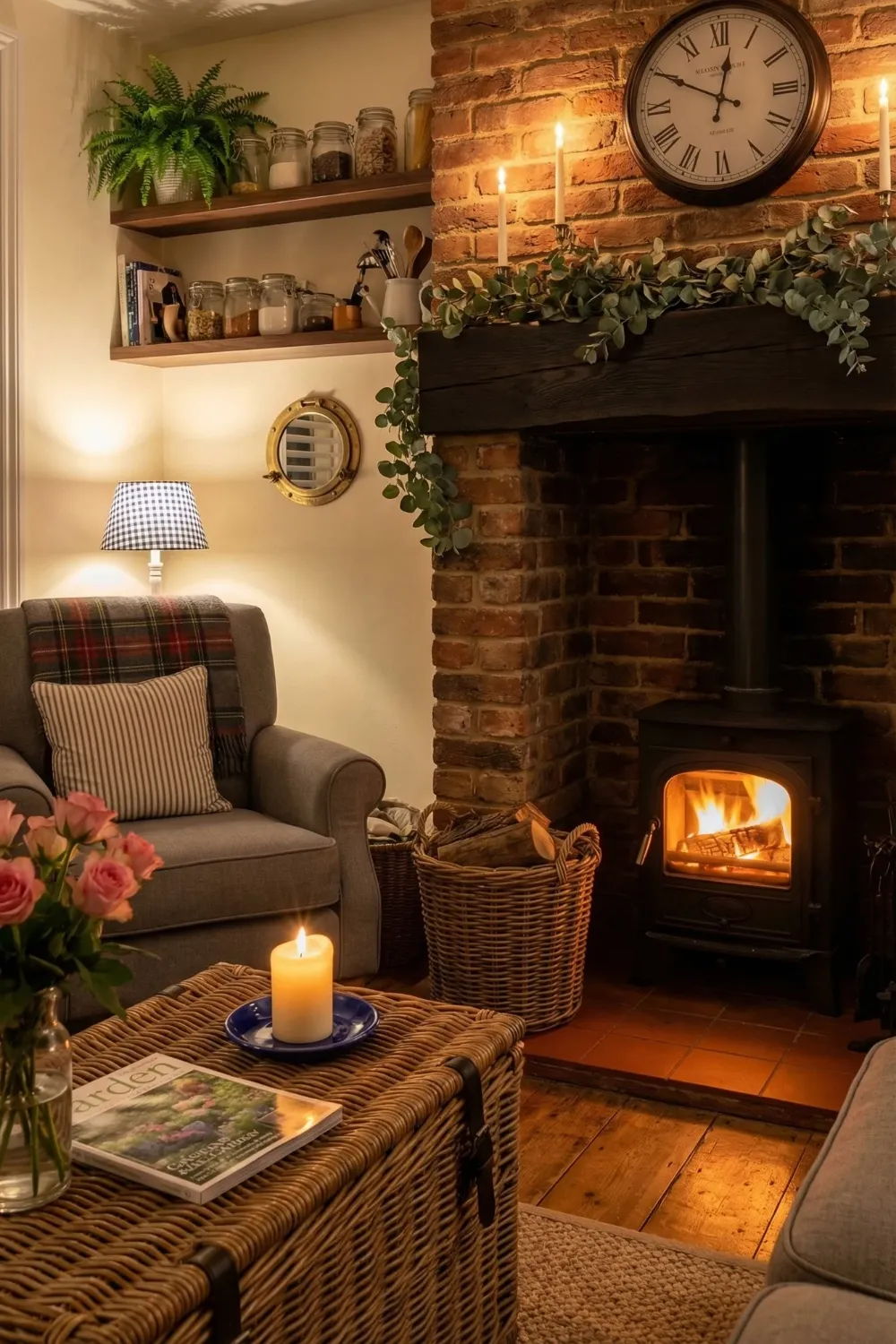
Getting the Same Feeling Without a Fire Place A lot of homes don’t have fireplaces, but you can still create the same mood with lighting.
- A floor lamp that gives off heat near a place to sit
- A lamp on a table that is lower than eye level
Soft bulbs instead of bright white lights Instead of one strong light source, the goal is soft, layered light.
2. Soft Layered Lighting Instead of One Bright Source
Cottagecore living rooms don’t usually have furniture sets that match perfectly. Instead, seating often looks like it was put together slowly.
There may be a floral armchair next to a plain sofa. The side table made of wood may look a little older than the other furniture. That unevenness actually makes the room stronger.
These areas usually look best with small floral patterns. Big prints tend to stand out more, while smaller patterns feel more natural and calm. Bookshelves also help to balance out seating areas in a subtle but important way. Tall vertical storage adds structure to the room, making it feel less soft. Plants add another layer.
When put at different heights, they move in a way that looks more like nature than strict symmetry inside.
3 • Color Should Feel Borrowed from Nature
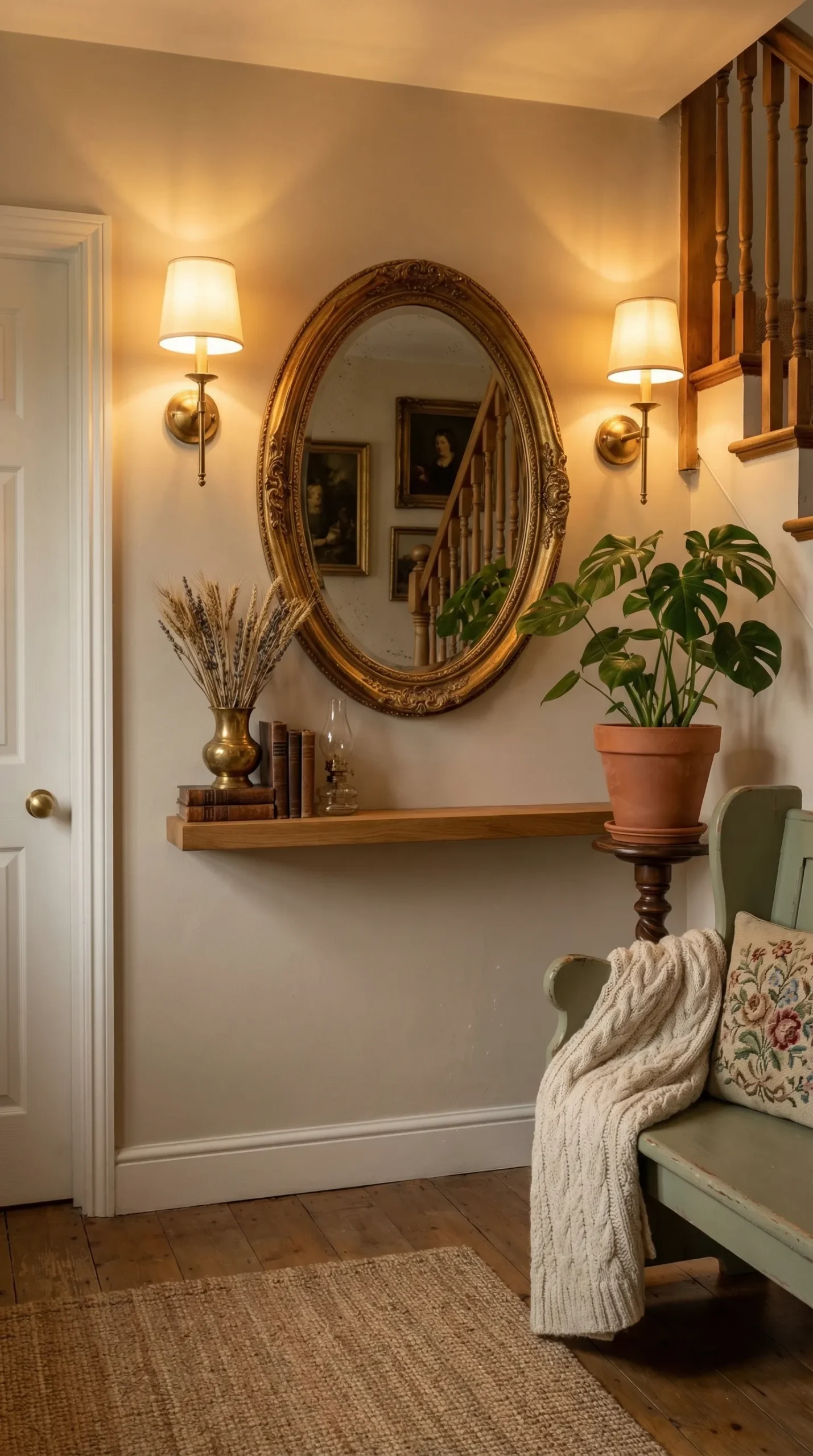
Cottagecore interiors don’t usually have bright or dramatic colors. The best palettes look like they could be used outside.
You can often see soft greens, warm creams, faded blues, and dusty flowers. These colors go well with wood and other natural fabrics.
For example, sage green walls. The color doesn’t feel bold when used well; it feels calm and grounded. Wooden furniture is very important here.
Warm wood tones keep green walls from looking cold or sterile. Cushions or art with flowers can quietly repeat the colors in the room, bringing it all together without being too much.
A Useful Tip for Bright Colors When one color takes over a room, you need to hold back.
- Pick one main color for walls or big pieces of fabric
- Use neutral materials to support it.
- Let smaller accents quietly repeat the tone When you use a lot of bright colors in a room, it can make the peaceful atmosphere that cottagecore relies on go away
4. Small Floral Patterns for a Softer Look
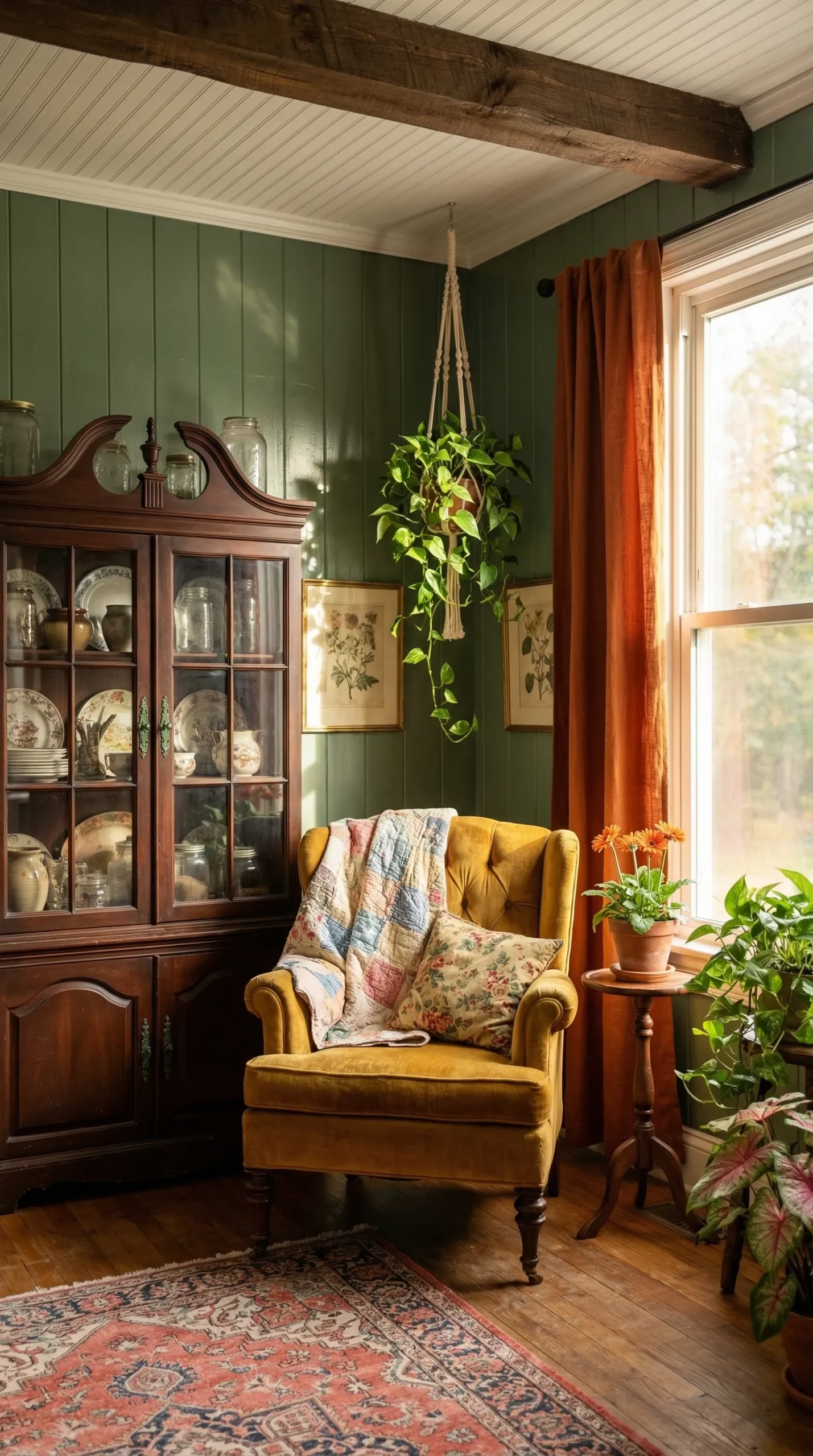
Even living rooms that look relaxed often have a hidden order. One of the easiest ways to make that stability is to use symmetry.
Putting two armchairs across from each other right away makes the room look balanced. Shelves on both sides of a fireplace naturally frame the room. Once that structure is in place, the decoration can stay simple.
Patterns that might have been fighting suddenly feel calm. When they have similar warm tones, plaids and florals can look good together.
The coffee table is also important here. A strong, sturdy table holds the seating arrangement in place and keeps the room looking stable.
5. Nature-Inspired Color Palette
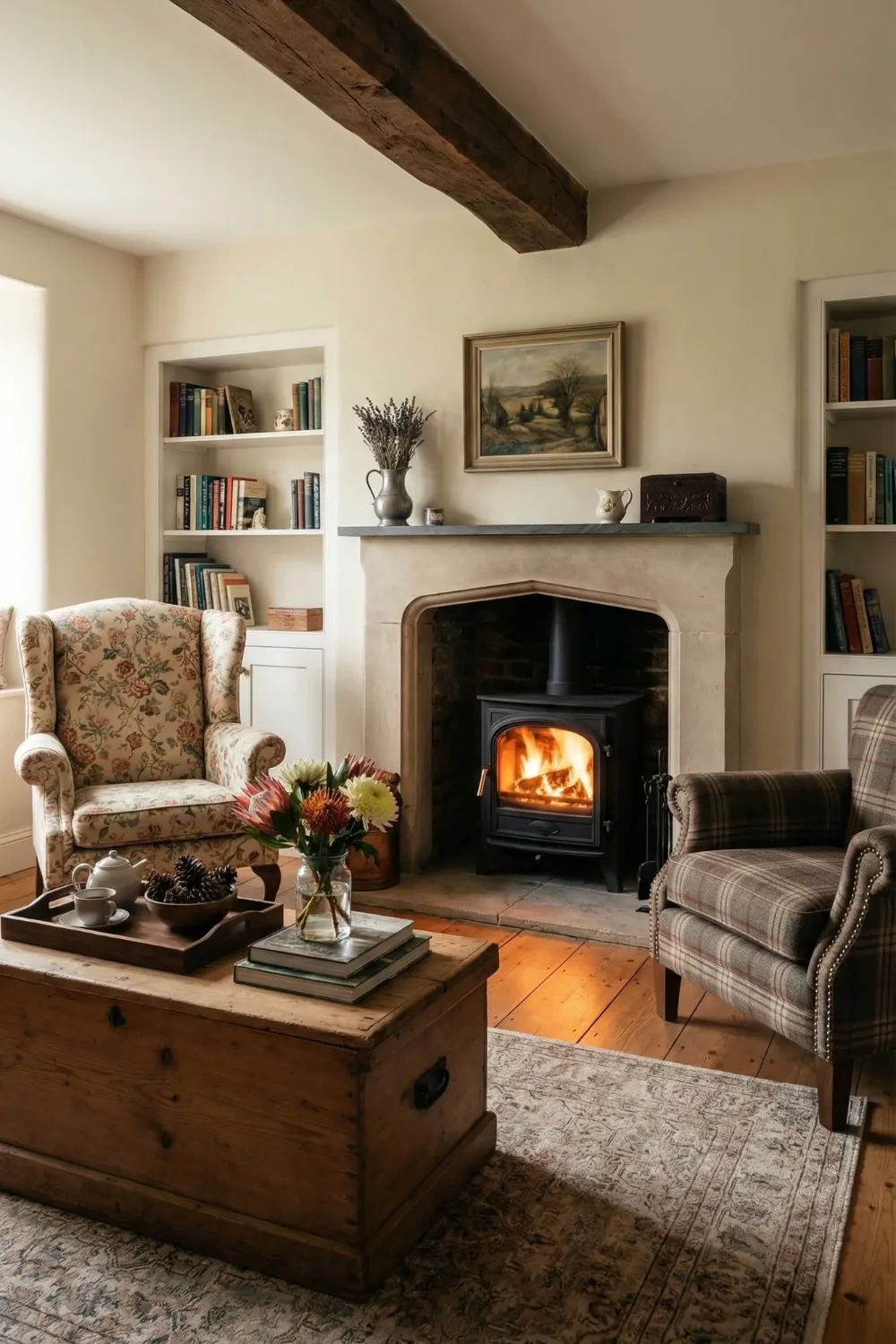
The quiet hero of cottagecore interiors is often natural light. Morning or afternoon light makes floral fabrics look softer and brings out the subtle texture in wood and linen.
Rooms that seem heavy under artificial light suddenly feel light. That’s why window areas are often kept simple. Curtains usually stay light and simple.
Their job is to frame the view from the outside, not block it.
There is a reason why white or light-colored sofas are often by windows. They bounce light around the room and give the eye a break between patterned fabrics.
Putting furniture around light There shouldn’t be anything in the way of light moving through the room.
- Place lighter fabrics near windows
- Position heavier furniture deeper in the room
- Allow daylight to reach natural textures
When sunlight interacts with materials, the room gains depth without adding extra decoration.
6. Symmetrical Layout for Calm Balance
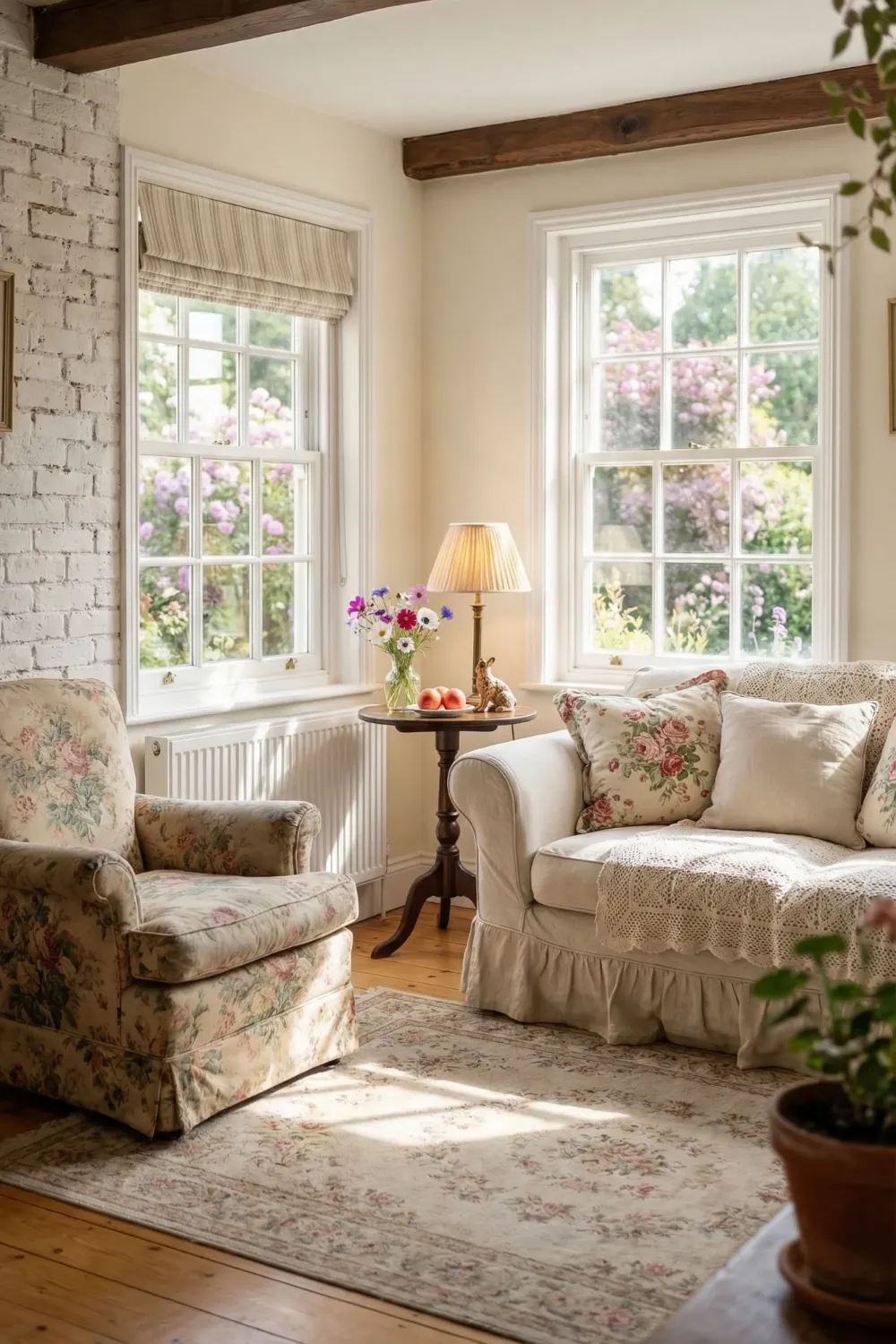
Some cottagecore living rooms feel more like cabins or rustic spaces. These spaces depend more on the presence of materials than on the color of the walls. The atmosphere is set by stone fireplaces, wooden walls, and thick fabrics.
The room often feels cozy and closed off, like a cabin in the mountains. Adding built-in shelves can make that feeling stronger. When shelves go around seating areas, the room starts to feel cozy and safe.
Upholstery that is neutral helps keep things in balance. Heavy materials need calm fabrics so that the room doesn’t look too busy.
Chunky knit throws or woven blankets make things softer without adding extra patterns.
7. Let Natural Light Do the Work
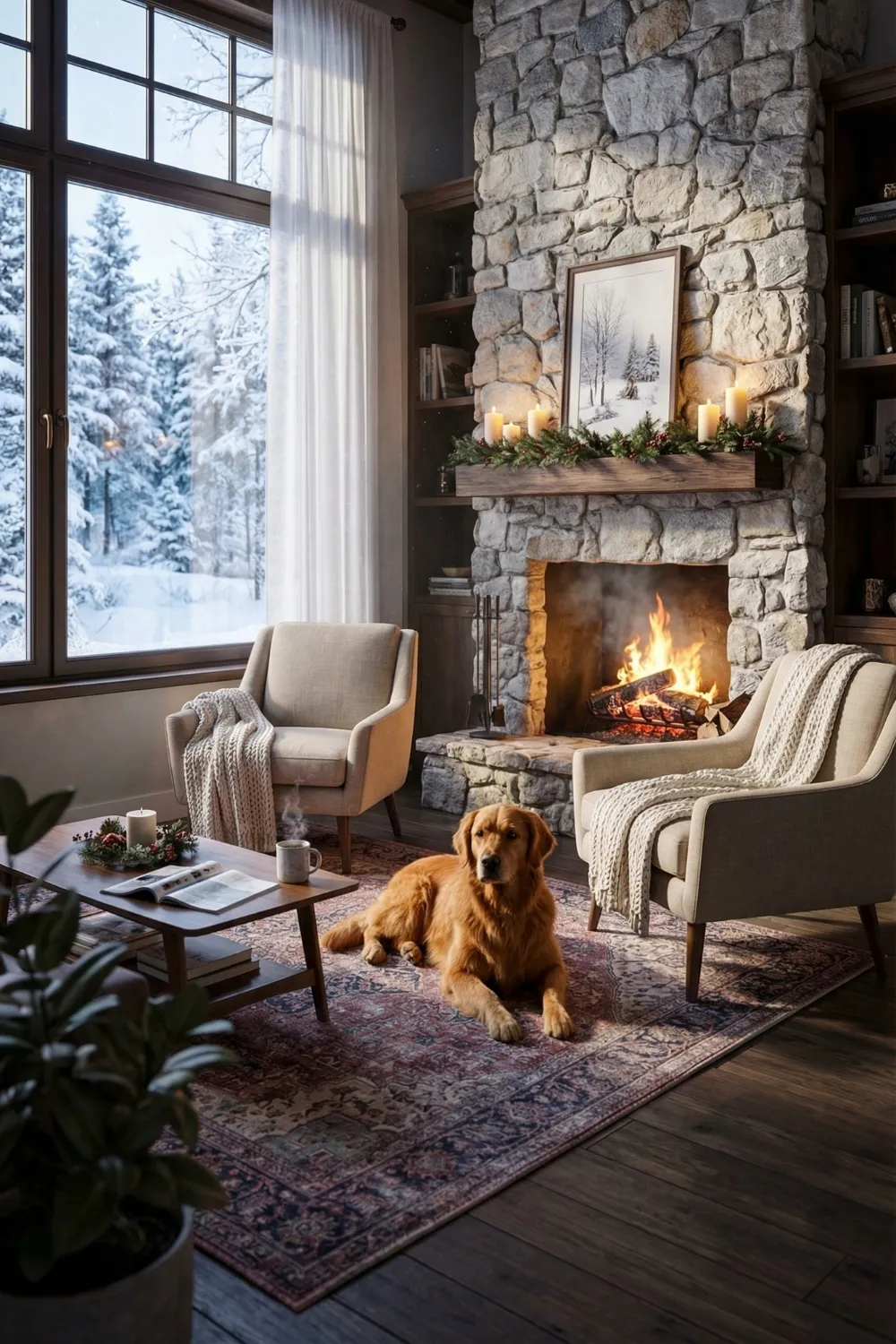
In many cottagecore interiors, texture becomes the primary design element.
Stone walls, wooden furniture, linen upholstery, and woven baskets create layers of tactile contrast. Even when colors remain neutral, the room feels rich.
Patterns usually stay restrained. Plaids, checks, and soft florals repeat gently across cushions or blankets.
That repetition builds cohesion.
Lighting then highlights those textures. Soft lamp light reveals woven fibers, brushed wood grain, and natural fabric folds.
The room begins to feel warm without relying on bright colors
8. Bookshelves Should Feel Lived In
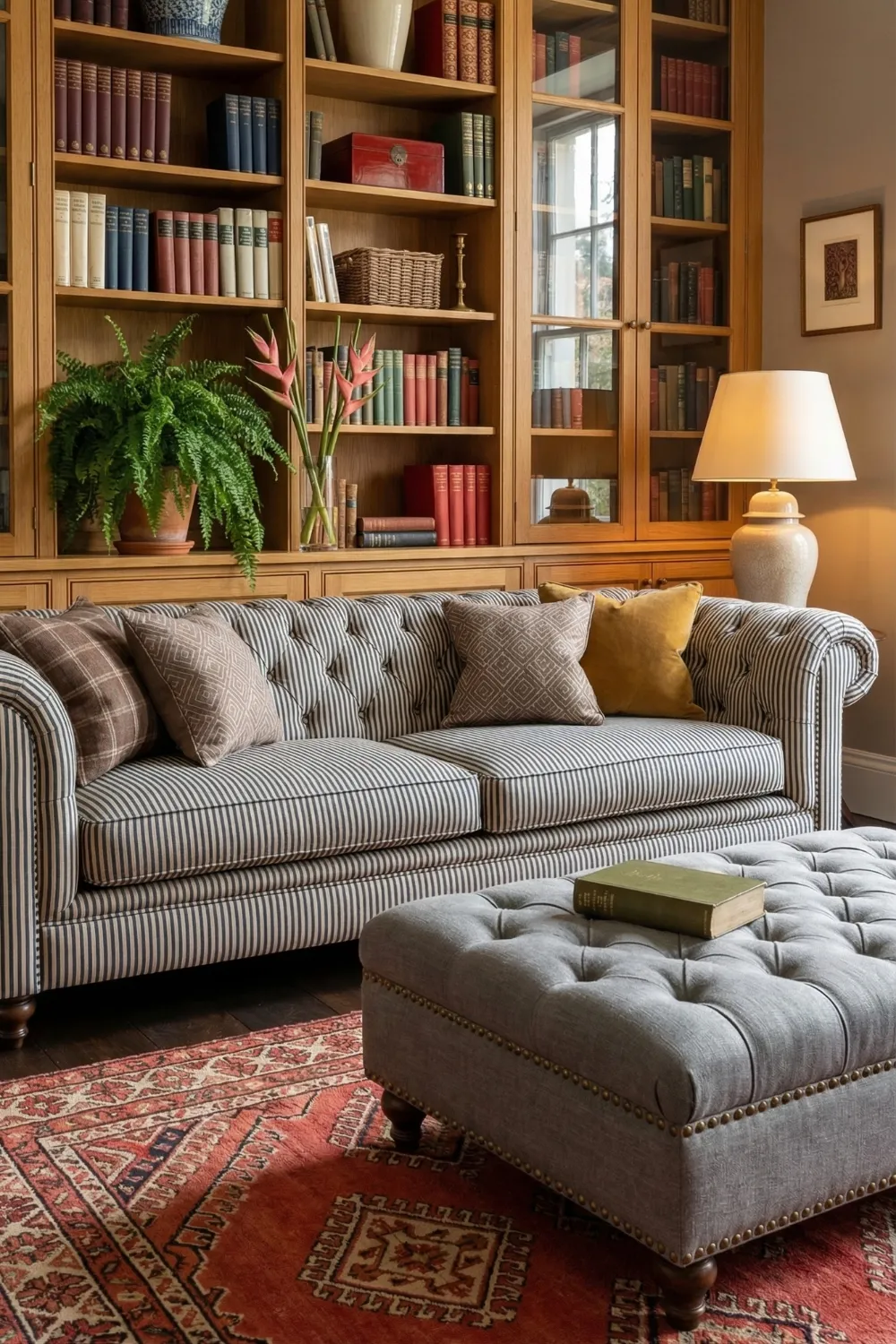
Perfectly styled bookshelves rarely appear convincing in cottagecore spaces.
The most appealing shelves feel as though they grew naturally over time. Books stand beside ceramics, small plants, and woven baskets.
Objects vary in height and shape. Some books stand upright, others lie stacked horizontally.
That irregular rhythm keeps the shelves from appearing staged.
Glass cabinet doors sometimes soften the visual effect. They allow objects to remain visible while creating gentle order.
A Simple Shelf Styling Approach
• Leave empty gaps between objects
• Mix vertical and horizontal book stacks
• Vary the height of decorative items
Shelves that breathe visually tend to feel more authentic.
9 . Rustic Elements Ground Light Interiors
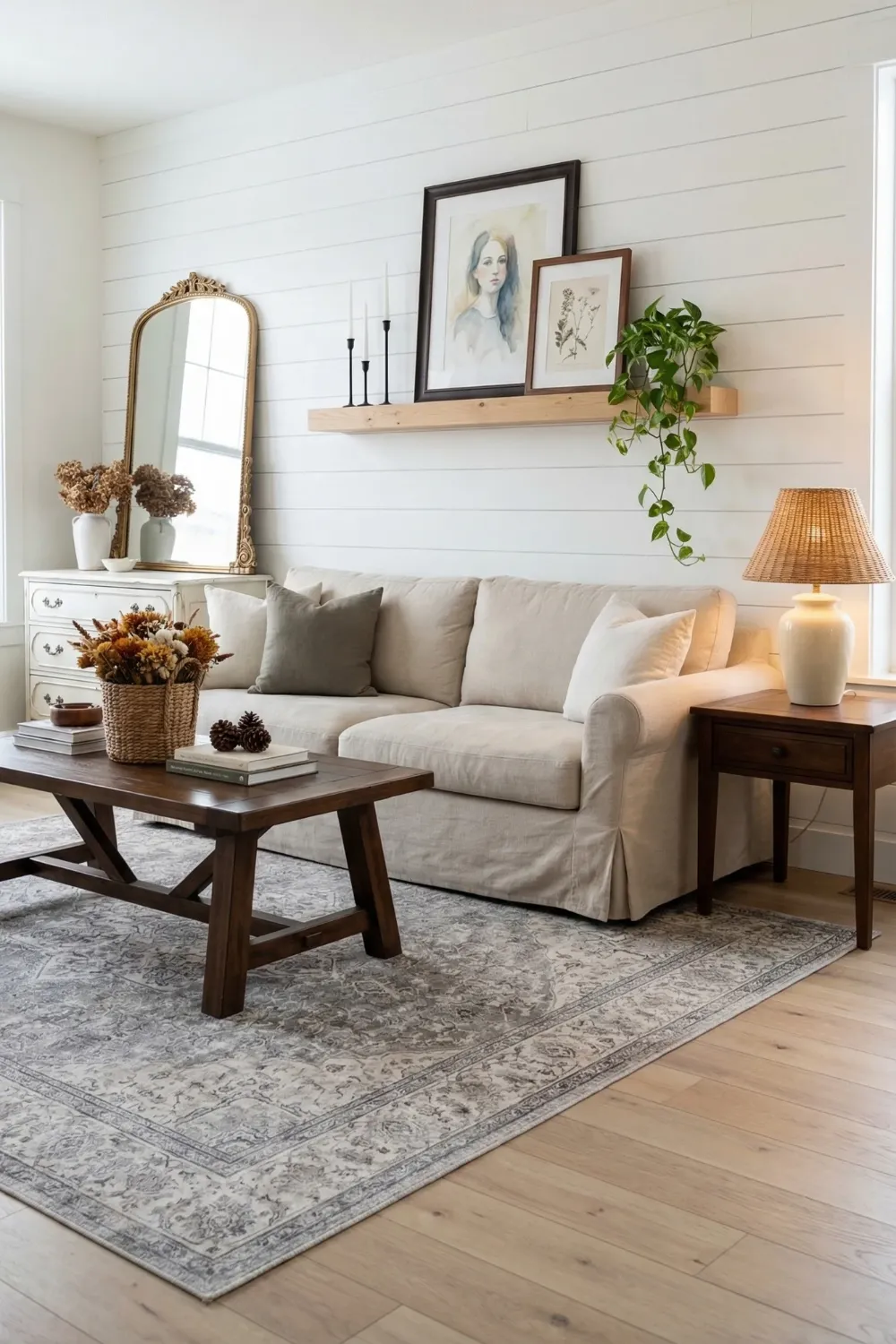
Many cottagecore living rooms have bright surfaces and heavier materials. The light walls and neutral upholstery make the room feel open.
Wooden elements that look rustic add warmth and stability. These rooms often have shiplap walls or paneling that isn’t too obvious. They add texture without being too loud. Coffee tables often look rough or like they were made by hand.
Their presence keeps the room from feeling too light and makes the furniture feel heavier. Decor tends to stay simple. Vintage art, ceramics, or small framed photos can give a room character without making it feel crowded.
Why Empty Space Is Important These interiors often feel calm because of the empty space.
• Avoid filling every wall or surface
• Allow wood and textiles to stand out
• Add decoration gradually rather than all at once
Restraint keeps the atmosphere relaxed.
10 . Vintage Details Bring Character
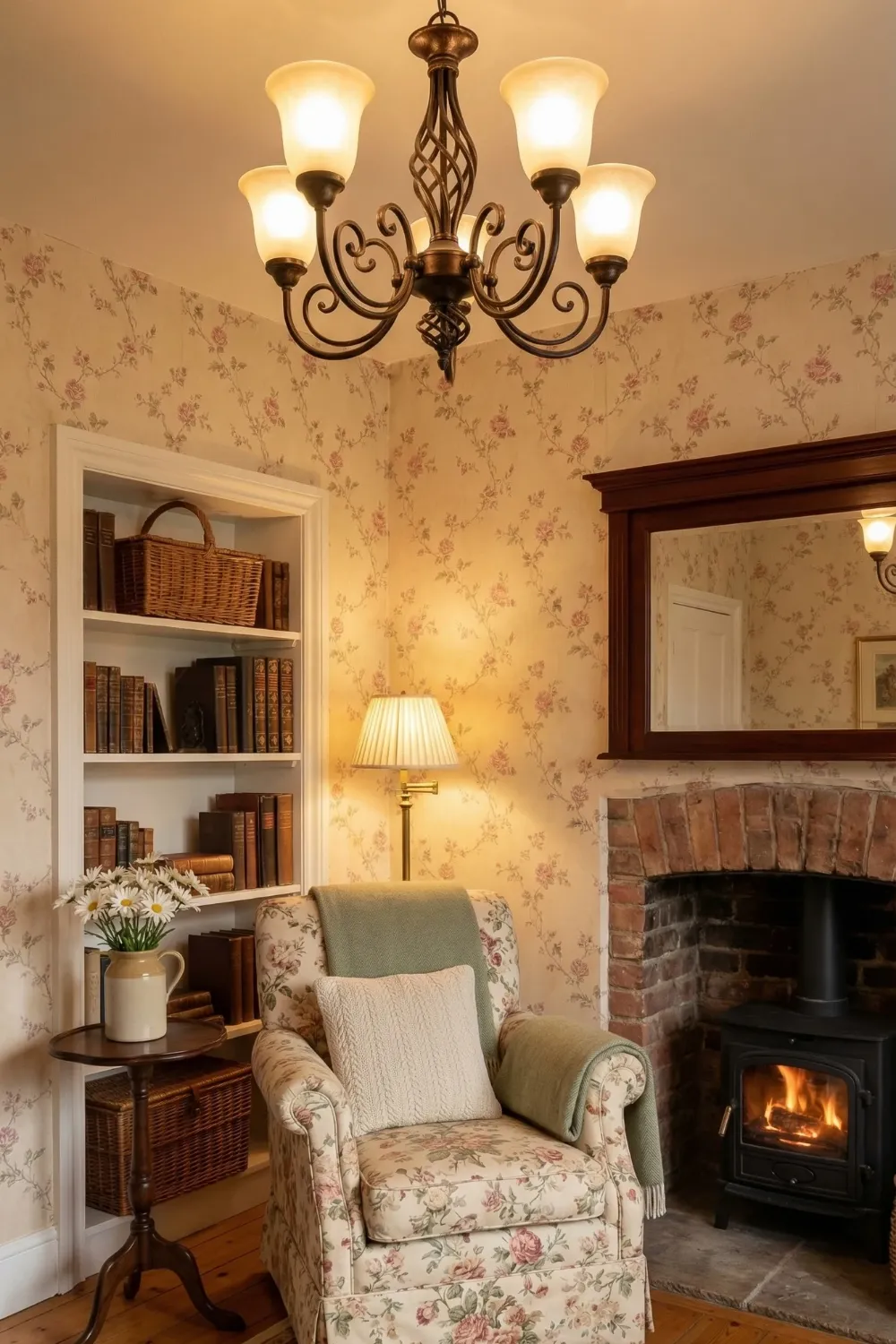
One of the defining qualities of cottagecore living rooms is their sense of history.
Older elements introduce depth that newly purchased décor rarely achieves. Floral wallpaper, antique frames, or inherited furniture pieces add quiet narrative.
These details work best when balanced by solid architectural elements.
A brick fireplace, built-in shelving, or wood flooring provides the structure needed to support decorative pattern.
Furniture shapes also matter. Curved armchairs or rounded sofa edges soften the room and prevent it from feeling rigid.
Pattern Should Remain Controlled
When one element carries strong pattern, surrounding pieces should remain calm.
• Choose one dominant patterned surface
• Keep upholstery relatively neutral
• Let architecture provide contrast
This approach preserves the charm of patterned details.
11. Cozy Rooms Are Built Through Thoughtful Layers
It may seem easy to make a convincing cottagecore living room, but the atmosphere comes from careful layering. The way furniture is arranged affects how people move around and gather in the space.
Rugs hold down seating areas and make furniture look like it belongs together. Light sets the mood long before decorative objects do. Patterns work only when their colors stay in the same warm family. The whole piece is often held together by neutral colors.
The best thing to do if you want to make a cottagecore living room is to be patient. Instead of decoration, start with the materials and layout. Let things slowly come into the space.
Rooms that change slowly usually feel the most real. They start to look more like the people who live in them than the styles that inspired them.
You Might Also Like
Transform your home further with these summer room decor ideas, or get inspired by our farmhouse entryway ideas. If you love cozy vibes, check out vintage garden decor ideas too.