When the weather finally changes, usually in late spring, homeowners start to view their backyard in a different way. People pay attention to the lawn. The patio furniture emerges. And then there’s the pool, which is perfectly operational but somehow falls short of your initial expectations when it was installed.Most of the time, the pool itself isn’t the problem. The edges are the problem. The tile. The finishing touches that, when done correctly, give the impression that a pool belongs in the south of France and, when done incorrectly, give the impression that it is a municipal recreation center.Most discussions about backyard renovation don’t pay nearly enough attention to pool coping and tile selection. However, they are working very hard. The coping establishes the tone for the entire outdoor area, defines the pool’s physical edge, and safeguards the structure beneath. In contrast, the tile determines the overall personality of the design, the color of the water, and the texture underfoot. If you do both correctly, the entire yard will rise.Here are
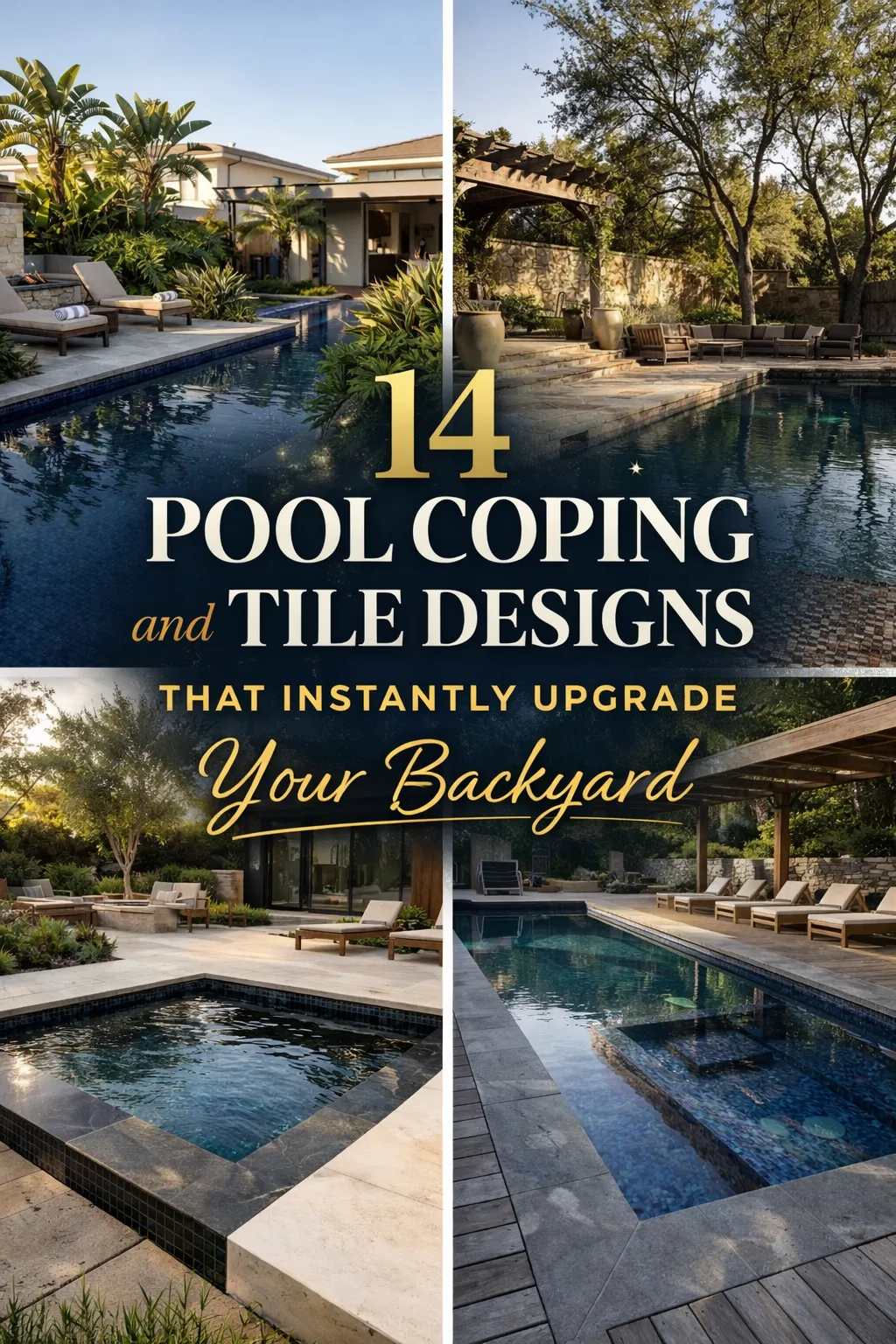
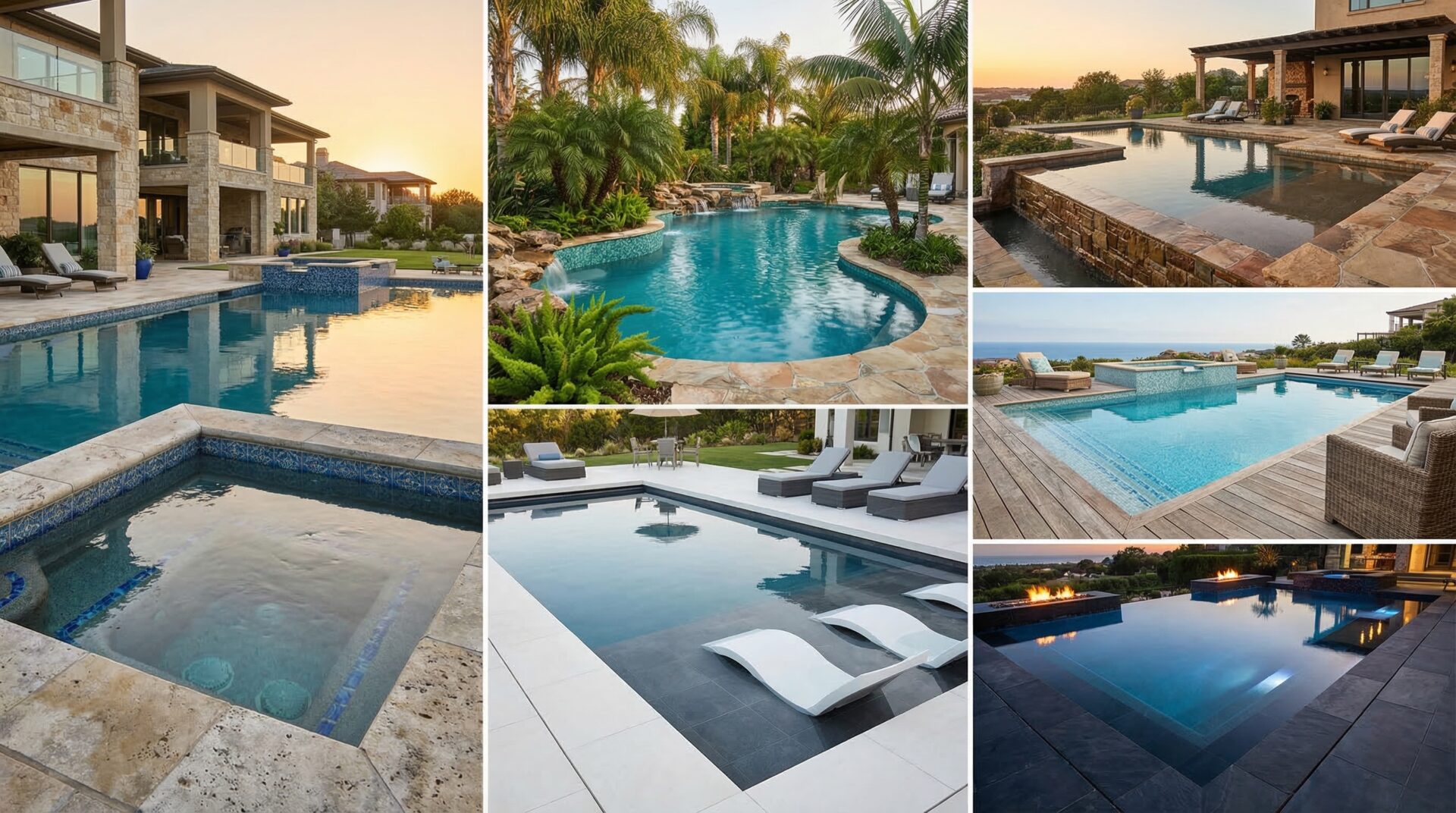
14 design ideas worth considering — from breezy Mediterranean classics to moody, dramatic modern pools that photograph like a luxury hotel.
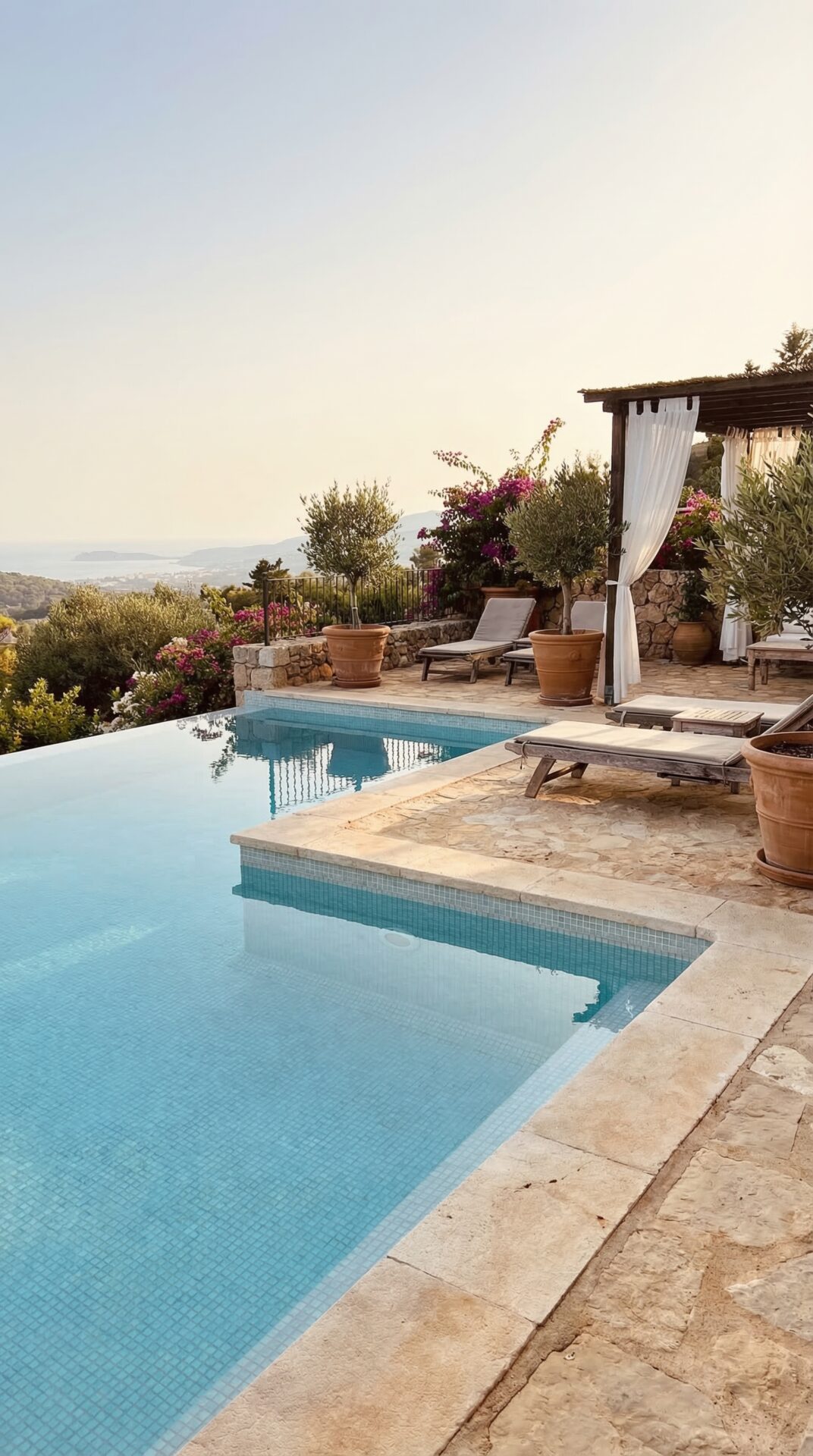
1. Mediterranean Infinity Pool
The first thing you notice here is the symmetry, and that’s intentional. Two tall planters with bunny topiaries on either side of the door, a wreath centered above, lower flowers at ground level — it forms a triangle your eye naturally follows. This is one of those arrangements where the geometry is doing most of the work.What makes it feel expensive rather than busy is the restraint in color. Soft yellows, pale pinks, white — nothing fighting for dominance. The board-and-batten wall behind it all gives the pastels something clean to sit against.If you’re recreating this at home, start with the tall elements first. Get the topiaries or planters positioned and anchored before you touch anything else. It sounds obvious but most people do it backwards — they start small and try to build up, which almost always ends in something that looks improvised.
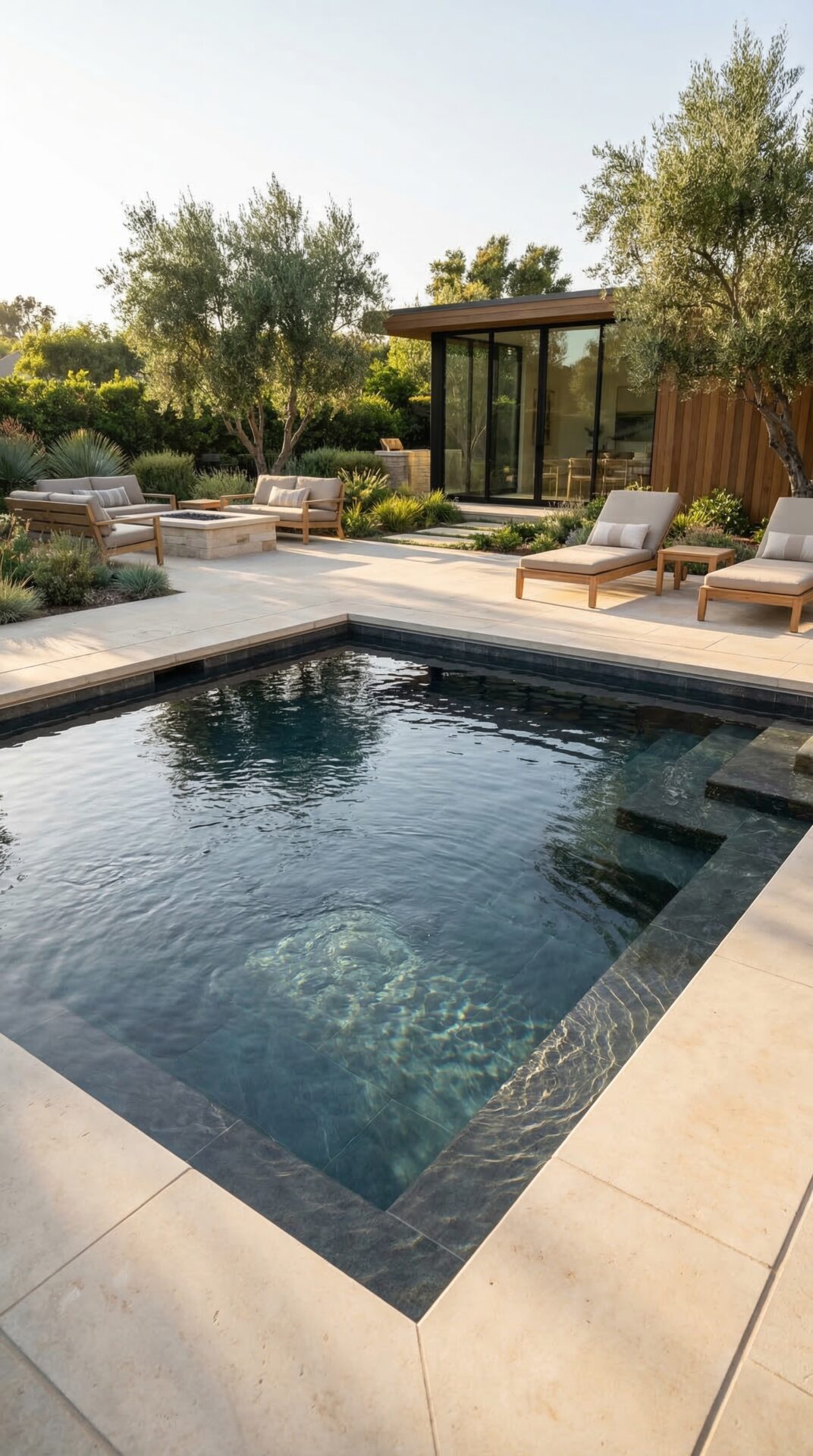
2. Minimalist Modern Pool
Some people don’t want their pool to make a big impression. Some homeowners want it to feel serene, well-organized, and nearly undetectable—a surface of motionless water encircled by pristine stone, with nothing vying for attention.That smooth, continuous appearance is produced by large-format porcelain pavers that run continuously from the deck through the coping area.The obvious choice is neutral grey, but depending on the surrounding architecture, warm beige or soft charcoal can be just as effective. Modern homes with strong geometric lines, such as those with flat roofs, floor-to-ceiling glass, and little landscaping, tend to look good in this style.Instead of existing as a distinct outdoor “feature,” the pool becomes an extension of the architecture. It’s a more restrained approach, but effective restraint is more difficult than it seems.
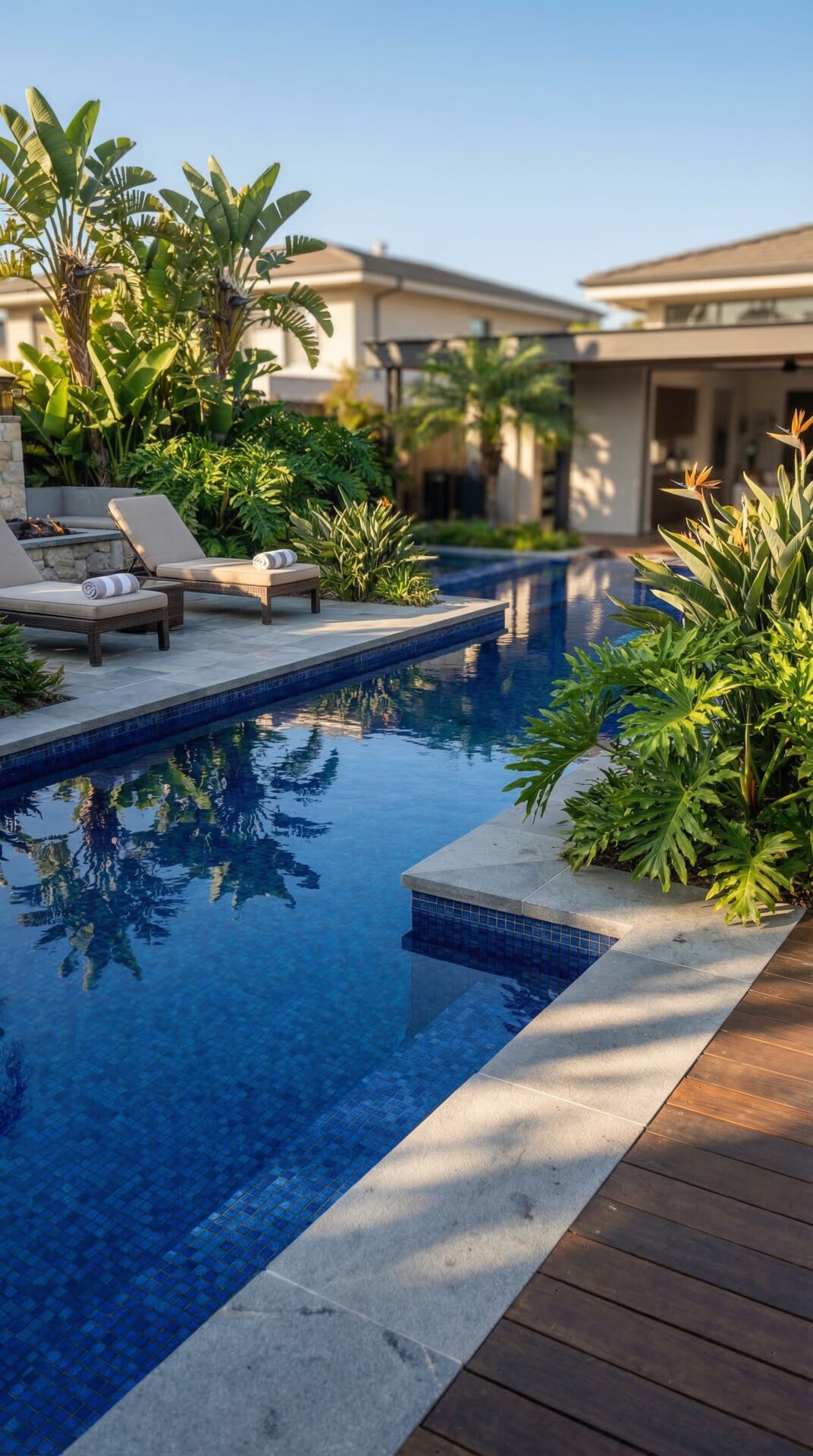
3. Tropical Resort Style
For home owners who want their backyard to truly feel like a vacation spot, this is the design path. A sense of open, limitless space is reinforced by deep blue tiles, lush surrounding vegetation (banana palms, bird of paradise, dense tropical ferns), and usually an infinity edge.People often forget that the color of the tiles inside has a big effect on how the water looks. Tiles that are darker and deeper make the water look like a rich cobalt blue. Lighter tiles give the Caribbean look of clear turquoise water.It all depends on what kind of mood you want to create and how much direct sunlight the pool gets during the day. This style of landscaping does a lot of work. Without it, the pool might look like it’s trying too hard. The whole yard starts to feel like it’s part of the scene.
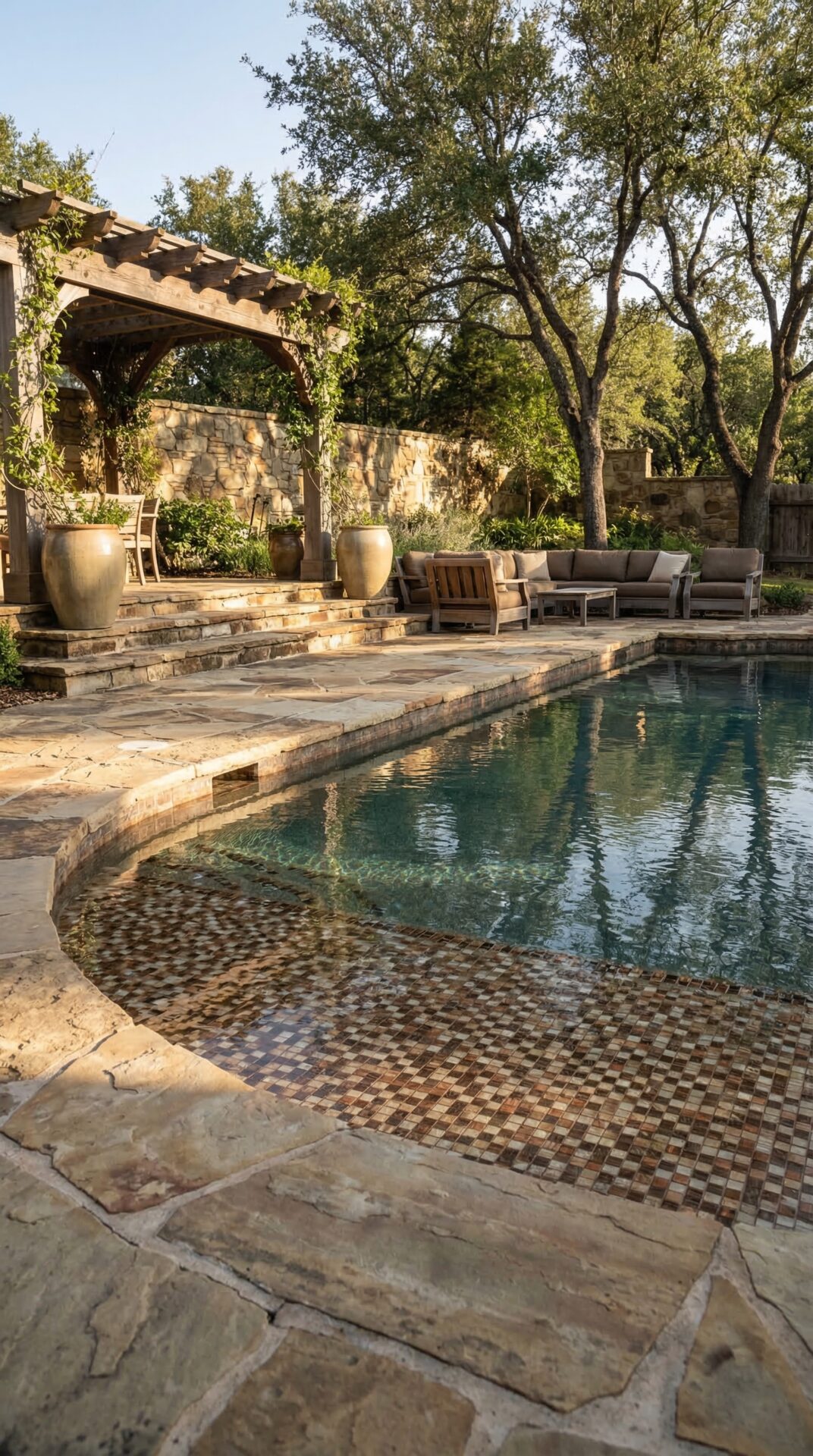
4. Rustic Natural Stone
Some backyards don’t call for a polished, contemporary finish. If there are mature trees, natural gardens, or an older home with character, a rustic stone pool can feel more at home than anything sleek or modern would.Irregular flagstone coping — the kind where no two pieces are exactly the same shape — combined with earth-toned mosaic tiles creates something that looks like it’s been part of the landscape for decades.
The rough edges aren’t a compromise. They’re the point.Slate, bluestone, and certain sandstones all work well for this aesthetic. The key is choosing stone with enough natural texture to be slip-resistant when wet. Some of the most beautiful flagstone looks terrible in practice because it becomes dangerously slick — something worth asking a supplier about before committing.
5. Light and Dark Contrast
Contrast is one of the most dependable pool design concepts. You can create a natural frame that directs the eye to the water by combining lighter-toned decking and coping with darker interior tiles.It doesn’t have to be drastic to work.For example, a cream or ivory limestone coping against slate-grey pool tiles gives the entire area a sense of purpose and structure without being overt.The pool is more than just a hole in the ground; it is a designed object.Practically speaking, the coping stone should ideally be one or two shades lighter than the surrounding deck, just enough to visually define the edge without producing a noticeable two-tone effect.
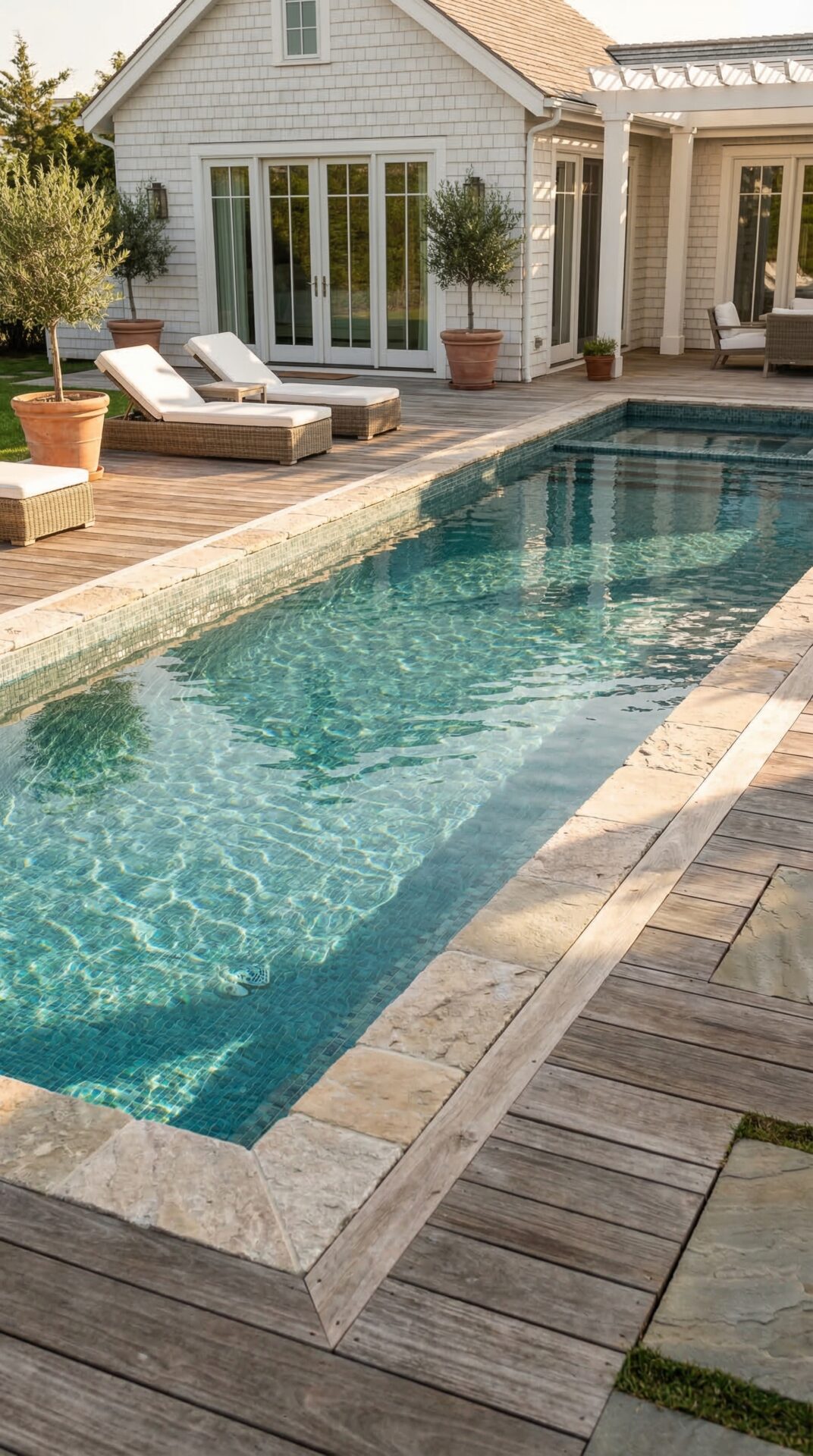
6. Coastal Wood and Tile
The appearance of beach houses has a purpose. From a small suburban backyard to a large coastal property, the combination of warm wood decking and cool blue water works on nearly every scale.Most homeowners are unaware of how important the material selection is in this situation. Not every type of wood can survive in a swimming pool.Teak is the gold standard because it is naturally water-resistant, dense, and, if left unsealed, ages to a stunning silver-grey color. Ipe is just as resilient. Anyone who wants the look without the maintenance commitment should think about high-quality composite decking.The tile interior in this style typically goes in the blue-green range — something that reinforces that connection to water and coastline rather than working against it.
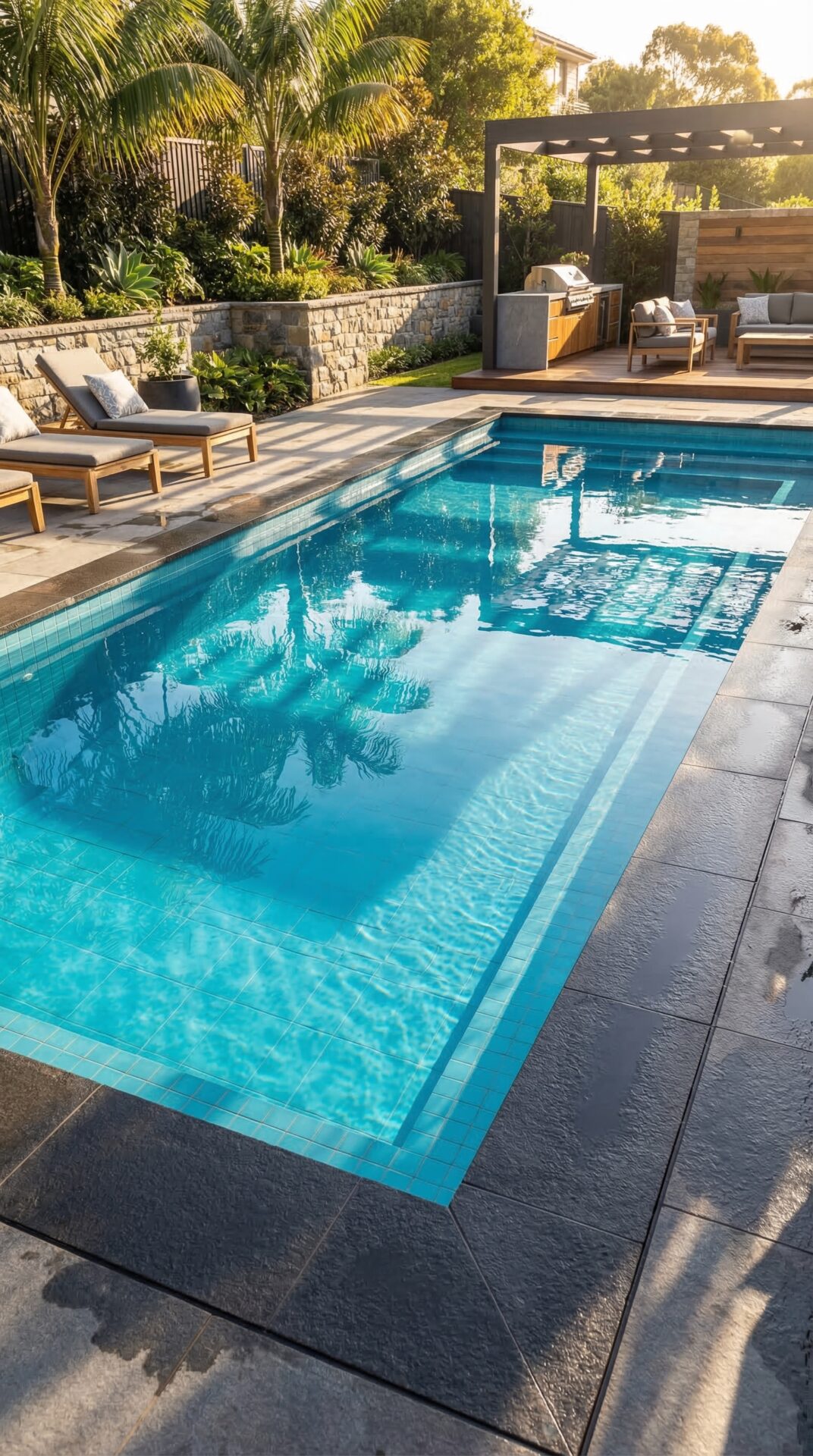
7. Dark Coping, Bright Interior
This is a more daring strategy that rewards self-assurance. Dark stone coping, such as charcoal basalt, black slate, or dark grey granite, produces a striking visual border that, in contrast, makes the interior tile appear almost glowing.The effect is particularly striking with bright blue or turquoise tile inside the pool. The dark frame makes the water color pop in a way that lighter coping simply doesn’t allow.If the goal is for the pool to be an unmistakable focal point in the yard rather than a background feature, this combination achieves that. It works best in open, well-lit outdoor spaces where the contrast can breathe.
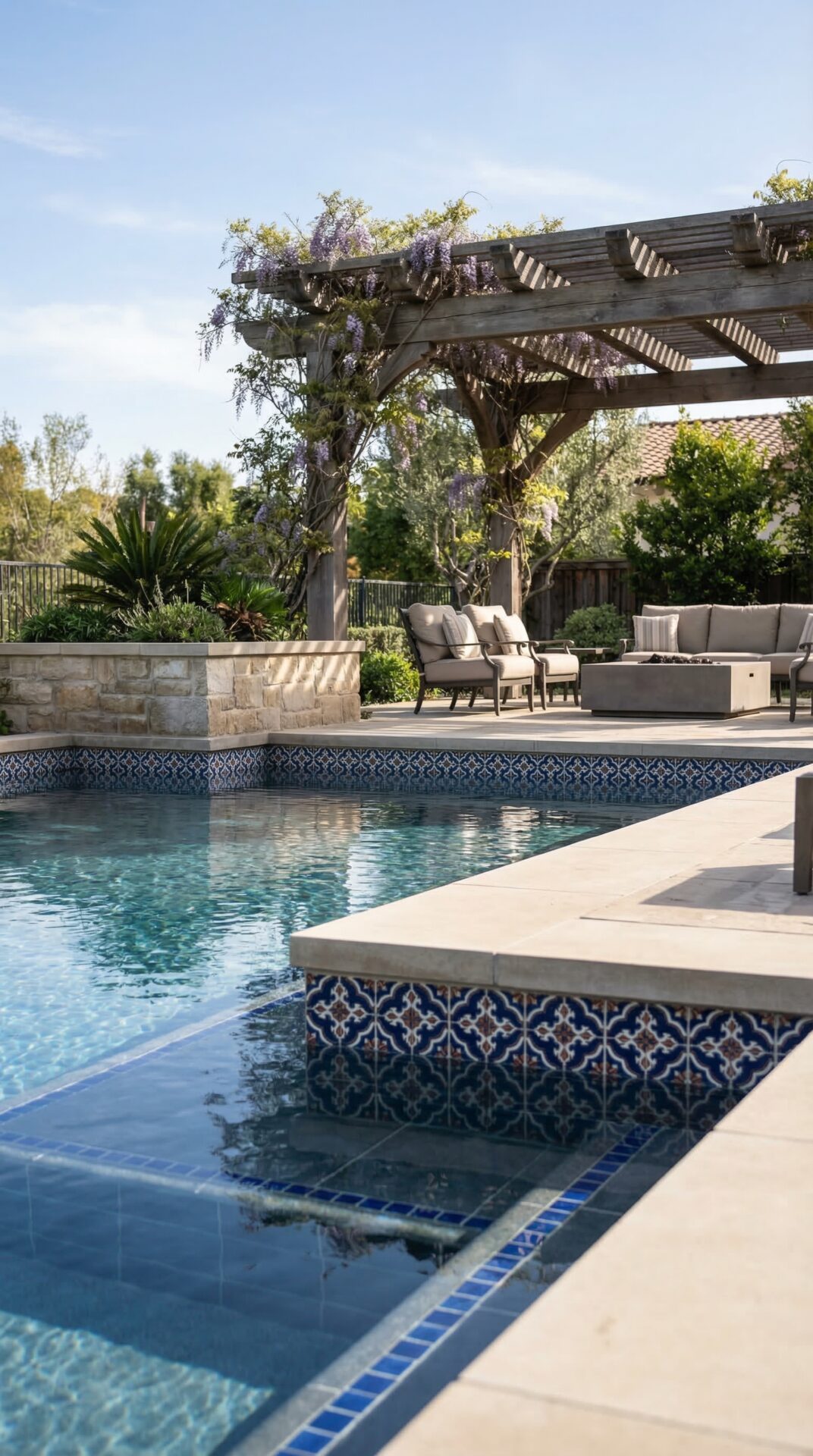
8. Decorative Waterline Tile Border
A single detail can sometimes accomplish more than a complete redesign.Without touching any structural elements, a decorative tile border that runs along the waterline, roughly where the tile meets the coping, can drastically alter a pool’s character.Among the most popular patterns for this use are those in the Mediterranean style, which are geometric, handcrafted, and rich in terracotta, deep blues, and whites.They add a feeling of craftsmanship and history that plain field tiles just cannot match. When using a decorative border, the surrounding design should remain rather subdued. Simple deck material, neutral coping, and restrained landscaping. Everything that surrounds the border should complement it rather than compete with it.
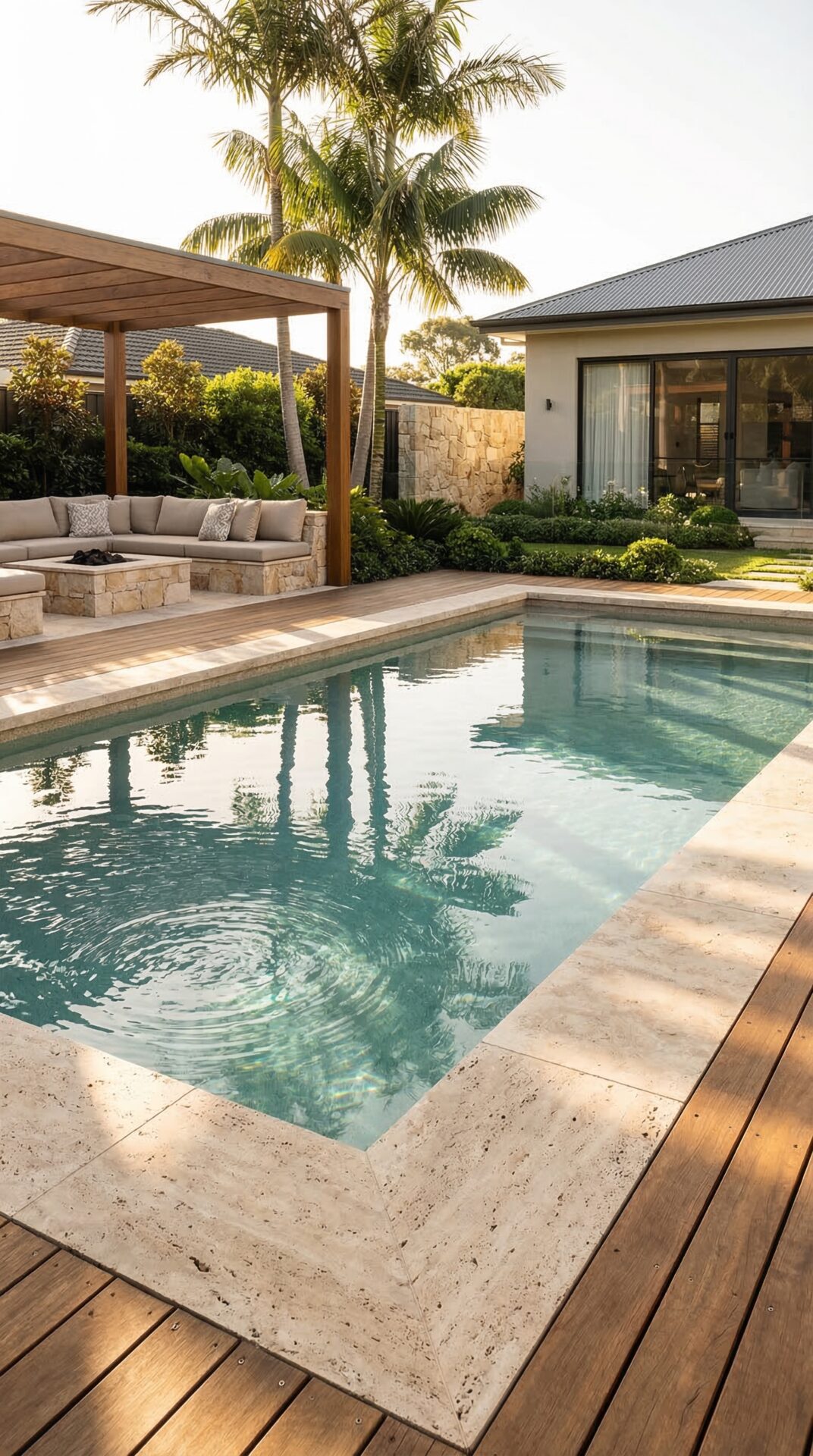
9. Stone Coping with Timber Deck
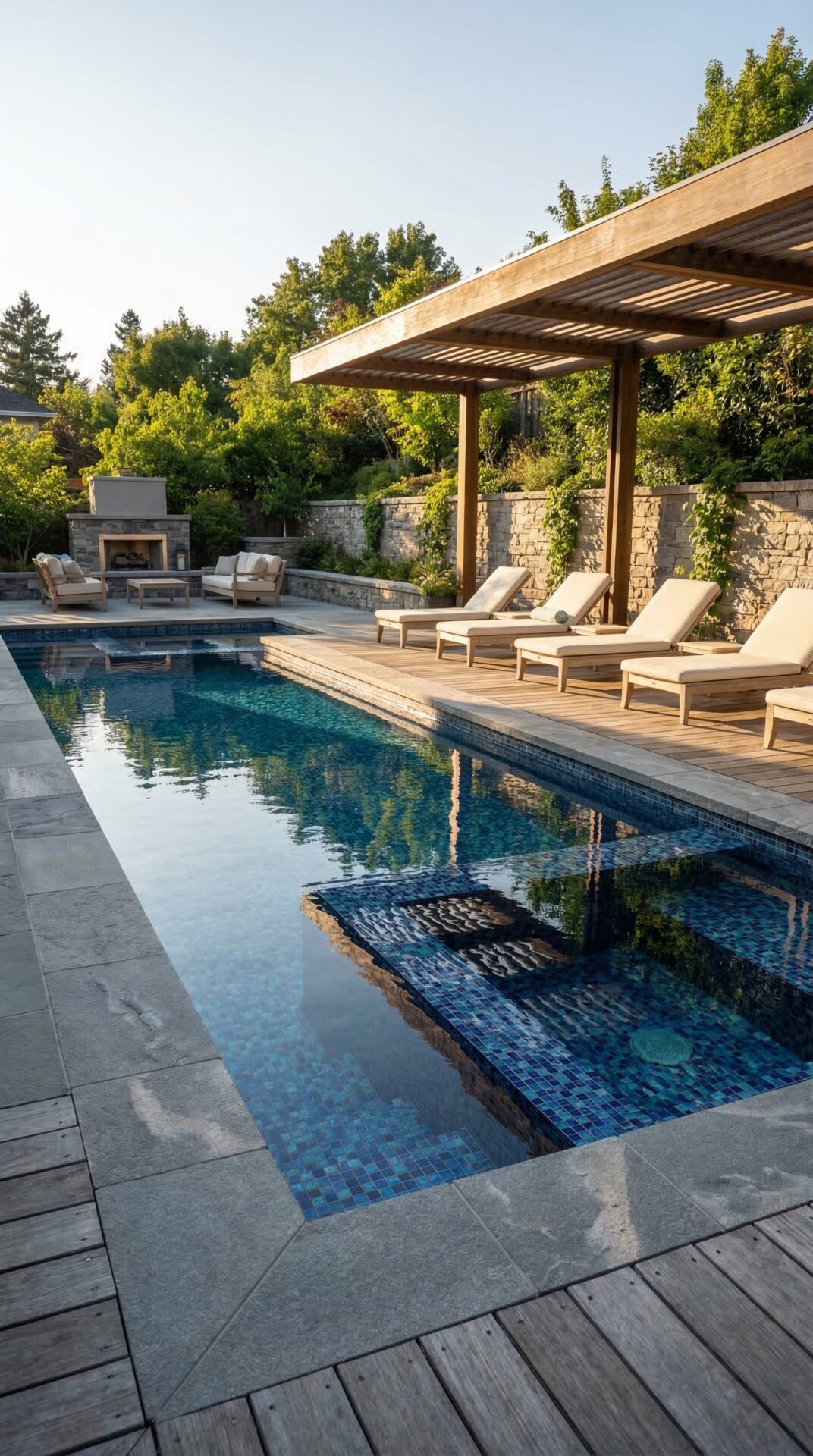
This pairing has become something of a classic in residential pool design, and it’s not hard to understand why. Natural stone at the pool edge provides durability and a clean structural finish. Timber decking around it adds warmth, texture, and a tactile quality that stone alone doesn’t offer.The combination works across a wide range of styles — it can feel rustic or refined depending on the stone and wood species chosen. Rough travertine with weathered teak has a completely different personality than honed limestone with smooth hardwood, even though the basic formula is the same.
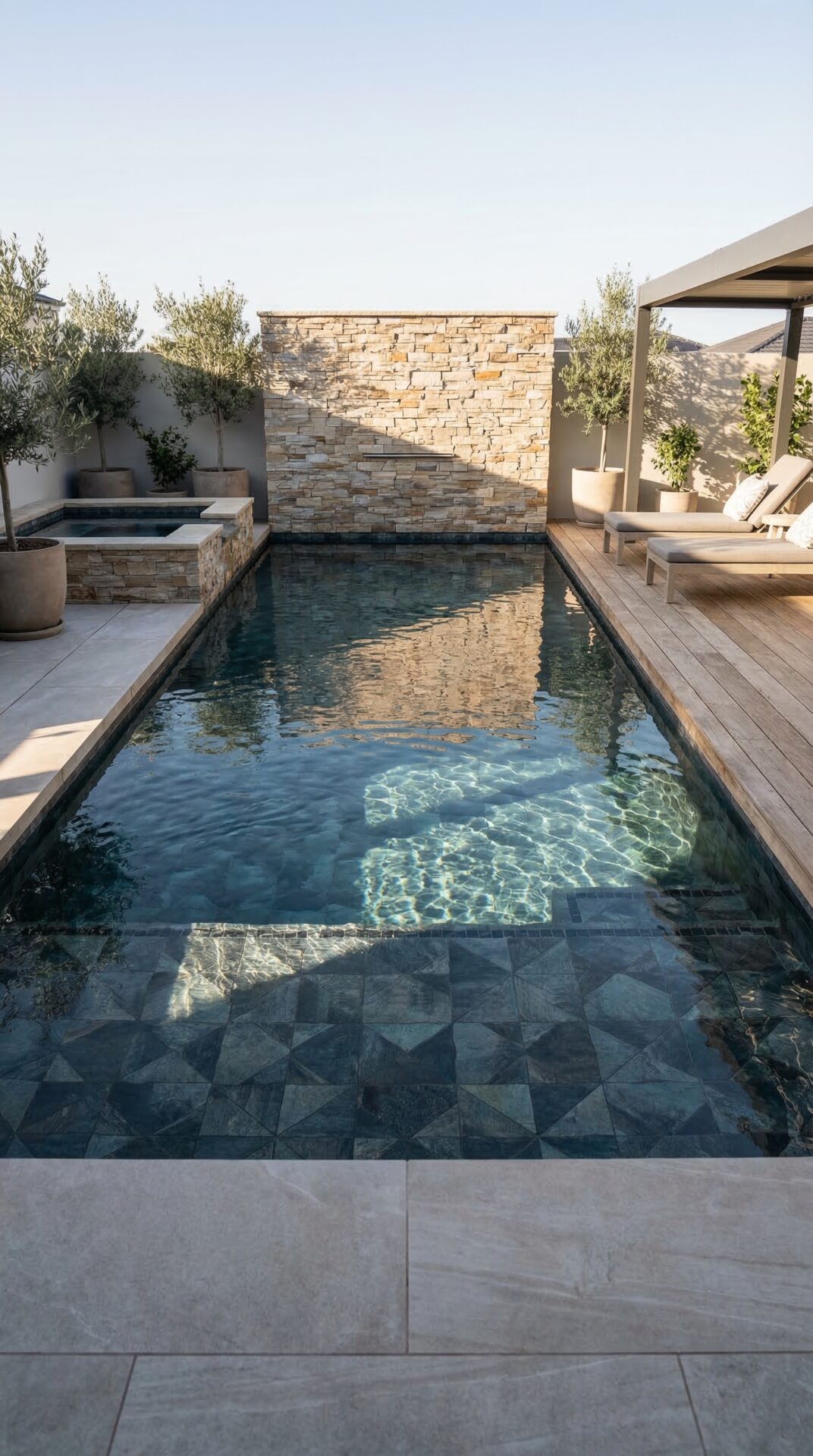
10. Textured Stone Feature Wall Pool
A textured stone feature wall at one end of a smaller pool—such as those found in courtyard designs, enclosed backyards, or urban properties—creates a sense of scale and drama that the pool by itself cannot. Depending on the overall design, reclaimed brick, rough-cut basalt, or stack stone can all be used.When you combine it with geometric interior tiles, the room becomes more than just functional; it becomes layered and purposeful. When outdoor space is scarce, this strategy works especially well. The entire space feels more thoughtful when there is a strong vertical component.
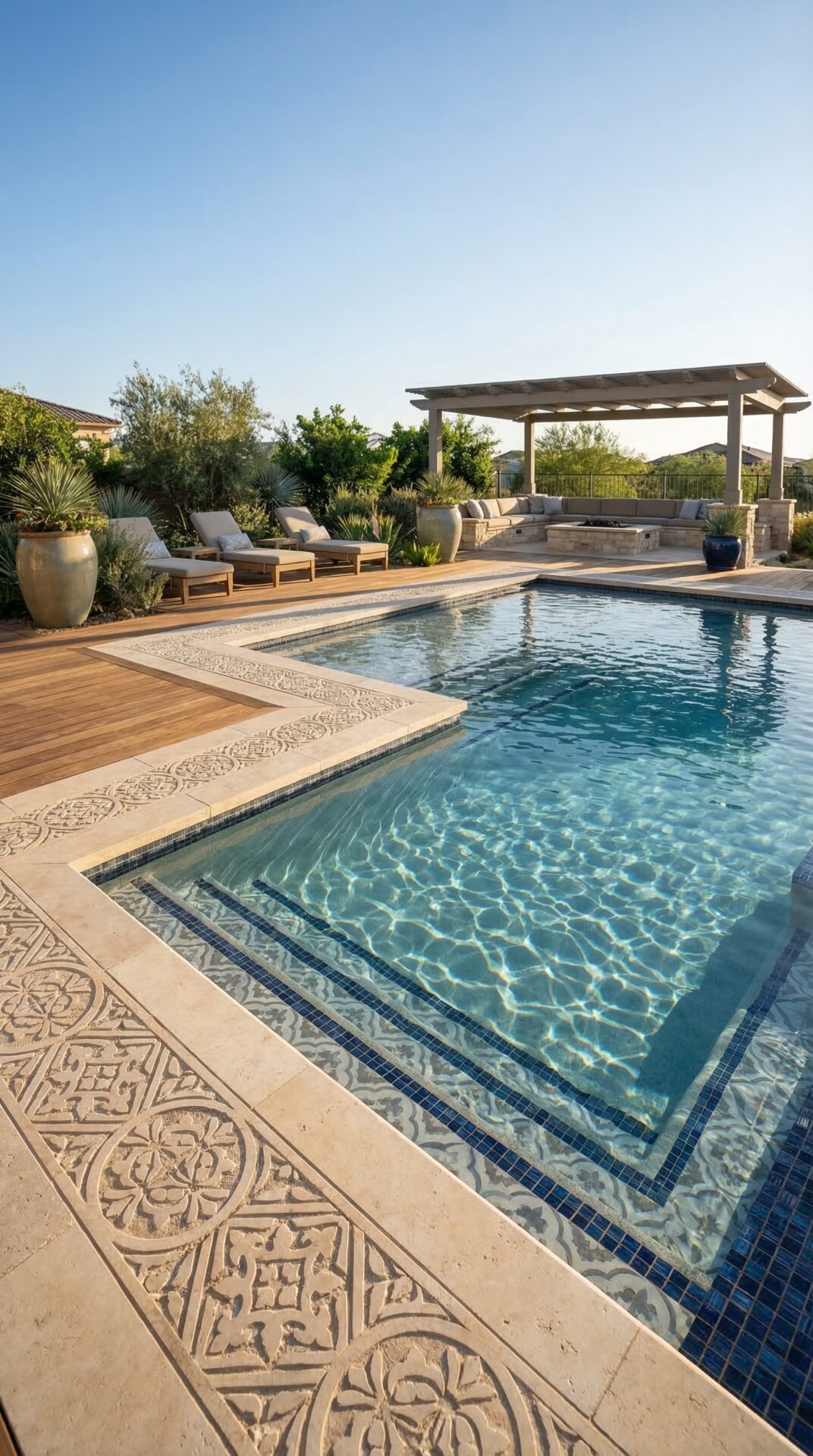
11. Custom Coping Inlays Pool
The kind of detail that distinguishes a designed pool from a built one is custom inlays, which can be decorative engravings, patterns, or even names carved straight into the coping stone. They’re not for everyone, but it’s worth looking into for homeowners who want their outdoor area to feel truly unique rather than catalog-perfect.The work is done by specialist stone masons, and the cost reflects that. But the result is something no off-the-shelf material can replicate: a pool that is specifically, unmistakably yours.
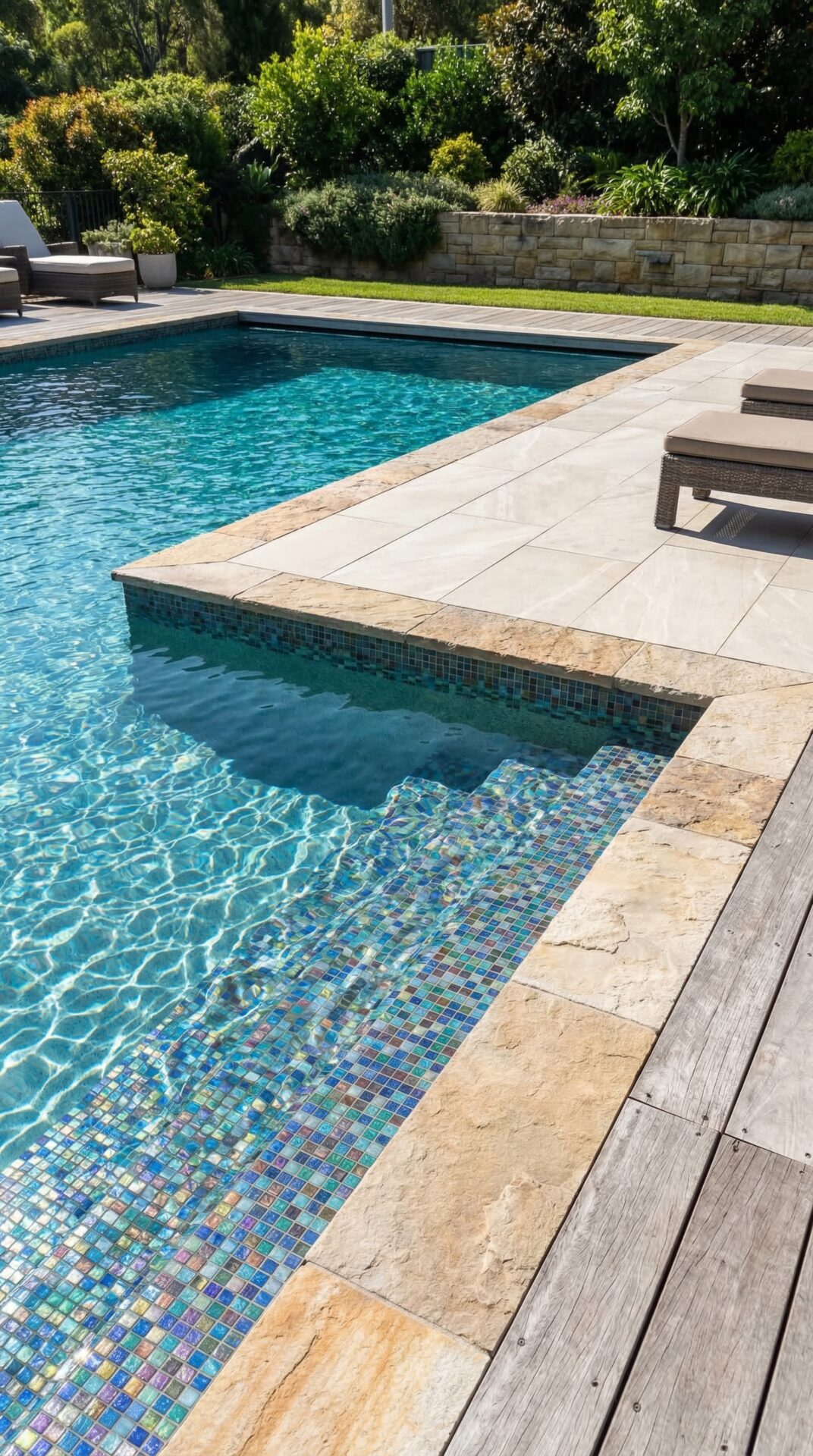
12. Mosaic Pool Steps
Pool steps are nearly always regarded as a purely functional component. The discussion ends when they are tiled to match the rest of the interior. Steps are among the first things you notice when you look at a pool, so this is a lost opportunity.By covering them with vibrant and purposeful multicolored mosaic tile, a practical necessity becomes a design element. Additionally,
contrasting colors on steps enhance underwater visibility, which is more important than most people realize until it doesn’t.
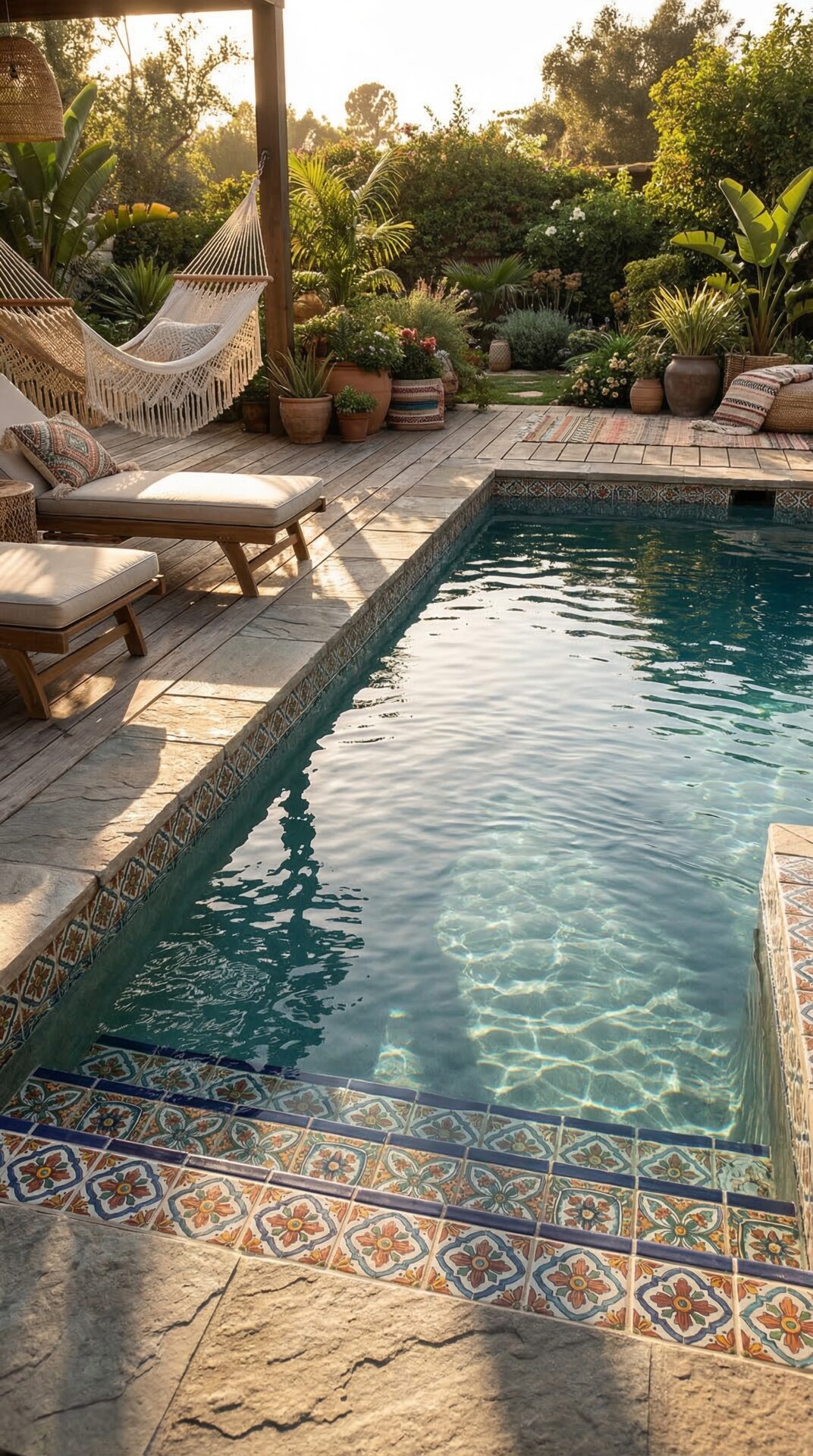
13. Bohemian Patterned Waterline Pool
Bohemian pool design is pattern-forward in a way that most pool aesthetics simply are not. Where minimalist styles ask materials to disappear into the background, bohemian design asks them to participate. Handmade Zellige tiles, encaustic cement patterns, colorful mosaic borders — these are materials with personality, and they show it.The key to making this work without it feeling chaotic is restraint everywhere else. The surrounding deck should be simple — plain concrete, natural gravel, or basic wood. The landscaping should stay low and grounded. Even the furniture should step back. When the tile is doing the talking, everything else should be listening.This style tends to suit homeowners who approach their outdoor spaces the way they approach interior design — as a genuine expression of taste rather than a background feature. It is not for everyone, but for the right yard and the right owner, it produces something that no other pool style quite matches.
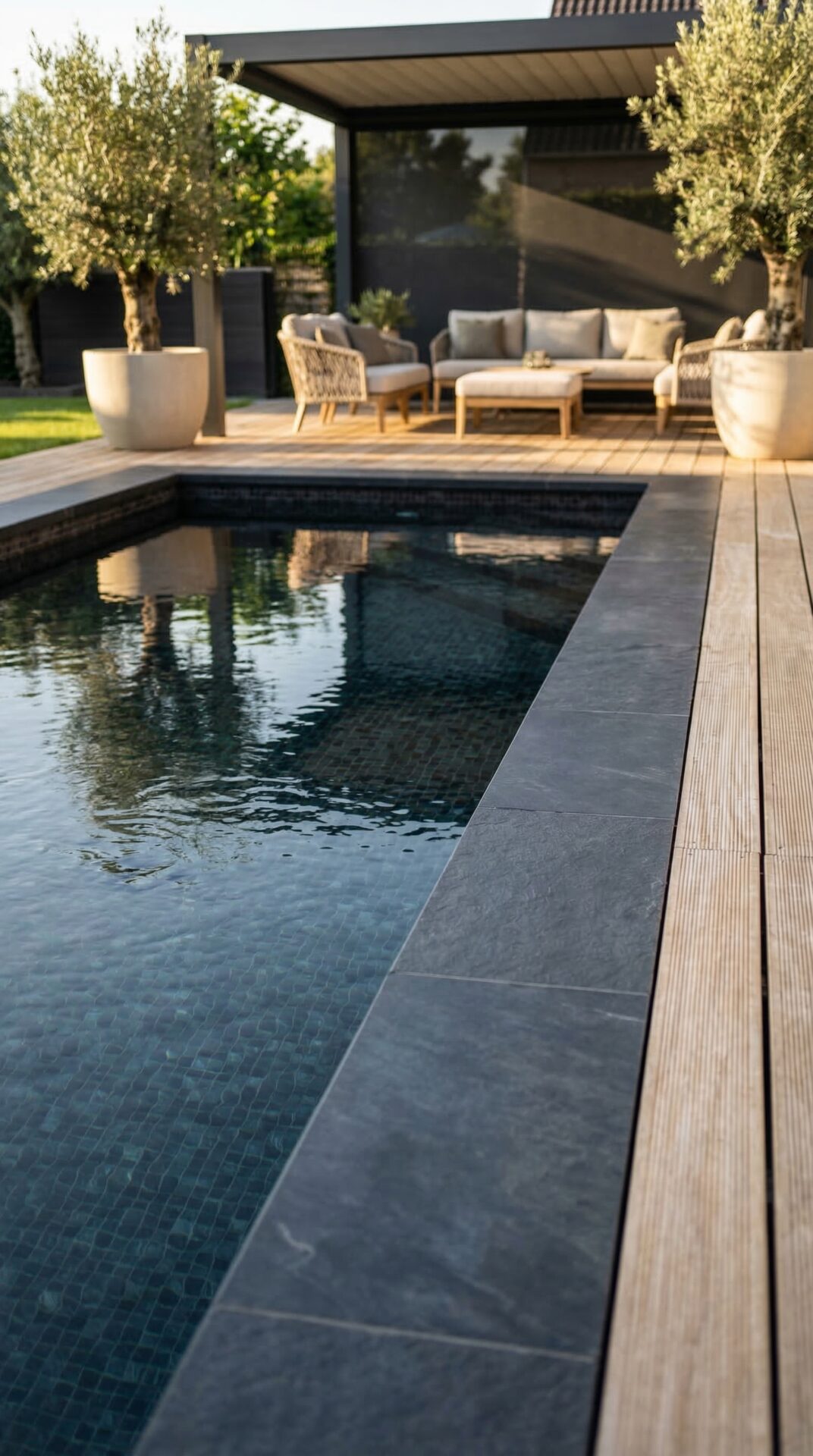
14. Dark Modern Luxury
The style demands dedication. It looks good in modern environments with strong geometry, angular architecture, and sparse landscaping.The same dark color scheme may seem out of place in a more conventional yard. The most dependable materials for this style are dark porcelain, slate, and basalt.They all age without looking out of date and retain their color well. Here, lighting is also very important. At night, well-placed exterior lights and underwater LEDs can make a dark pool look amazing.
Choosing Materials:
What Actually Matters
Aside from personal style, there are practical factors that should affect any decision about coping and tile. There is no room for negotiation on slip resistance. No matter how nice it looks, any surface at the edge of a pool that gets slippery when wet is a risk.Ask the suppliers directly about the wet slip rating of any material you’re thinking about. In warmer places, it’s important to think about how well things keep heat. On a hot afternoon, dark stone and some types of porcelain can really hurt your feet.Materials that are lighter in color and more porous tend to stay cooler. Porosity and how much water a material can hold affect how long it lasts and how much care it needs. Most natural stones need to be sealed every now and then. Porcelain and glass tiles are not porous at all, which makes them much easier to care for over time
| Material | Durability | Heat | Best Application |
|---|
| Travertine | High | Excellent | Mediterranean, luxury pools |
| Limestone | High | Good | Classic, elegant designs |
| Slate | Very High | Moderate | Dark, contemporary pools |
| Concrete Pavers | High | Good | Modern, minimalist pools |
| Porcelain Tile | Very High | Moderate | Low-maintenance applications |
| Basalt | Very High | Moderate | Dark modern, resort styles |
| Flagstone | Medium | Good | Rustic, natural designs |
| Mosaic Tile | High | Good | Waterline borders, steps, decorative |
| Teak / Timber | High (sealed) | Excellent | Coastal, wood-and-tile combinations |
Final Thought
Picking out tiles and pool coping won’t be newsworthy. People don’t throw dinner parties to tell people they’ve chosen to travel instead of limestone. But these choices stay in the yard for a long time.They are there every morning when the sun comes up, every afternoon when guests come over, and every night when the pool lights come on.That’s worth taking seriously. Not overthinking, but taking seriously.
The right combination of materials and design doesn’t just look good in photos. It makes the whole backyard feel like somewhere worth being.
You Might Also Like




Pingback: 11 Modern Farmhouse Bathroom Ideas That Look Straight Off Pinterest - Decorly Nest | Modern Home Decor Ideas
Pingback: Moody Living Room Ideas That Feel Cozy, Not Claustrophobic - Decorly Nest | Modern Home Decor Ideas