
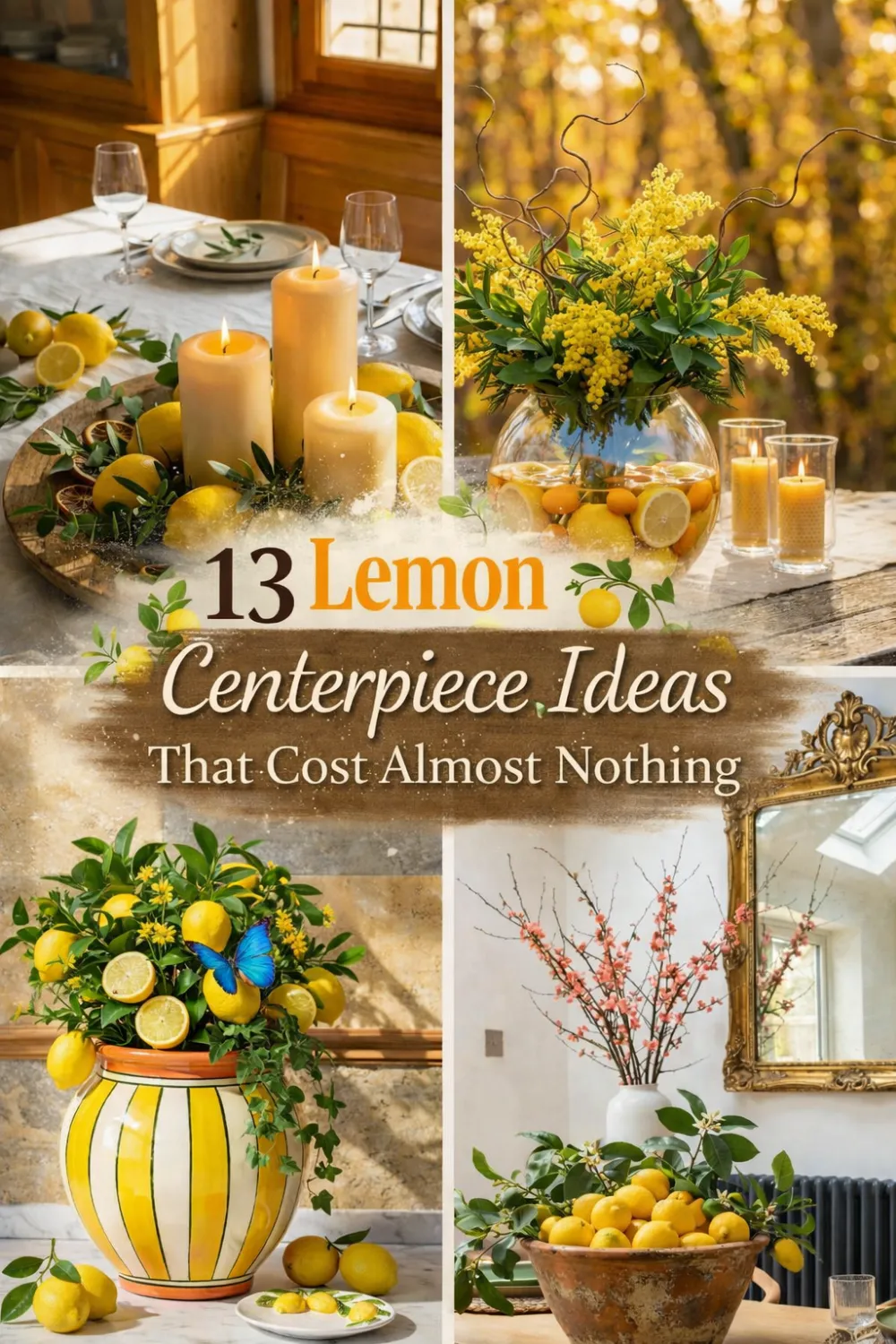
Lemon Centerpiece Ideas That Cost Almost Nothing and Look AmazingI did not plan to become someone who thinks seriously about lemon centerpieces. It happened by accident, the way most good things do. A few summers ago I had people coming over for dinner and absolutely nothing ready for the table. I had lemons in a bowl on the counter, a few eucalyptus stems I’d grabbed at the grocery store checkout without really thinking, and a wooden tray that had been sitting on the counter for weeks. I put them together in about four minutes, set them in the middle of the table, and spent the rest of the evening getting asked about it.
That was the moment I understood something about table decor that I had not quite grasped before: the most effective arrangements are usually the ones where someone made a confident decision about a few simple things and then stopped. Lemons are one of those rare ingredients that make every decision around them easier. The color does the work. The shape does the work. All you have to do is not overthink it.
This guide covers thirteen different ways to work with lemon centerpieces — from the most casual everyday basket to more layered arrangements that look genuinely styled. Every one of them is achievable without a trip to a florist or a Pinterest budget.
— Written from actual dinner parties, last-minute scrambles, and a genuine love of styling tables on a normal budget 🍋
1 • Why Lemons Work So Well in Table Decor — And Why Most People Don’t Use Them Enough
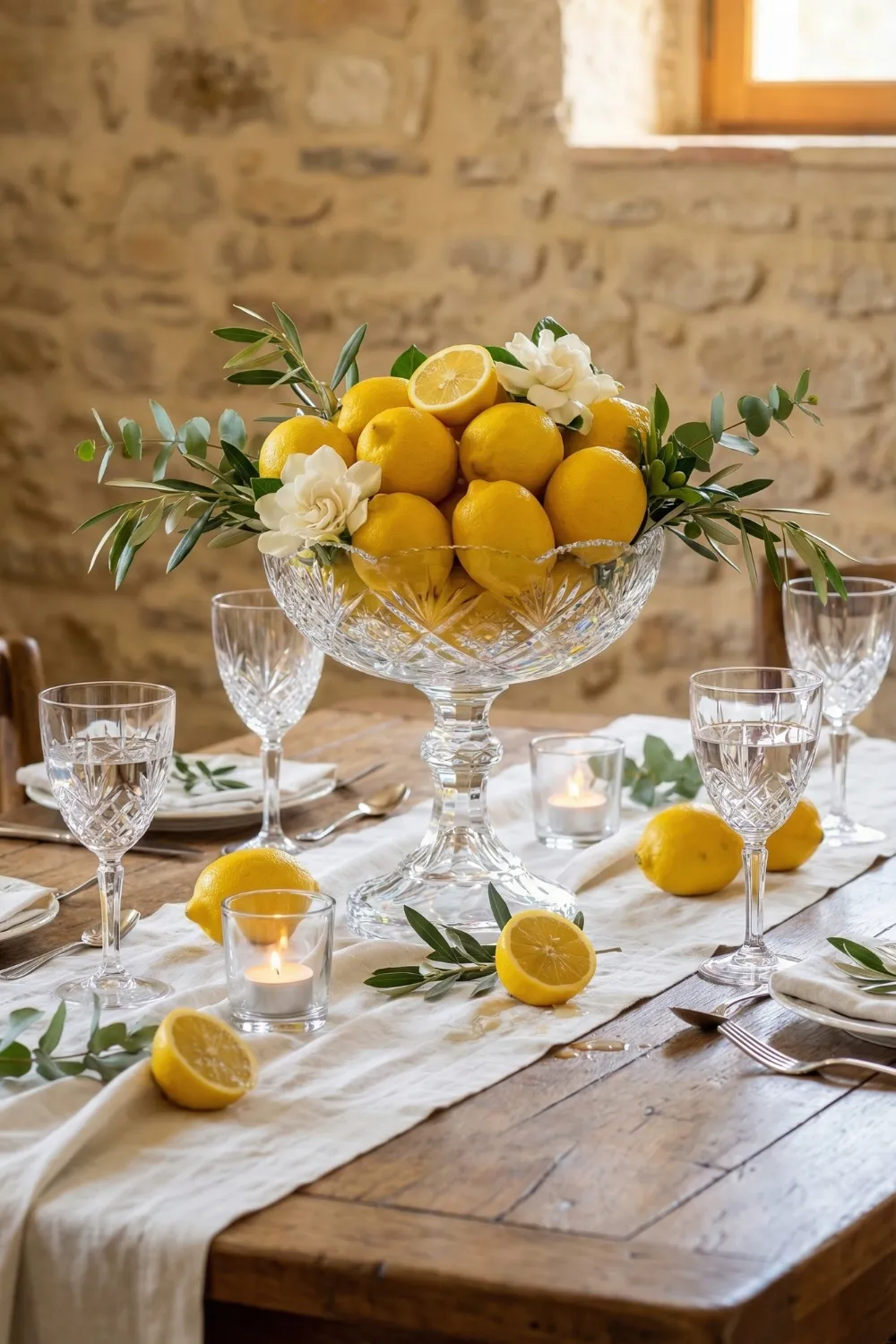
Lemons sit at a very specific intersection of qualities that almost nothing else in a grocery store can claim. They are bright without being garish. They are natural without looking unfinished. They have a shape — round, slightly irregular, satisfyingly weighted — that makes compositions feel balanced without any effort on your part.
The color is doing more than you might think. Yellow at the center of a table creates what designers call a focal point: a place the eye goes first and returns to naturally. On a wood surface, the yellow pops because it sits opposite of brown on the color wheel. On a white tablecloth, it brings warmth without introducing a competing color. On an outdoor table, it bounces sunlight back in a way that makes the whole setup feel more alive.
The other thing lemons do, which flowers often cannot, is last. A well-placed bowl of lemons on a kitchen table can sit there for two weeks and look better at the end than it did at the beginning. The fruit slowly develops deeper color as it ripens. It does not wilt, shed petals, or develop that slightly sad look that cut flowers get by day four.
And then there is the versatility. Lemons work in baskets, bowls, glass vases, wooden trays, ceramic planters, vintage tins, and mason jars. They work with eucalyptus, olive branches, rosemary, hydrangeas, wildflowers, and on their own with nothing at all. Very few decorative elements are this cooperative.
Why Lemons Are the Perfect Centerpiece Ingredient
- Bold yellow creates an instant focal point on any table surface
- Round shape softens the straight lines of plates, runners, and furniture
- Last 1–2 weeks without wilting — much longer than cut flowers
- Work with almost every container and greenery combination
- Cost a fraction of what a floral arrangement would run
2 • The Design Logic Behind Citrus Centerpieces
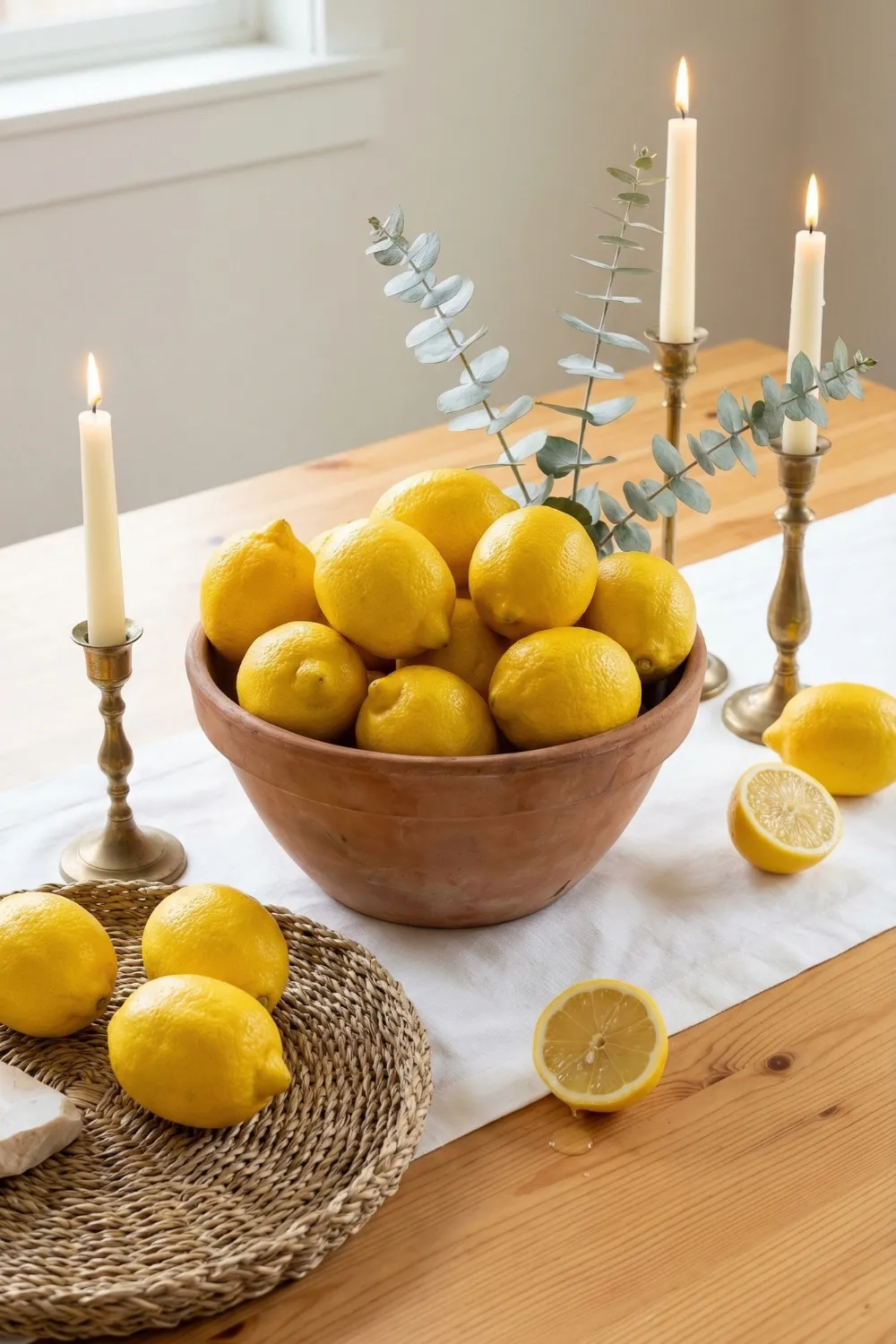
Before getting into specific arrangements, it helps to understand the few principles that make lemon centerpieces work — because once you understand them, you can improvise confidently instead of following instructions like a recipe.
The first principle is contrast. Yellow against a neutral background — white linen, raw wood, pale stone — is one of the most readable color combinations in nature. It does not need to be styled cleverly because the contrast does the work for you. This is why even a simple bowl of lemons on a plain white tablecloth reads as intentional design rather than laziness.
The second principle is shape variety. A composition made entirely of round objects looks static. When you introduce vertical elements — a candle, a sprig of eucalyptus, a tall stem — the arrangement suddenly has movement. The eye travels up and down and across rather than just landing in one spot and stopping.
The third principle is texture contrast. The glossy skin of a lemon looks completely different next to matte ceramic, rough woven wicker, soft linen, or bristly eucalyptus. These surface differences are what make a composition feel rich rather than flat.
“The most effective table arrangements are usually the ones where someone made a confident decision about a few simple things — and then stopped.”
3 • Rustic Lemon and Candle Tray for Evening Tables
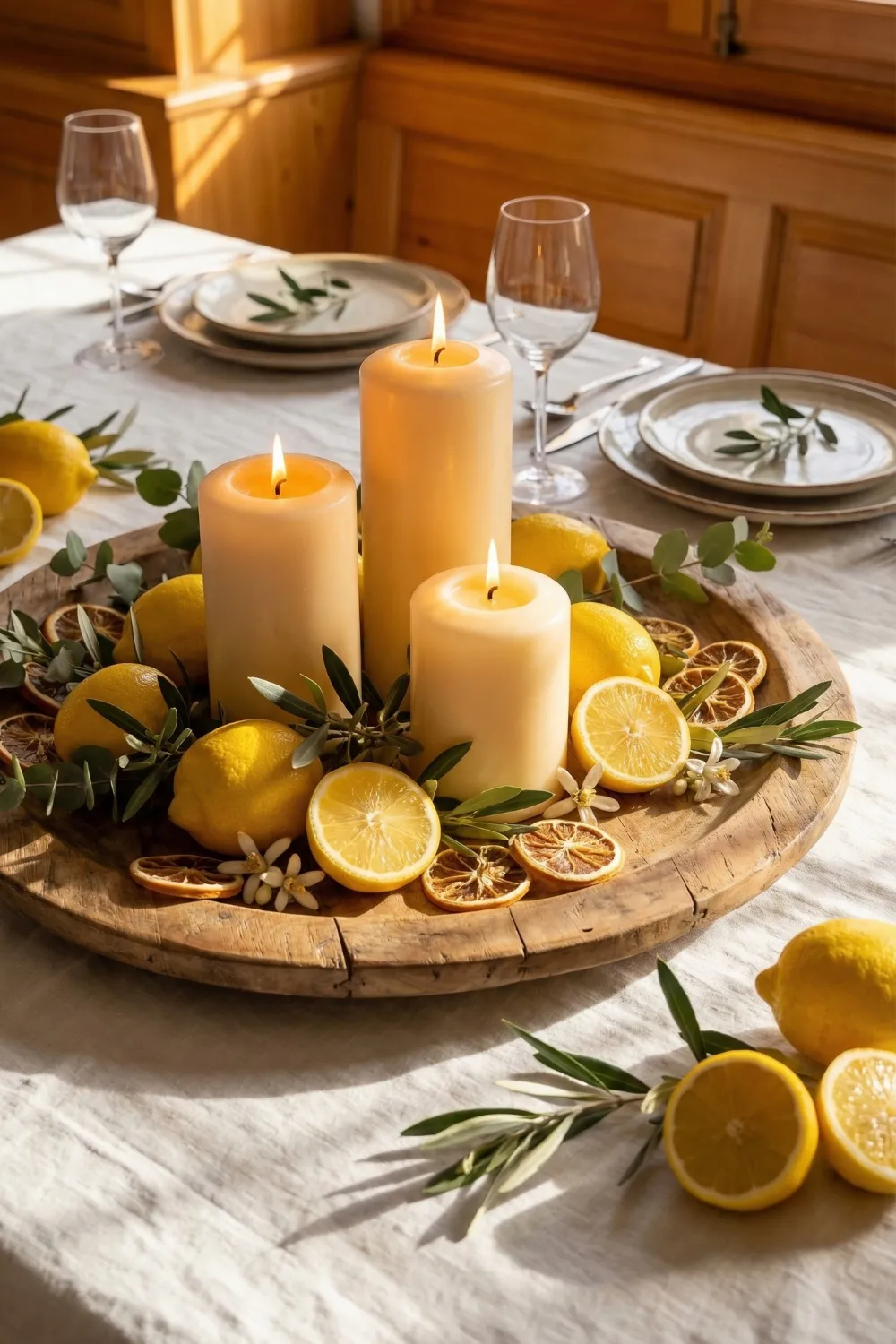
This is the arrangement I come back to most often when I want a table to look styled without spending more than twenty minutes on it. The combination of lemons and candles works because they do opposite things: the candles create warmth and soft light, and the lemons create brightness and natural energy. Together, they feel balanced in a way that neither achieves alone.
Start with a wooden tray — any size that fits your table without overwhelming it. The tray matters more than people realize. It frames the arrangement and tells the eye where the centerpiece begins and ends. Without it, the same objects scattered on a table just look like objects on a table.
Place three pillar candles in the tray at different heights. Cluster lemons around and between the candles, leaving them loose rather than arranged symmetrically. Then tuck a few sprigs of eucalyptus or olive branches into the gaps. The greenery connects everything and fills in the spaces that would otherwise look bare.
The result should look like it came together naturally rather than being assembled. If it looks too tidy, gently push a couple of lemons slightly out of place. The slight informality is the whole point.
Building the Candle Tray Step by Step
- Start with the wooden tray — it frames the composition and makes it feel intentional
- Place candles at different heights to add vertical movement
- Cluster lemons loosely around the candles — not symmetrically
- Tuck eucalyptus or olive sprigs into gaps to connect the elements
- Let one or two lemons sit slightly outside the tray for a natural overflow effect
4 • Outdoor Lemon Tablescapes That Feel Bright and Relaxed
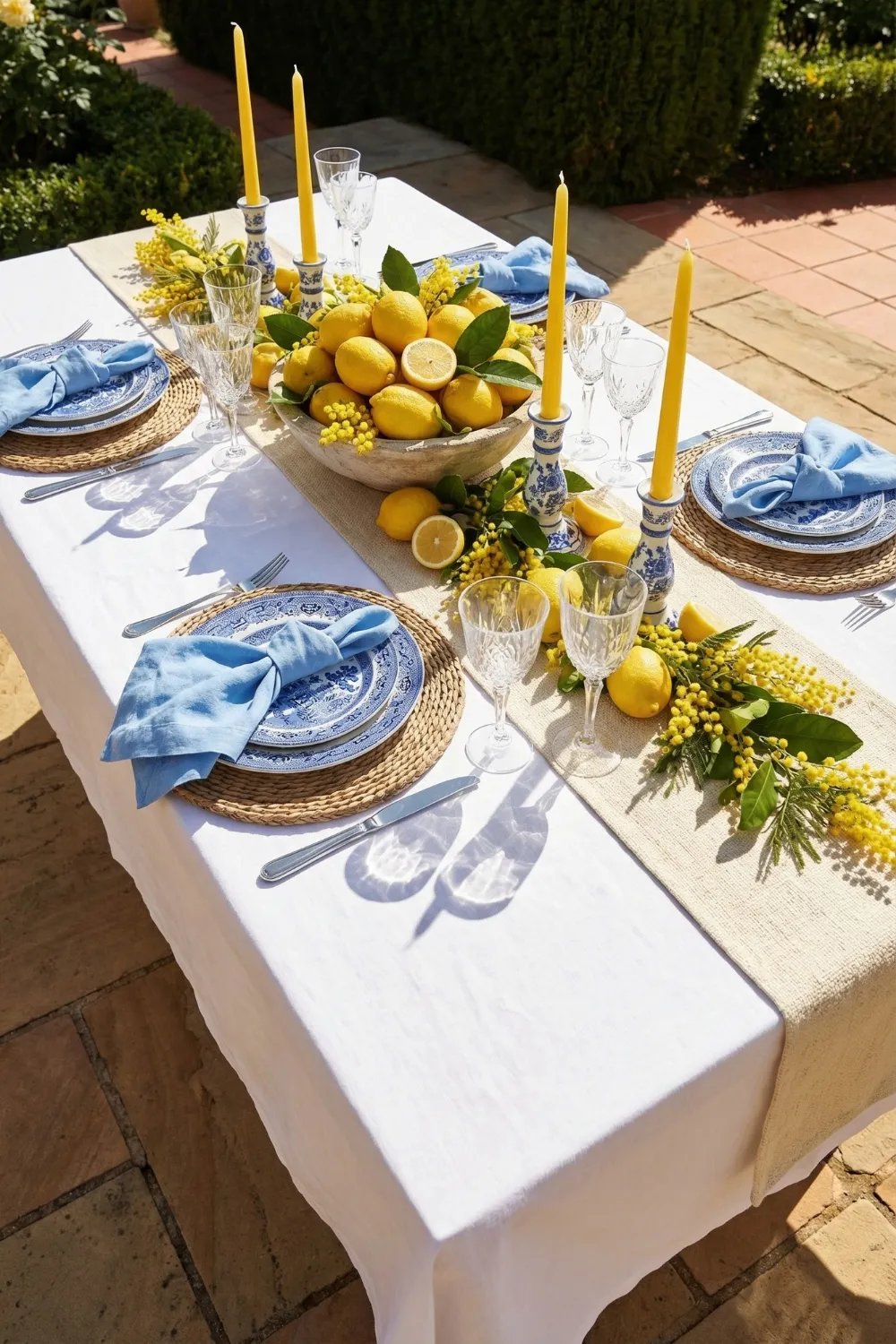
Outdoor dining tables have a specific challenge that indoor tables do not: they compete with the entire visual landscape around them. A centerpiece that might feel strong indoors can look timid outside. Lemons, because they catch and reflect natural light, hold their own in outdoor settings better than almost any other decorating ingredient.
The approach that works best for outdoor tables is horizontal rather than tall. Lay down a neutral linen runner first. Put a bowl of lemons at the center — this becomes the anchor. Then scatter a few individual lemons and small greenery sprigs down the length of the runner, spacing them loosely rather than evenly. The repeated yellow color creates rhythm: the eye bounces from one point to the next and reads the whole table as a cohesive scene.
If you want height without fragility, a pair of low hurricane lanterns at either end of the runner adds structure without risking a wind incident. Blue or white dinnerware makes the yellow lemons look even more vivid by contrast — one of those color combinations that works reliably in both interior design and table styling.
5 • Lemon Arrangements in Vintage Containers
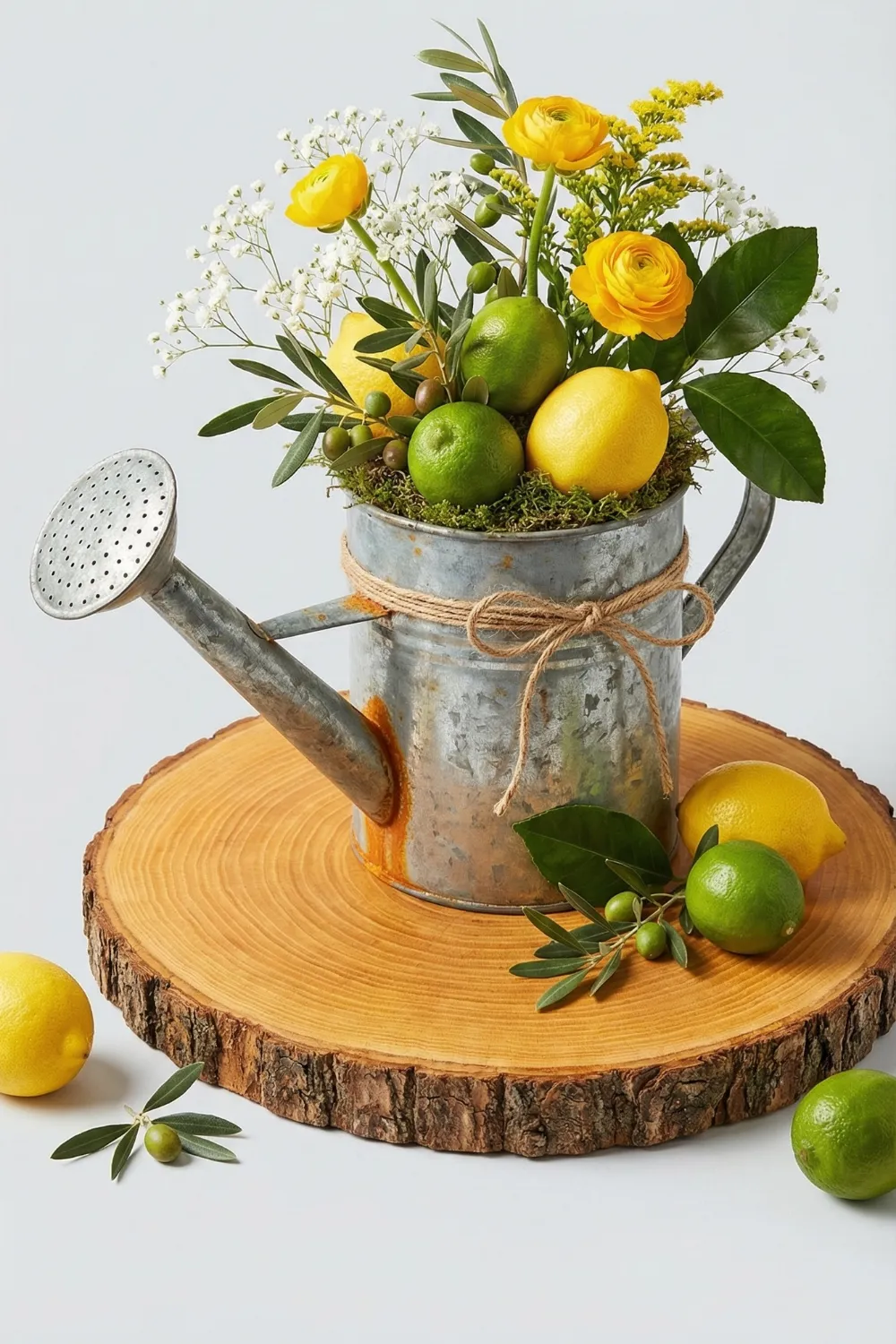
The container is always part of the story. A plain bowl of lemons tells one kind of story — clean, modern, unfussy. An old watering can or a vintage enamel pitcher full of lemons and wildflowers tells a completely different one. It suggests a garden, a farmhouse kitchen, a life lived close to things that grow.
Vintage metal containers — watering cans, pitchers, old colanders, dented tin buckets — have a texture that plays beautifully against the smooth skin of lemons. You can find these at thrift stores, antique markets, or even your own garage for very little money, and they transform an otherwise simple citrus arrangement into something with genuine character.
When using a taller container like a watering can, do not just pile lemons at the bottom. Instead, create a mixed arrangement by placing flower stems in first, then tucking lemons in between the stems so the fruit sits mid-arrangement. Small yellow flowers reinforce the citrus color palette without competing with it.
6 • Floating Lemon Bowls That Create Instant Visual Interest
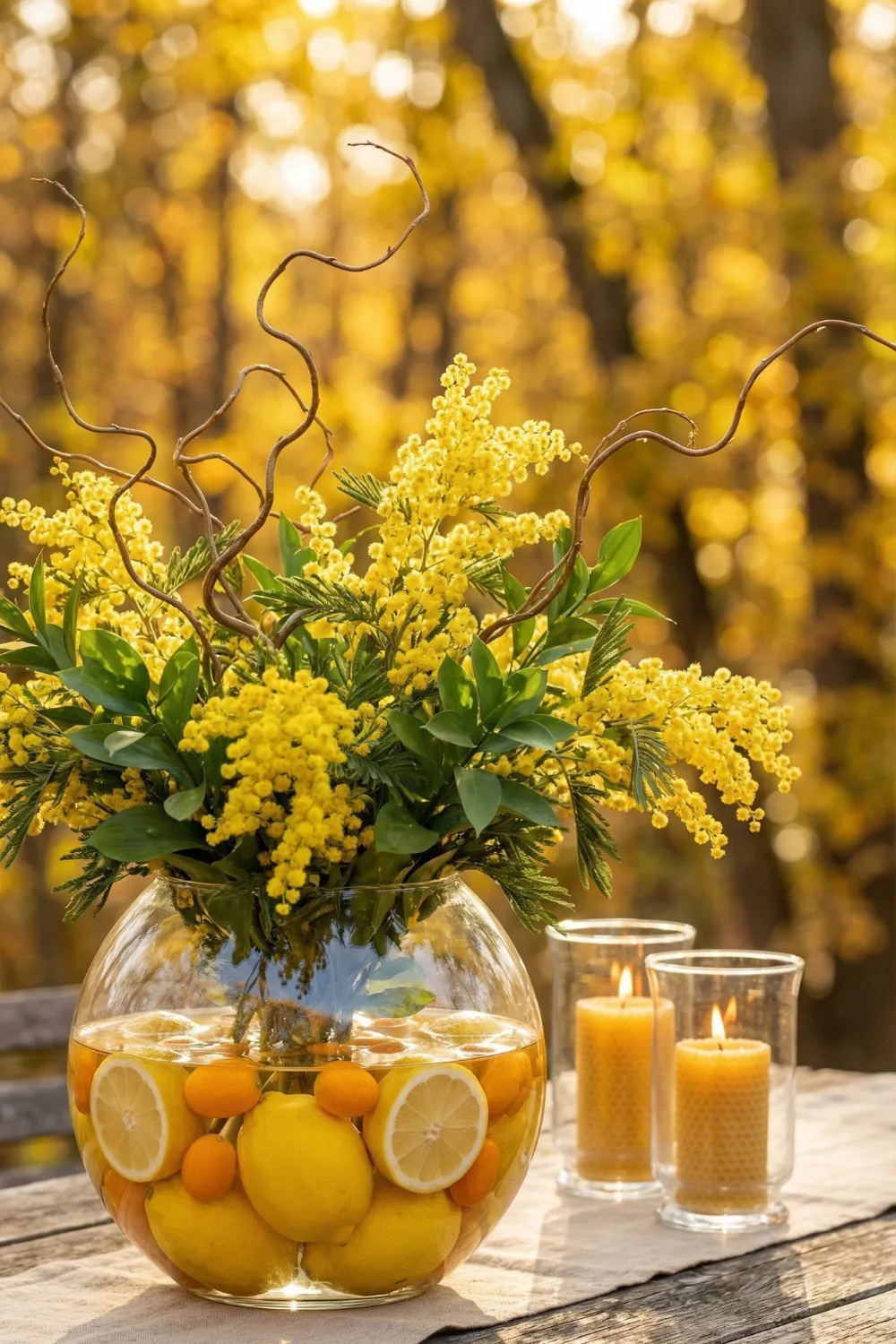
This is the arrangement I recommend to anyone who tells me they are not good at styling things. There is almost no way to do it wrong. A clear glass bowl, some water, a few lemons — whole and sliced — and whatever greenery or flowers you have on hand. The transparency of the glass does half the design work by itself.
Fill a wide, low glass bowl with water. Drop in two or three whole lemons — they float naturally and sit at slightly different angles, which creates an organic quality. Add four or five lemon slices. Pressed gently against the side of the bowl, the slices show their interior pattern visible through the glass. It looks deliberate and beautiful and takes about ninety seconds.
For a more finished look, lay a few flower stems across the top of the bowl. A candle placed close to the bowl at night reflects in the water and creates a glow effect that photographs extremely well.
Floating Bowl Formula
- Wide, low clear glass bowl — the wider the better for visual impact
- Two or three whole lemons — they float and create organic angles
- Four or five lemon slices pressed against the glass sides
- Greenery stems resting across the top for height
- One candle nearby at night for the reflection effect
7 • Casual Citrus Baskets for Everyday Tables
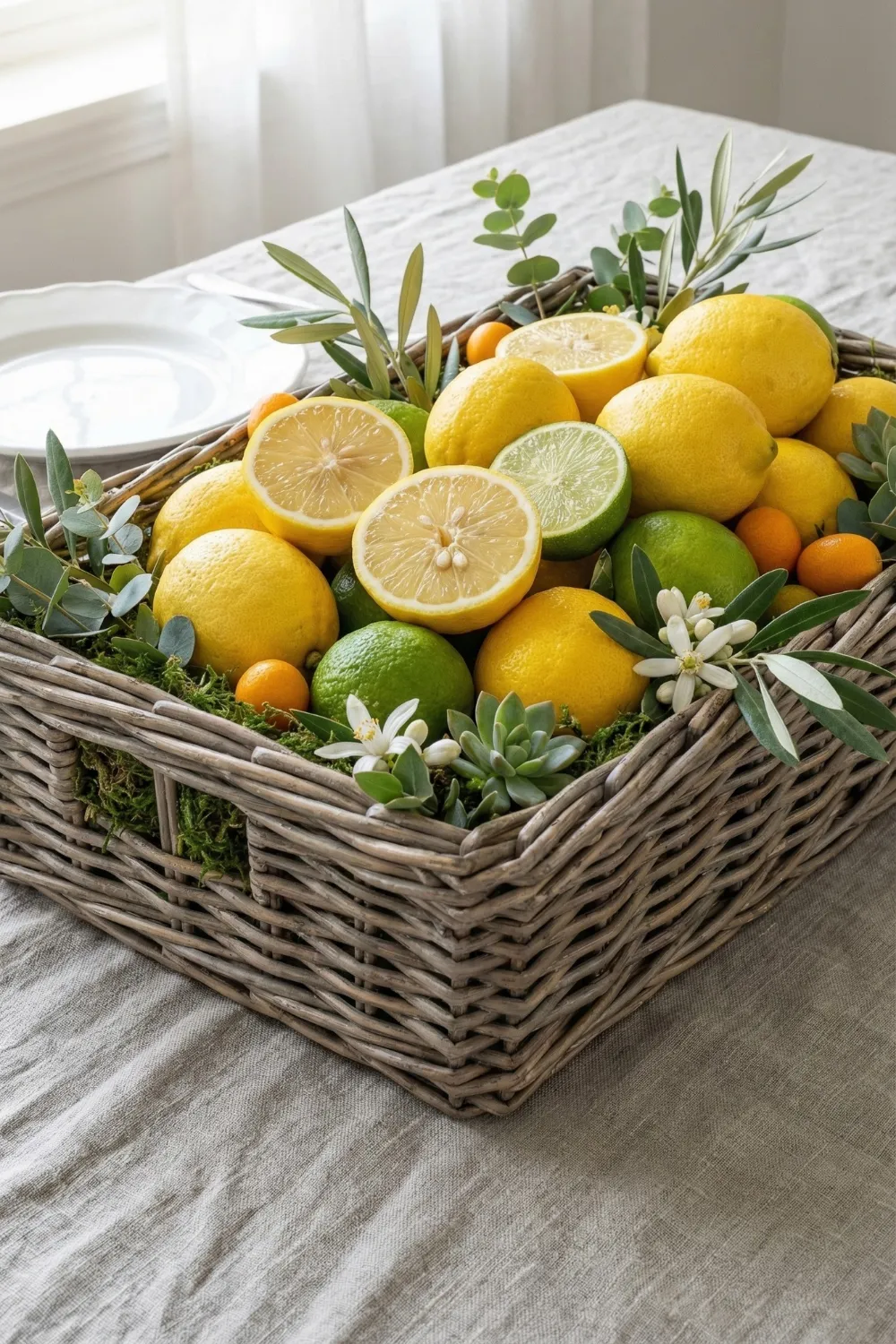
Not every table needs a centerpiece that looks like it was styled. For a kitchen table that gets used for breakfast and homework and late-night snacking, a casual wicker basket of lemons is exactly right — present enough to make the table feel considered, relaxed enough to not get in the way.
A shallow wicker or rattan basket works better than a deep one because the fruit stays visible. Line the bottom with a few eucalyptus or olive branches first. Set whole lemons across the greenery, then add a few halved lemons with the cut side facing up. The cross-section of a lemon — those pale segments, the little seed pockets, the ring of white pith — is genuinely beautiful.
A few limes mixed in shift the palette just slightly without changing the mood. Keep lemons as the dominant element. This is one of those arrangements that looks better slightly full than perfectly arranged. Pile it in loosely and leave it alone.
8 • Overflowing Lemon Bowls That Create a Sense of Abundance
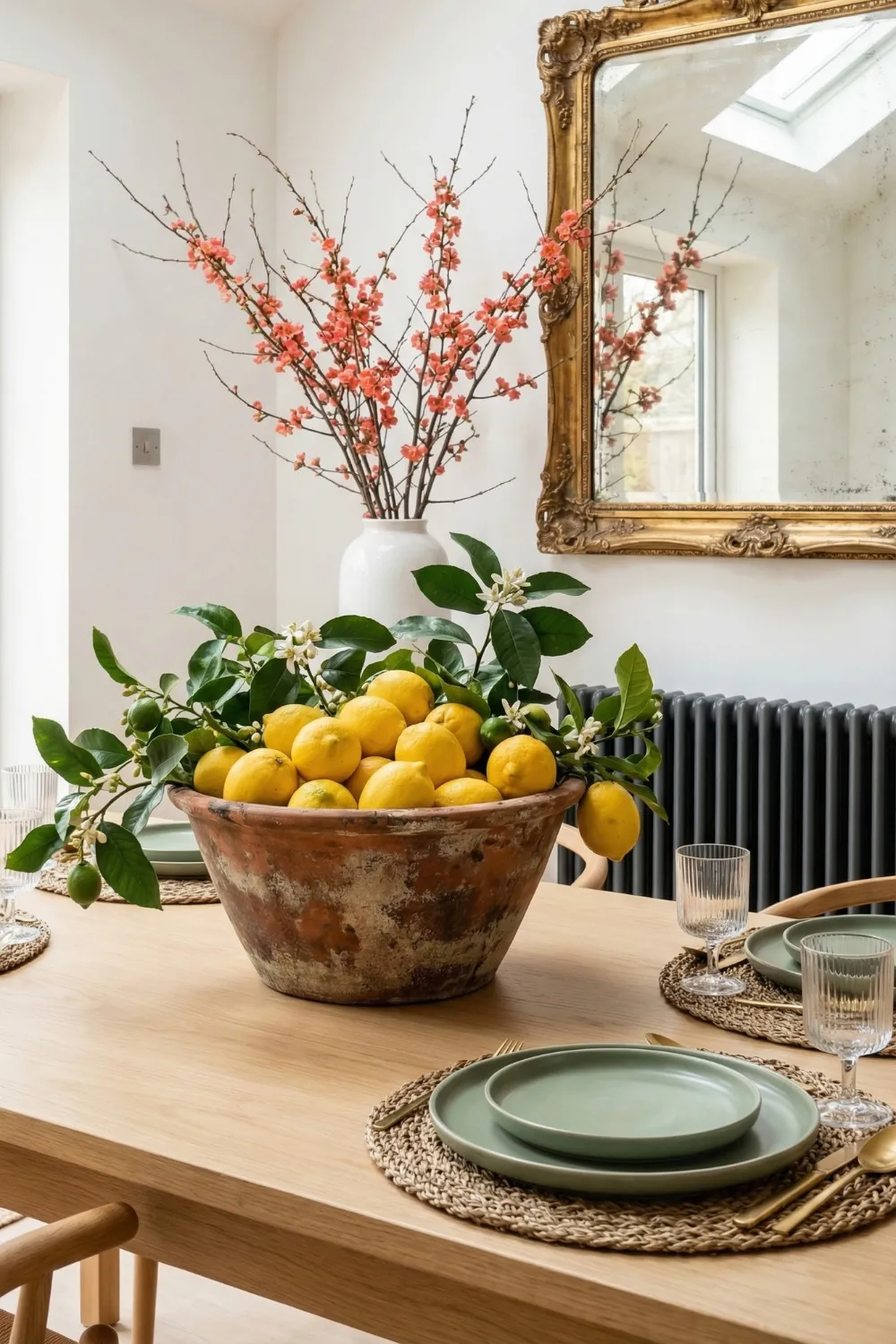
There is a specific feeling that comes from a bowl of fruit that is slightly too full — a generosity, a sense that there is more than enough. It is the same quality you see in Italian still-life paintings, where the fruit is always piled high and threatening to roll off the edge. That feeling is surprisingly easy to recreate.
Choose a bowl that is slightly larger than you think you need. Fill it with lemons until they begin to mound above the rim. Let one or two lemons rest against the outside of the bowl as if they rolled there naturally. Tuck a few stems of greenery between the fruit so that leaves emerge from the bowl and extend outward.
A few limes added to the mix create color variation without pulling focus from the lemons. The arrangement should feel generous, seasonal, and completely unpretentious.
9 • Glass Vase Citrus Arrangements With Flowers
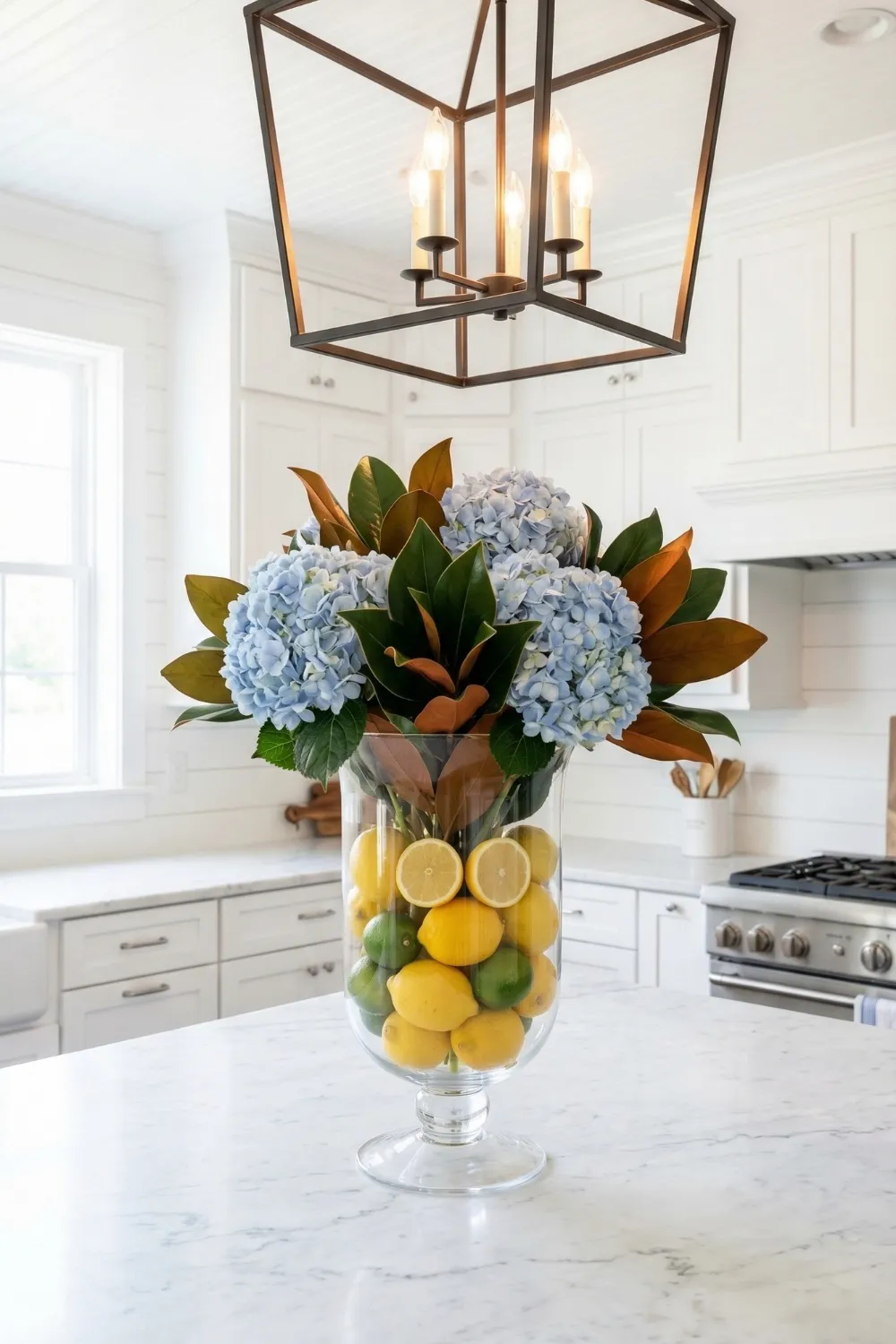
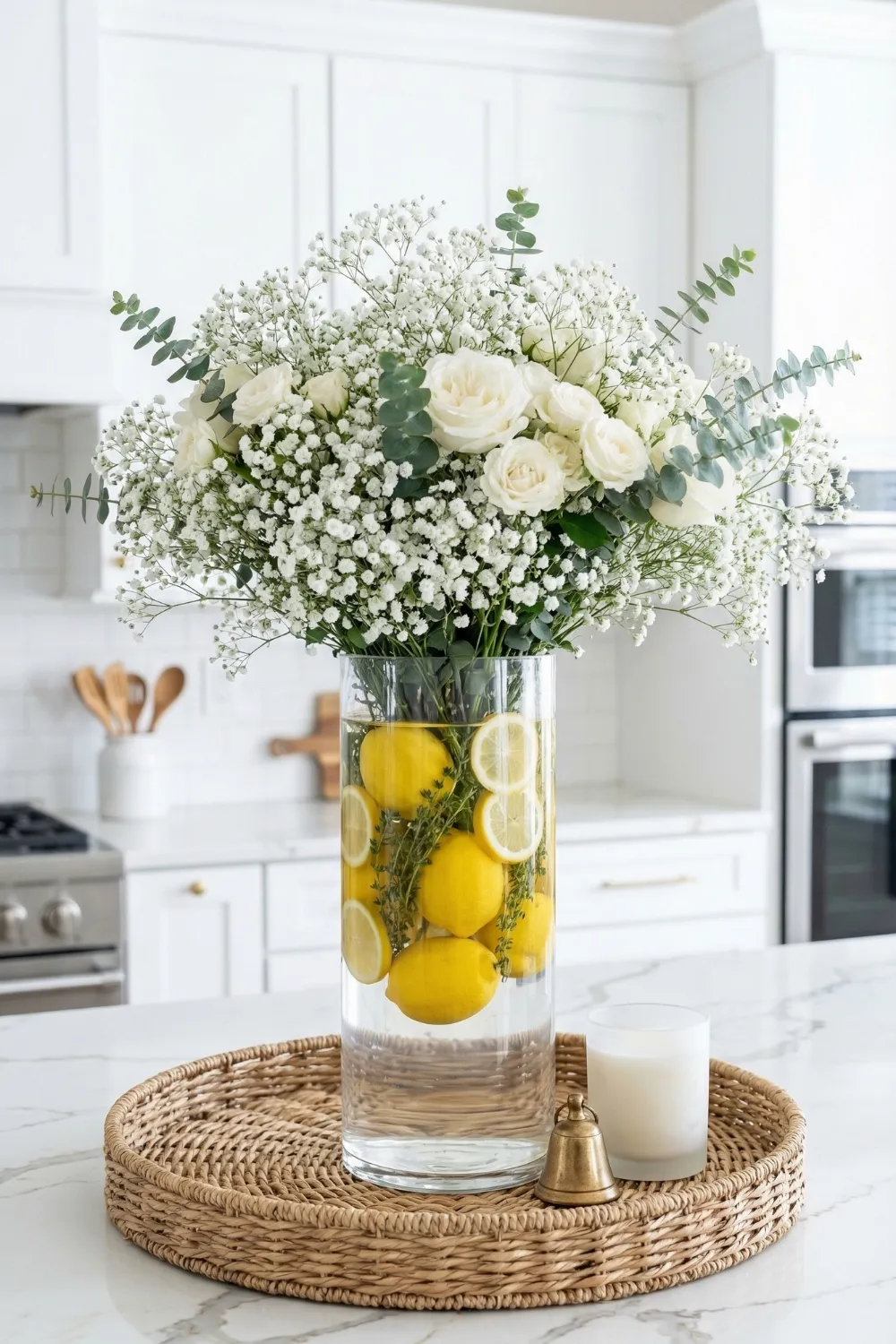
This is one of those arrangements that looks far more expensive and complicated than it actually is. A wide glass vase, some lemon slices, water, and a handful of flowers — that is genuinely all you need. The lemon slices pressed against the glass create a pattern of repeating circles that makes the vase itself part of the display, not just a container for the flowers.
Fill the vase about two-thirds with water. Place lemon slices around the inner edge of the vase, pressing them gently against the glass. Add a few whole lemons or lemon halves in the center for weight. Then arrange flower stems through the citrus layer.
Blue hydrangeas are the classic pairing here because the blue and yellow sit opposite each other on the color wheel and create a contrast that is vivid without being harsh. White flowers work equally well if you want something softer. The finished result looks layered and intentional, and the lemon slices visible through the glass give it a quality that a plain floral arrangement simply does not have.
10 • Garden-Inspired Lemon Floral Arrangements
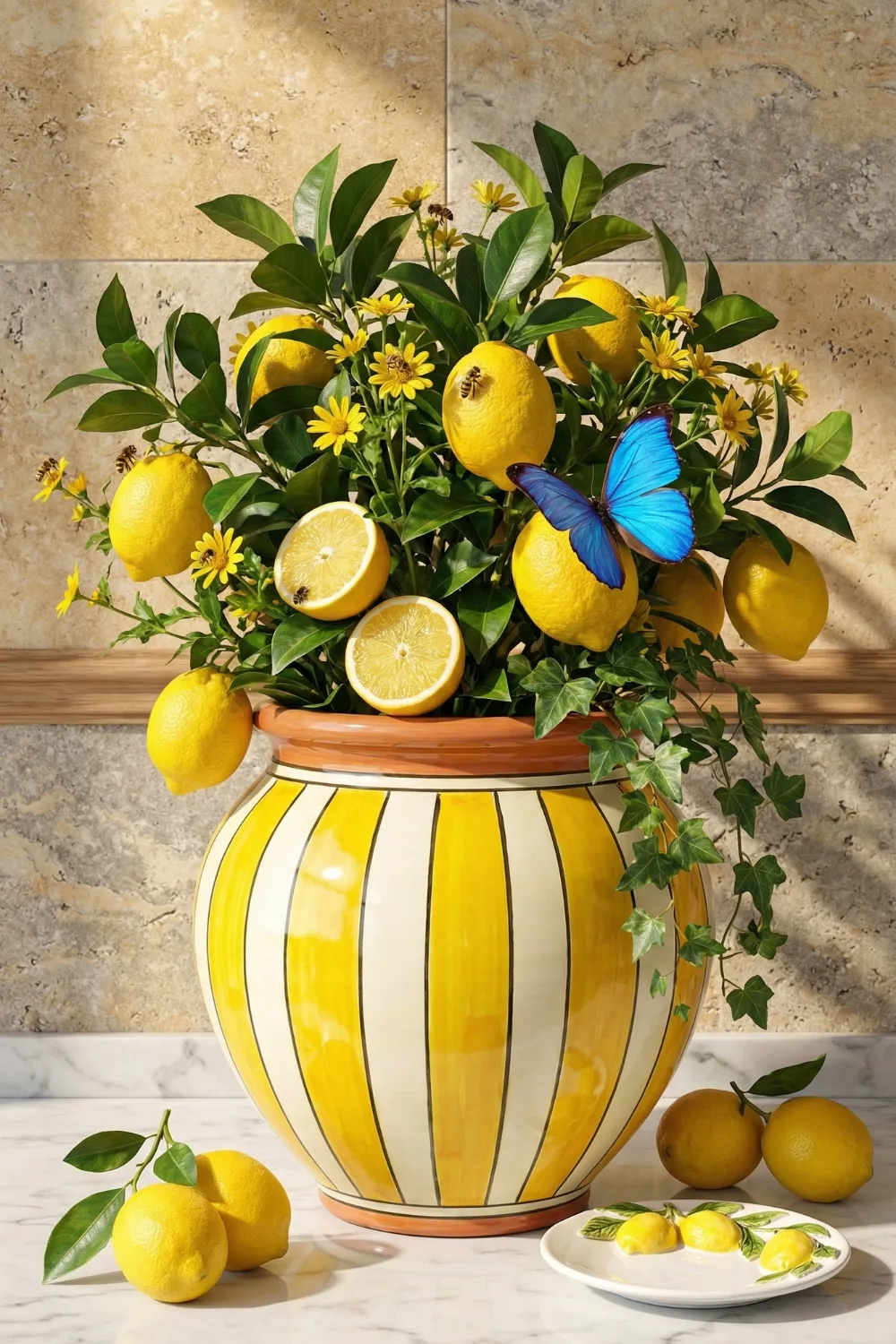
Some centerpieces are meant to look intentionally designed. Others are meant to look like they were gathered from a garden that morning and brought inside still slightly damp. The garden-inspired approach is the second kind — loose, slightly asymmetrical, with a mix of textures and shapes that makes the arrangement feel like it grew rather than was built.
Start with a ceramic planter or a decorative pot. Fill it with structural greenery first: branches, large leaves, anything with enough body to hold the shape of the arrangement. Then add flowers to soften and add color, working them in loosely rather than symmetrically.
Finally, tuck whole lemons and halved lemons into the arrangement near the base, where they can sit naturally among the stems rather than sitting on top. When the fruit is integrated into the composition this way — not displayed, just present — it creates the effect of something that genuinely grew together.
11 • Mason Jar Lemon Centerpieces for Rustic Tables
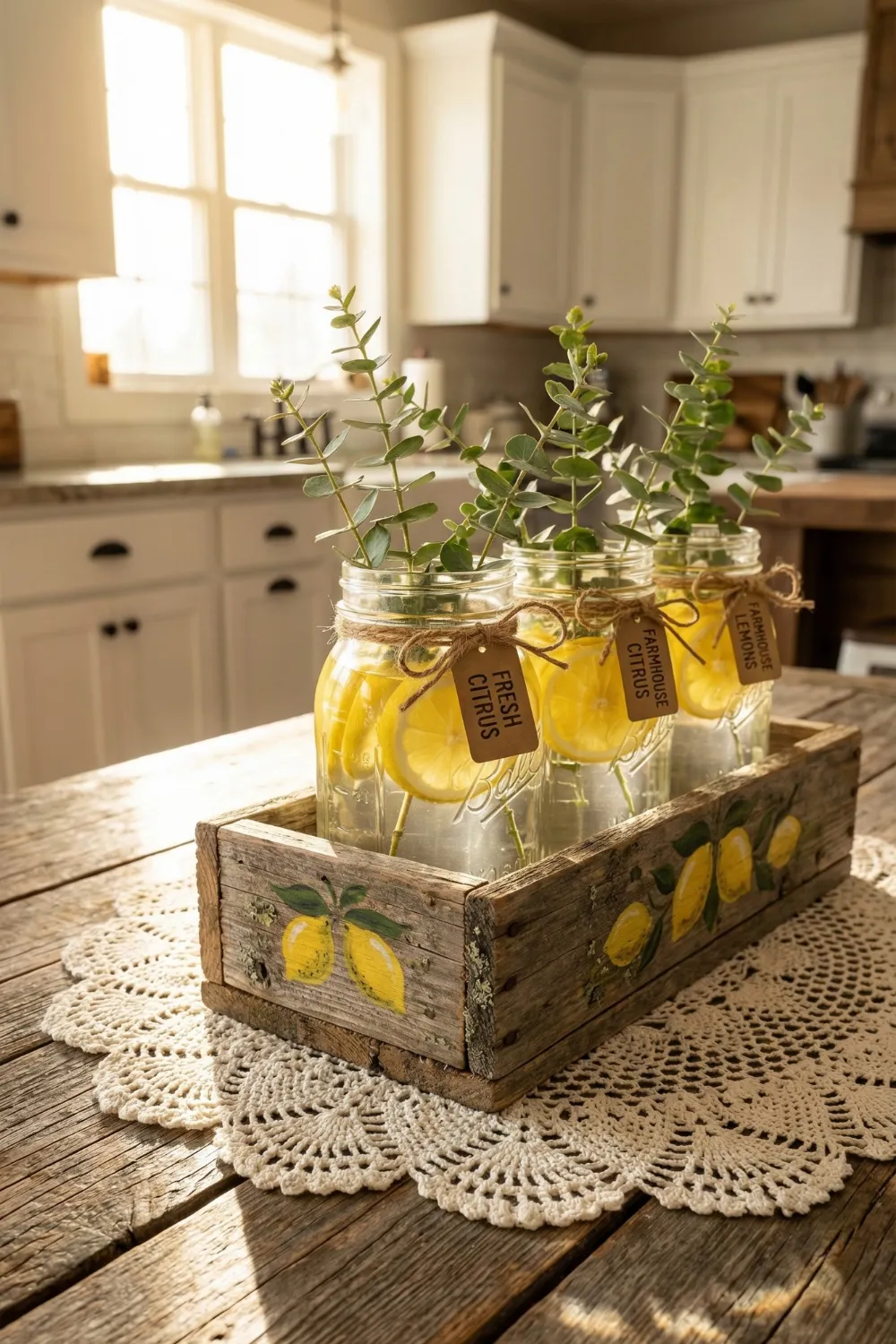
There is something about grouping small arrangements together that feels more dynamic than a single centerpiece. Three mason jars arranged on a wooden tray is probably the simplest version of this idea, and it works on almost every table style from farmhouse to Scandinavian minimal.
Fill each jar with water and press lemon slices against the inside of the glass. The circular cross-sections visible through the glass create a repeated pattern across all three jars. Add eucalyptus stems or small flower sprigs to each jar for height — keeping the stems roughly the same length across all three jars gives the grouping a cohesive look.
The wooden tray is essential here. Without it, three small jars just look like three separate things on a table. With the tray, they become one organized composition. That distinction — arranged on purpose versus objects that happen to be in the same area — is the whole difference between a centerpiece and clutter.
Mason Jar Trio Setup
- Three mason jars on a wooden tray — the tray is what makes it a centerpiece
- Lemon slices pressed against the inside of each jar for visible circular pattern
- Eucalyptus stems at similar heights across all three jars
- Works beautifully on farmhouse tables, kitchen islands, and brunch setups
12 • Elegant Citrus and Floral Vase Displays for Formal Tables
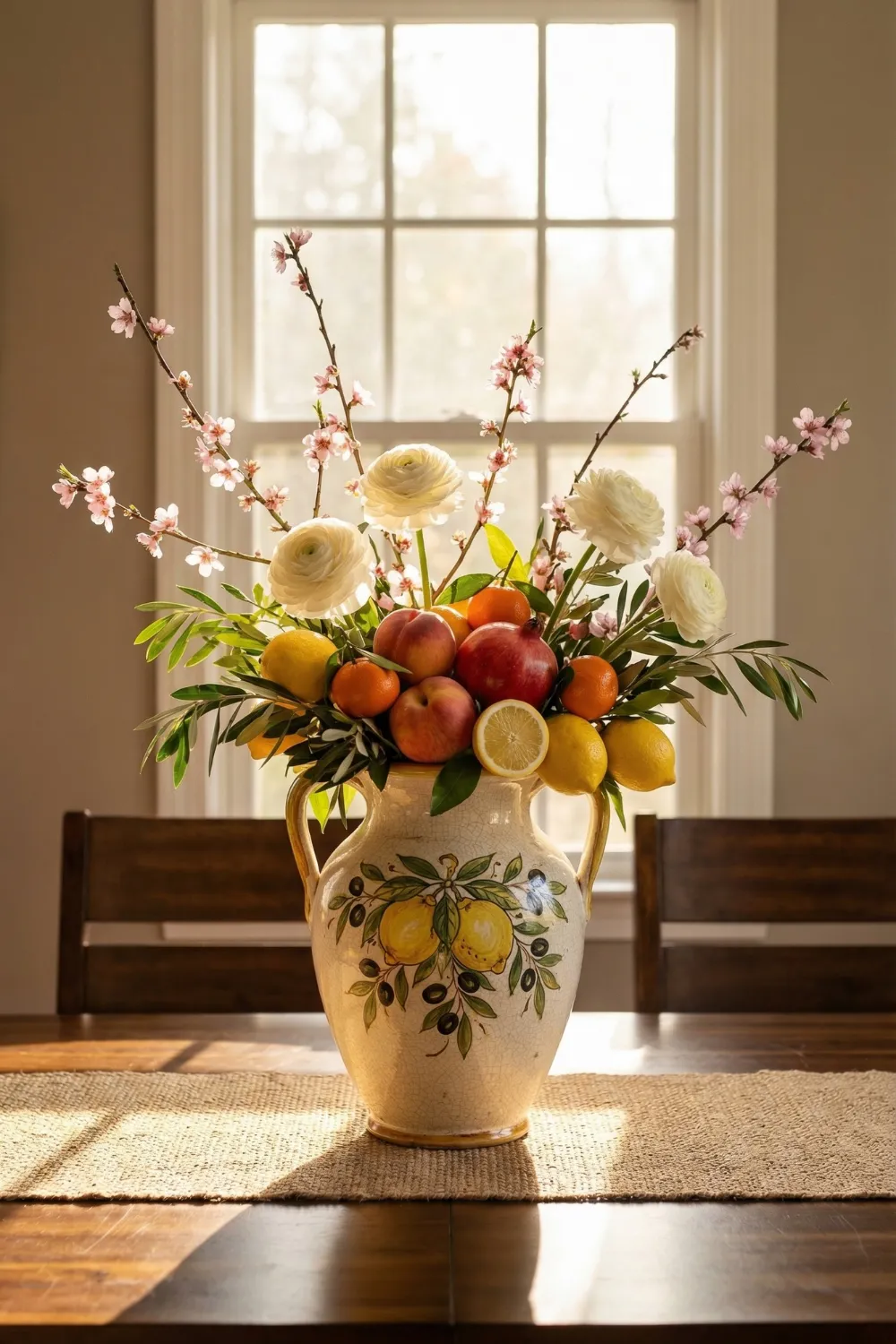
Lemons are not only for casual settings. With the right container and a thoughtful arrangement, they read as genuinely elegant — the kind of centerpiece that belongs at a dinner party where the table is set properly and the glassware matches.
A tall ceramic vase with simple pattern or glaze creates the right foundation. Build the arrangement in layers: structural greenery first, establishing height and silhouette. Then larger flowers to add volume and color. Then lemons, placed near the base and worked into the stems so they sit within the arrangement rather than around it.
Adding a small orange or two, or a few deep yellow pomegranates, introduces depth and warmth to the color palette. It does not need to be perfect. In fact, a slightly imperfect arrangement — one stem a little longer than expected, one lemon sitting at an odd angle — usually looks more real and more beautiful than something that looks like it came from a display window.
13 • Why Simple Lemon Centerpieces Continue to Work — And Always Will
Trends in table decor come and go. Certain flowers are fashionable for a season and then disappear. Colors that were everywhere in spring feel dated by the following year. Lemons do not follow this pattern. They have been on tables in some form since people started caring about how tables looked, and they will continue to be there because they answer something real rather than something stylistic.
They bring color to a surface that would otherwise be neutral. They bring natural material into a space that is full of manufactured objects. They bring an unpretentious quality — the feeling that someone put them there because they wanted to, not because they felt they should.
What I have come to understand from all the tables I have styled, hastily and carefully, for guests and for myself, is that the arrangements that people respond to most warmly are almost never the ones that took the longest. They are the ones that look like whoever made them trusted their own eye, grabbed what was available, and put it together without second-guessing. Lemons, more than almost any other decorating ingredient, make that confidence easy to have.
Start with a bowl and a handful of lemons. See what happens. The table will be better for it.
You Might Also Like
Love table decor? Check out these flower bar ideas for your next gathering. Add a seasonal touch with summer room decor tips, or bring the cozy indoors with cottagecore living room ideas.