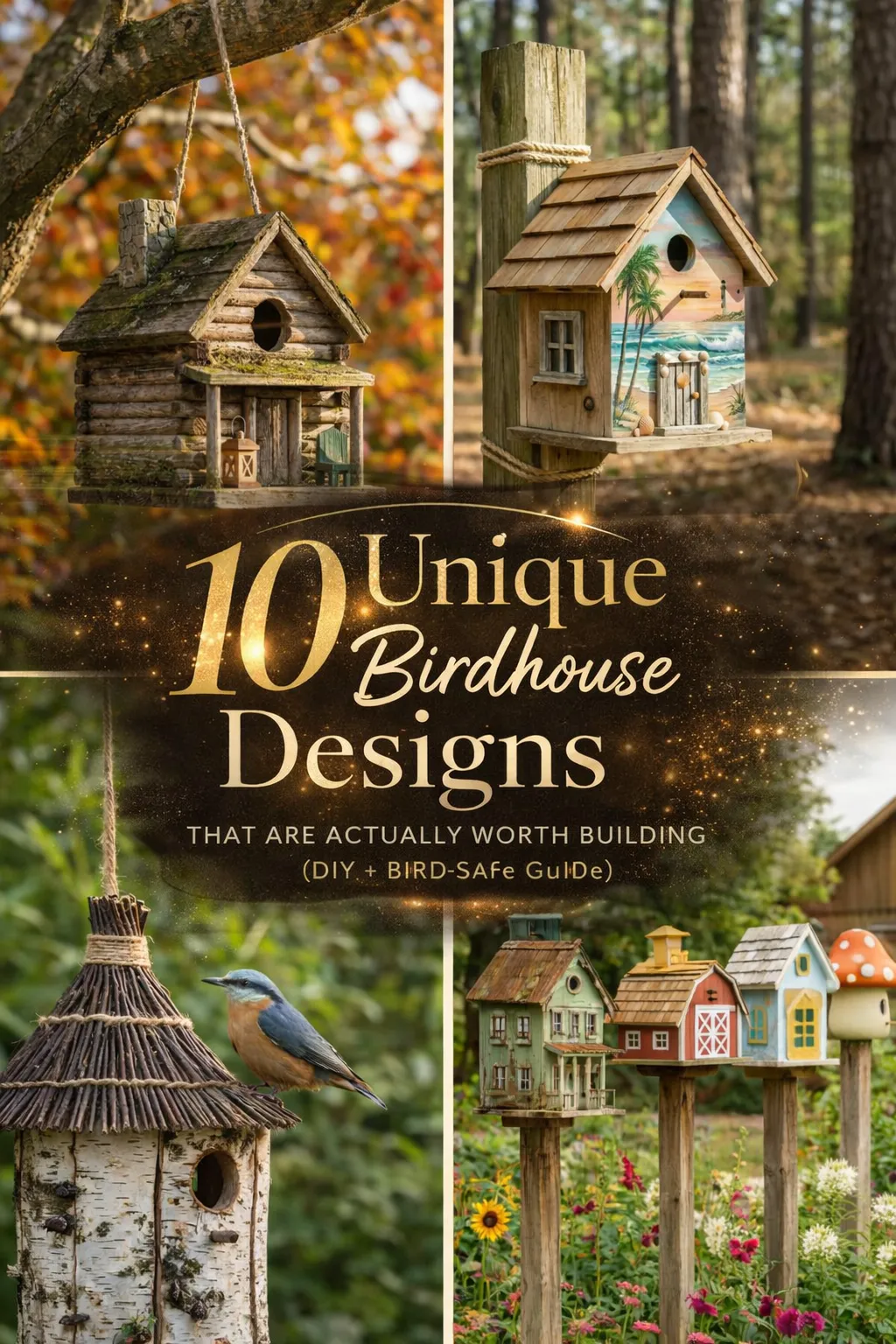
Most of the time, people do not think about birdhouses. A small wooden box with a hole drilled in it and a hook on a fence post. Functional, but not memorable.
These birdhouses are very different from the ones in this guide. They are like tiny buildings that use the same design ideas as real buildings, like proportion, symmetry, material contrast, narrative, and layered detail. Some are silly. Some are like sculptures. One of them is basically a Gothic estate. All of them are safe for birds and can be built by someone with some DIY experience and a free weekend.
The main idea is that creativity and usefulness do not have to compete with each other when designing a birdhouse. The designs in this guide that look the best are also the ones that get the structural details right, such as the size of the entrance hole, ventilation, drainage, weatherproofing, and mounting. When form and function work together to solve the same problem, it looks easy. That is the level of quality that all of our projects must meet.
1. Rustic Twig Roof Woodland Cottage Texture as Structure
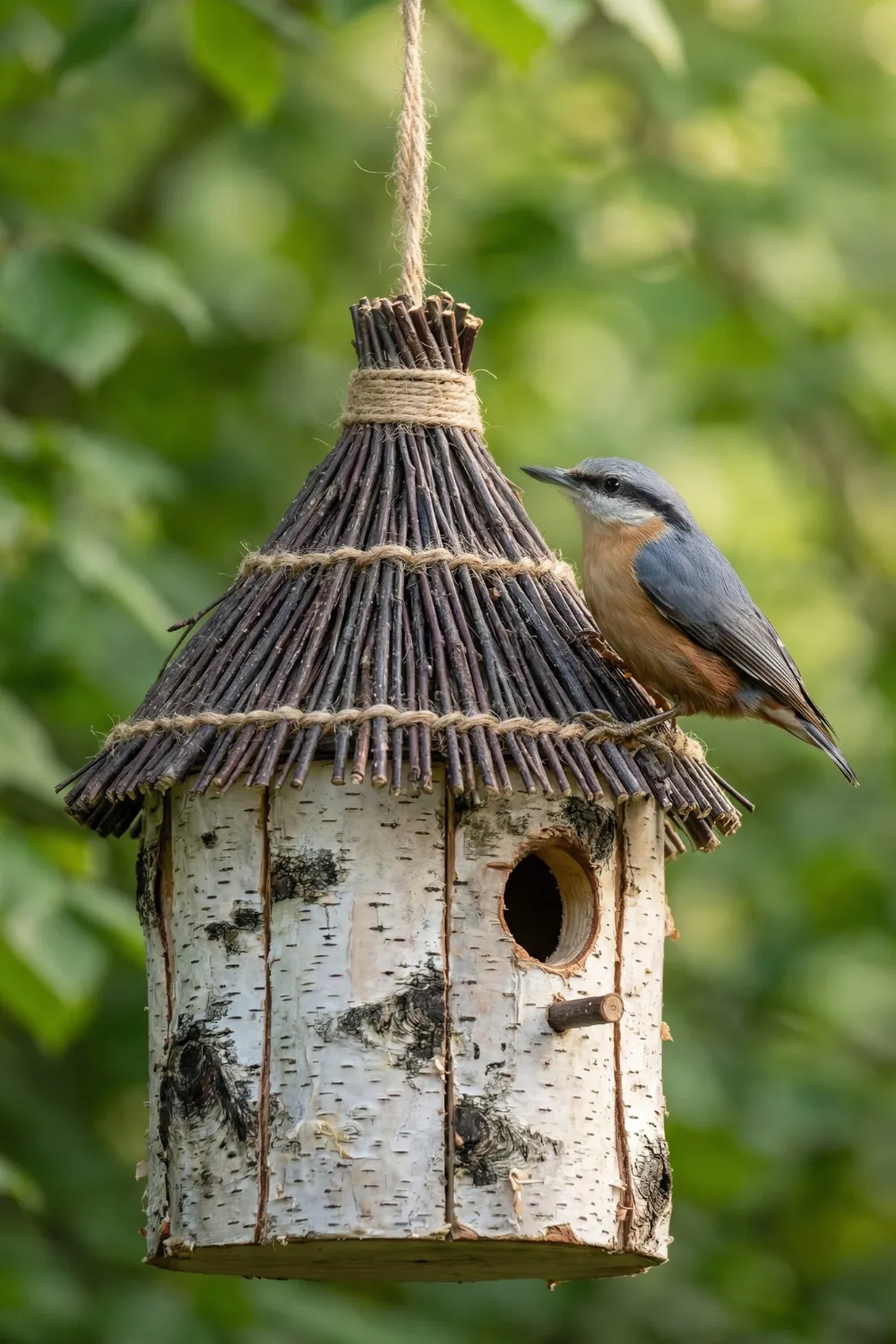
The twig roof birdhouse works the same way that real shingled roofs do: the overlapping layers make the roof look good and protect it from the weather. The overlapping pattern keeps wind-driven rain from getting through, and each layer of twigs lets water fall onto the layer below. This is not decoration that looks like function; it is decoration that is function, which is the best standard any design detail can meet.
Using the same kind of material over and over again is the key to making a twig roof look planned instead of thrown together. Cut twigs of the same size, about the size of a pencil, to the same length before putting them together. Before putting the bundles on the roof, tie each one tightly with natural jute twine. The regular size of the bundles gives the look of layers, almost like thatch, instead of a pile of sticks.
Construction details that matter:
- A birch log or smooth-barked timber body creates the material contrast that makes the twig roof read as a deliberate design choice — rough against smooth is a pairing as reliable in miniature architecture as it is in full-scale buildings
- Entrance hole diameter of 1.25–1.5 inches suits most small songbirds (wrens, chickadees, nuthatches) and should be positioned in the upper third of the front panel, at least 6 inches above the floor of the nesting chamber
- Drainage holes at the base of the nesting chamber — four small holes in the floor corners are non-negotiable; standing water inside a nest box causes egg failure and disease
- Finish with a non-toxic exterior oil sealant rather than paint, which preserves the natural bark texture while protecting against moisture penetration
2. Playful Cartoon Character Birdhouse — Bold Focal Point, Serious Structure
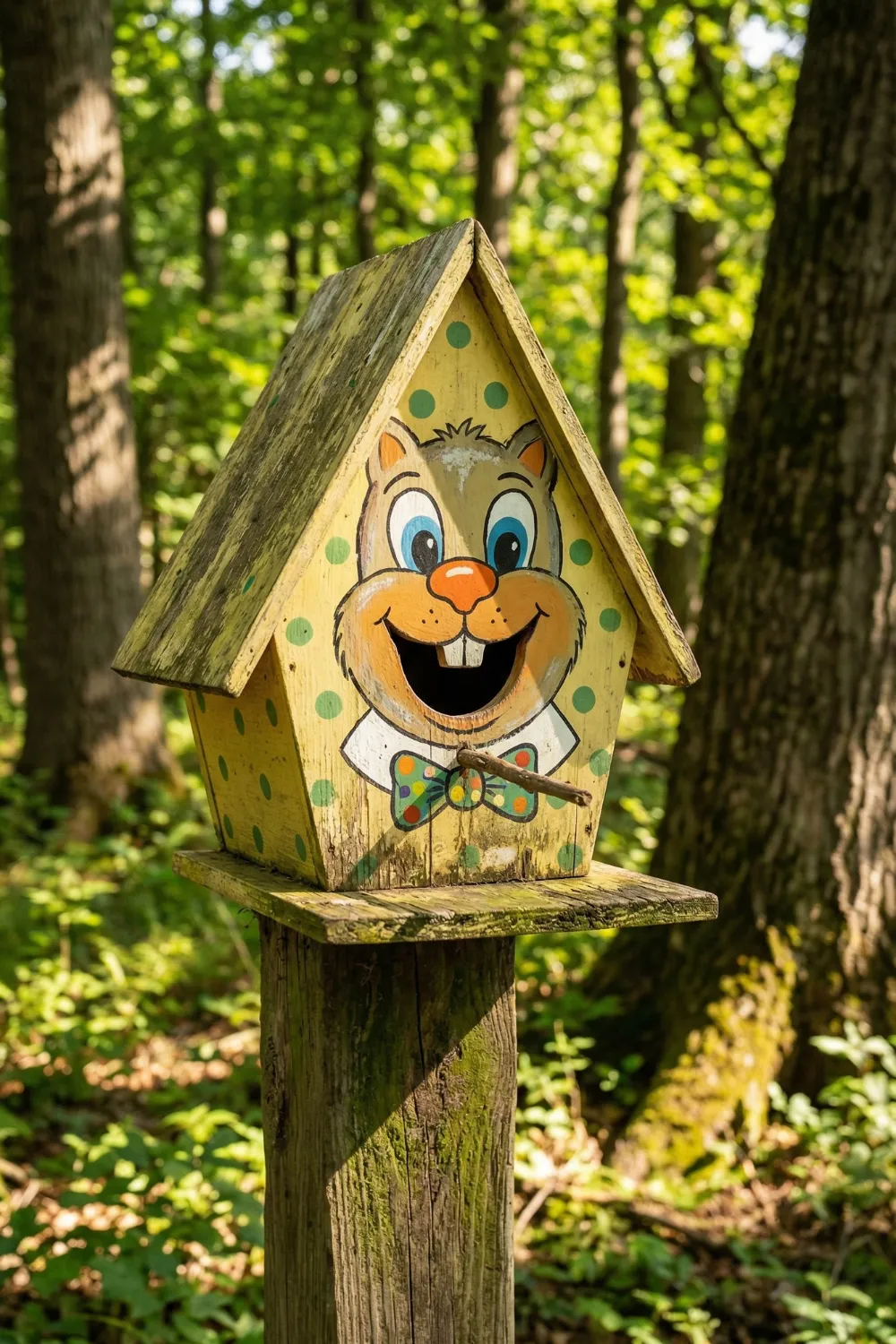
The same principle that makes a character birdhouse work also works for any good piece of graphic design: one main point that everything else supports. The big eyes stand out right away against the neutral background of the garden. The bright color stands out against the green leaves because of the simple contrast between high and low saturation. Everything is easy to read from far away.
It is possible for a home builder to do this by completely separating the character design from the nesting box. First, make a standard rectangular nesting box with strong joints, a properly sized entrance hole, and ventilation and drainage as planned. Then, treat all of the character details, like the eyes, mouth shape, and decorative elements, as overlays that are put on the surface. This keeps the load-bearing structure from being damaged by decorative cuts and keeps the inside clean and usable.
Critical bird safety notes for this design:
- The entrance hole must be a clean, smooth circular cut regardless of what the surrounding character design looks like — feathers are delicate and rough edges cause injury over repeated entries and exits
- Omit the perch entirely or keep it extremely short (under half an inch) — perches are a predator convenience feature that provides no benefit to nesting birds
- UV-protective clear coat over exterior acrylic paint preserves colour and prevents the flaking that would expose rough surfaces inside the box over time
- Mount on a smooth metal post at least five feet above ground — predator baffles below the mounting point add meaningful protection
3. Hand-Carved Wood Spirit Birdhouse — Integrated Design at Its Best
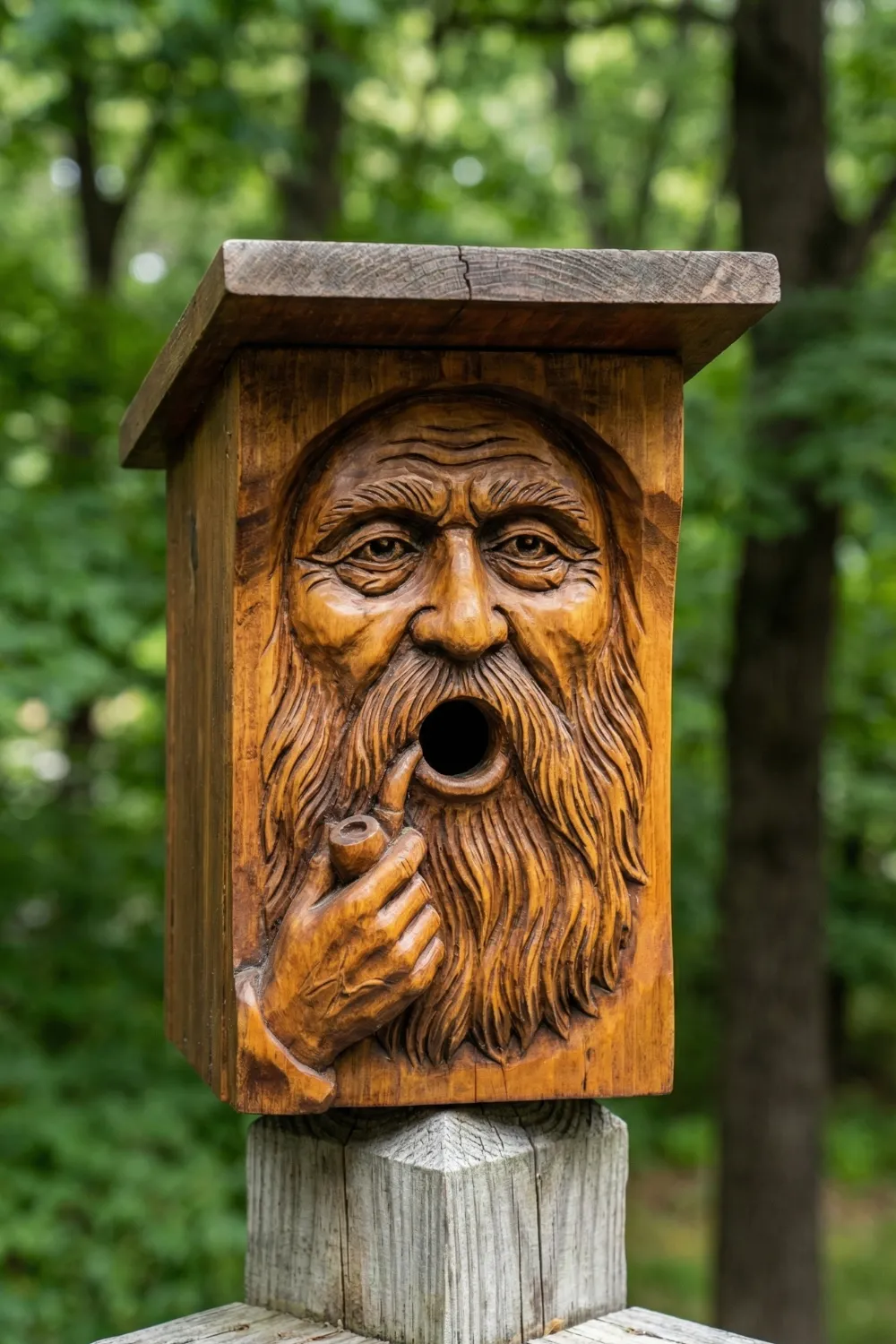
The wood spirit birdhouse does something that most decorative birdhouses don’t: it makes the functional part and the decorative story look like they belong together. The hole in the entrance is the mouth. The functional requirement and the design story are two sides of the same coin. This is the true meaning of integrated design: it is the opposite of adding decoration to something that was designed without it.
As the day goes on, the deep-carved grooves in the shadow play change a lot. For example, a flowing beard, furrowed brows, and textured hair all look different. In the morning and evening light, when the sun is low in the sky, what looks like a flat surface becomes more complicated and three-dimensional. This is the same quality that makes carved stone architectural details on old buildings look alive in a way that flat surfaces never do.
Material and carving guidance:
- Cedar is the wood of choice for outdoor carved pieces — its natural oils resist moisture and decay without chemical treatment, it carves cleanly with standard tools, and it weathers to an attractive silver-grey that suits the woodland spirit aesthetic
- Keep all interior surfaces of the nesting chamber smooth and unpainted — carved exterior texture is desirable; rough interior surfaces that snag feathers are not
- Tilt the roof forward by approximately 5–10 degrees so rain runs away from the entrance hole rather than pooling at the front face
- Mount using an exterior bracket against a fence post or wall rather than hardware driven directly into living tree bark — tree wounds create entry points for disease and the movement of living wood eventually loosens any direct mounting
4. Multi-Level Mini Birdhouse Apartment — Repetition as Cohesion
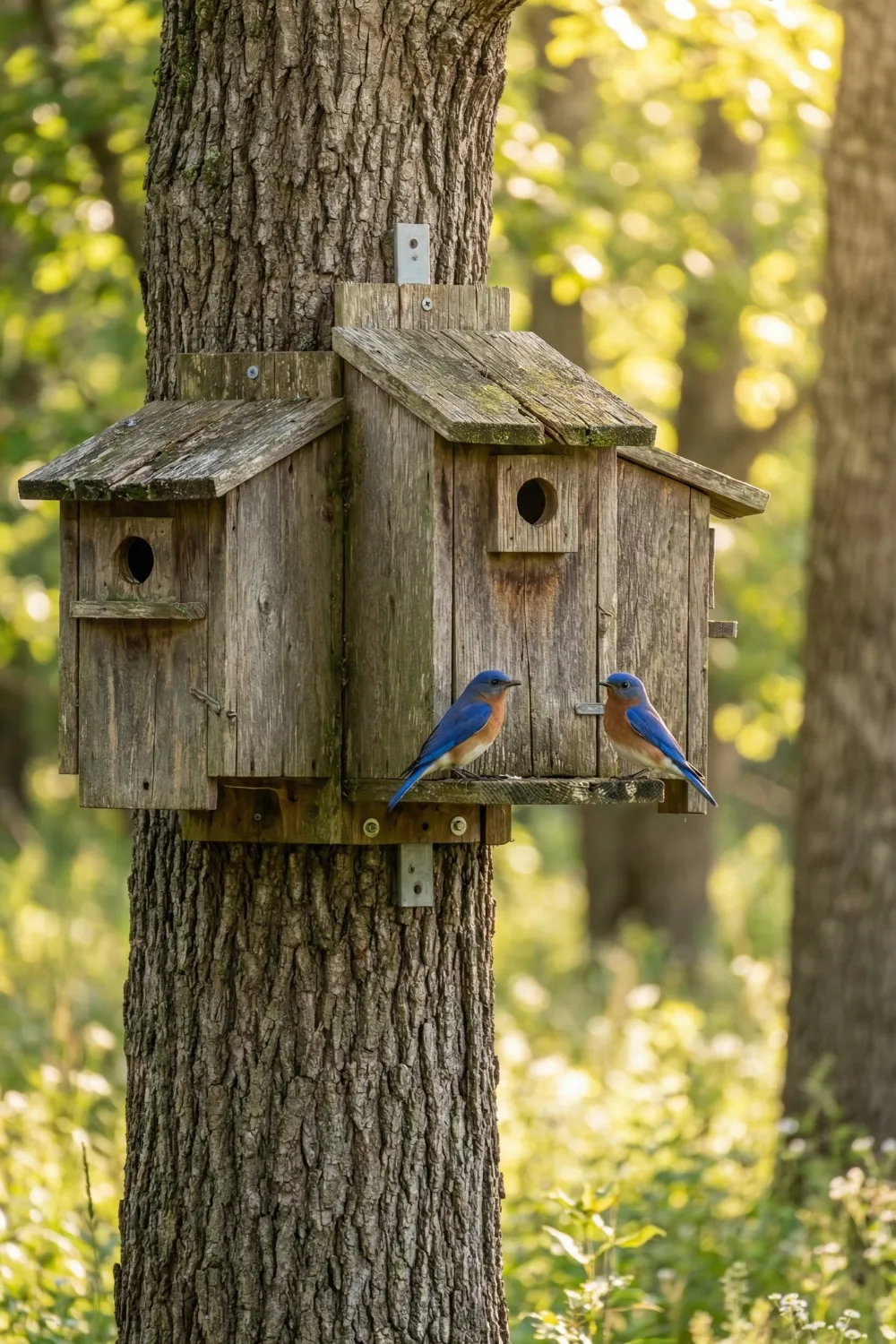
The stacked multi-unit birdhouse looks good for the same reason that repeating architectural elements always do: repetition creates rhythm, and rhythm gives the impression of intentional design. The repeated rooflines, the consistent spacing between levels, and the uniform entrance hole positions all help to keep the structure from looking like a random collection of parts.
Internal separation is the most important design and behavioral requirement for multi-unit birdhouses. During nesting season, most songbirds are very territorial. If there are multiple entrance holes that all lead to the same interior cavity, the birds will fight all the time and will not be able to nest. Each entrance hole must lead to a completely separate nesting area. This is not just a nice thing to have; it is the difference between a usable habitat and an expensive nest-site dispute.
Multi-unit construction principles:
- Consistent spacing between levels is both aesthetically necessary and practically important — too little space between nesting chambers increases the acoustic and structural disturbance that each nesting pair experiences from neighbours
- Orient entrance holes in slightly different compass directions on each level — this reduces direct sightline conflict between residents and distributes the “territory” each pair perceives around their entrance
- Ventilation slots cut just below each roofline are essential — stacked structures with multiple nesting chambers generate more interior heat than single boxes, and overheating is a leading cause of nest abandonment
- Use untreated cedar or pine; treated lumber off-gases chemicals that are harmful in enclosed nesting spaces
5. Cottage Garden Birdhouse With Planter — Zoning in Miniature
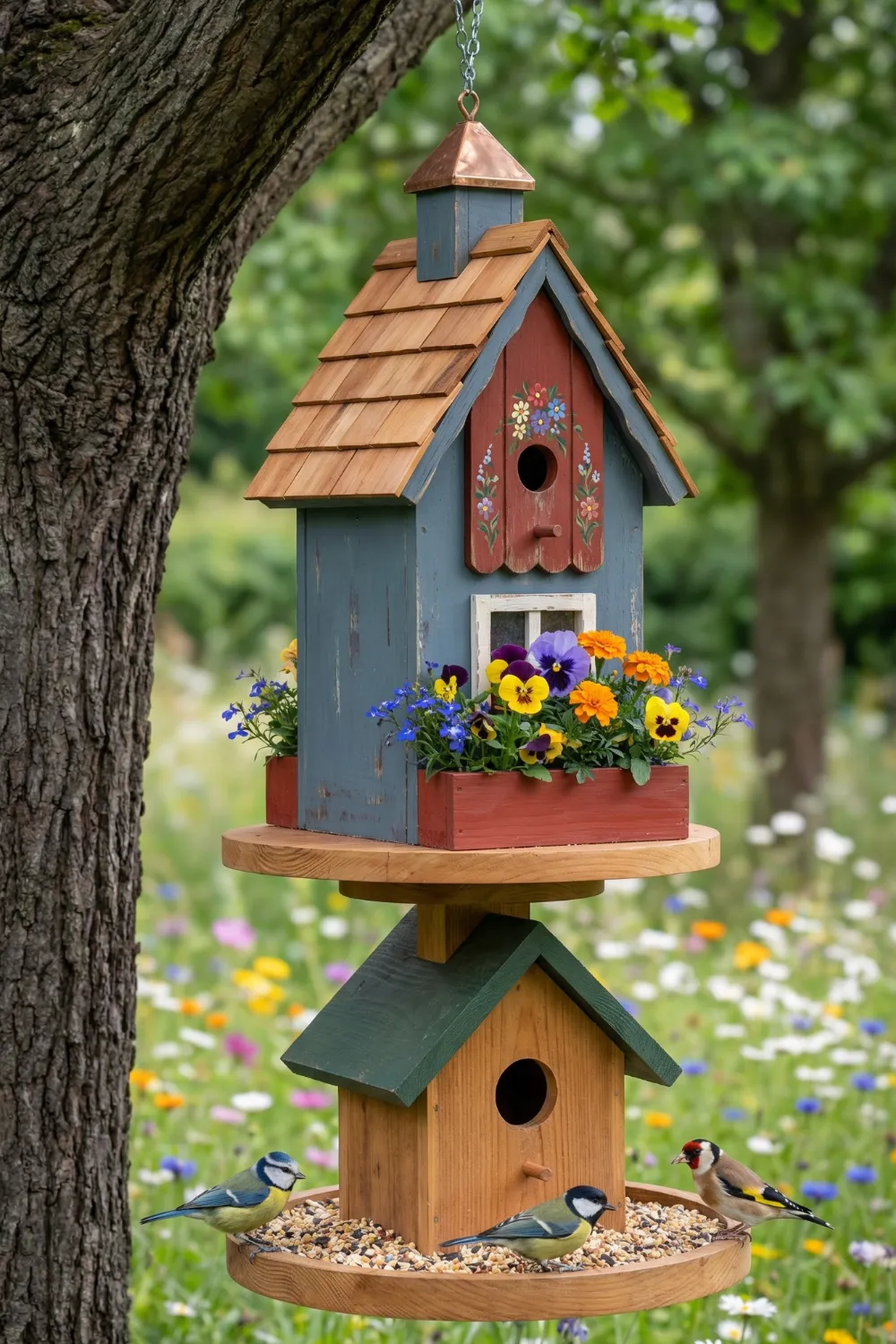
The nesting box on top and the planter tray on the bottom are examples of what architects call programmatic layering, which means putting multiple uses in a single space. This is how apartment buildings work in full-scale architecture: different activities happen on different levels, each with its own needs, but they are all connected by one structure. The same idea works for a birdhouse in the garden.
The color discipline of this design is what makes it look good. The muted blue paint and warm natural wood trim make a contrast that looks like it was planned, not random. The two colors are clearly related and clearly different. Adding a third or fourth color makes things less cohesive by adding competition. The best rule for painted birdhouse designs is to use no more than two or three colors.
Structural considerations for the planter integration:
- Soil is significantly heavier than it appears — reinforce the base of the planter section with thicker timber (at least 3/4 inch) and use corner brackets at the joint between planter and nesting box
- Line the planter cavity with a plastic insert before adding soil, not for waterproofing the planting but to isolate moisture from the timber structure of the birdhouse above it
- Drainage holes in the planter floor are essential — water pooling in the planter base will saturate the timber below and eventually compromise the nesting chamber structure
- Choose shallow-rooted, lightweight plantings: succulents, compact herbs, or small trailing plants like creeping thyme — deep-rooted or heavy plants create both structural and maintenance problems
6. Expressive Wooden Character Trio — Personality Through Proportion
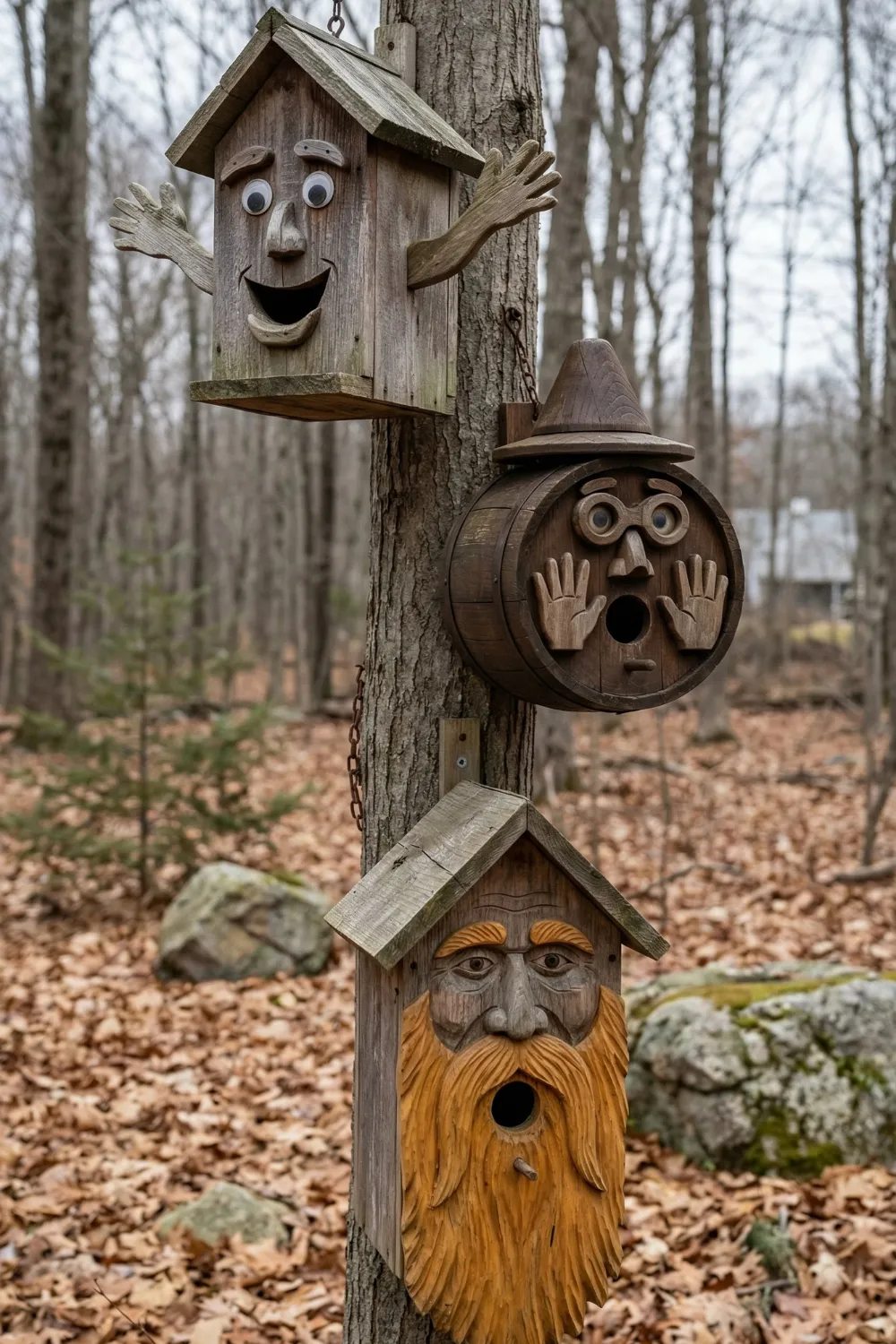
A set of three character birdhouses looks good together because the group makes a composition that each piece can not make on its own. One of the most reliable ways to make arrangements that feel intentional in visual design is to group related elements together so they look like one object instead of separate items. Three birdhouses with characters that are the same size and height become a scene; the same three that are scattered randomly become clutter.
The exaggerated eyes, expressive brows, and gestural arm forms that make these work all follow the same proportion rules as good character illustration. People with big heads and big features look friendly and expressive, while people with heads and features that are the right size look strange. The point is to make things bigger, and fully committing to it is what makes a character birdhouse work or not.
Building character birdhouses that stay functional:
- Build the nesting box first to standard specifications, then design character features as applied overlays — this sequence ensures the habitat is never compromised by decorative decisions made before structural ones
- Natural wood stain in two complementary tones (a lighter base, a slightly darker accent) works better than multiple paint colours, which compete with the character facial details that should dominate visually
- All arm, ear, or protruding decorative elements should be firmly secured with exterior wood glue and stainless screws — loose protrusions become predator handholds over time
7. Whimsical Garden Post Birdhouse Village — Repetition With Variation
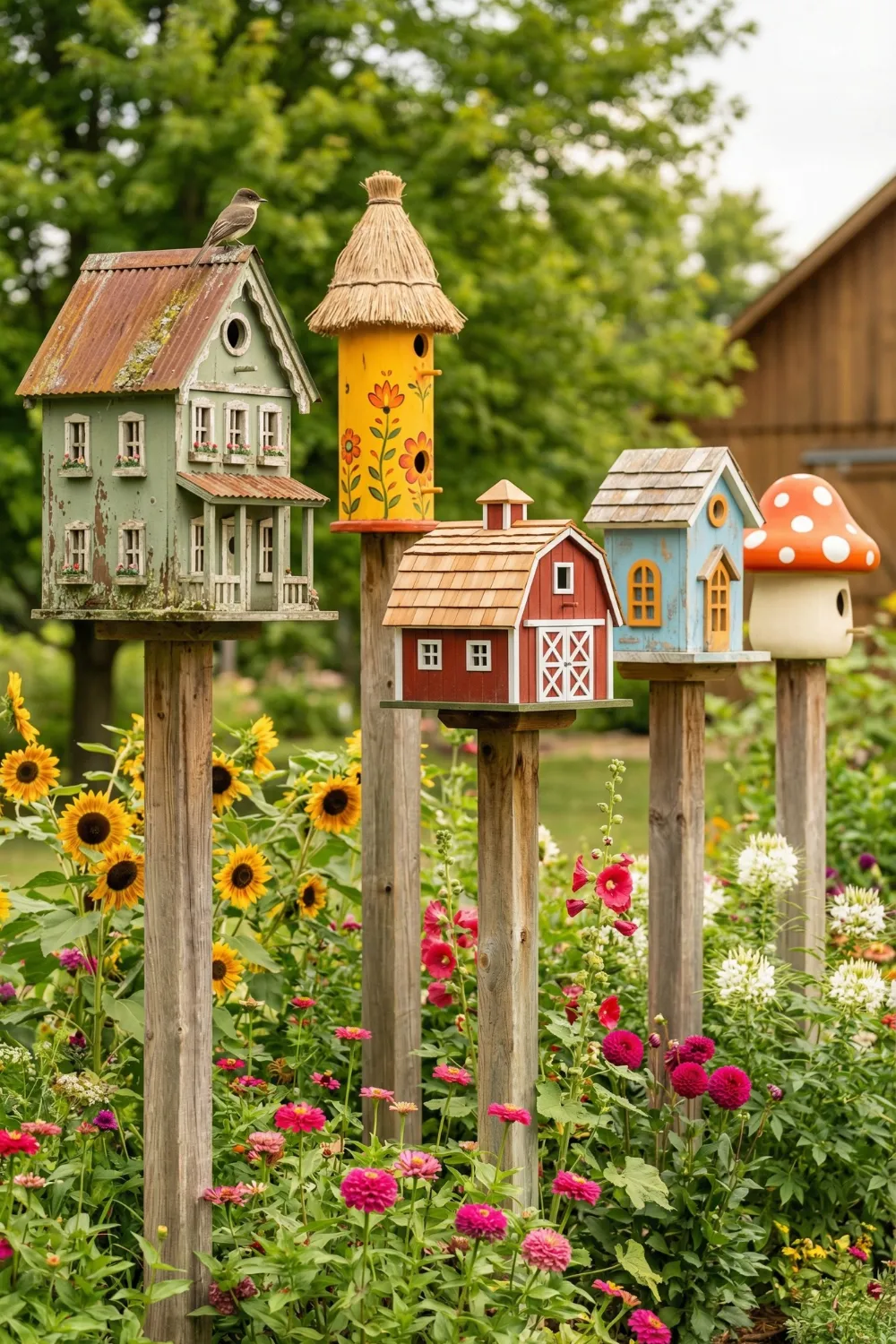
A garden birdhouse village can only be successful or unsuccessful based on one design choice made before any building starts: setting up a framework that allows for individual differences. If you do not get the framework right—like having posts that are different heights, spacing that is not consistent, or scales that do not match—then the result looks like a mess. If you get the post heights, spacing, and overall scale right, the different colors and shapes of the houses will look charming instead of messy.
This is the design principle of repetition with variation. It is one of the most useful tools for both inside and outside design. A line of the same things is boring. A bunch of things that are all different from each other does not make sense. A group of things that have similar structural features but different surfaces or details is visually rich and planned.
Village installation principles:
- Set all posts to the same height (a minimum of five feet above ground for predator deterrence) and space them at regular intervals — even spacing creates the visual rhythm that unifies diverse house designs
- Choose a coordinated paint palette rather than unrelated individual colours — two or three base colours used in different combinations across the houses creates visual cohesion while allowing each house its individual character
- Each house must function as a completely independent nesting unit with its own entrance, chamber, ventilation, and drainage — connected interiors defeat the purpose of a village arrangement
- Position the village near natural planting (flowering shrubs, ornamental grasses) for visual integration, but ensure no foliage obscures individual entrance holes
8. Stacked Terracotta Planter Tower — Vertical Thinking
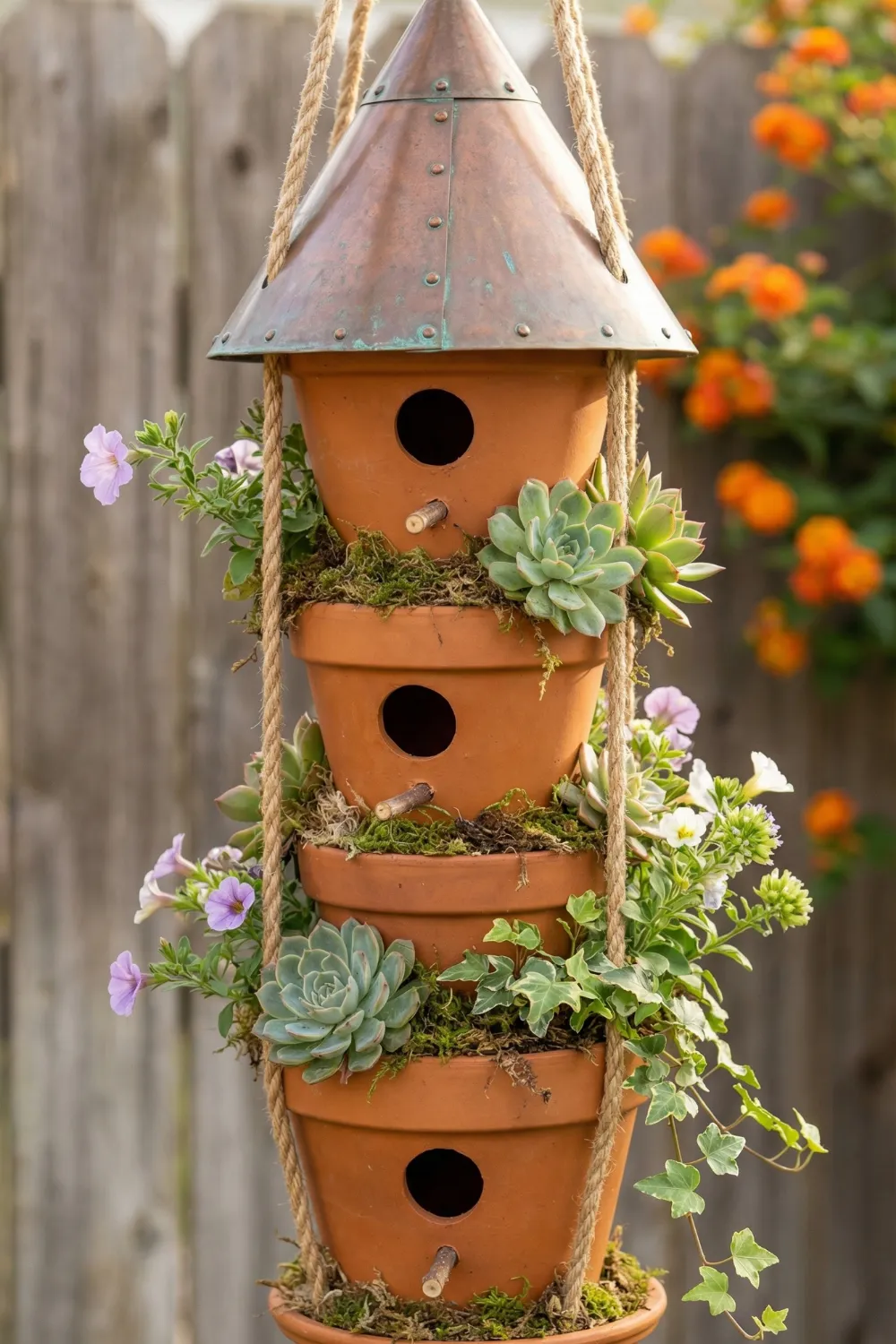
The stacked terracotta tower is one of the more creative structural ideas in this guide because it turns a common non-wood material into something that is useful for wildlife. Terracotta has natural thermal mass properties, which means it takes in heat slowly and lets it out slowly. This keeps the temperature inside from changing too much, which can stress nesting birds when the weather changes.
Landscape designers call the vertical stacking “borrowed height” because it makes things look taller by arranging them in a way that makes them look taller instead of just one tall structure. Vertical arrangements are one of the best ways to make a small garden look interesting and eye-catching without taking up more space.
Terracotta-specific construction requirements:
- Use a ceramic drill bit (standard wood bits crack terracotta) to cut entrance holes, and sand the cut edge smooth with fine-grit sandpaper before assembly
- Terracotta is inherently porous — apply a bird-safe interior sealant to the nesting chamber surfaces to prevent moisture wicking through the walls from saturating the nest
- Copper or stainless steel topper hardware provides both weather protection and the material contrast that makes the patina of aged terracotta read as intentional rather than neglected
- Use heavy-duty suspension hardware rated for outdoor loads — terracotta is significantly heavier than timber and standard garden hooks are frequently inadequate
- Plant only shallow-rooted, lightweight species in any integrated planting layers — succulents are ideal because their root mass and water requirements are both minimal
9. Coastal Sunset Storybook House — Narrative as Design Strategy
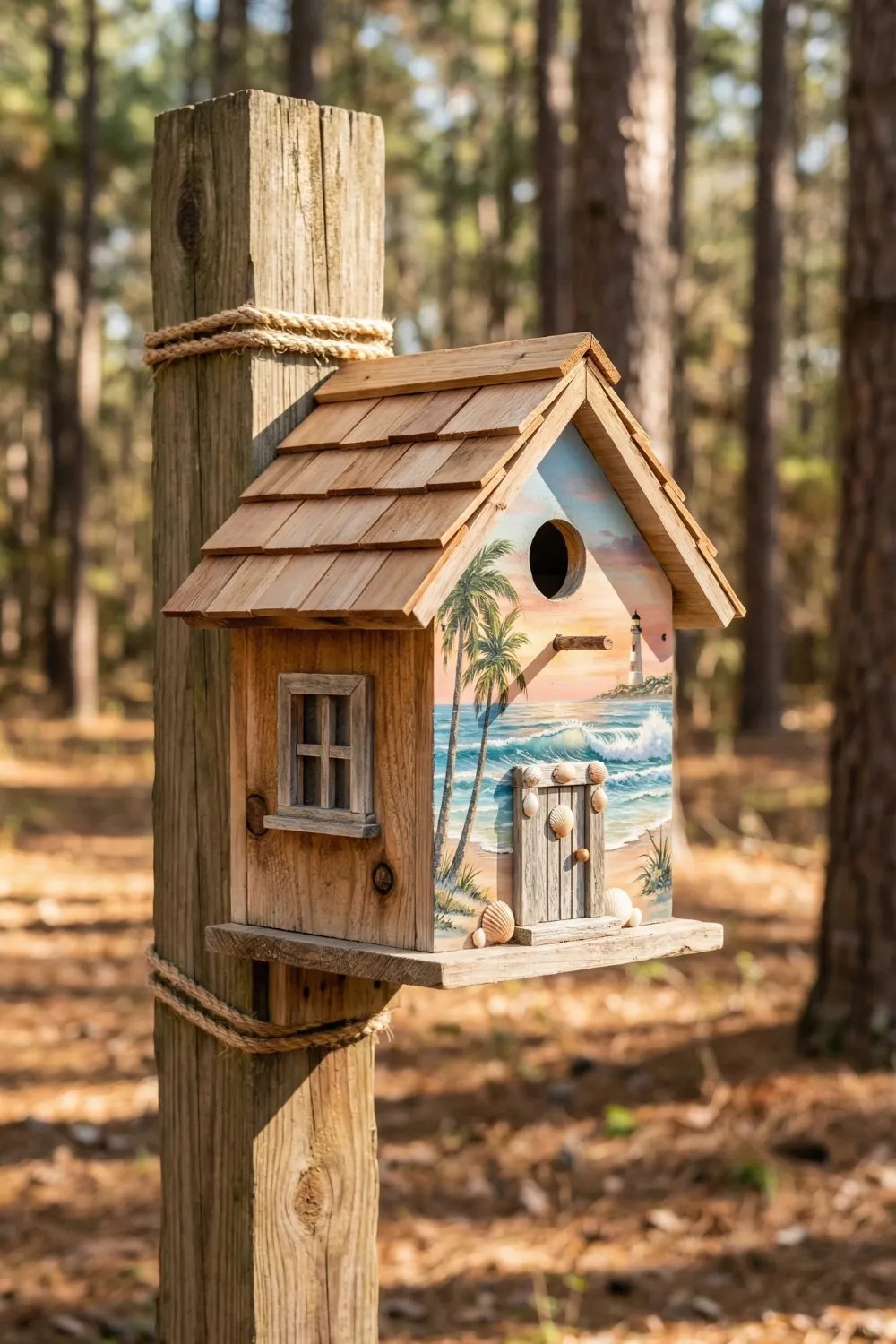
The painted narrative birdhouse works on the same idea as the best illustrated children’s books: a clear visual story told through carefully arranged parts, where each part of the surface adds to a coherent world instead of fighting for separate attention. The gradient sky, palm silhouettes, and lighthouse in the coastal scene all work together because they all have a clear theme and a logical composition that makes the entrance hole part of the scene instead of just being added on at the end.
The most important decision about the composition is to treat the entrance hole as a planned part from the beginning instead of just putting it where it is easy. The hole becomes part of the scene in this design, like a window, a portal, or the sun. This is what makes a painted birdhouse different from a painted and designed birdhouse.
Technical painting guidance:
- Sketch the full composition on paper before touching the wood — understanding where every element sits relative to the entrance hole is essential before the first brushstroke
- Exterior acrylic paint is the medium of choice for painted birdhouses: water-based for easy cleanup, fast-drying, and available in the full colour range required for gradient and detail work
- UV-protective clear coat applied in two coats over the finished painting is non-negotiable — unprotected exterior paint on a sun-exposed surface fades significantly within a single season
- Keep any three-dimensional embellishments (shells, hardware, applied decorative elements) minimal and flush-mounted — protruding elements provide predator footholds and are dislodged by weather over time
10. Victorian Gothic Mansion Birdhouse — Maximalism With Discipline
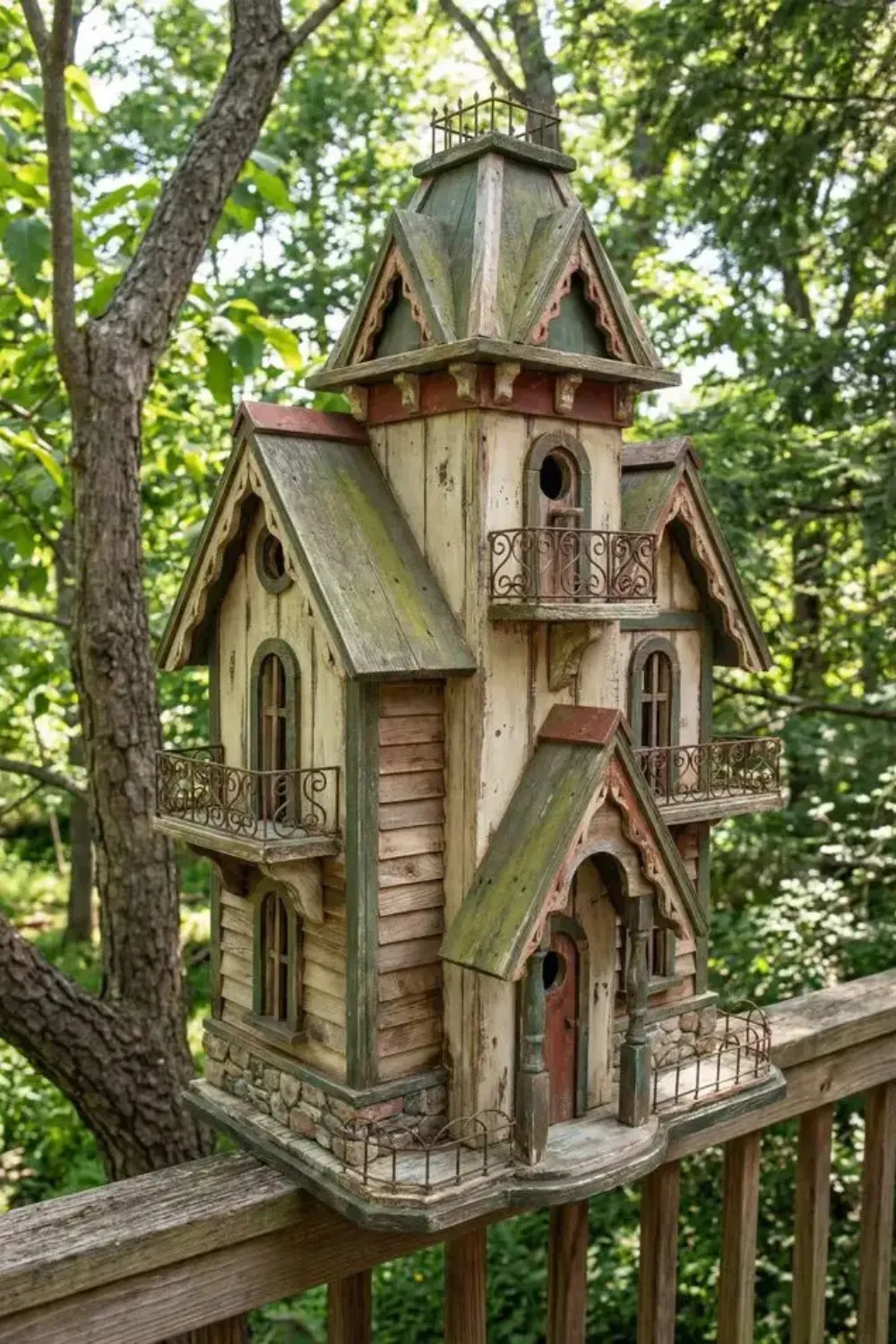
The Gothic mansion birdhouse is the most difficult project in this guide, but it also has the best chance of looking good. The only thing that can make it work is keeping the right proportions between all the architectural parts, even as the decorative details get more complicated. The towers, balconies, arched windows, and peaked rooflines all work because their sizes are consistent with each other and the whole building. If one part of a building is out of proportion, like a balcony that is too big or a tower that is too narrow, the whole thing looks more like decoration than architecture.
Before cutting any wood, the best way to build at this level of complexity is to work from elevations that are drawn to scale. Front view, side view, and back view. Knowing exactly where each decorative piece goes in relation to the others and how it will look from the main viewing angle stops the design drift that happens when complicated builds are figured out during construction.
Structural principles for complex builds:
- Keep the interior nesting chambers simple regardless of exterior complexity — birds require a clean, smooth, appropriately dimensioned cavity; the Gothic exterior is entirely for human appreciation
- Use lightweight trim pieces (thin MDF, balsa wood, or dimensional softwood strips) for decorative balconies, window surrounds, and cornices — solid timber decorative elements add unnecessary weight that stresses mounting hardware over time
- Ventilation slots cut beneath each roof eave are essential in a multi-roofed structure — complex rooflines trap heat more effectively than simple pitched roofs and adequate ventilation is correspondingly more important
- Weathered paint finish (base coat plus dry-brushed lighter highlights on raised edges, slightly darkened recesses) creates the aged Gothic character while a final sealing coat in matte varnish protects without adding unwanted sheen
Build Principles That Apply to Every Design
Across ten designs from twig cottages to Gothic estates, a set of functional requirements appears consistently. These aren’t stylistic preferences — they’re the difference between a birdhouse that attracts and supports nesting birds and one that looks interesting while sitting permanently empty.