
The laundry room is the most honest room in the house. No one performs in it. No guests linger there. It exists purely to support the rhythm of daily life — and because of that, it’s usually the last room anyone thinks to design with real intention.
That is a chance that was missed. If you plan it out well, a farmhouse laundry room can be a place you do not mind going into. These are not just pretty touches; they are what make the difference between a utility closet you can live with and a working room you really enjoy. When a room feels well thought out, even folding towels goes from a chore to a ritual.
These nine ideas cover all the different styles of farmhouse laundry, from rustic and textured to modern and simple. Each one comes with useful design tips.
1. Rustic Brick Floor With Butcher Block Counter — Where Hard and Soft Materials Meet
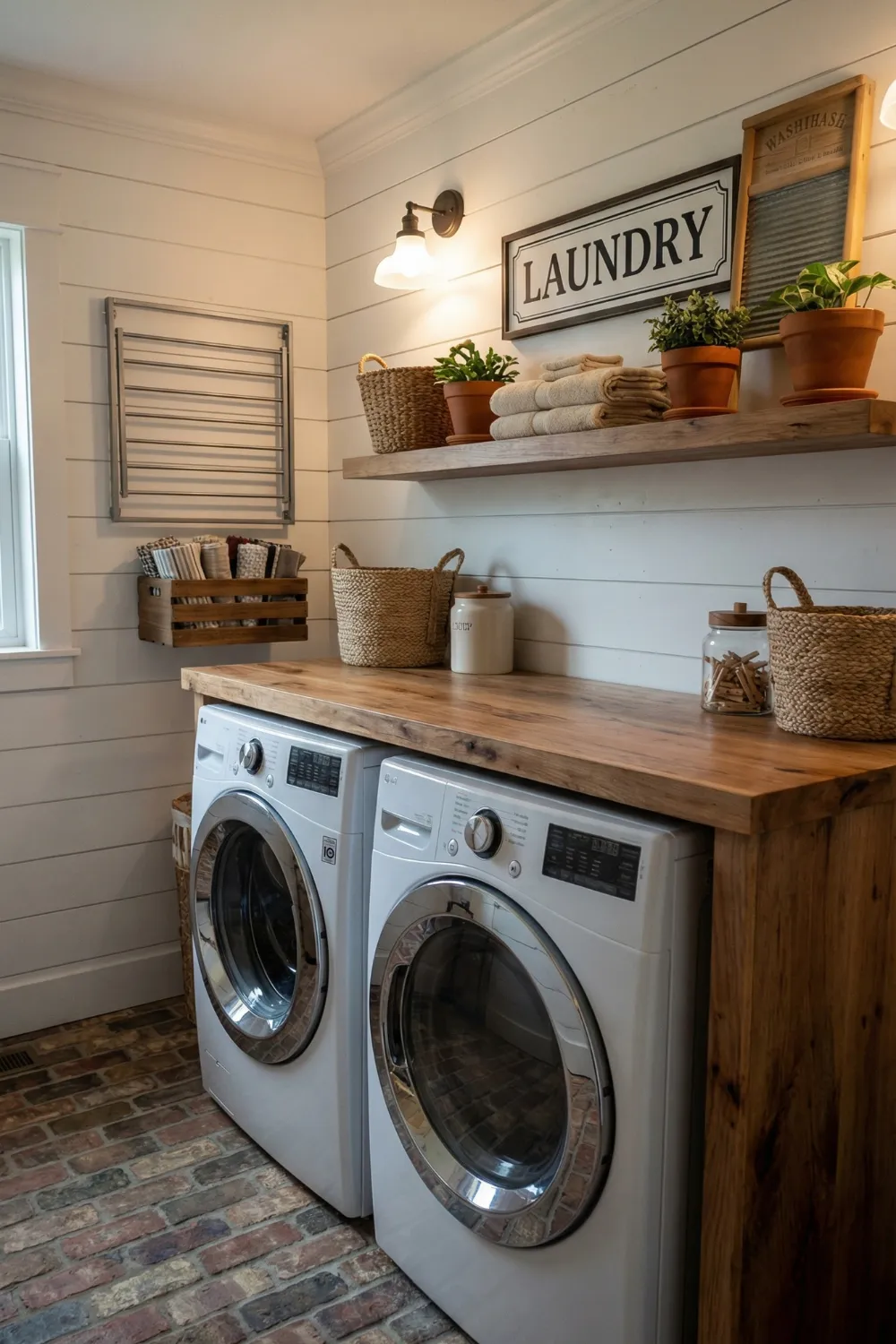
The character of this laundry room comes from the contrast between the rough, old brick floor and the smooth, warm butcher block countertop above. This combination works just as well in laundry rooms as it does in farmhouse kitchens. Each material makes the other stand out more and look more interesting.
Brick floors are a good choice for workspaces because they are useful as well as attractive. It does not mind water and mud, it does not show wear as it gets older, and it gives the space a visual weight that keeps lighter elements from feeling unmoored. The fact that no two bricks are exactly the same in tone gives farmhouse spaces the kind of surface texture that makes them feel like they have been around for a long time.
Building the material story upward:
- Shiplap on the walls introduces a second layer of horizontal texture that references the brick below without competing — the key is keeping it painted in a single warm white or cream so it reads as light and reflective rather than adding further visual complexity
- A butcher block countertop running the full width of the machines creates a proper folding surface and visually anchors the upper half of the room — this is the single highest-value addition in most small laundry rooms, practically and aesthetically
- Warm-toned bulbs in a vintage-style sconce or exposed filament fixture do more for the atmosphere of a brick-walled room than any decorative addition — brick absorbs cool light and reflects warm light, and the difference is significant
- One organic accent — a trailing pothos, a small herb pot, an enamel bucket with dried lavender — completes the room without cluttering it
2. Lace Screen Door With Vintage Entryway — Framing the Transition
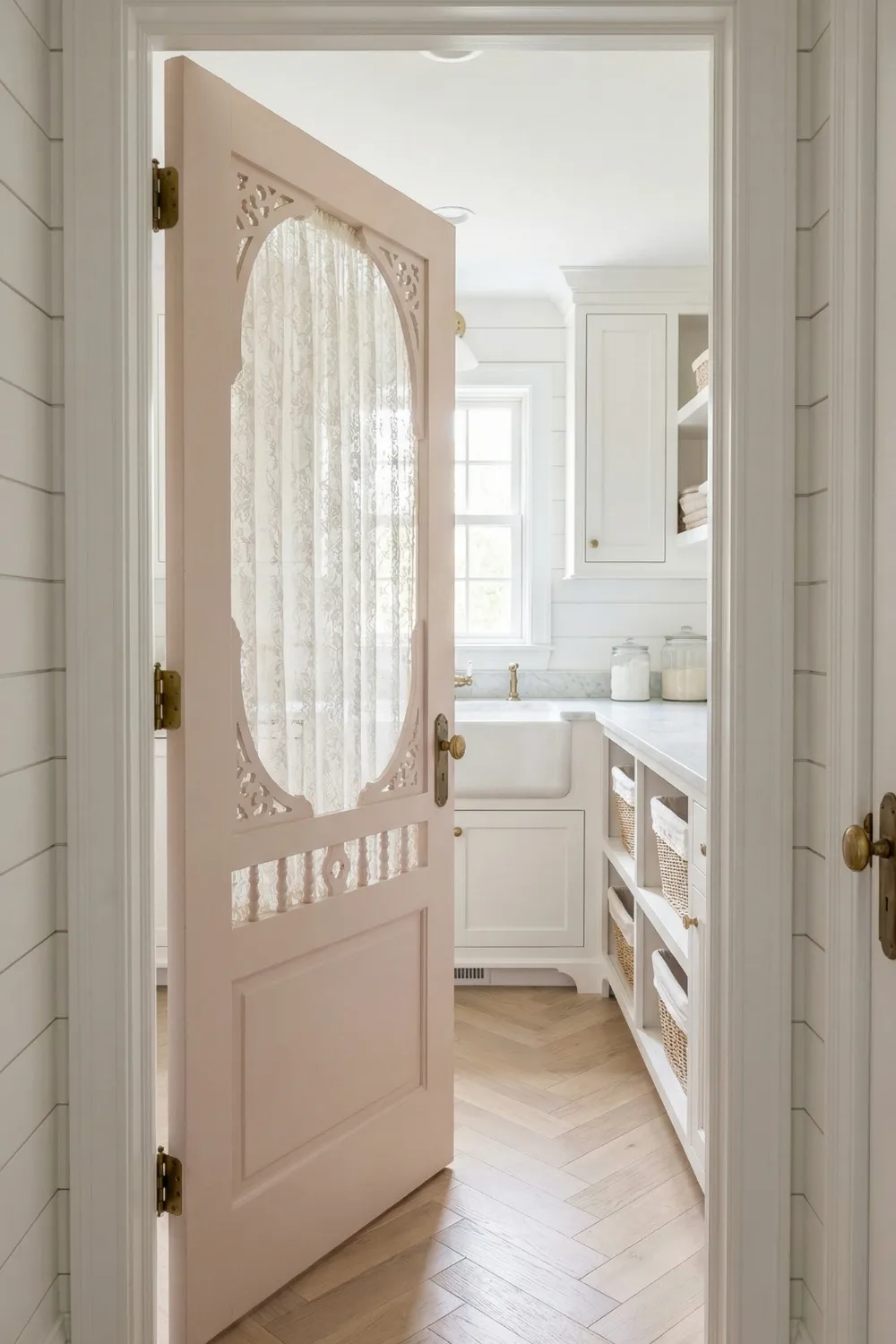
The threshold is important in a lace-paneled screen door, just like it is in architecture. Instead of just putting in a slab door and calling it done, you should plan out the transitions between rooms, like from the kitchen to the laundry room or from the mudroom to the utility room.
A door with lace or etched glass panels lets natural light flow between rooms while still keeping them separate. The lace pattern makes the edge softer, makes patterns and shadows on the floor when light shines through it, and tells you something about the home long before anyone opens it. It is a design choice that makes people happy every time they see it, which in a laundry context means several times a day.
Making this work practically:
- A wood-framed door with a removable lace or fabric insert is the most adaptable version — the insert can be replaced seasonally or updated as the room evolves
- Pair the door with patterned flooring immediately beyond it — a small herringbone tile, a hex mosaic, or a simple checkerboard — so the entry reads as a composed transition rather than just a door in a wall
- Hooks mounted to the wall adjacent to the door (not on it, where the weight distribution is uneven) create entry-level organization that doubles as display — woven baskets, a vintage laundry sign, a linen apron
- Keep the wall color on both sides of the door in the same family — contrasting colours on either side of a glass or lace door creates visual fragmentation when light passes through
3. White Subway Tile With Modern Farmhouse Details — Three Materials, Total Cohesion
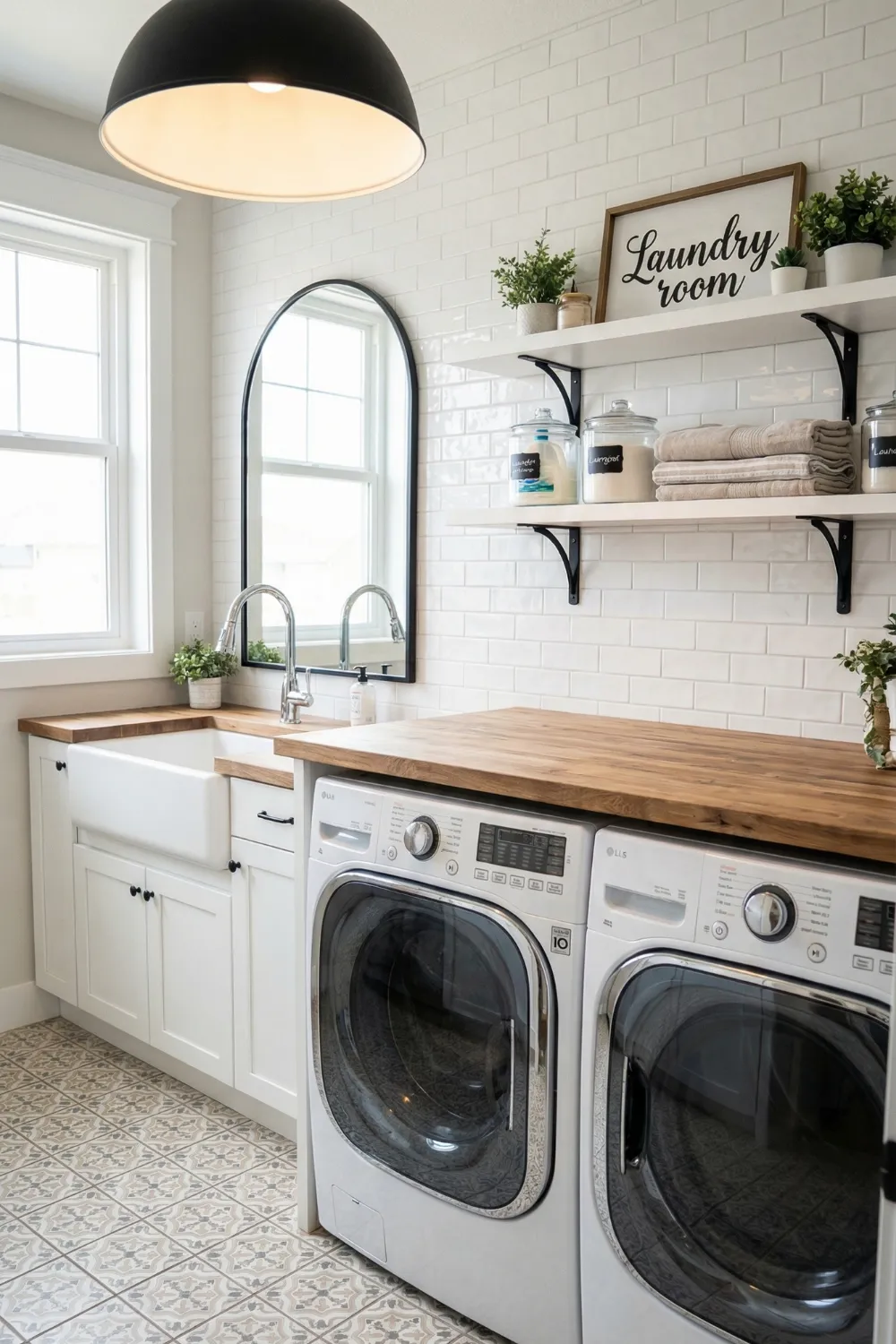
The modern farmhouse laundry room works because it sticks to a rule that most design guides say to follow but few do: keep your materials to a minimum and use them again and again.
White subway tile, a warm wood countertop, and matte black hardware. That is the whole story of the materials in this room. Every surface choice either uses one of these three elements or is neutral enough to support them. The black open shelving brackets, the black faucet, and the black pendant lamp are all different things, but they all have the same finish. This finish ties the room together in a way that makes it look like it was planned rather than just put together.
Subway tile is a good choice for a laundry room for the same reasons it is been a kitchen and bathroom staple for over a century: it is easy to clean, it reflects light, its grid layout gives it a natural rhythm, and it provides a neutral background that makes everything else look more planned.
The vertical principle:
- Subway tile laid vertically rather than in the traditional horizontal brick pattern creates upward visual movement that makes rooms feel taller — a meaningful difference in the low-ceilinged utility rooms that most laundry spaces occupy
- Tall cabinetry that reaches the ceiling eliminates the visually awkward “floating cabinet” problem and maximizes storage simultaneously
- Clear glass jars with labeled detergents and fabric softeners transform functional supplies into organised display — this is the open shelving trick that makes storage look intentional
- One plant in a simple white or terracotta pot introduces organic softness that the hard geometry of tile and metal needs to feel warm rather than clinical
4. Built-In Mudroom and Laundry Combo — Programmatic Intelligence
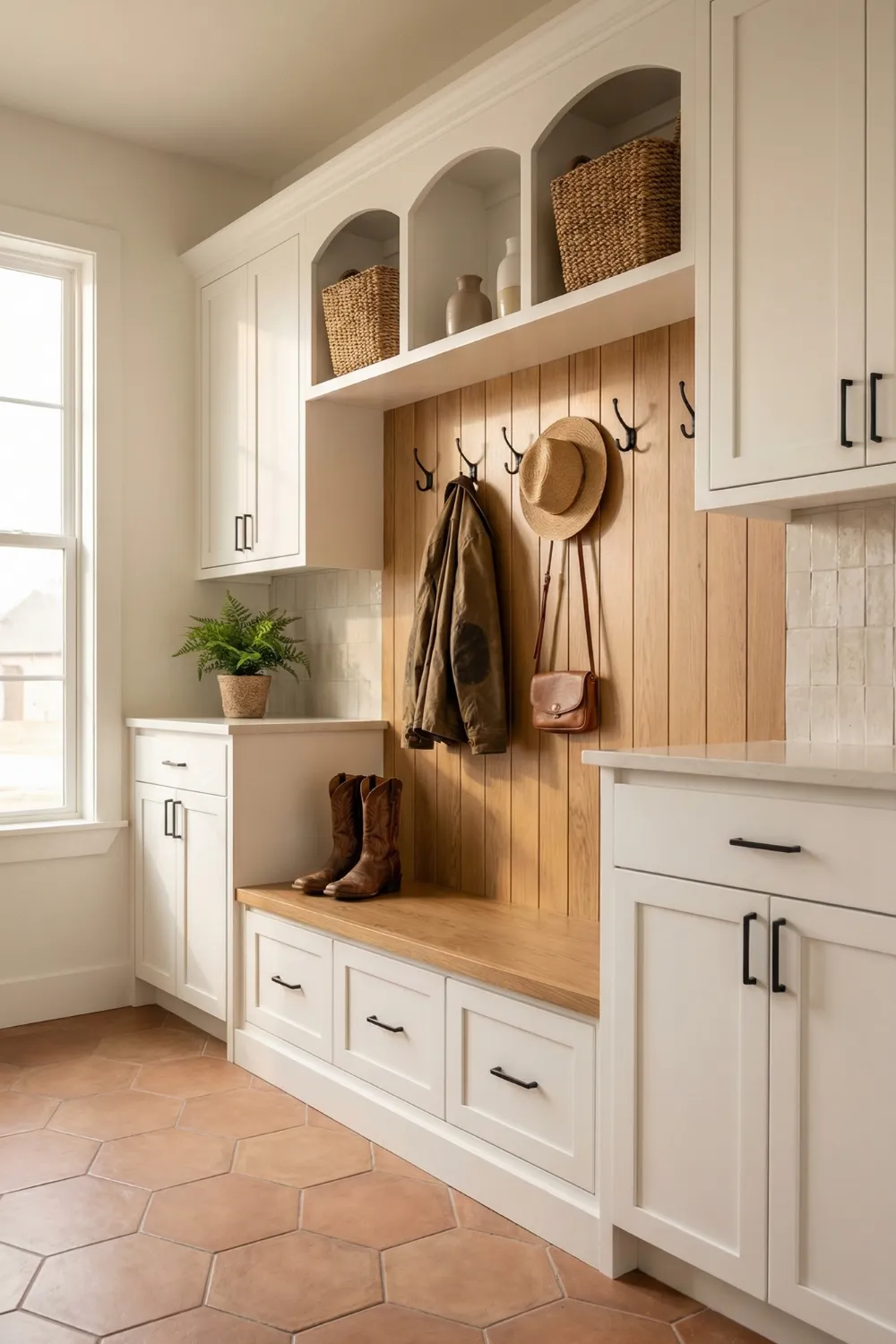
Once you understand it, the combined mudroom and laundry room design makes every laundry room that only serves one purpose feel like a missed opportunity. The logic is simple: the dirtiest things in a house, like muddy boots, sports gear, and outdoor gear, come in through the same door that needs to be cleaned. Combining the drop zone and the washing zone cuts out a whole step and a lot of household stress.
The design challenge of a combined space is making sure that the two functions do not look like they are fighting for attention. The answer is clear zoning: one area for storage, hanging, and dropping off (the mudroom zone), another area for washing, drying, and folding (the laundry zone), and a consistent material palette that runs through both areas to tie the space together even though it has two purposes.
Creating cohesion across two functions:
- Vertical shiplap used consistently across both zones reads as a single design decision rather than two rooms pushed together — colour continuity is the binding agent
- A wood bench at the mudroom end that matches the laundry countertop in tone and material creates a visual through-line that ties the room together horizontally
- Built-in cabinetry above both zones in the same painted finish maximises storage while creating the architectural uniformity that makes custom millwork look intentional rather than piecemeal
- Personality details — a house plant, a woven basket, a printed hook strip — should be concentrated in the mudroom zone where they read as welcoming rather than scattered across both zones where they compete
5. Floral Wallpaper With Skirted Sink — The Cottagecore Laundry Room
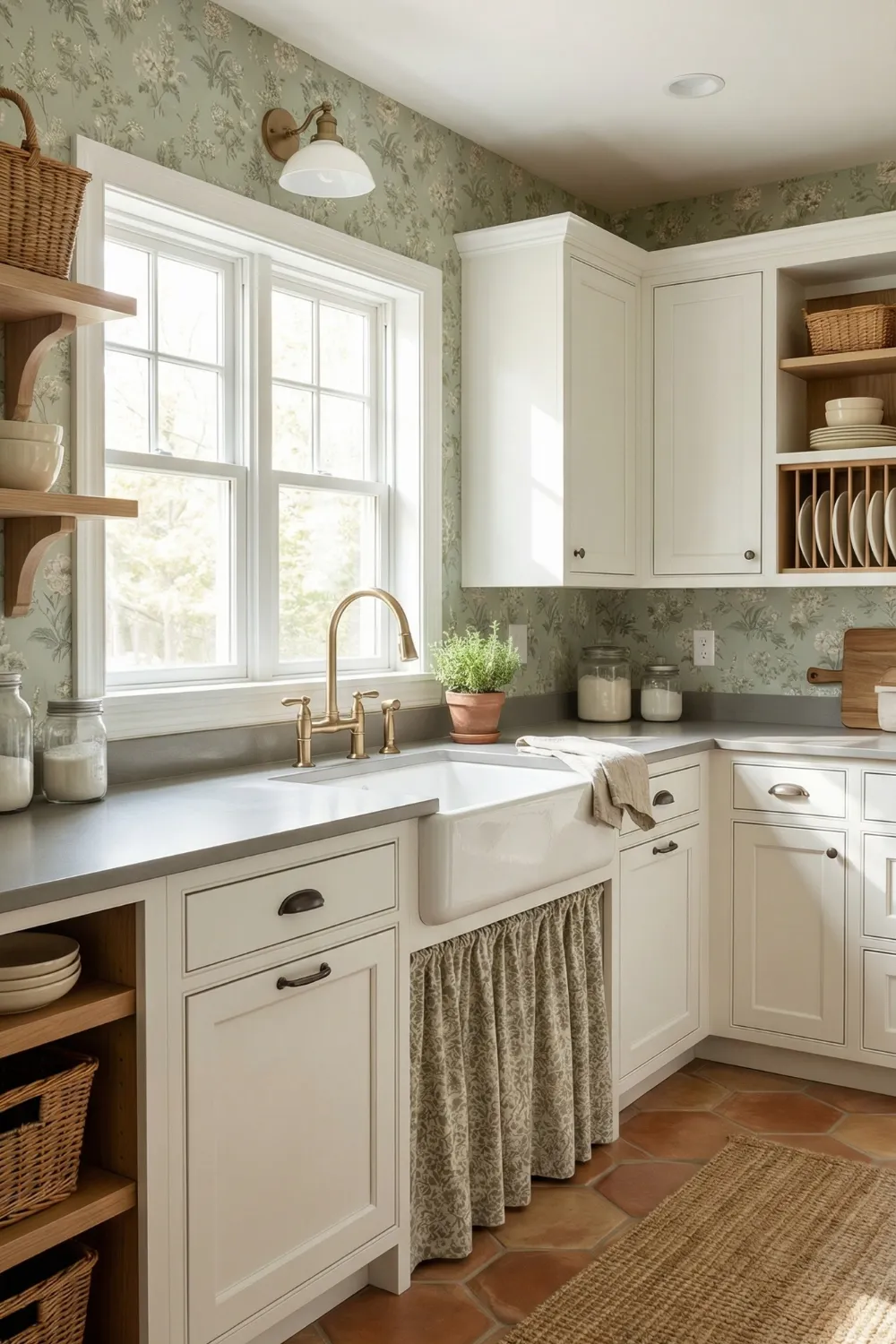
The cottagecore laundry room asks a question that most utility room designs don’t: what if this space was really beautiful instead of just tidy? In this case, the answer is botanical wallpaper, a sink with a fabric skirt, terracotta hex tiles, and brass hardware. The result is a room that fits into a well-known design style without looking too staged or self-conscious.
Most people do not think floral and botanical wallpaper will work in a laundry room, but they do. The reason is simple: the room’s surfaces are mostly hard and functional, and the wallpaper adds the only organic, textural, and visually interesting element that those surfaces can’t. It is like plants, art, and textiles all in one room, but on a bold surface.
Making pattern work in a small room:
- Choose wallpaper in a palette that includes at least one tone already present in the room — the green of the wallpaper echoing the sage of a cabinet, or the terracotta of the floor appearing in the wallpaper’s warm undertones — this repetition is what prevents pattern from feeling intrusive
- A skirted sink skirt in a plain linen or cotton fabric (not a competing pattern) softens the hard cabinetry line and conceals cleaning supplies without adding visual complexity
- Brass hardware throughout — tap, cabinet pulls, towel ring — creates material continuity in a room with a lot of competing visual elements; consistent metal finish is the grounding decision that prevents cottagecore from tipping into chaos
- Keep the floor simple (terracotta hex or small-scale neutral tile) so it supports the wallpaper rather than competing with it
6. Aqua Barn Door With Herringbone Floor — One Bold Colour, Total Transformation
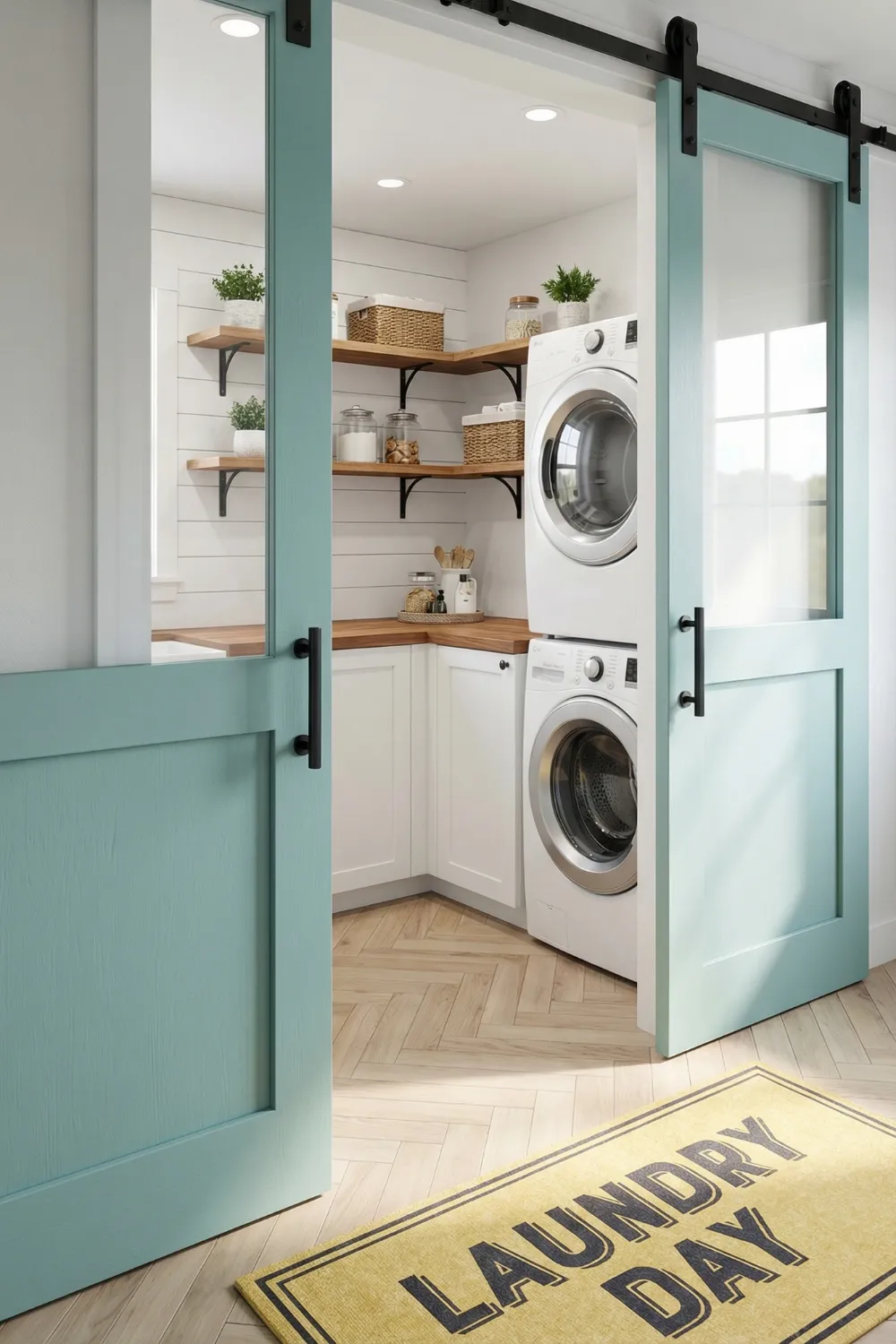
The barn door is the farmhouse design element that delivers the highest visual impact per dollar and square foot of almost any choice available. It slides rather than swings, which matters enormously in the tight quarters of most laundry rooms. It introduces hardware and texture at eye level, which is where design decisions are noticed most immediately. And when painted in a considered colour — aqua, sage, charcoal, barn red — it becomes the room’s focal point before anything else is installed.
The design principle governing this room’s success is exactly the same one that makes an accent wall work: one surface carries the colour, everything else provides the neutral support that allows that colour to be fully appreciated. White shiplap walls, warm wood tones, open shelving in natural timber — all of these exist to give the aqua door somewhere to land.
Colour strategy for bold barn doors:
- The door colour should appear at least once more in the room at a smaller scale — a painted pot, a folded towel in the same family, a printed label — to feel like a considered palette choice rather than a single impulsive decision
- Herringbone tile floors introduce movement and direction that static square or rectangular tiles cannot — the diagonal lines carry the eye across the room’s full width, making narrow laundry spaces feel measurably less constricted
- A cheeky functional detail — a mat that acknowledges the room’s purpose with humour, a sign with personality, a jar labeled with something unexpected — humanises the space and makes it feel personal rather than styled
7. Forest Green Cabinets With Brick Floor — Depth, Warmth, and Character
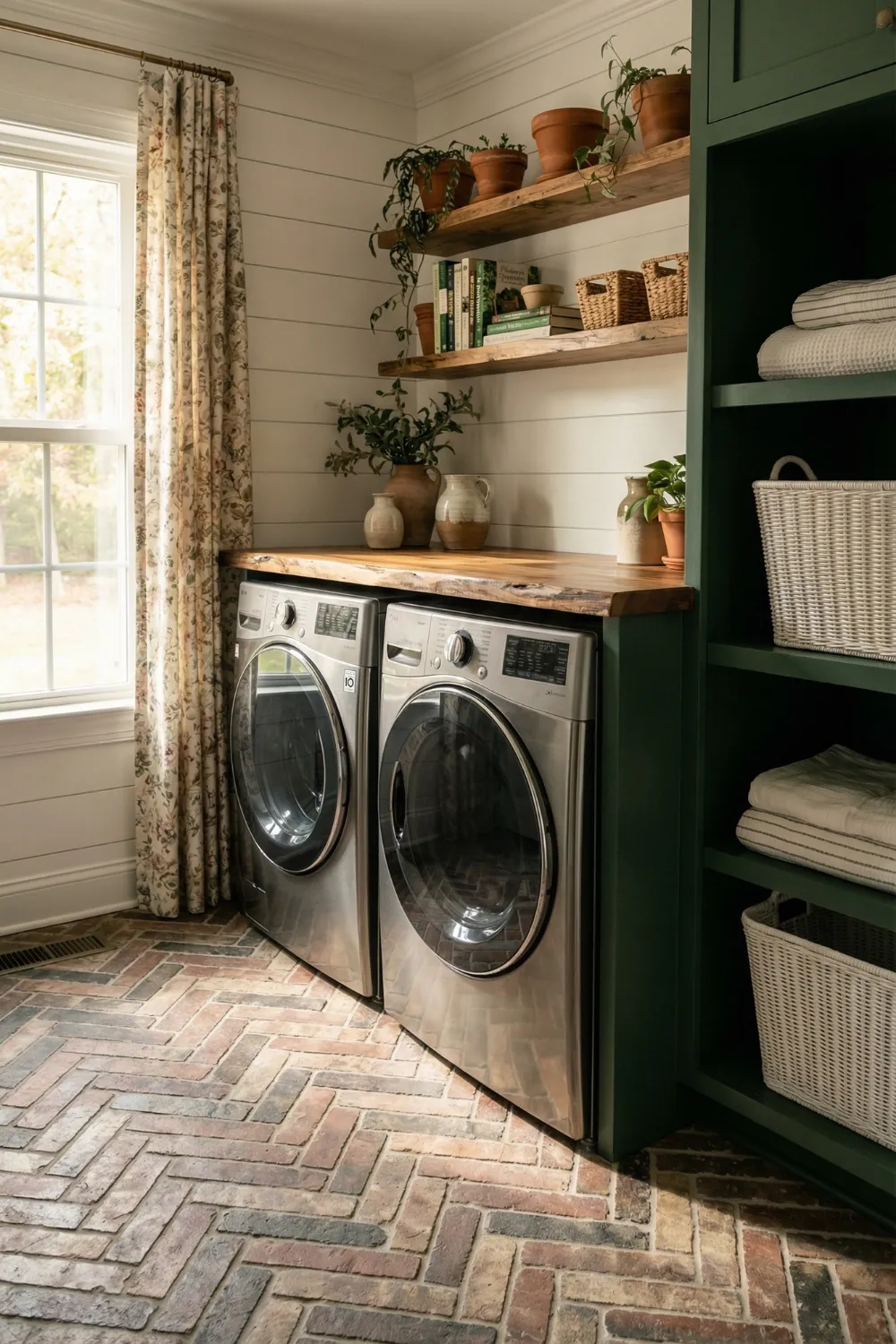
Forest green cabinets in a laundry room say the same thing about utility spaces as navy and deep charcoal have been saying about kitchens for the past ten years: that color choices should be made with the same confidence as in living rooms, and that deep, rich tones can make a working room feel more sophisticated instead of heavier.
Natural materials that add warmth, like brick herringbone flooring, open wood shelving, and white shiplap walls, go well with deep cabinet colors. Each of these things helps to lighten the space so that the deep green does not take over. The brick floor is doing a lot of important work, especially because its warm red-orange undertone makes a nice contrast with the green that makes both more interesting to look at.
Managing deep colour in small rooms:
- White upper walls and ceiling are non-negotiable when lower cabinetry is this deep — the colour should feel grounded, not enveloping
- Open shelving above the machines in a natural wood finish gives the eye a warm, lighter landing point above the dense cabinetry and breaks the vertical monotony
- Floral or botanical curtains at a window are an unexpected softening element that reinforces the garden-adjacent, pastoral quality of both forest green and brick — and introduces natural light diffusion that warms the deep cabinet tones
- Woven baskets on open shelves tie the room back to organic, natural materials and prevent it from reading as kitchen-adjacent rather than its own distinct farmhouse space
8. Scandinavian Farmhouse With Black Accents — Minimalism With Warmth
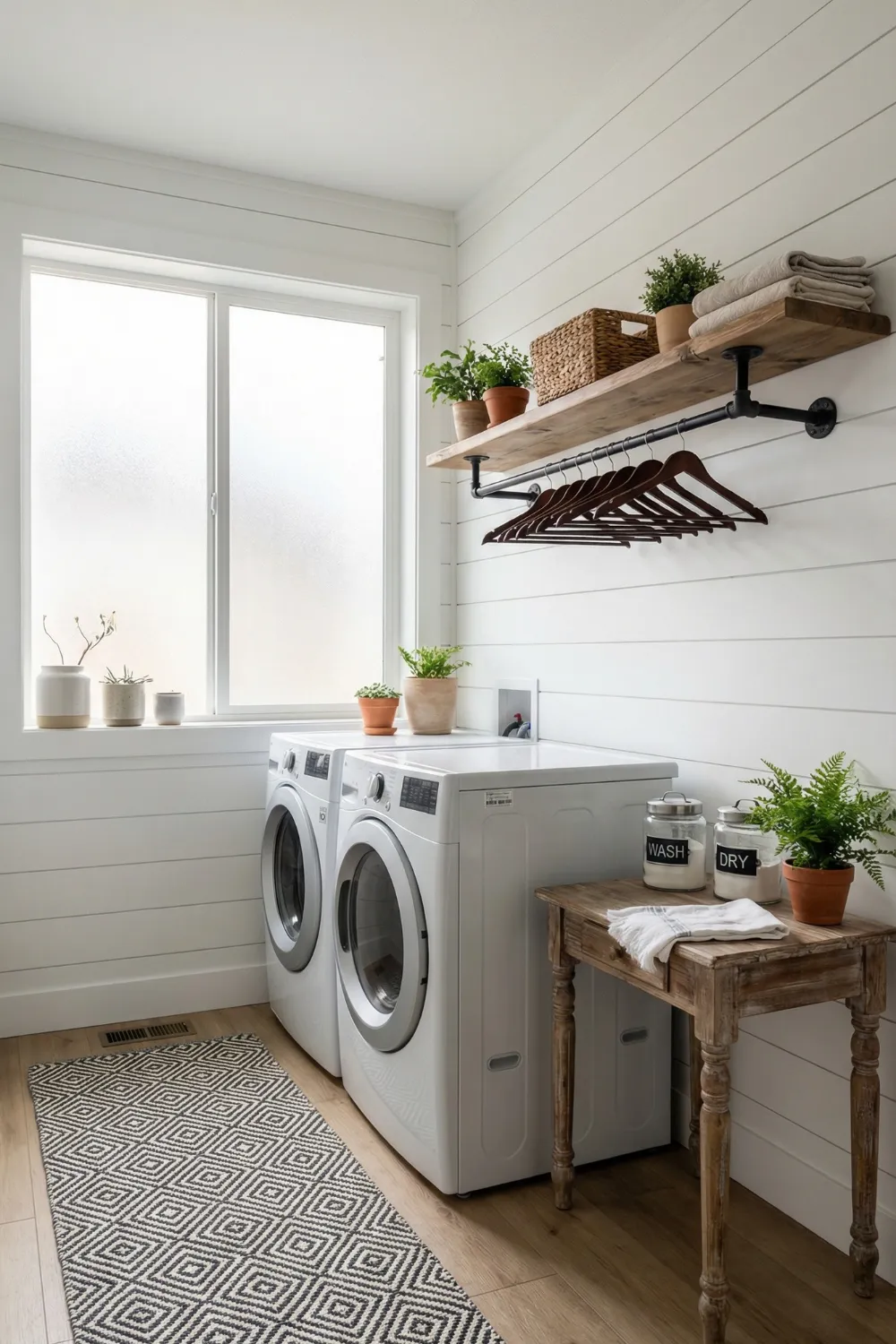
The Scandinavian farmhouse hybrid is the newest style in this collection and probably the most versatile. It works well in smaller spaces, newer homes that do not have a lot of original architectural character, and rental situations where permanent changes are not possible.
The idea behind this is Scandinavian simplicity applied to farmhouse materials: white shiplap walls, a big window that lets in a lot of natural light, a natural wood worktable with black spindle legs, a striped runner rug, and an open wooden shelf with a hanging rail. Nothing is too much. There is no such thing as decoration for decoration’s sake. Everything gets its place by being useful and looking good.
The black spindle table legs are what maintain this room from looking too rustic. They add a graphic, slightly architectural touch that makes the whole thing look more modern. This is the most elegant example of modern farmhouse tension: old materials and modern proportions.
Achieving the Scandinavian farmhouse balance:
- Natural light is the most important element in this format — if the laundry room has a window, the layout should prioritise its exposure rather than positioning cabinetry or shelving in front of it
- A striped cotton runner rug in two tones (one warm neutral, one darker accent) grounds the space and introduces softness underfoot without the visual complexity of a patterned rug
- Plants are not optional in a Scandinavian-adjacent room — the absence of pattern and colour decoration means that organic, living elements do proportionally more work to prevent the room from feeling sterile
- Limit black accents to two or three elements: legs, hardware, and one lighting fixture — more than this tips the room from “crisp accent” toward “industrial,” which is a different aesthetic entirely
9. Chartreuse Cabinets With Butcher Block — Confident Colour for the Brave
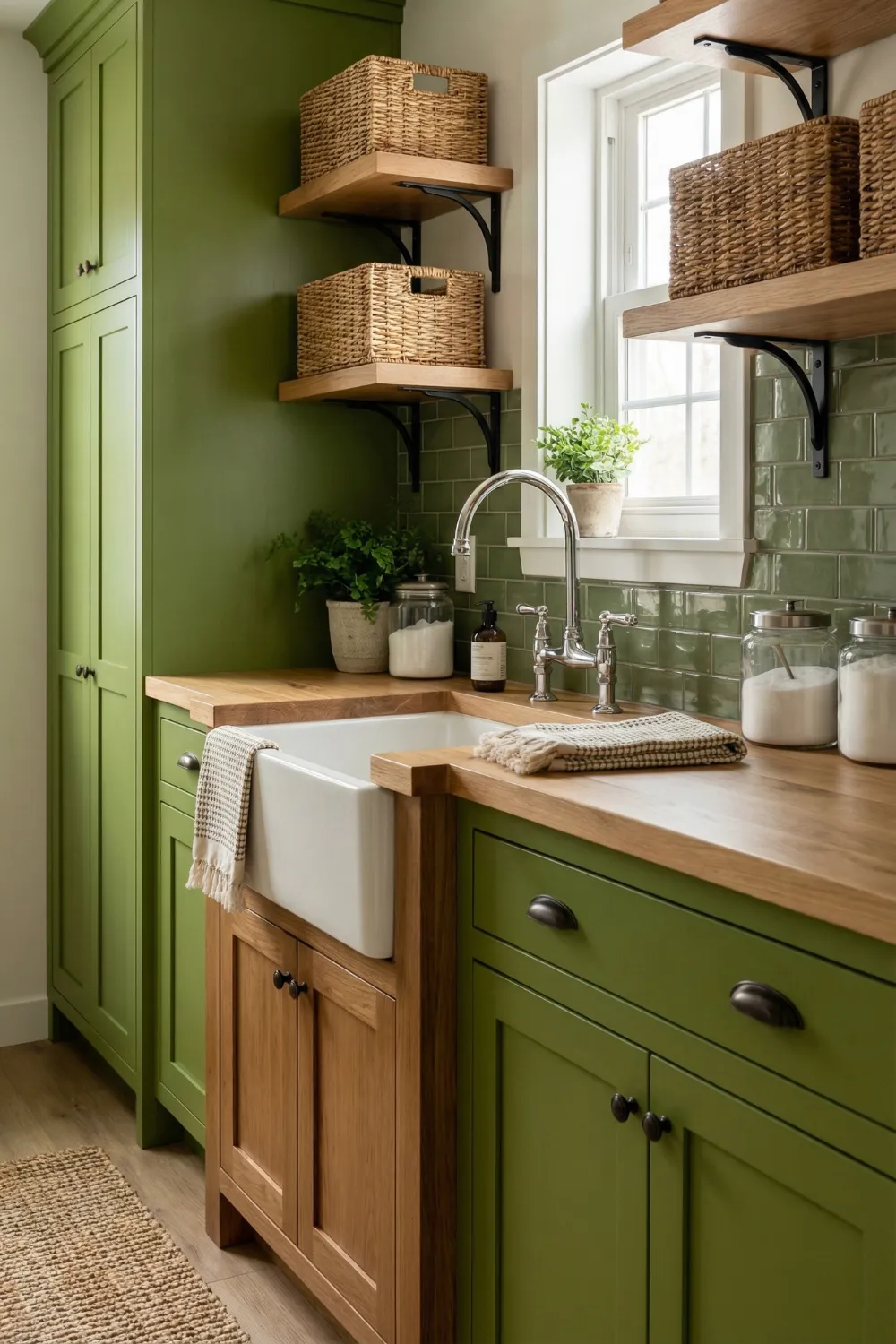
Most farmhouse laundry rooms work within a palette of neutrals, natural materials, and one restrained accent colour. This one doesn’t, and understanding why it still works is instructive.
Chartreuse is a simultaneously warm and vivid yellow-green that could easily overwhelm a small enclosed room. What keeps it from doing so here is the discipline of the supporting palette: butcher block countertop in natural warm wood, a crisp white farmhouse sink, matte black hardware, and open shelving in woven natural baskets. Every supporting element is either neutral or natural, which gives the chartreuse enough visual space to be itself without competing.
This is the fundamental rule of confident colour in interior design: the more saturated or unconventional the primary colour, the more neutral and restrained everything around it needs to be. The colour demands space, and the surrounding palette provides it.
Making bold cabinet colour work practically:
- A farmhouse sink in white is the most reliable anchor for any strongly coloured cabinet — its classic form and neutral tone provide exactly the visual stability that bold colour needs beside it
- Butcher block is preferable to stone countertops in this context because its warmth moderates the cool-yellow quality of chartreuse; a white or grey stone top would push the green toward cool and slightly clinical
- Woven baskets and natural fibre accessories soften the graphic intensity of the cabinet colour and bring the room back toward the organic farmhouse aesthetic that its base design belongs to
- Keep the floor and walls entirely neutral — white or light grey walls, a simple natural tile floor — so the room has exactly two protagonists: the cabinet colour and the butcher block
The Design Principles Behind Every Farmhouse Laundry Room That Works
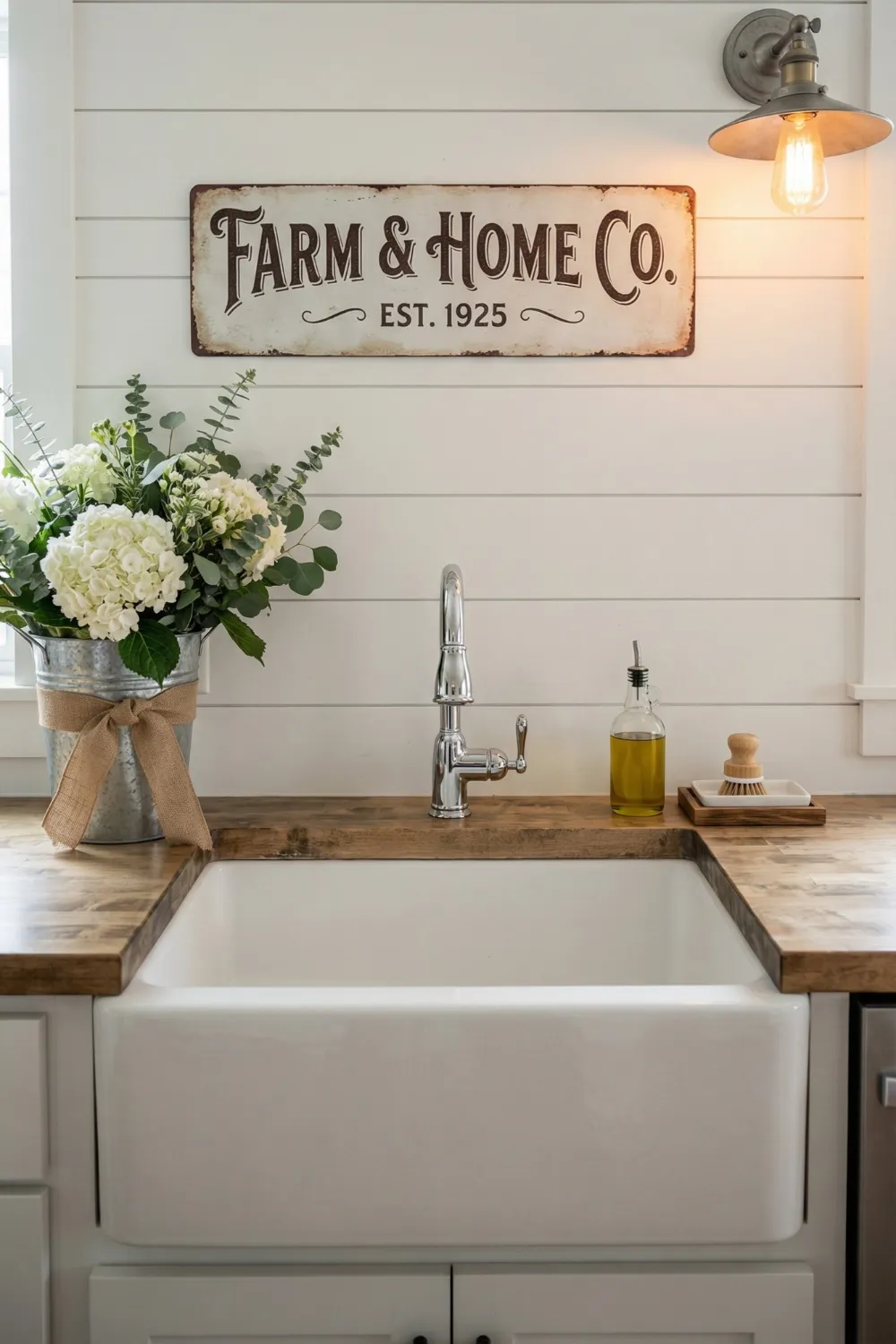
These nine rooms span a wide range of specific aesthetics — rustic and textural, modern and minimal, bold and pattern-forward, restrained and Scandinavian. What they share is a set of underlying design decisions that apply regardless of specific material or colour choices.
Material contrast is the engine of farmhouse style.
Rough and smooth, hard and soft, rustic and refined — farmhouse aesthetics are built on the productive tension between opposing material qualities. A room with only smooth, pale, uniform surfaces reads as modern. A room with only rough, dark, varied surfaces reads as rustic. The combination of both reads as farmhouse.
Natural materials age better than synthetic alternatives.
Wood, brick, terracotta, linen, woven rattan — these materials improve with use rather than revealing it as damage. In a working room that sees daily activity, choosing materials that age gracefully is a practical decision as much as an aesthetic one.
One statement decision per room is enough.
A bold cabinet colour, a patterned wallpaper, a coloured barn door, a brick floor — any of these can anchor a room’s design identity on its own. Two or more competing statement decisions fragment the room’s visual logic. Choose the one that excites you most and let the rest of the room support it.
Functional organisation is part of the aesthetic.
Open shelving with organised supplies, labeled glass jars, folded towels in a consistent colour, hooks with purpose — visible organisation in a farmhouse space reads as intentional and calm. Visible disorganisation reads as chaos regardless of how beautiful the surrounding materials are.
Lighting sets the emotional register.
Cool overhead lighting makes any laundry room feel institutional. Warm-toned bulbs in a considered fixture — a vintage sconce, an exposed filament pendant, a rattan shade — shift the room from functional to inviting. This is the change with the highest return relative to its cost and the one most consistently overlooked.
Final Thought
Make the Room You Use Every Day
The reason to have a well-designed laundry room is not because it looks good. In the most practical sense, you use this room every day, sometimes more than once. Over months and years, the total experience of that room—whether it feels like a chore to get through or a space that helps and rewards daily life—adds up to something important.
Farmhouse design is great for working rooms because its core values—warmth, durability, honest materials, and functional beauty—are exactly what a laundry room needs. It is not about making the room look like a magazine. It is about making it feel like a place you can relax in over and over again.
That is what it means to have good design in a workspace.
Which of these ideas for a farmhouse laundry room is going to you put on your renovation mood board? Share below, or save this post for when you start planning.