
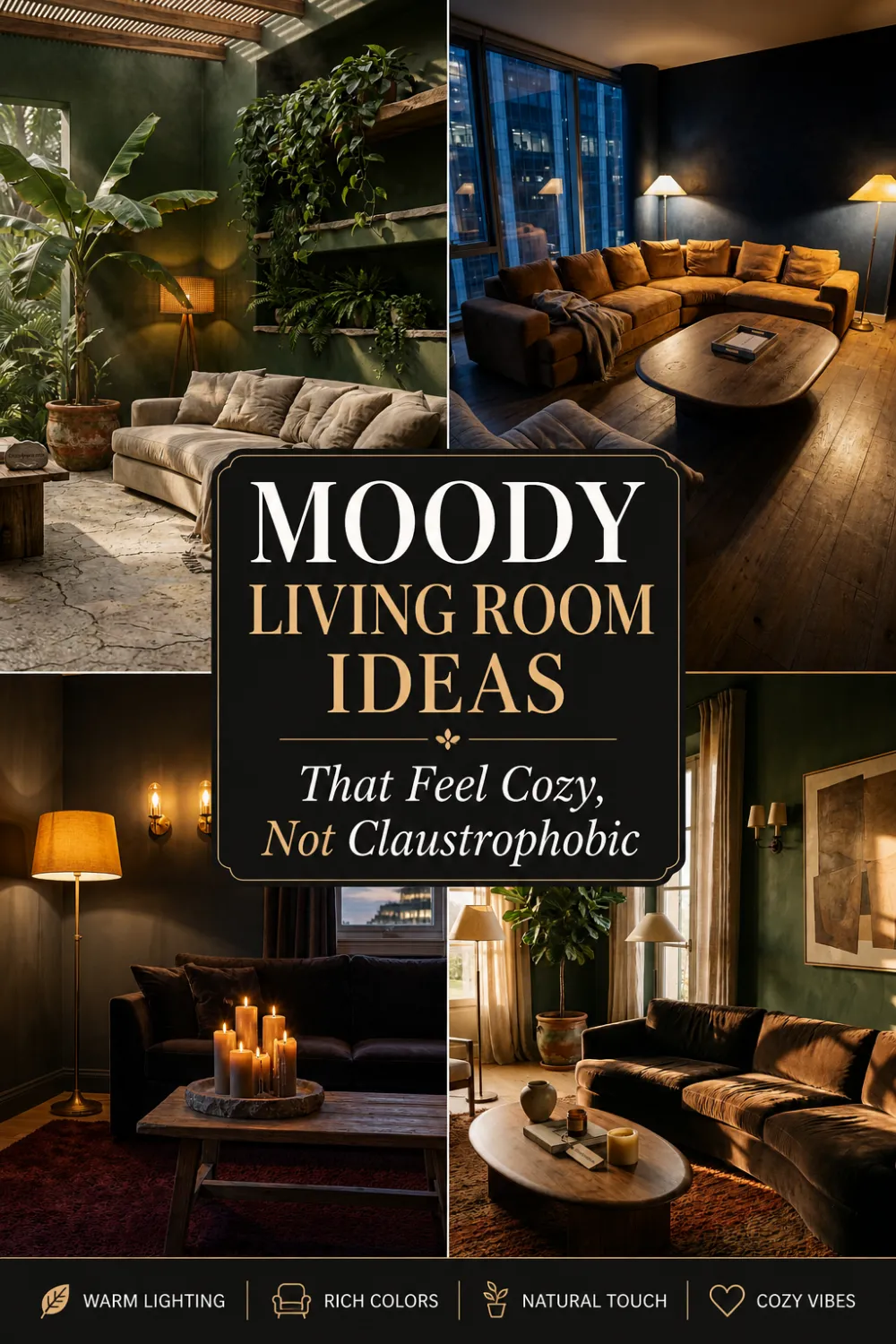
At Decorlynest.com, that’s the kind of design we believe in — spaces that feel as good as they look, and look even better because they feel right.
The Real Secret to Moody Living Rooms Nobody Talks About
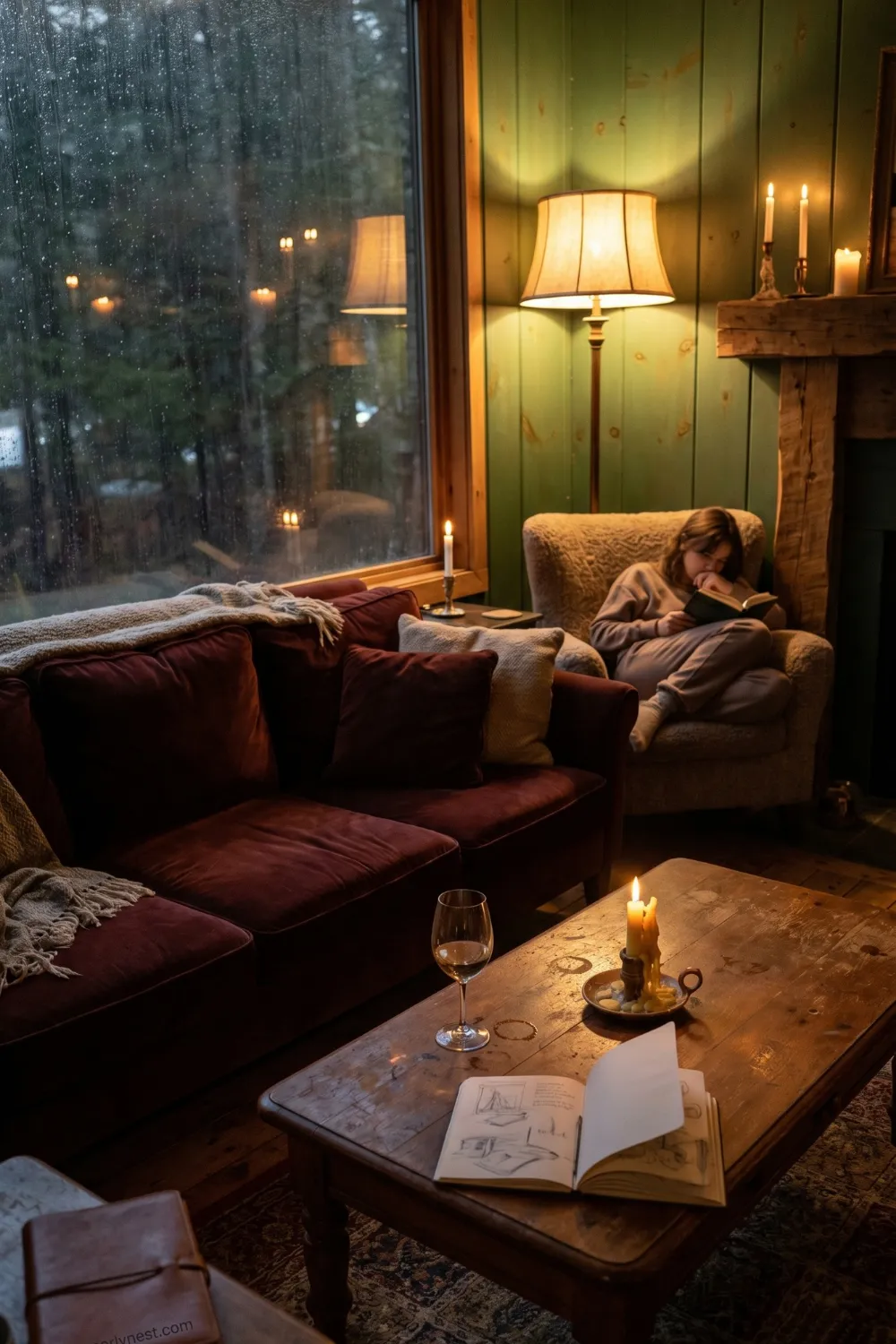
Most people think moody living rooms are just dark walls and dim lights. They’re wrong. A truly moody space is not built on darkness — it’s built on intention. The kind of room that makes you drop your phone, kick off your shoes, and exhale for the first time all day. That’s the goal. That’s what moody design actually means when done correctly.
The best moody living rooms share one quiet truth: they prioritize feeling over aesthetics. Color sets the stage, but it’s the warmth of layered lighting, the weight of textured fabrics, and the silent invitation of plush seating that makes a room emotionally irresistible. When these elements align, the space stops being a room and starts being a mood — literally.
This is not about following a trend. Moody interiors have always existed in the homes of people who wanted their spaces to feel private, personal, and a little bit cinematic. Here’s how to build one that works for real life, not just a Pinterest board.
1. Why Deep Colors Work Differently Than You Think
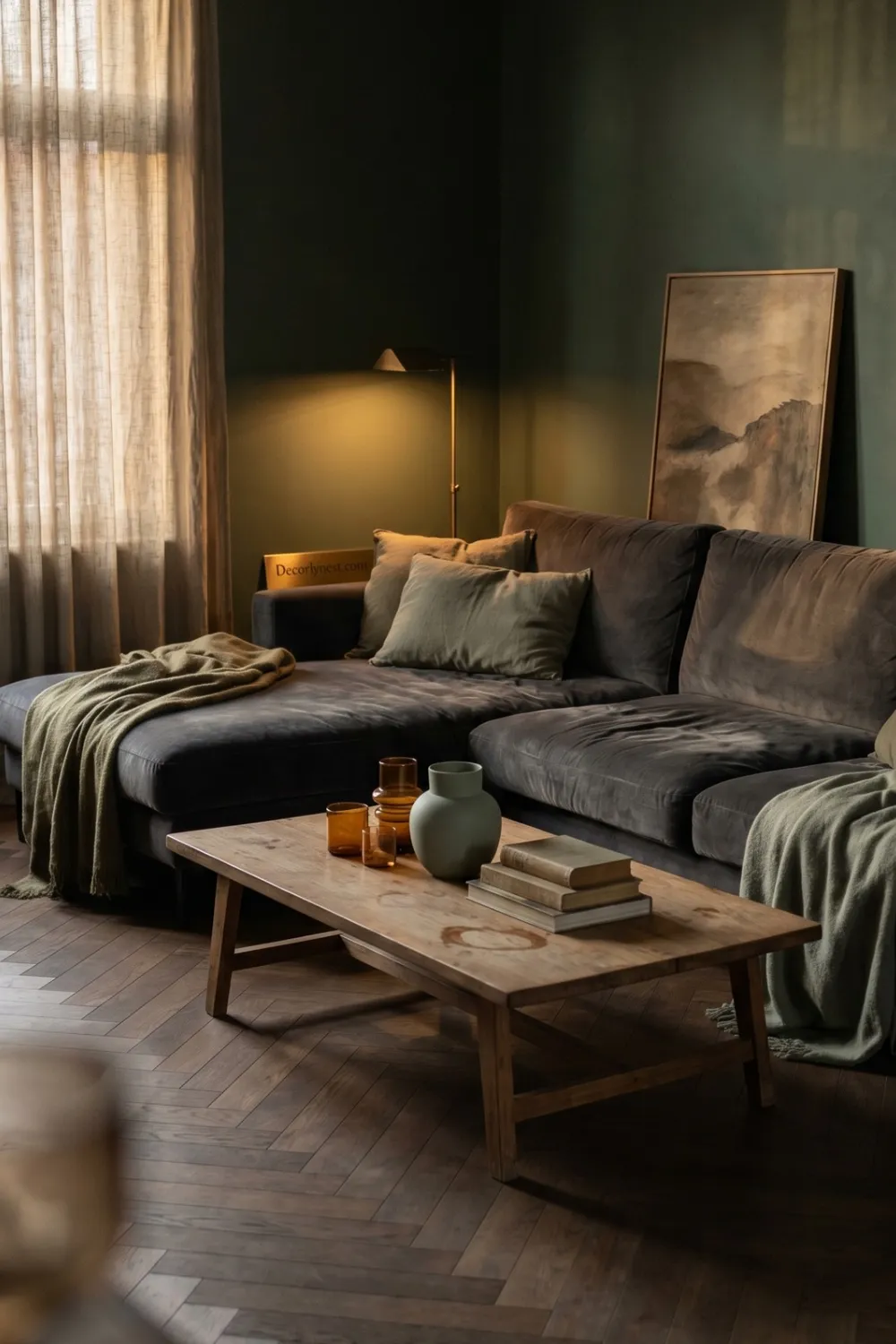
Deep colors — forest greens, charcoal blues, ink blacks, dusty mauves — don’t actually make a room feel smaller when used correctly. What they do is collapse visual distance. When your walls, sofa, and rug exist in the same tonal family, the room reads as one unified, cohesive atmosphere instead of a collection of separate objects.
This is why moody rooms feel so grounding. Your eyes aren’t jumping from contrast to contrast. They’re resting. In a world full of visual noise, a well-tuned moody palette is genuinely calming for the nervous system. Interior designers call this tonal harmony. Your body just calls it relief.
The key is choosing colors with warmth in their undertones. A green that leans olive. A gray that leans taupe. A navy that leans midnight rather than electric. Cool-toned darks feel sterile and cold. Warm-toned darks feel like a cashmere blanket at dusk.
2. The Layered Lighting Rule That Changes Everything
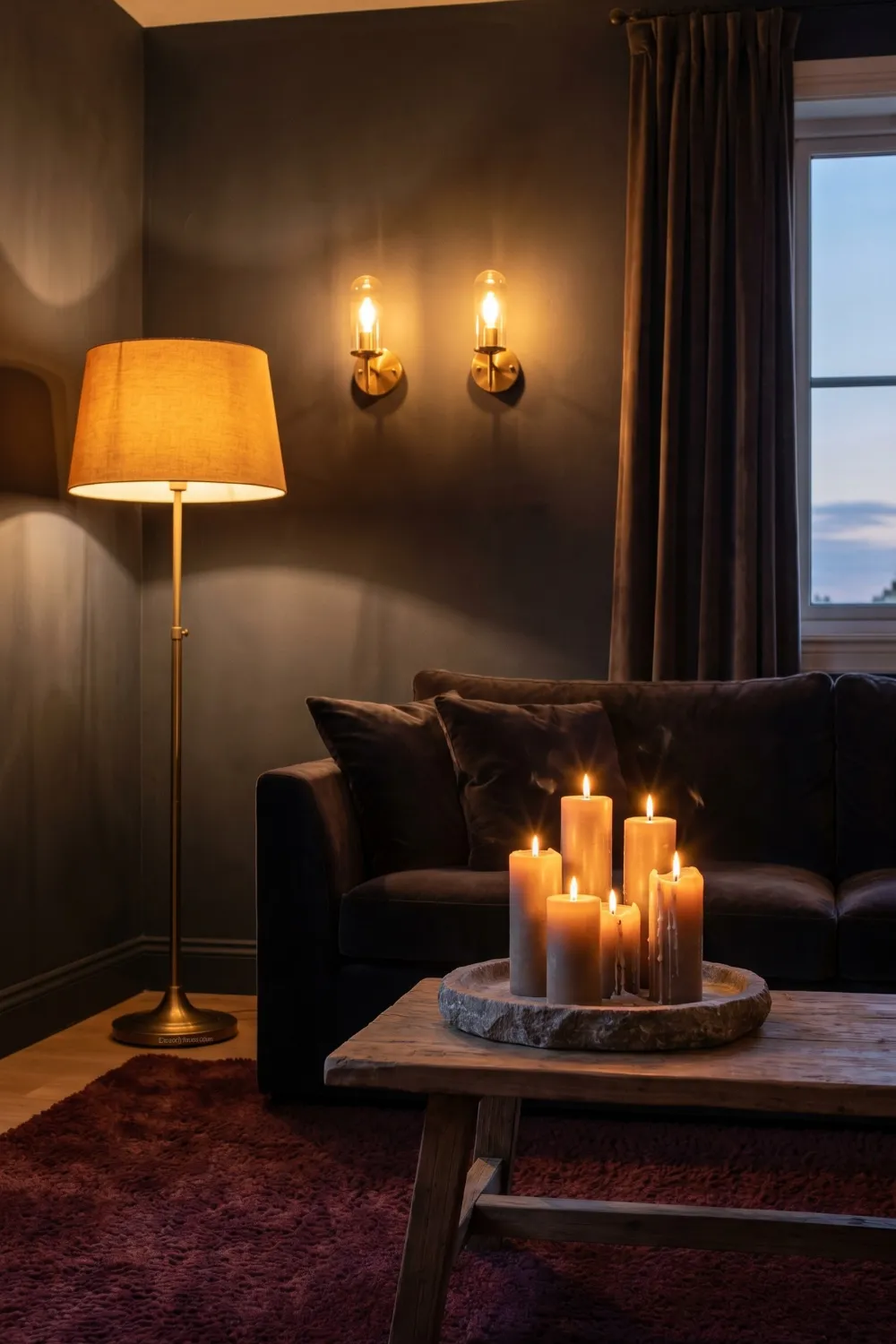
If you take one principle from this article, let it be this: overhead lighting is the enemy of mood. A single bright ceiling fixture will instantly destroy the atmosphere of even the most beautifully designed dark room. It flattens everything. It removes shadow. And shadow, in moody design, is not a problem — it’s the product.
Instead, build your lighting in three distinct layers. The first layer is ambient — soft floor lamps and wall sconces that create a warm glow at eye level and below. The second layer is accent lighting — a reading lamp beside the armchair, a small table lamp on a side table, maybe a strip of warm LEDs tucked behind shelving. The third layer is the most overlooked: candlelight or flame-adjacent sources — actual candles, decorative lanterns, or Edison bulb pendants that flicker slightly and remind your body that evening has arrived.
When all three layers work together, lighting stops being functional and starts being atmospheric. The room breathes differently. Time moves differently. That’s the entire point.
3. Texture Is Doing the Heavy Lifting
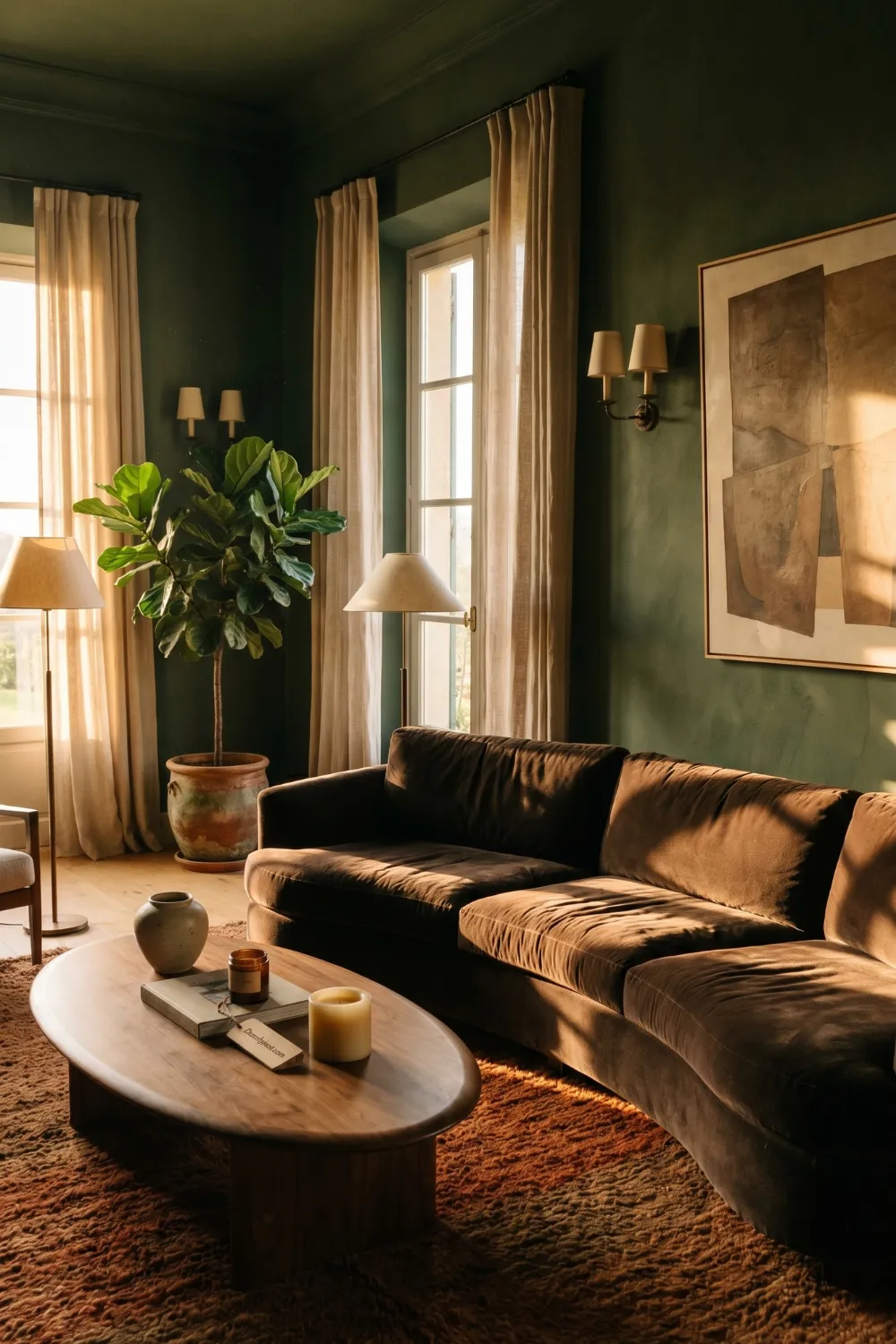
In a moody room where colors are intentionally restrained, texture becomes the thing that keeps the space visually alive. Without texture variation, dark rooms become flat and lifeless — like a photography backdrop rather than a livable space.
Think about what your eyes touch when they move across a moody room: the slight sheen of a velvet cushion, the rough warmth of a jute rug, the matte softness of a linen curtain, the cool weight of a ceramic vase. These aren’t decorative details. They’re sensory anchors that make the room feel rich, layered, and real.
The best moody interiors mix at least four to five different textures in the same palette. Wool and wood. Leather and linen. Stone and silk. The materials contrast even when the colors don’t, which is exactly what keeps a tonal, low-contrast room from feeling one-dimensional.
Don’t neglect the ceiling and walls either. Limewash paint, textured wallpaper, wood paneling, or even exposed brick brings vertical texture that transforms flat walls into something architectural and intentional.
4. Furniture That Feels Generous, Not Precious
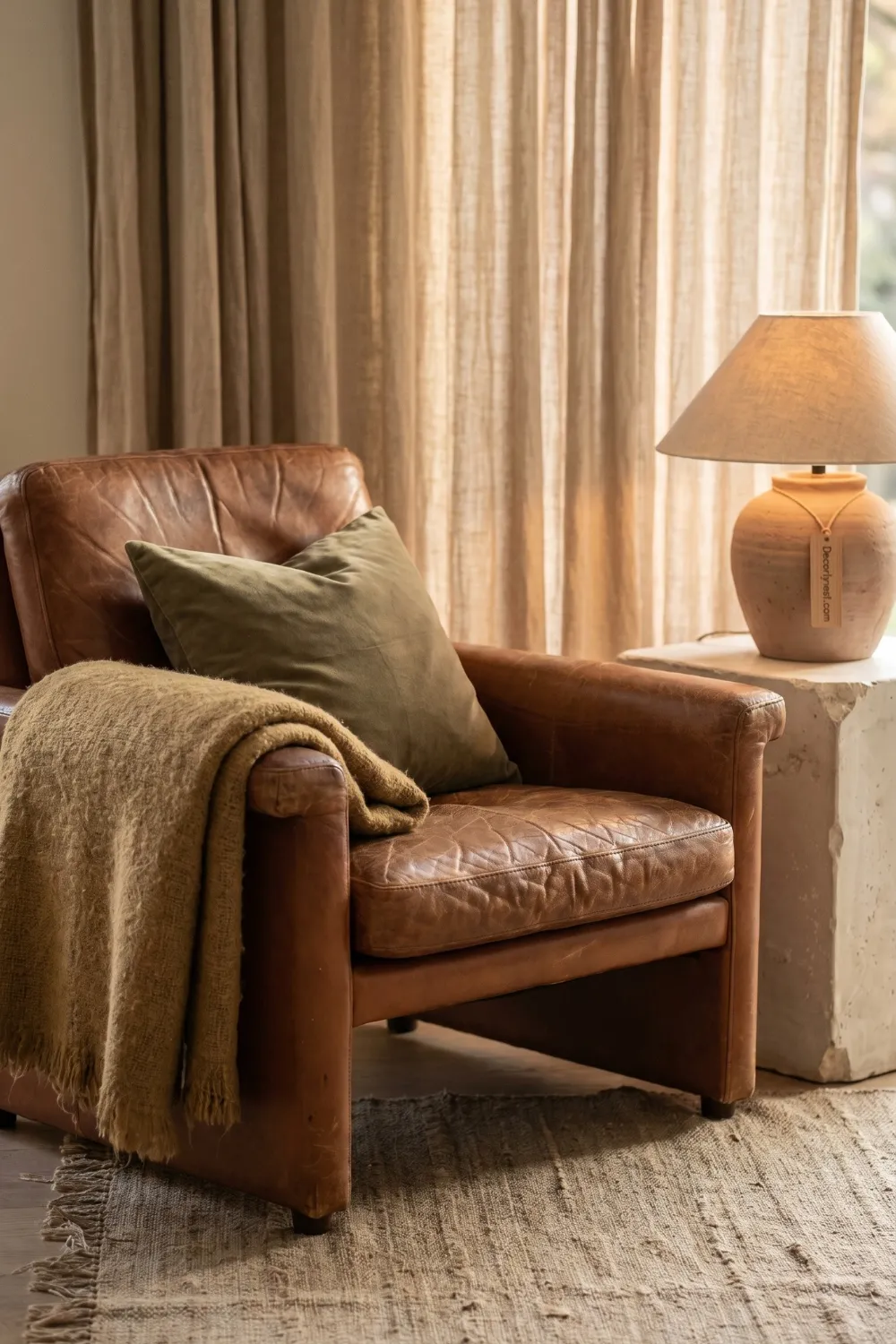
Moody rooms cannot be minimalist in the cold, untouchable sense. They need furniture that invites contact — sofas deep enough to curl into, armchairs wide enough to tuck your legs under, ottomans large enough to use as actual footrests. The moment furniture starts looking like it belongs in a showroom instead of a home, the mood evaporates.
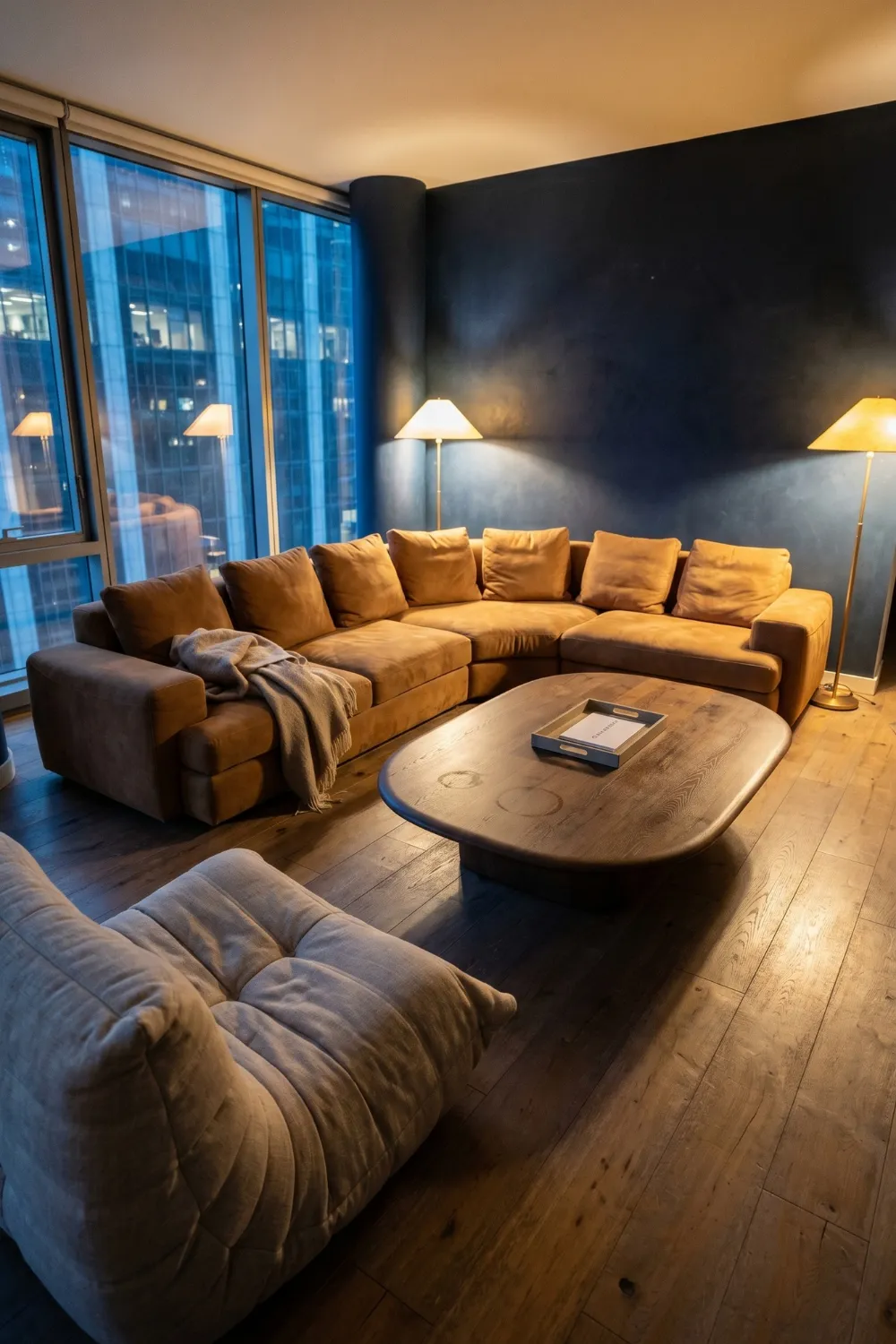
Scale matters here too. Oversized sectionals, chunky coffee tables, deep-cushioned loveseats — these all contribute to the generous, grounded feeling that moody design depends on. Small, spindly furniture makes dark rooms feel unsettled. Heavy, generous furniture makes them feel rooted.
The shape of your furniture also matters more than people realize. Curved silhouettes — rounded sofas, oval coffee tables, arched chairs — soften what would otherwise feel like a rigid, boxy room. Straight lines and sharp corners read as tense. Curves read as relaxed. In a room designed around comfort and calm, that distinction is everything.
5. Greenery Is Your Secret Weapon Against Cave-Mode
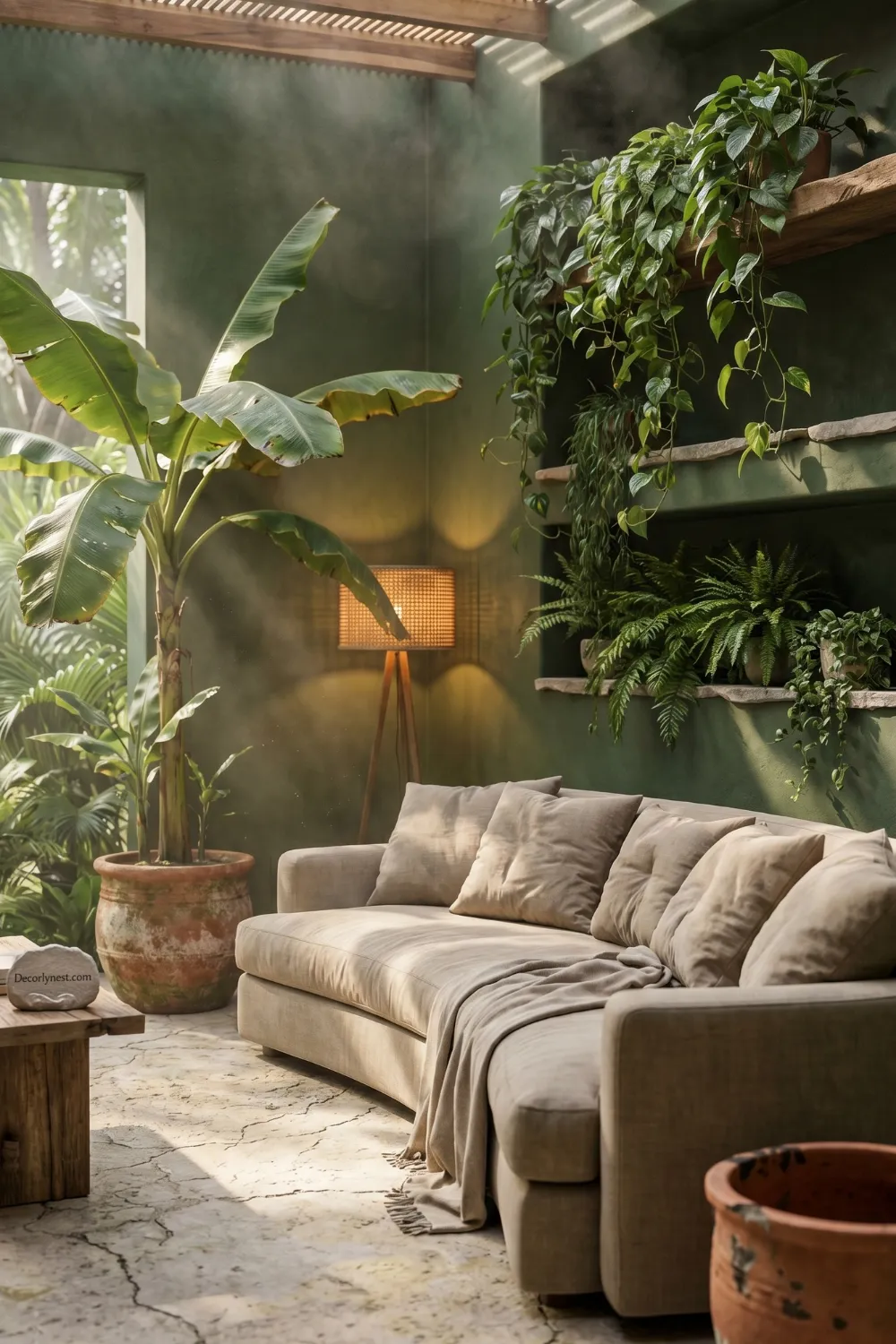
The biggest fear people have about moody rooms is that they’ll feel like a cave. Dark, closed-in, suffocating. The solution is not adding bright white accessories or lighter paint — it’s adding plants. Living greenery introduces the one thing dark rooms often lack: organic life.
Deep olive greens, forest greens, and trailing vines connect dark rooms to something natural and breathing. A fiddle leaf fig in the corner. A monstera on a wooden plant stand. A cluster of pothos trailing off a shelf. Plants introduce vertical interest, visual softness, and a biological reminder that the room is alive, not static.
Choose plants with large, dark-green leaves for maximum impact in moody spaces. They absorb less light reflection, which keeps the palette cohesive, while still breaking up the visual weight of dark walls and furniture. Terracotta and matte black planters work beautifully in this context — they add material contrast without disrupting the tonal flow.
6. The Art of Saying Less With Décor
Moody rooms fail most often from over-decorating. When you add too many objects, the space starts to feel chaotic instead of curated, cluttered instead of layered. The discipline of moody design is knowing when to stop.
A single large piece of artwork on a dark wall makes more impact than a gallery wall of twelve small frames. One sculptural ceramic object on a coffee table says more than seven different decorative trinkets. Negative space in a moody room is not emptiness — it’s breathing room, and it’s what allows the pieces you’ve chosen to actually be seen.
Edit ruthlessly. Keep what has meaning, material interest, or strong silhouette. Remove anything that exists purely out of habit or because it came with the room. The goal is a space that feels curated without feeling museum-like — confident and personal, not stiff and untouchable.
Lighting a candle on an empty surface is worth more than filling that surface with decorative objects that don’t serve the mood.
7. Making It Feel Lived-In, Not Staged
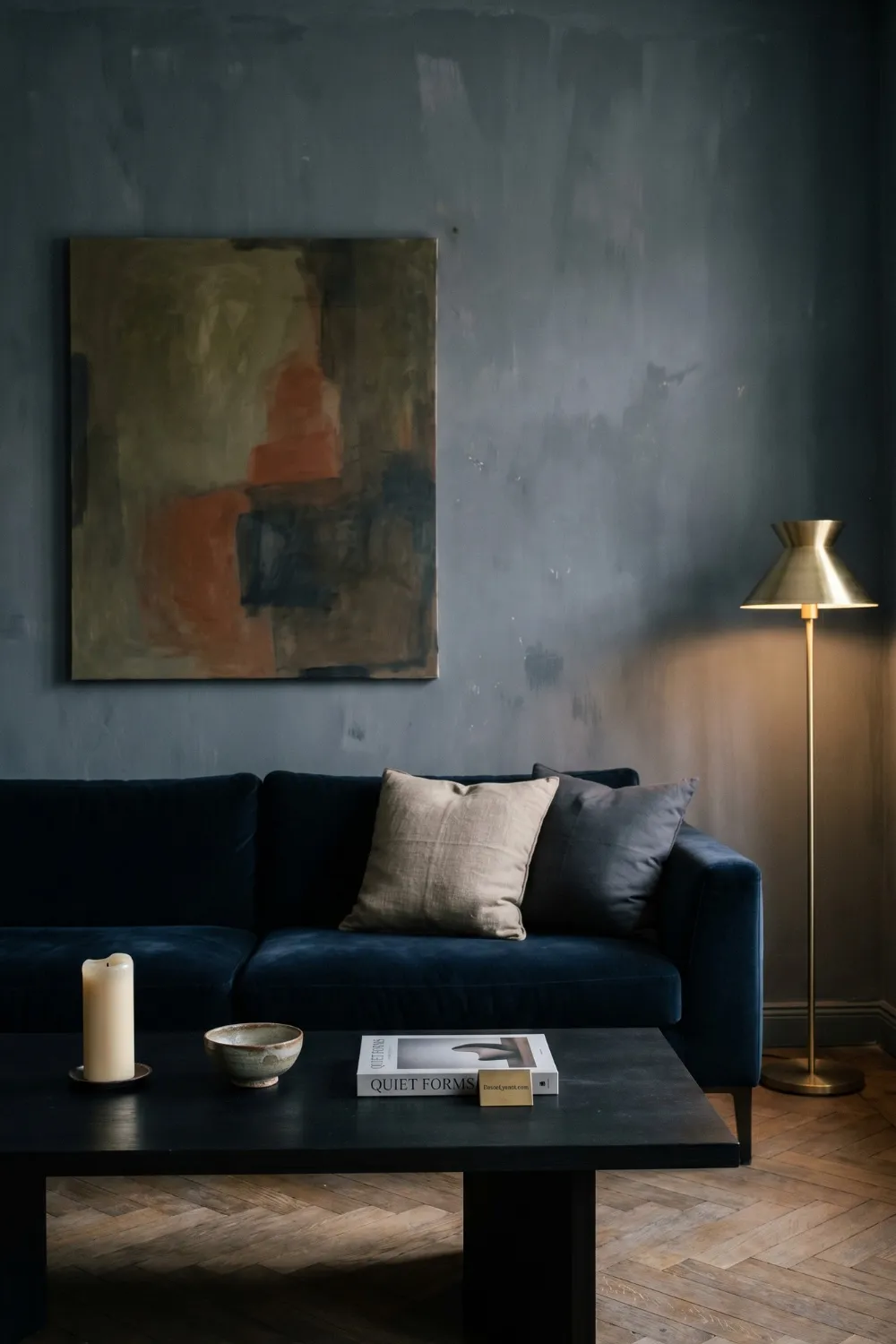
The final ingredient — and the one that no amount of shopping can replicate — is the feeling that someone actually lives here. Moody rooms that feel perfect in photos often feel hollow in person because they’ve been styled to impress a camera, not to support a human life.
The most compelling moody living rooms have a half-read book on the coffee table. A throw blanket that’s been used and casually folded. Pillows that are plump but slightly imperfect. A tray with a candle that’s actually been burned. These are not flaws. These are proof that the room is loved, and loved rooms have a warmth that no amount of design strategy can manufacture.
Let your space evolve slowly. Invest in one quality piece at a time rather than decorating the whole room at once. Moody interiors reward patience. The rooms that feel the most intentional are usually the ones that took the most time — not because they were expensive, but because every object was chosen deliberately rather than purchased in a single weekend haul.
8. The Mood You’re Really Designing For
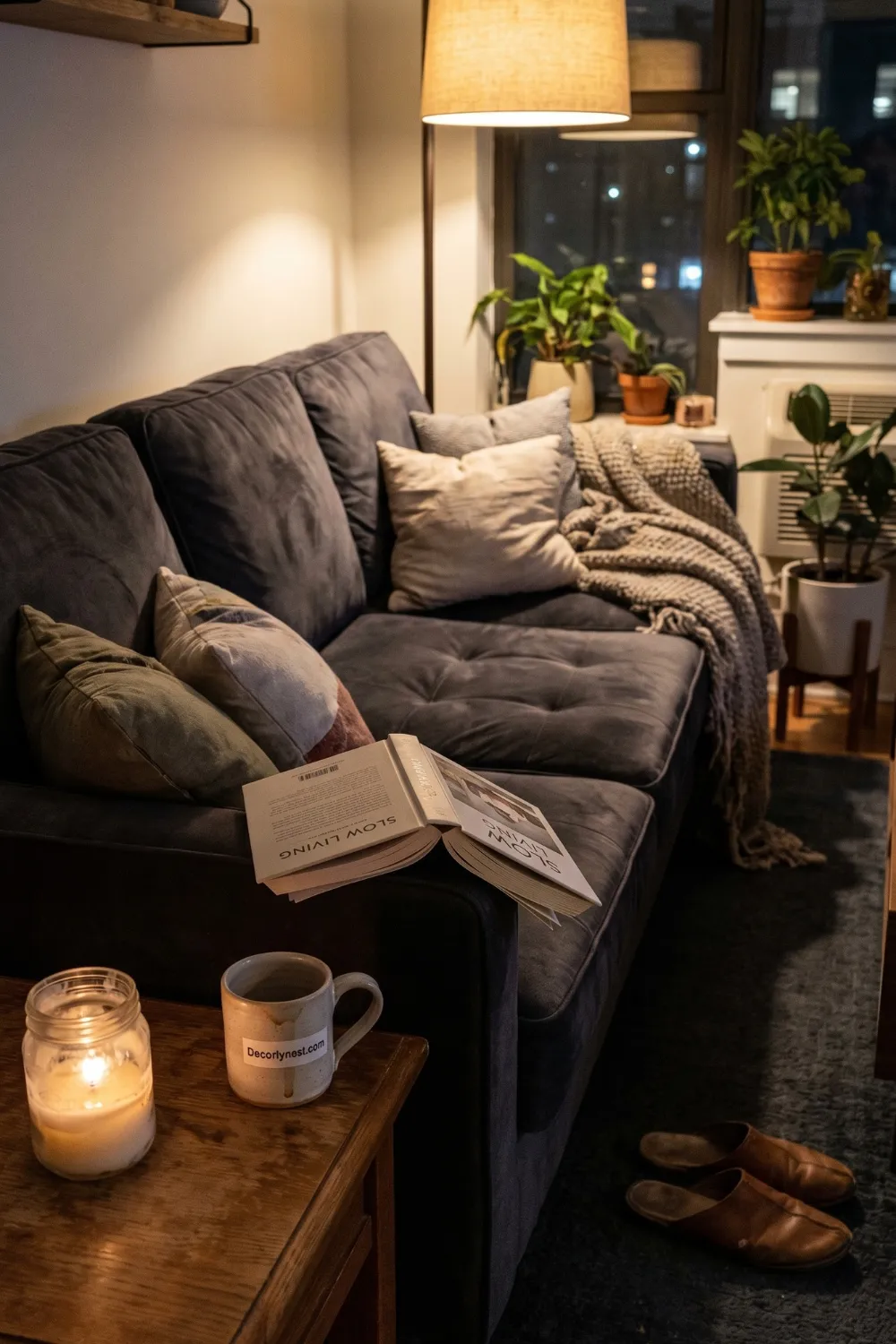
The best moody living room isn’t the one that photographs beautifully. It’s the one that makes you want to be in it — at 7 p.m. on a weeknight, when the day was too long and the world was too loud. The one where the lighting is low, the sofa is deep, and the room feels like it was designed specifically for the version of you that needs to decompress.
That’s the real goal. Not drama for drama’s sake. Not darkness for aesthetic points. But a space that genuinely supports the slower, quieter, more intentional version of your life. When your living room can do that on a regular Tuesday night, you haven’t just decorated a room. You’ve designed a place to come home to.
At Decorlynest.com, that’s the kind of design we believe in — spaces that feel as good as they look, and look even better because they feel right.