
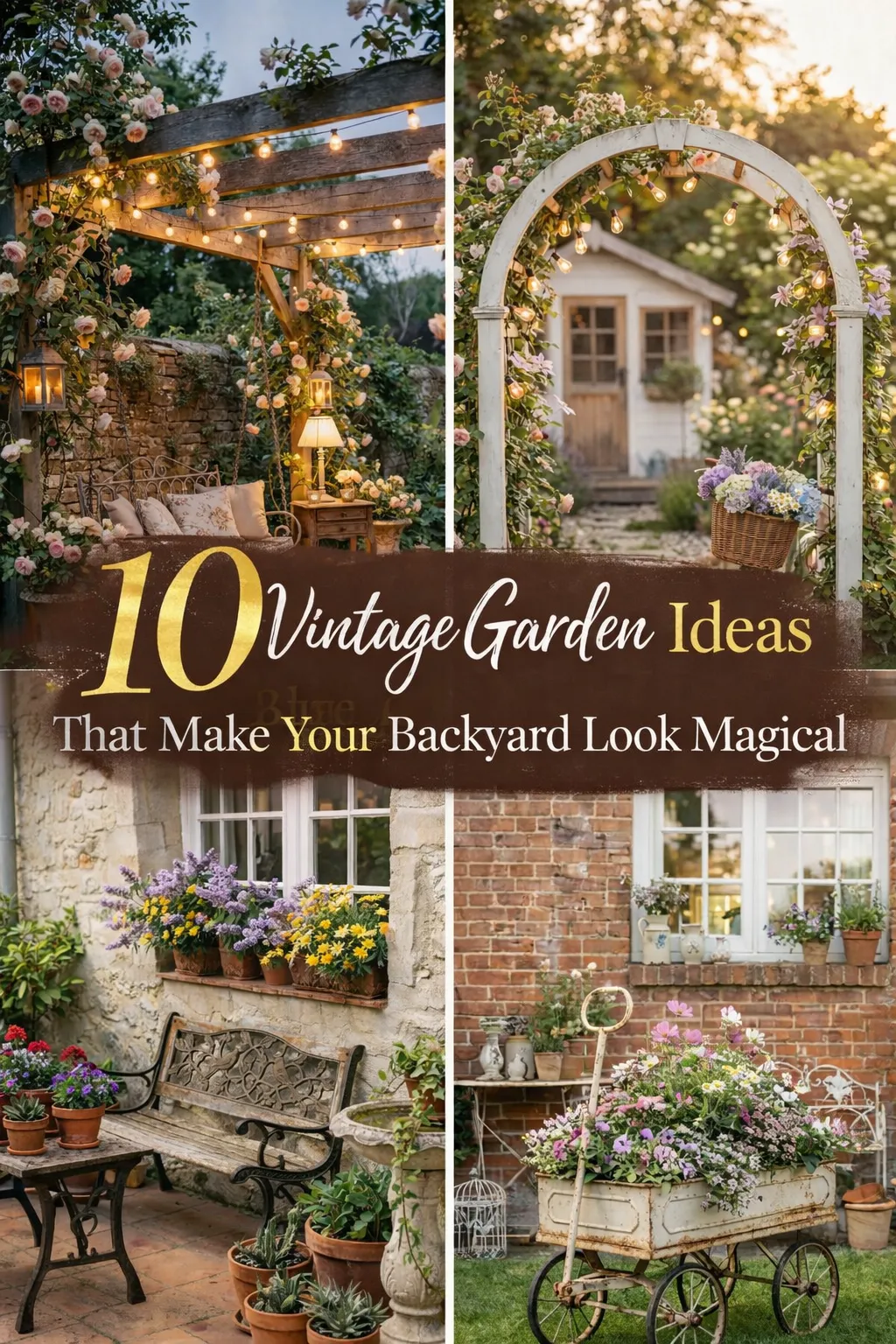
Some gardens look like they are done. Some people feel “lived in,” which is a whole different thing.
When a garden is done, the pots match, the hedges are symmetrical, and everything is in its right place. In a lived-in garden, there is a stone bench that looks like it has been through three owners, a birdcage that glows softly among the ferns, and a rusted cart overflowing with wildflowers that somehow looks better for not being new. That second garden is what vintage style makes, and it is much easier to do than most people think.
When you design a vintage garden, you do not have to look for rare antiques or spend a lot of money at estate sales. It is about knowing why old, rough, story-rich things feel so at home outside and then using that knowledge on purpose. The heavy lifting is done by patina, contrast, layered materials, unexpected focal points, and warm lighting. The plants and buildings do the rest.
Here are ten specific ways that vintage style can change any outdoor space without being too loud.
1. Stone Patio With Vintage Iron Bench — The European Courtyard Effect
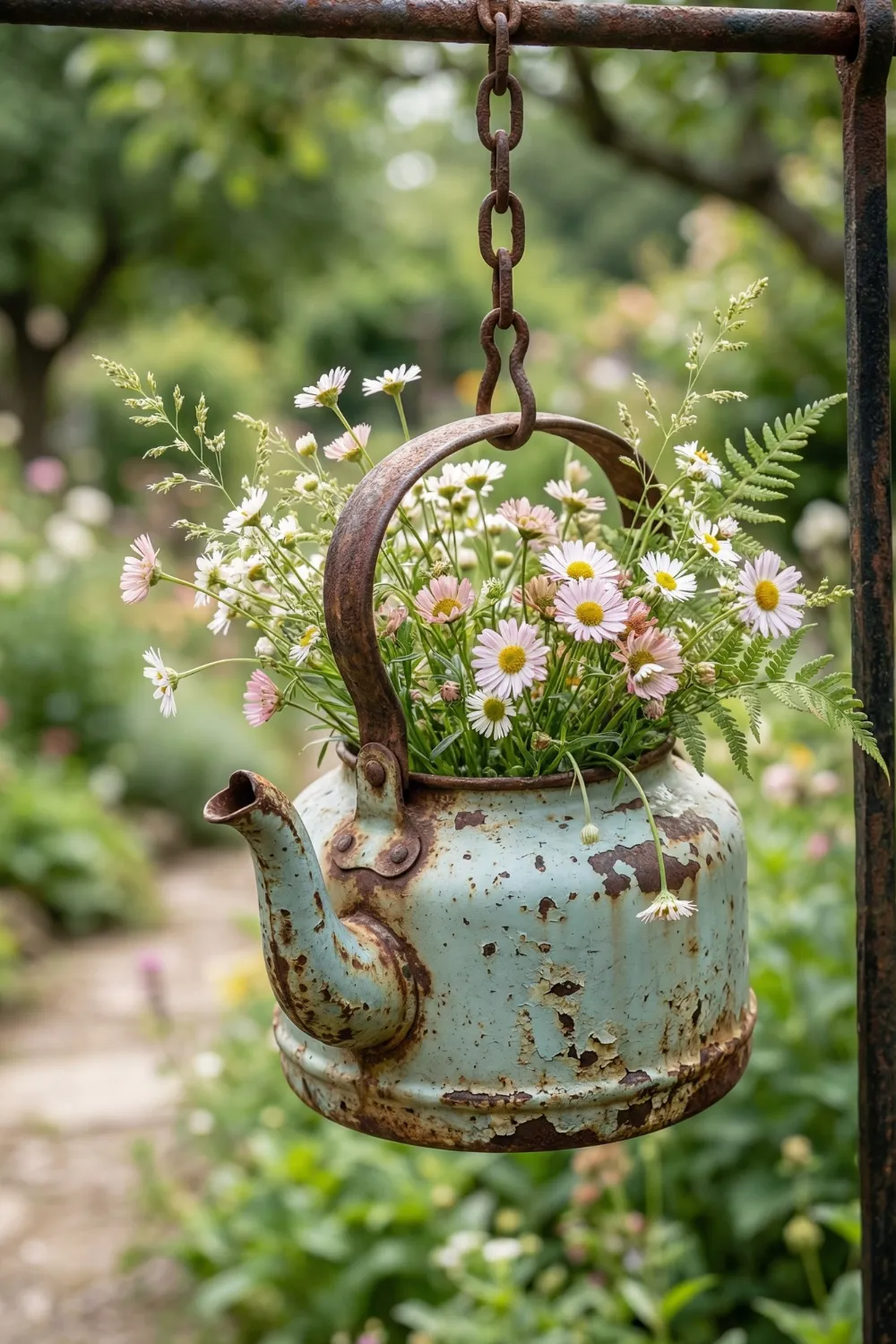
You don’t need a Tuscan villa to achieve that sunlit European courtyard feeling. A stone or terracotta tile patio, one well-chosen iron bench, and a pair of window boxes filled with seasonal blooms will get you surprisingly close.
The design principle at work here is material contrast. Rough stone underfoot, dark forged metal in the furniture, warm clay in the pots, and soft petals in the planting — each surface has a completely different texture, and that variety is what gives vintage outdoor spaces their visual richness. When every material in a space has the same finish or sheen, the result feels modern. When textures clash slightly, it feels old, in the best possible way.
Making the composition work:
- Treat the window directly behind the seating like a mini stage — two symmetrical flower boxes filled with geraniums, daisies, or trailing lobelia create an instant backdrop that frames the bench
- Vary pot heights around the seating area: one tall urn, a couple of mid-height terracotta pots, one low tray of herbs — this staggered approach reads as “collected over time” rather than “purchased together last weekend”
- A birdbath or small stone figure placed a few feet away gives the eye somewhere to travel after taking in the main seating
The goal isn’t a coordinated outdoor furniture set. It’s a corner of the garden that looks like it evolved organically.
2. Romantic Pergola Swing With Climbing Roses — Vertical Layering at Its Best
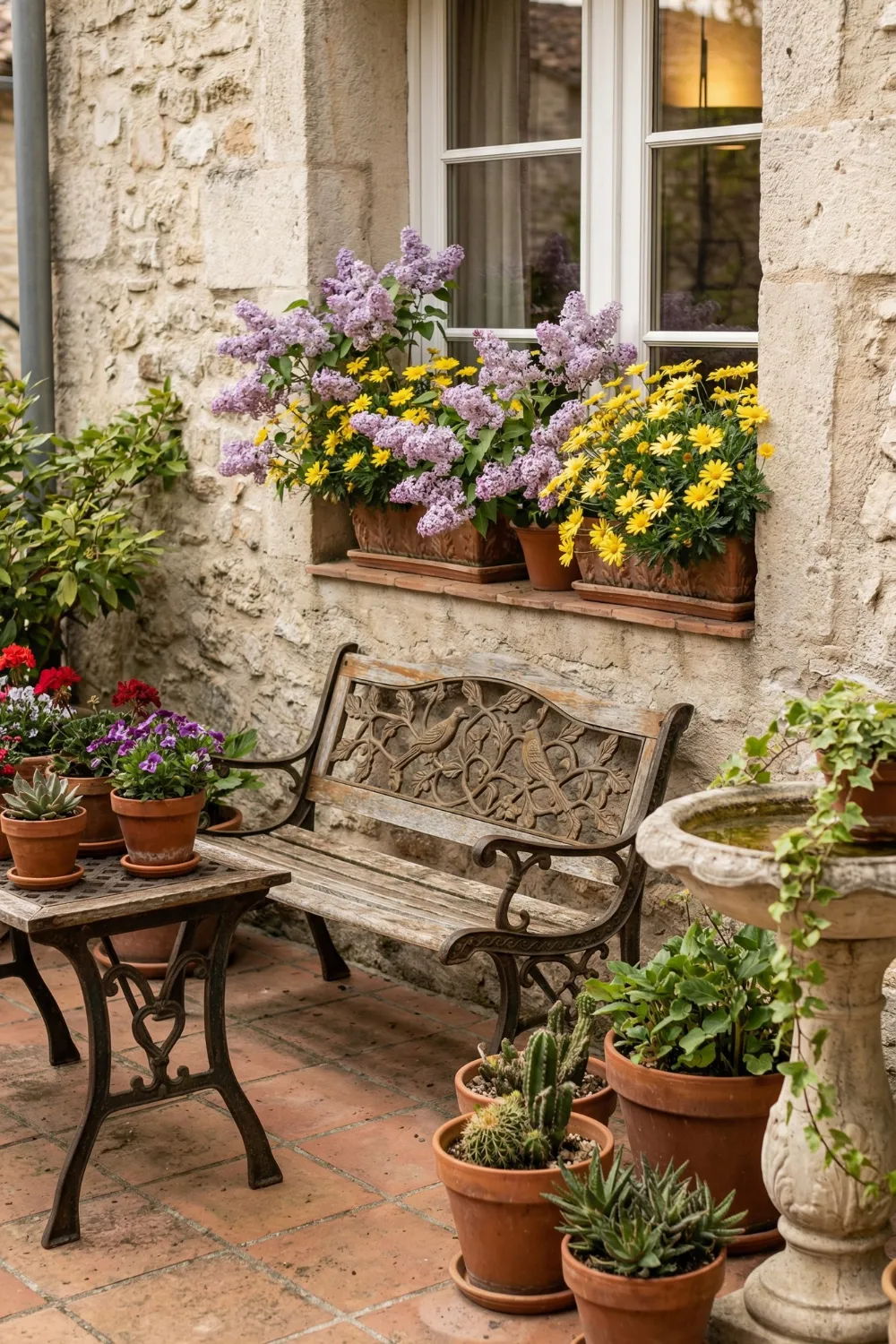
One of the best things you can do for your garden is to put up a wooden pergola with a swing bench. Climbing roses are what make structural wood feel truly magical.
The idea behind this design is to stack things vertically. Most gardens are laid out horizontally, with plants on the ground, some shrubs, and maybe a tree in the back. A pergola adds a third dimension: height. When climbing plants, hanging lanterns, and draped string lights fill that vertical space, the garden feels more like a real place instead of a flat one.
Instead of tying climbing roses or jasmine tightly to the pergola beams, let them climb loosely. You want the growth to look like it was planned, not forced. A few stray tendrils add to the charm; they make the garden look alive and a little wild, which is what vintage styling is all about.
Styling the swing itself:
- Cushions in faded florals, dusty linen, or soft sage green keep the palette feeling aged and romantic — avoid anything too bright or too crisp
- Layer textures: a cotton cushion base, a linen throw, a small embroidered pillow — vintage design rewards textile layering
- A small wrought iron side table with a potted fern or trailing plant nearby completes the vignette and adds the “someone actually lives here” quality that makes garden spaces feel real
Add soft string lights or a hanging lantern for evening use. This is where the transformation from “daytime pretty” to “evening magical” happens.
3. Rustic Birdbath as Garden Focal Point — The Statement Necklace Principle
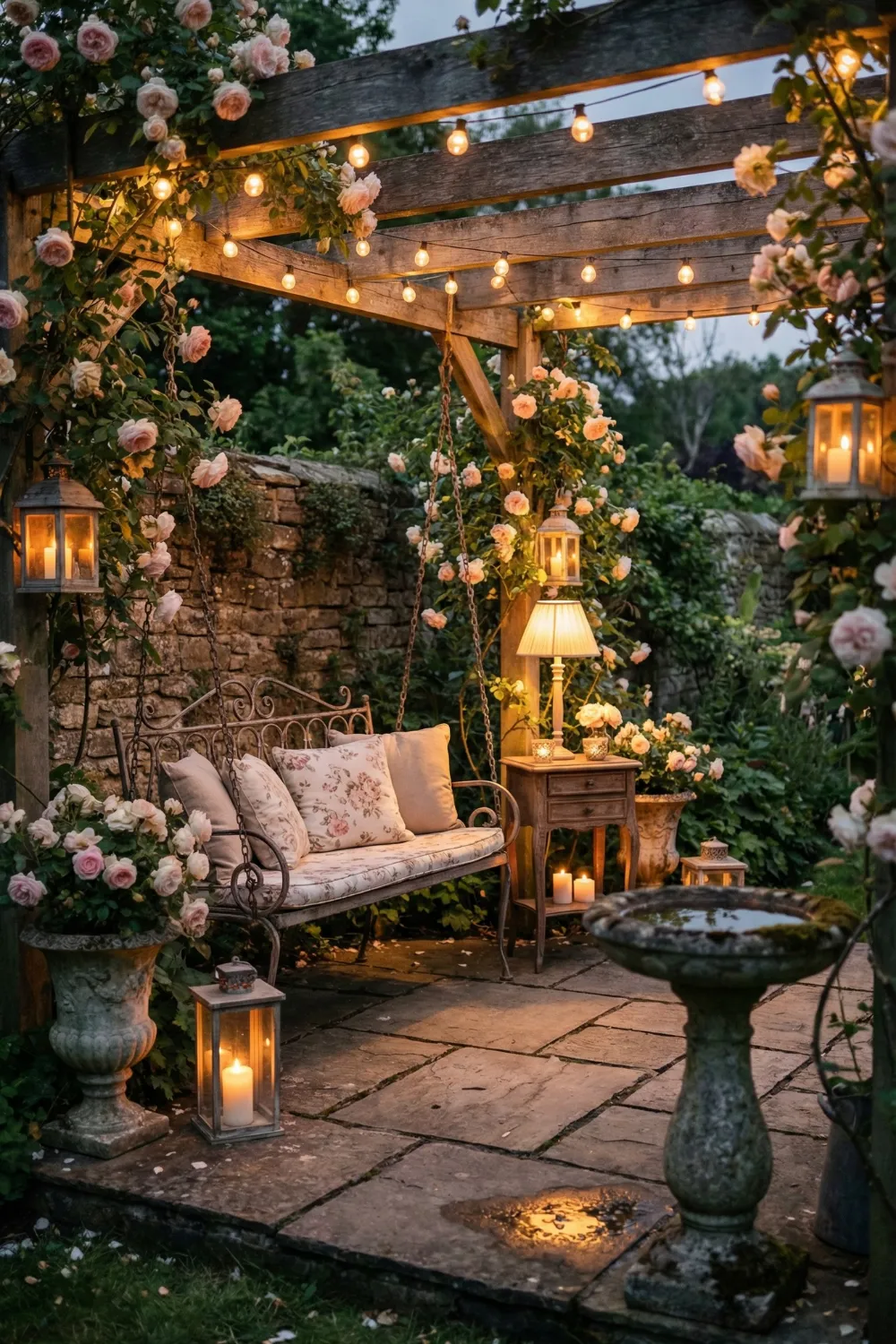
At least one thing in a well-designed garden should draw the eye. A sculpted pedestal birdbath is a great way to do this in cottage and vintage garden styles. It is tall, it stands out, and it makes a natural gathering point in the plants.
Placement is the most important thing. Put a birdbath where two paths meet or where your eye naturally lands when you look out from the house or patio. A birdbath that is in the wrong place looks like junk in the garden, while one that is in the right place looks like the garden was made around it (even if it was added years later).
Surrounding plant composition:
- Low ground cover or herbs immediately at the base — thyme, creeping chamomile, or silvery lamb’s ear all work well
- Mid-height flowering plants ringing the birdbath — lavender, echinacea, or old English roses
- Taller shrubs or grasses behind it as a backdrop that makes the structure read clearly against the planting
Gravel or irregular stone around the base serves two purposes: it visually frames the birdbath as a feature, and it improves drainage so the surrounding soil stays healthy. Small hardscape moments like this are what separate a garden that has features from one that showcases them.
4. Vintage Lanterns Along a Rose Garden Path — Light as a Design Tool
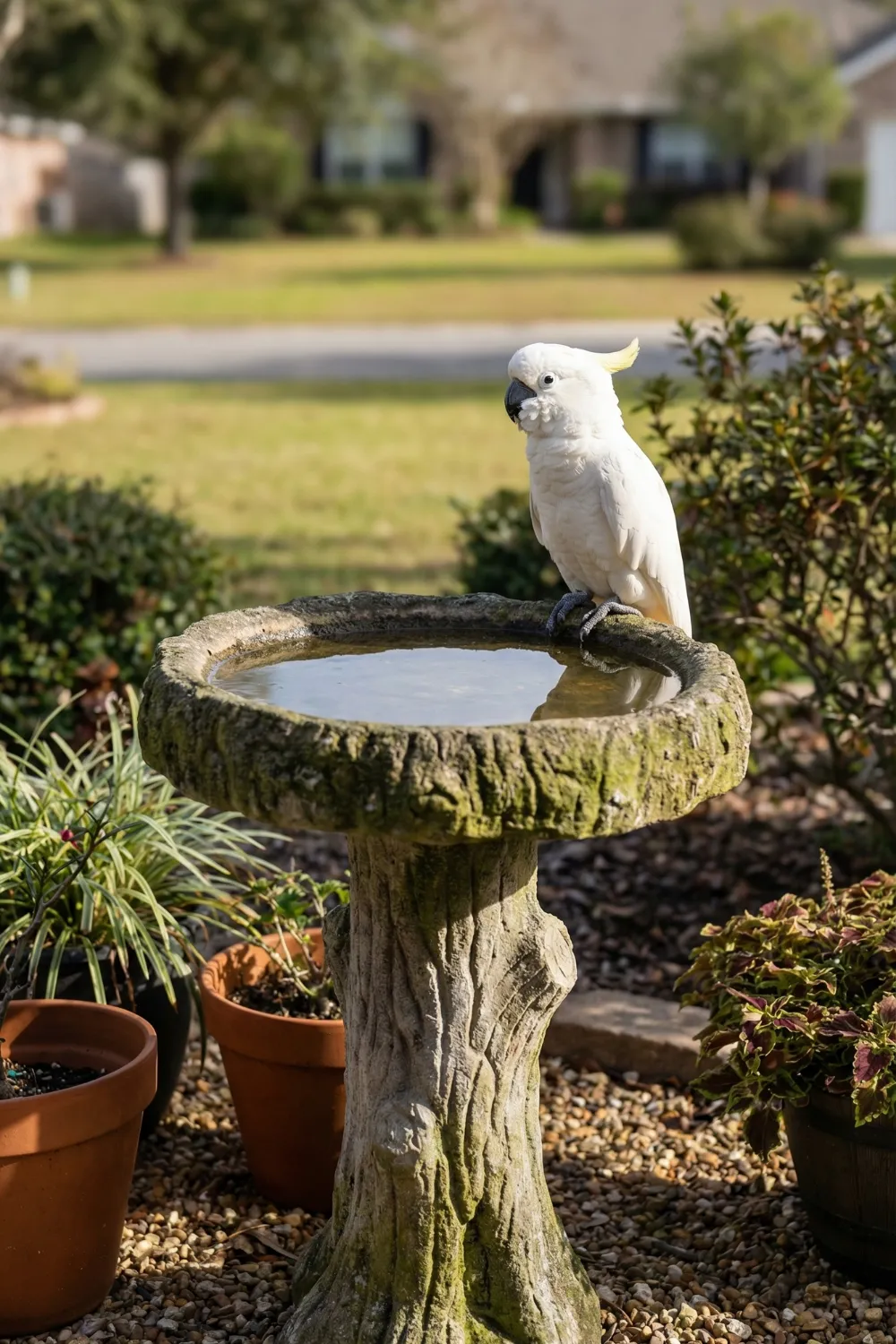
The most underused design tool in garden styling isn’t a plant or a piece of furniture — it’s light placed at the right height in the right location.
Along a winding stone or gravel path, vintage-style lanterns do something that modern garden lighting does not do very often: they make the garden feel like a place to be after dark, not just something to look at through a window. A lantern’s warm amber glow among climbing roses and an ivy-covered fence makes for a beautiful picture, but it feels even better in person.
The difference between lanterns that look like they were put in on purpose and those that look like they were put in by chance is how they relate to planting. Instead of putting lanterns right in the middle of a path edge, tuck them slightly into planting beds. Let the leaves around the light source partially frame it. This makes it look like the lantern has been there long enough for the garden to grow around it.
Practical tips:
- Solar-powered vintage lanterns have improved dramatically — they give the same warm glow without electrical installation and work perfectly for winding garden paths far from power sources
- Alternate lantern heights if possible: one at knee level, the next at ankle level, the next elevated slightly on a low pedestal — varying heights prevent the lighting from feeling like airport runway markers
- Wooden fences, trellises, and climbing rose walls make ideal backdrops because they reflect and soften the lantern light
5. Repurposed Garden Cart Flower Display — History as Decoration
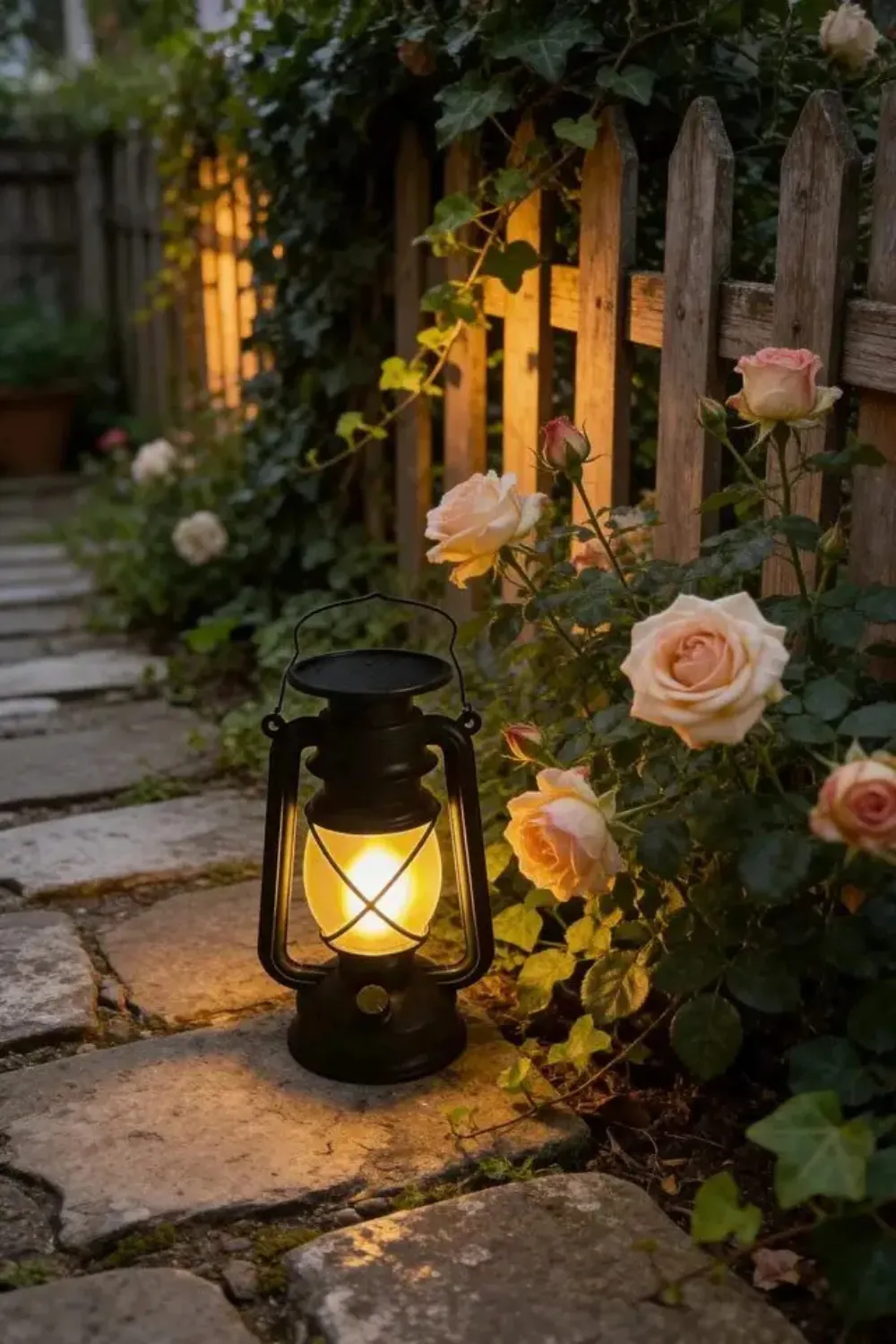
A rusty metal cart or an old wooden wheelbarrow full of flowers is one of the best ways to style a vintage garden. It costs very little, takes only a few minutes to set up, and adds a lot of character.
The reason that repurposed things work so well outside is that they tell a story. A new terracotta pot is just a pot. The cart has peeling paint and a wheel that is not quite straight. It looks like it spent years in a walled kitchen garden before being turned into this flower display. That imagined history is worth more than any new garden tool you could buy.
Plant composition inside the cart:
- Trailing varieties at the edges — bacopa, trailing verbena, creeping Jenny — that spill over the sides and blur the line between container and garden
- Medium-height blooms filling the center body — petunias, marigolds, or zinnias for colour
- One or two taller stems for vertical interest — cosmos, tall salvia, or ornamental grasses.
Put the cart up against a brick wall, a garden shed, or a stone fence so that it interacts with the architecture. When vintage items are placed in a way that makes sense with their surroundings, they look like they belong there. When they are just floating in space with nothing around them, they look like clutter. Let ivy or a trailing plant hang over the edge of the cart and onto the ground around it. This one detail makes the piece look like it has been around for a long time.
6. Whimsical Metal Sculpture Garden Accent — The Element of Surprise
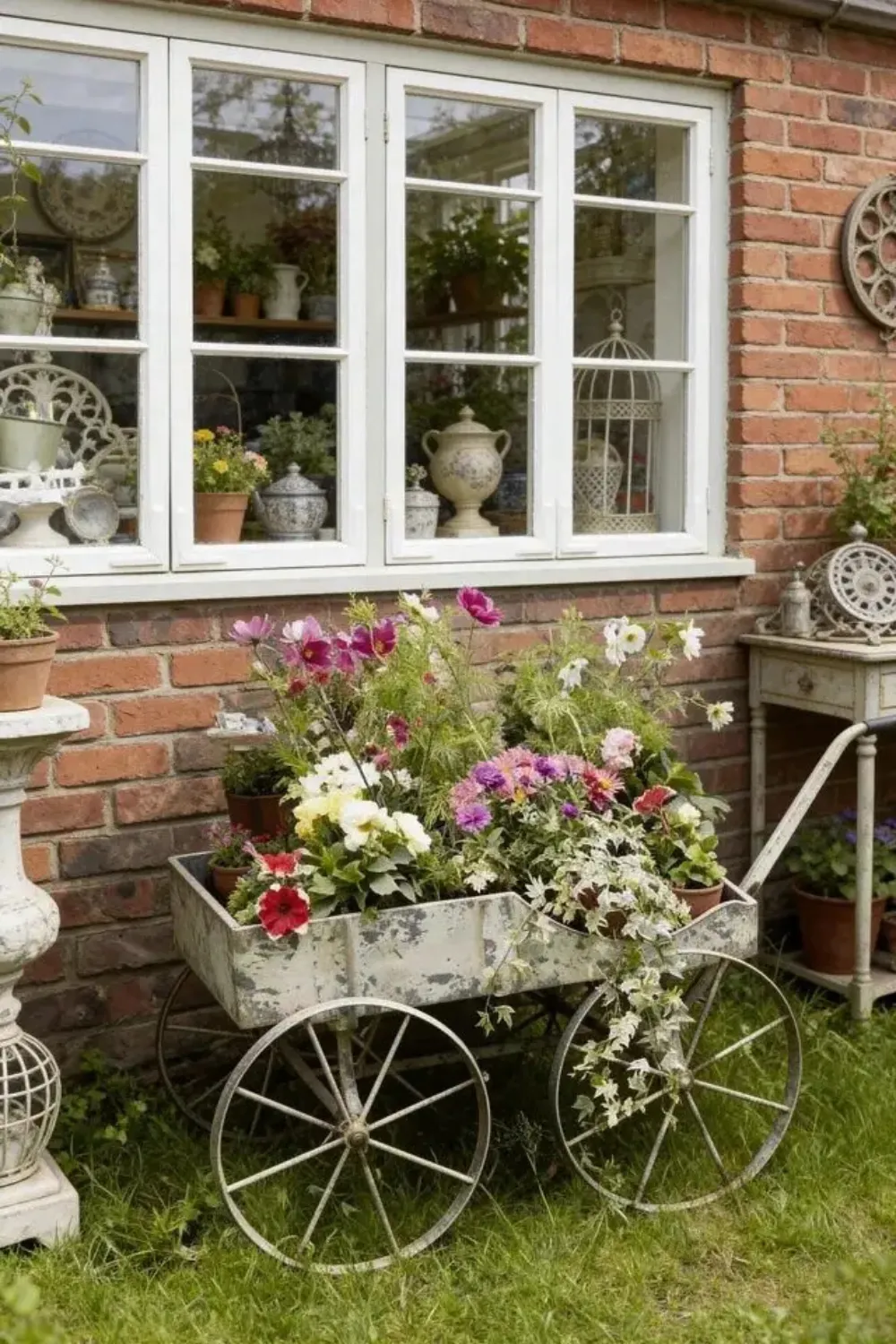
At least one thing in the best vintage gardens should make people stop and look twice. A unique metal sculpture, like a mechanical figure, a weathered animal shape, or an abstract collection of reclaimed parts, shows the personality of the person who designed the space in a way that plants and regular garden furniture can’t.
The idea behind this design is to make things look different on purpose. A sculptural piece that is a little industrial and a little strange is placed among soft, natural plants. This creates a tension that makes both elements more interesting. The plants look more lush when they are next to something hard and angular, and the sculpture looks more interesting when it is next to something living and green.
Placement and context:
- Elevate the piece slightly — a low wooden platform, a flat stone, or a simple plinth — so it has presence without dominating
- Position it along a garden path rather than center stage, so it feels discovered rather than displayed
- Surround it with leafy, full-foliaged plants (hostas, ferns, or large-leaved perennials) that frame it without competing
Seek out reclaimed metal pieces, old farm equipment repurposed as sculpture, or handmade yard art from local makers. The imperfections — rust, uneven welds, mismatched parts — are exactly what make these pieces work in a vintage garden context.
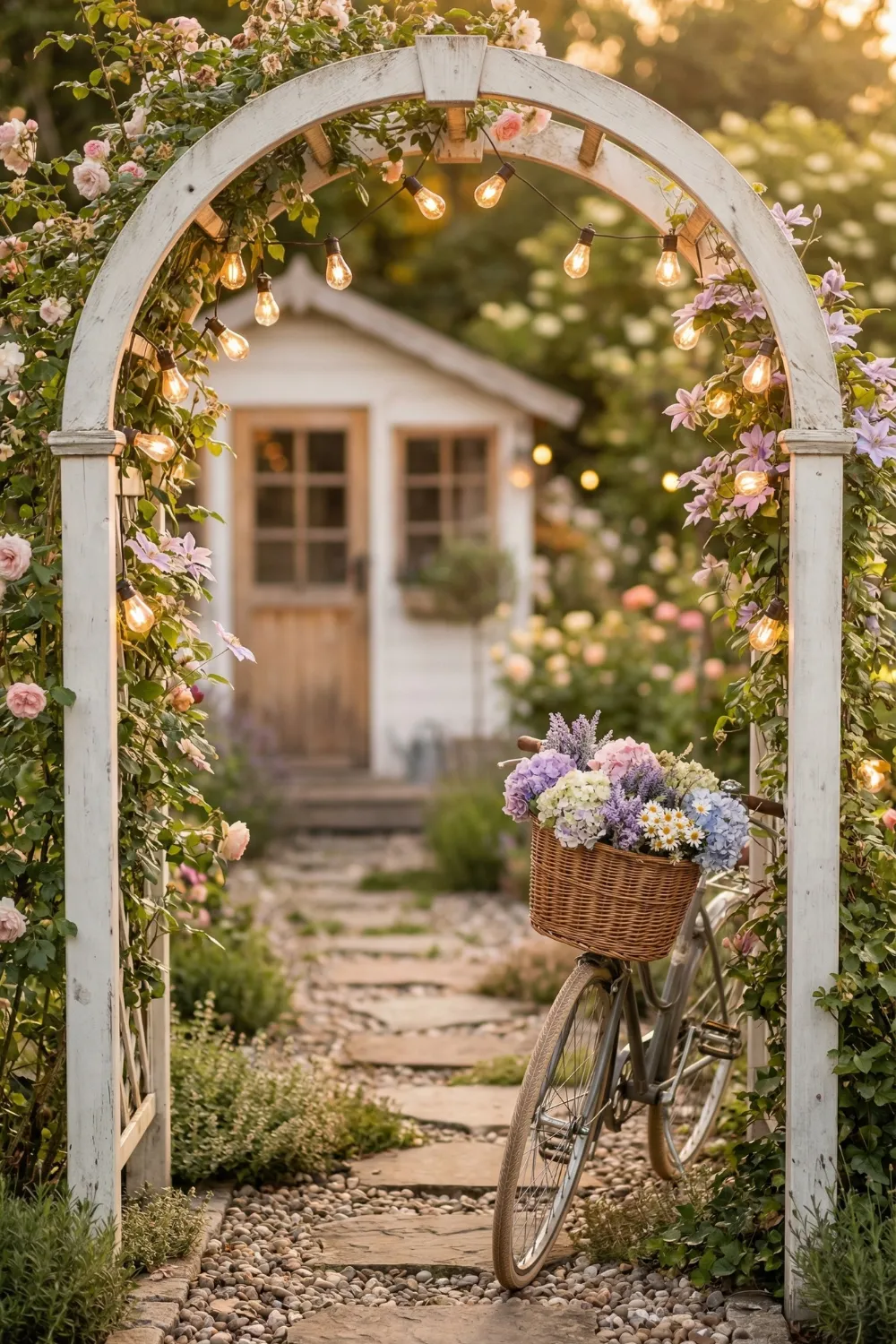
7. Cottage Garden Archway With Vintage Bicycle — Framing as a Design Tool
One of the oldest design moves in landscape history is to put an arch at the entrance to a garden. It still works because the psychology behind it is sound. A threshold that separates two areas gives you a sense of discovery. The garden beyond the arch always looks better with that frame than it does without it.
This arch goes from being a piece of garden architecture to a piece of garden storytelling because of the old bike leaning against it. Someone who rides a bike, cuts flowers, or stops here on their way to somewhere else lives in this garden. Things that suggest people have been there make outdoor spaces feel lived in and cozy instead of just pretty and still.
Building this effect:
- Train climbing roses, jasmine, or wisteria over the arch — these are the classic cottage choices because their flowers soften the wooden structure and their fragrance adds a sensory layer
- A basket mounted on the bicycle handlebars filled with seasonal blooms is a simple detail that photographs beautifully and reinforces the cottage aesthetic
- Soft string lights draped across the arch structure create evening warmth and make the entrance feel welcoming after dark as well as during the day
The most important rule: don’t over-style the bicycle. One flower basket, two at most. Let the bike look like it belongs there, not like it was styled for a photoshoot.
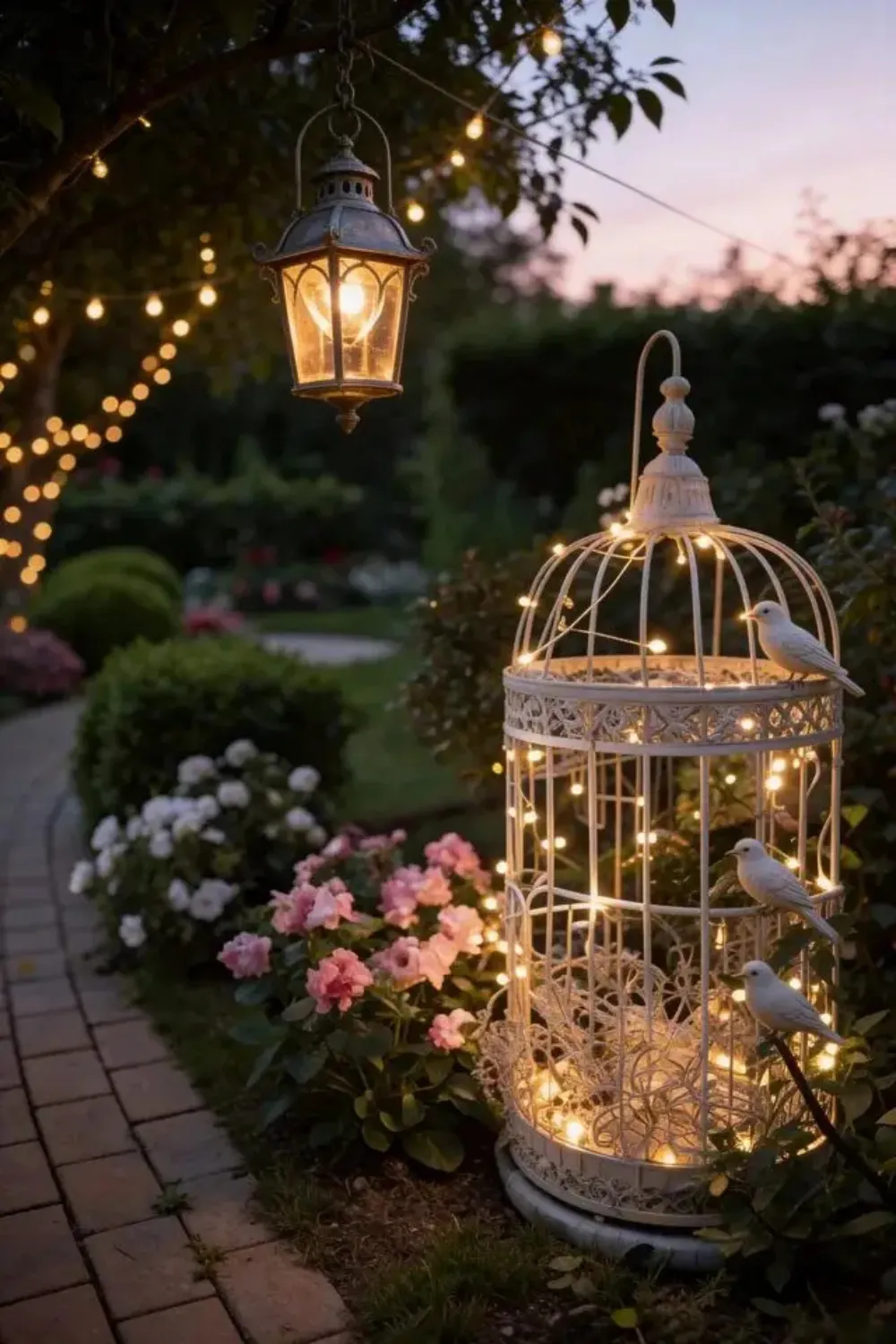
8. Glowing Birdcage Lantern for Evening Gardens — Layered Light Sources
A vintage birdcage with fairy lights or a small candle lantern is the kind of decoration that seems too simple at first. But when you see it glowing among ferns at dusk, you get why it is so appealing.
The illuminated birdcage is a good design element because it can be both a sculpture and a light source at the same time. During the day, it looks like a pretty decoration. At night, it glows and becomes the main focus of the planting around it, changing the whole mood. Very few decorative items look good both during the day and at night.
Positioning for maximum effect:
- Place it slightly off-center from a garden path so it illuminates both the walkway and the adjacent planting rather than pointing straight down
- Position it at roughly knee to mid-height — either hung from a low branch or set on a short pedestal — so the light casts warmth at eye level when seated rather than pointing at the sky
- Pair with a hanging lantern at overhead height nearby to create layered light sources at two different levels
The combination of ground-level birdcage glow and an overhead lantern creates the same layered lighting effect interior designers use in living rooms — ambient plus accent — just translated to a garden setting.
9. Ornate Vintage Urn Planter — When the Container Is the Statement
In most container planting, the vessel is meant to disappear — a neutral backdrop for the flowers. The ornate vintage urn inverts this completely. The container is the point. The planting is what softens and activates it.
Aged metal urns with decorative detailing have a formal, old-world quality that contrasts beautifully with casual cottage planting. That contrast — between the structured, almost architectural form of the urn and the relaxed organic spill of trailing plants — is what creates visual interest. Either element alone would be ordinary; together they create tension that holds the eye.
Plant selection for urns:
- Trailing varieties are essential — creeping Jenny, string of pearls, trailing thyme, or ivy — because they spill over the urn’s lip and soften the hard edge between vessel and air
- Add one upright plant at the center for height — a small ornamental grass, a structural succulent, or a spiky cordyline
- Resist the urge to fill the urn to overflowing; leaving some visible soil at the top allows the urn’s interior detailing to remain part of the composition
Position urns on steps, raised platforms, or low plinths where their silhouette reads clearly against the surrounding garden. An ornate urn sitting directly on grass tends to get visually lost; elevated even slightly, it becomes a feature.
10. Storybook Fox Lantern Along Garden Pathways — Personality as Design
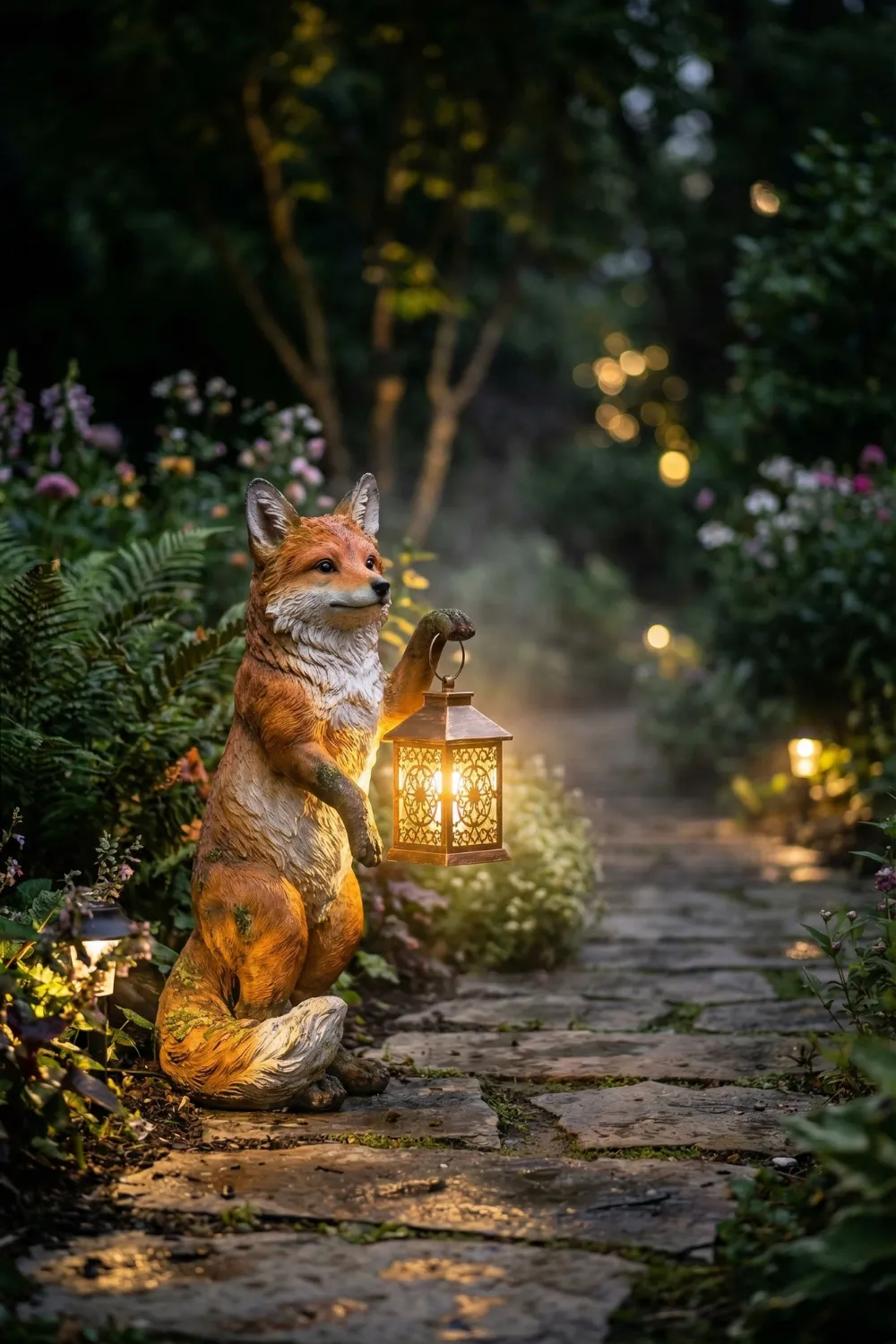
Of all the elements in vintage garden styling, the ones that get remembered longest are the ones with personality. A fox sculpture carrying a lantern along a woodland-style garden path is precisely that kind of element — charming, slightly unexpected, and utterly specific to the person who put it there.
Character statues work best when they feel placed rather than planted. A fox lantern tucked among ferns at the edge of a stone path looks like it wandered in from the surrounding garden. A fox lantern sitting in the center of a neat lawn looks like it was purchased and positioned. The first reads as magical; the second reads as decor.
Creating the woodland path effect:
- Use irregular natural stone pavers rather than uniform concrete — the slight variation in size and level makes the path feel ancient
- Plant densely on both sides: ferns, ivy, low hostas, and mossy ground cover create that enclosed, forest-floor feeling that makes character statues feel at home
- Add two or three additional lanterns further along the path so the fox becomes the first point in a glowing trail rather than an isolated piece
The warm light cast by the lantern onto the surrounding stone and foliage creates a small pool of atmosphere that draws the eye and invites closer inspection — which is exactly what the best garden details do.
The Design Logic Behind Vintage Garden Charm
After ten different styling approaches, a handful of principles consistently appear. These are the ones that actually explain why vintage garden decor works — and they’re worth internalizing before making any purchasing or planting decisions.
Patina is a feature, not a flaw.
Rust, weathered paint, worn stone, and aged wood carry visual information that new materials can’t replicate. They suggest time, history, and a garden that has been tended across seasons. Seek out pieces with visible age rather than avoiding them.
Focal points control the experience.
A garden without a focal point is just a collection of plants. One strong anchor — a birdbath, a sculpture, a glowing lantern, an arch — gives the eye a place to land and a place to return to. Build your planting around it rather than adding it as an afterthought.
Vintage pieces need architectural context.
Objects placed against walls, fences, gates, and structures always look more intentional than objects floating in open space. The architecture provides the frame; the vintage piece becomes the picture within it.
Lighting transforms gardens twice daily.
During the day, lanterns and birdcage lights function as decorative sculpture. After dark, they become the primary design element — creating atmosphere, defining zones, and revealing the garden in an entirely different way. Plan for both.
Repurposed objects earn their place through narrative.
A cart, a bicycle, a watering can — objects that imply use and human activity make gardens feel inhabited rather than decorated. The best vintage gardens feel like they’re between moments, not frozen in a styled photograph.
Frequently Asked Questions
Q: Do vintage garden pieces need special maintenance outdoors?
It depends on the material. Iron and steel pieces benefit from an occasional coat of clear rust sealant if you want to preserve their current look; if you prefer natural rust patina, simply accept that they’ll continue to age. Wooden items should be sealed with exterior-grade sealant. For galvanized metal and ceramic, no special treatment is needed beyond bringing delicate items indoors during freezing temperatures.
Q: How do I keep vintage decor from looking cluttered?
The rule of three works well outdoors: group objects in odd numbers, and limit yourself to three distinct vintage pieces in any single sightline. A bench, a birdbath, and a lantern in one view feels curated; a bench, birdbath, lantern, cart, bicycle, and two urns in the same view feels overwhelming. Edit ruthlessly.
Q: Can vintage garden style work in a small yard?
Absolutely — vintage style often works better in small spaces because the intimate scale makes each piece more visible and impactful. In a small courtyard, one ornate urn, one climbing rose on a trellis, and two well-placed lanterns create a complete vintage atmosphere. The key is editing ruthlessly: choose three to five pieces with genuine character rather than filling every corner with objects. Small vintage gardens succeed through curation, not accumulation.


Pingback: Moody Living Room Ideas That Feel Cozy, Not Claustrophobic - Decorly Nest | Modern Home Decor Ideas