
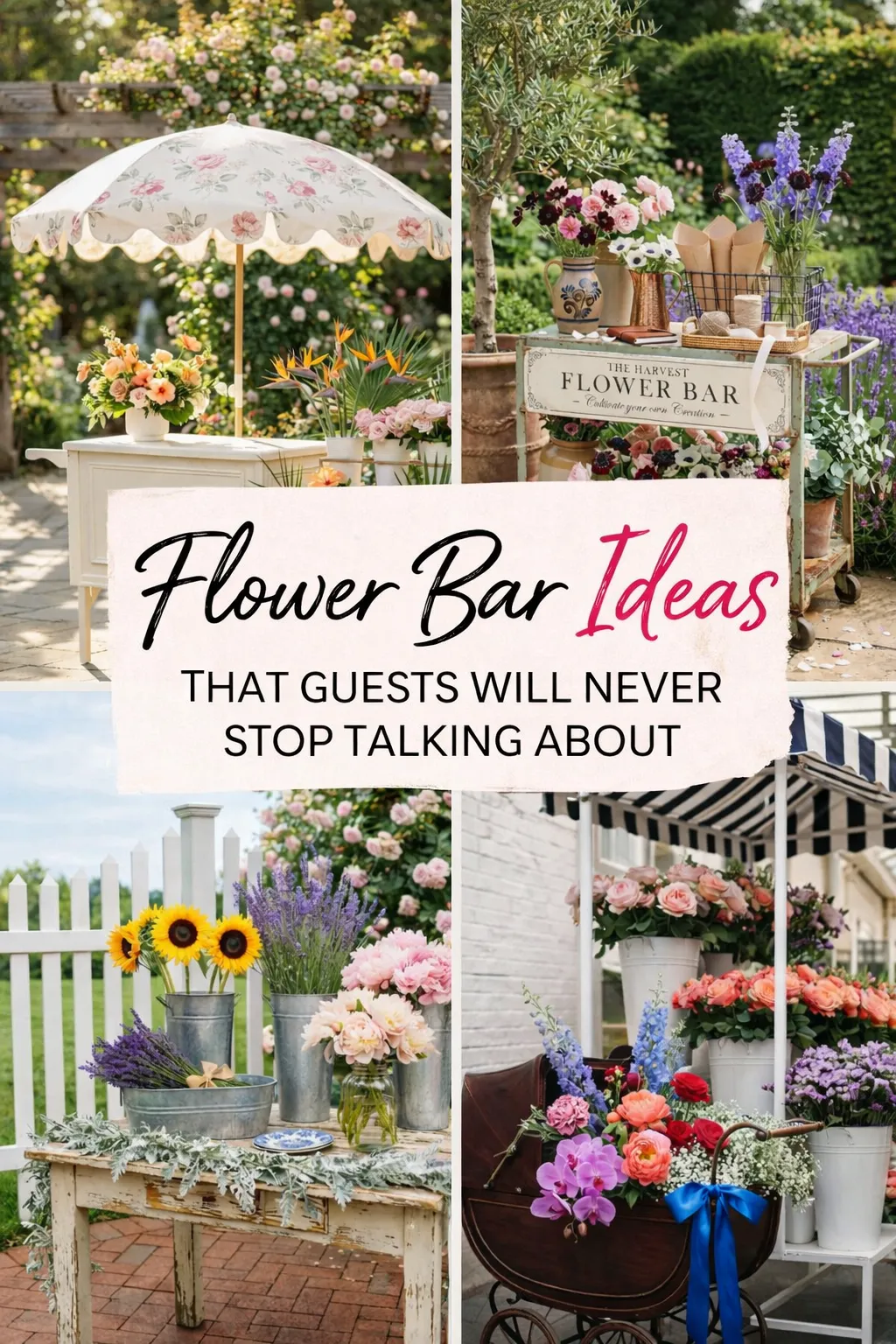
There’s a moment at every well-designed event where guests stop moving and start noticing. A flower bar — done right — is one of those moments.
There are more than just flowers on the table. A well-designed flower bar is a mix of decoration, activity, and conversation starter. Guests can choose their own stems, mix colors, wrap a bouquet, and leave with something they made themselves. That little bit of creativity is what makes a wedding or garden party feel “nice” instead of “alive.”
Here’s something that most flower bar guides do not tell you: the flowers are only half of the story. The design framework behind the display—different types of containers, height layering, color logic, and spatial organization—decides if it looks like a curated boutique florist or a bucket of stems on a folding table. This guide is for making the first one.
Table of Contents
- 1. Tiered Flower Cart With Vertical Drama
- 2. Rustic Garden Flower Bar With Natural Layers
- 3. Vintage Umbrella Flower Cart
- 4. Vintage Truck Flower Bar
- 5. Minimalist Flower Shelf Bar
- 6. Rustic Harvest Flower Bar With Artisan Details
- 7. Vintage Arched Flower Bar With Colored Bottles
- 8. Clean Coastal Flower Bar With Striped Canopy
- 9. Minimal Porch Flower Bar With Rustic Simplicity
- 10. Romantic Garden Cart Flower Bar
- 11. The Design Principles That Make Every Flower Bar Work
- 12. FAQs
1. Tiered Flower Cart Display — Vertical Drama That Commands Attention
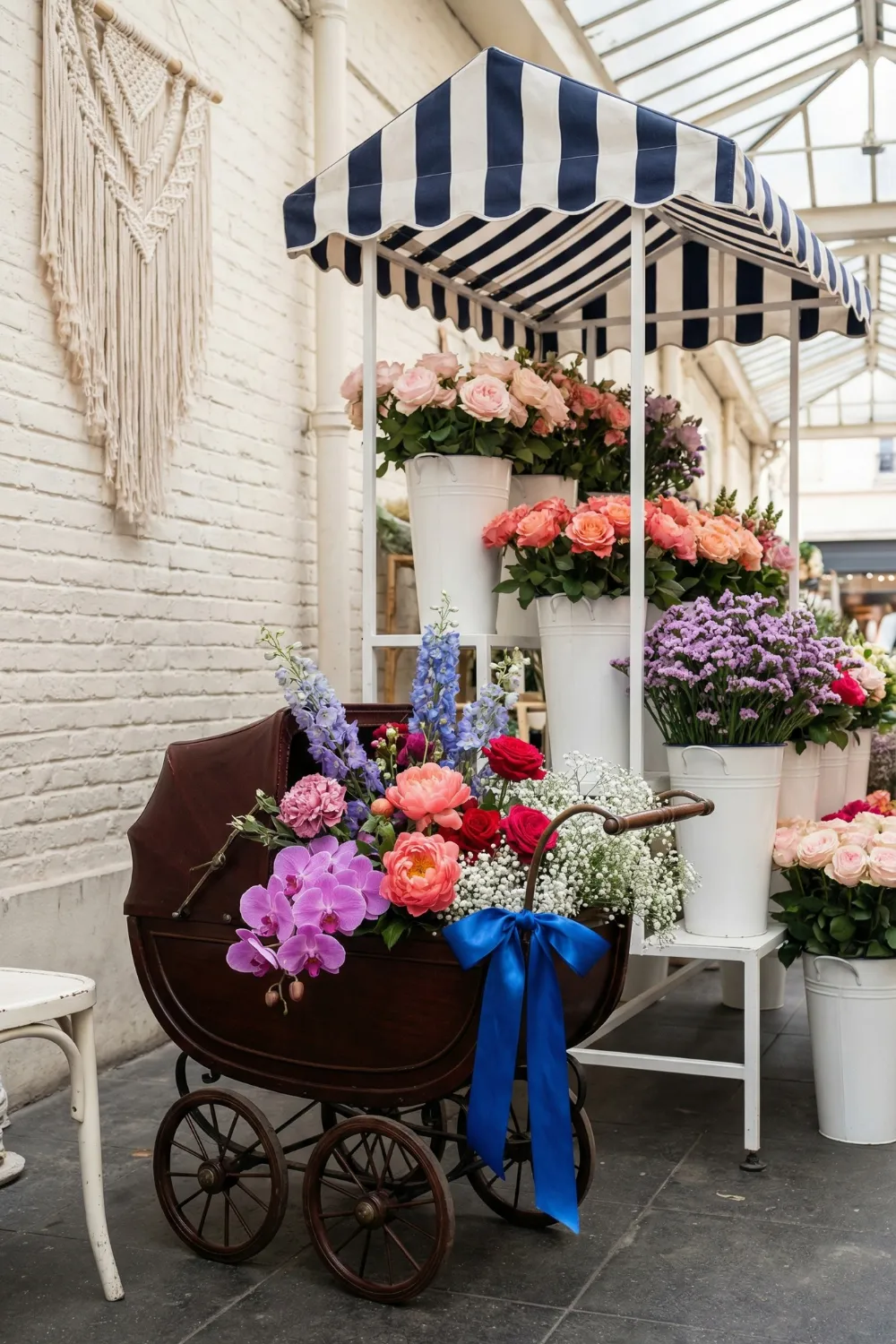
The tiered cart is the best flower bar format for both photos and in-person use. The answer is simple: the height difference. When flowers bloom at three or four levels at once, the eye goes up, the display looks full, and the whole station feels like it was planned rather than put together.
The color logic on a tiered cart should start at the bottom and work its way up. Put deeper, bolder colors like burgundy ranunculus and deep coral dahlias at the bottom and let softer colors like pale pinks and yellows climb up to the top. The cream, blush, and lavender at the top of the arrangement keep it from looking too heavy on top. It shows how professional florists think about visual weight in big displays.
What makes the styling cohesive:
- Group flowers by color family across each tier — warm tones on one side, cool tones on the other — rather than alternating randomly
- A striped awning or fabric canopy overhead creates a “roofline” that frames the station and signals to guests: this is the destination
- Wheels on the base aren’t just practical — they add to the mobile boutique aesthetic that makes tiered carts feel special
Even without a vintage cart, this format works with tiered kitchen shelving, stacked wooden crates, or a repurposed bar trolley. The principle scales to whatever you’re working with.
2. Rustic Garden Flower Bar — Letting the Environment Do Half the Work
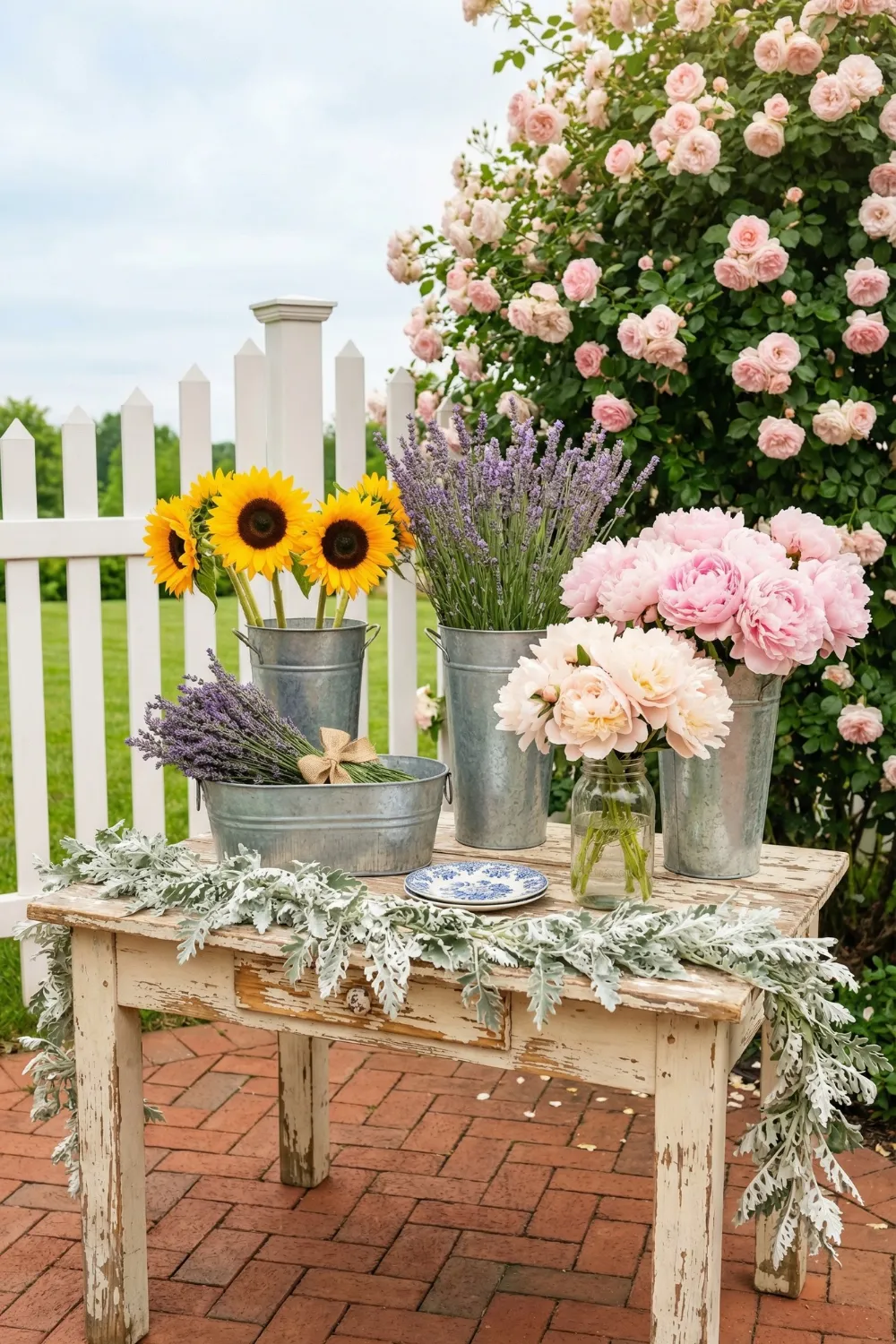
This is the flower bar format for outdoor events: a weathered wooden table, metal buckets in varying sizes, glass vases, and a lush natural backdrop doing the heavy lifting behind it.
The skyline principle is what makes a rustic setup go from “charming” to “genuinely well-designed.” Think of your flower arrangement as a city skyline, with tall flowers in the back and center, medium-height flowers on the sides, and low clusters in the front and on the edges. This three-tier silhouette adds rhythm and keeps any display from looking flat in pictures or in person.
Most people do not know how important the background is here. A white garden fence, a climbing rose wall, or a brick path behind the table can all be used as free decorations. Putting a flower bar in a natural setting instead of against a neutral background makes styling it much easier and makes it look much better. The garden is the frame.
Practical tips for this format:
- Use mismatched vessels intentionally — tall metal buckets, medium glass jars, short ceramic crocks — for an “artfully gathered” effect that looks collected rather than purchased
- Keep the table surface visible in places rather than covering it completely; negative space on a rustic wood table reads as design, not emptiness
- Add simple kraft paper, twine, or scissors in a wire basket at one end so guests understand the station is meant to be used, not just admired
3. Vintage Umbrella Flower Cart — Whimsy as a Design Strategy
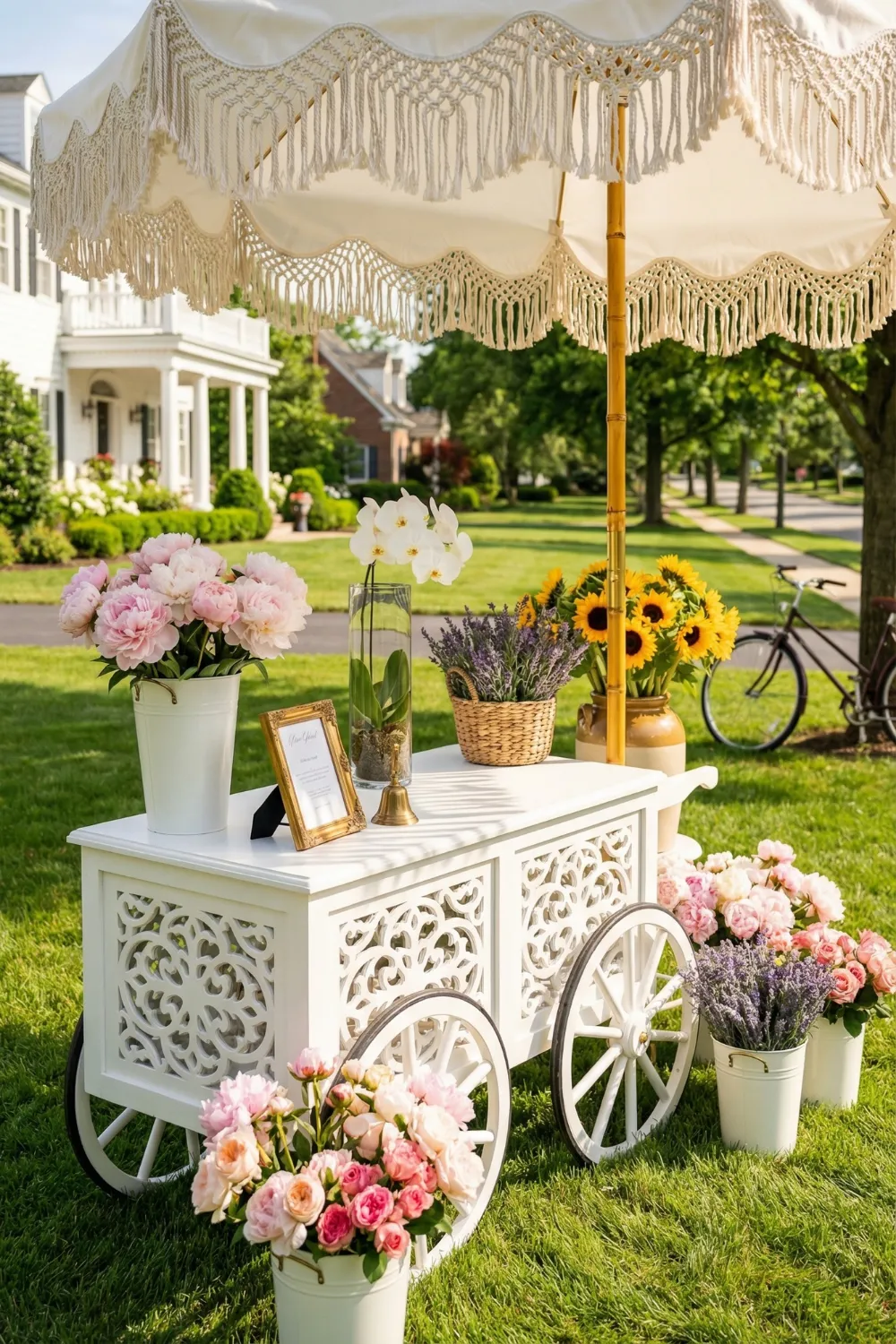
The umbrella on this cart isn’t decoration. It’s architecture.
Any part that makes a “roofline” over a display automatically raises it from station to destination. It makes the setup feel like a separate area within a larger event, which makes guests more likely to gather around it, stay there, and interact. This is a principle taken from retail design, where canopies and awnings are used on purpose to slow down foot traffic and make people stay longer.
This format’s visual balance depends on symmetry. Not the kind where everything matches perfectly, but the kind where the color weight is evenly spread out on both sides. On the left, peonies, and on the right, ranunculus. Tall stems on both ends surround shorter clusters in the middle. This balance of colors and shapes makes the display look polished even when it has a lot of texture and variety.
Small details that make a big difference:
- A framed chalkboard sign or handwritten menu card does two things simultaneously: it guides guests on how to use the station and it adds a decorative element that photographs beautifully
- A small bell, vintage scale, or botanical print adds personality without adding clutter — one or two character objects go further than a dozen
- Floor-level elements like a potted hydrangea or a basket of extra stems at the base of the cart ground the display and prevent it from feeling like it’s floating
4. Vintage Truck Flower Bar — When the Furniture Becomes the Experience
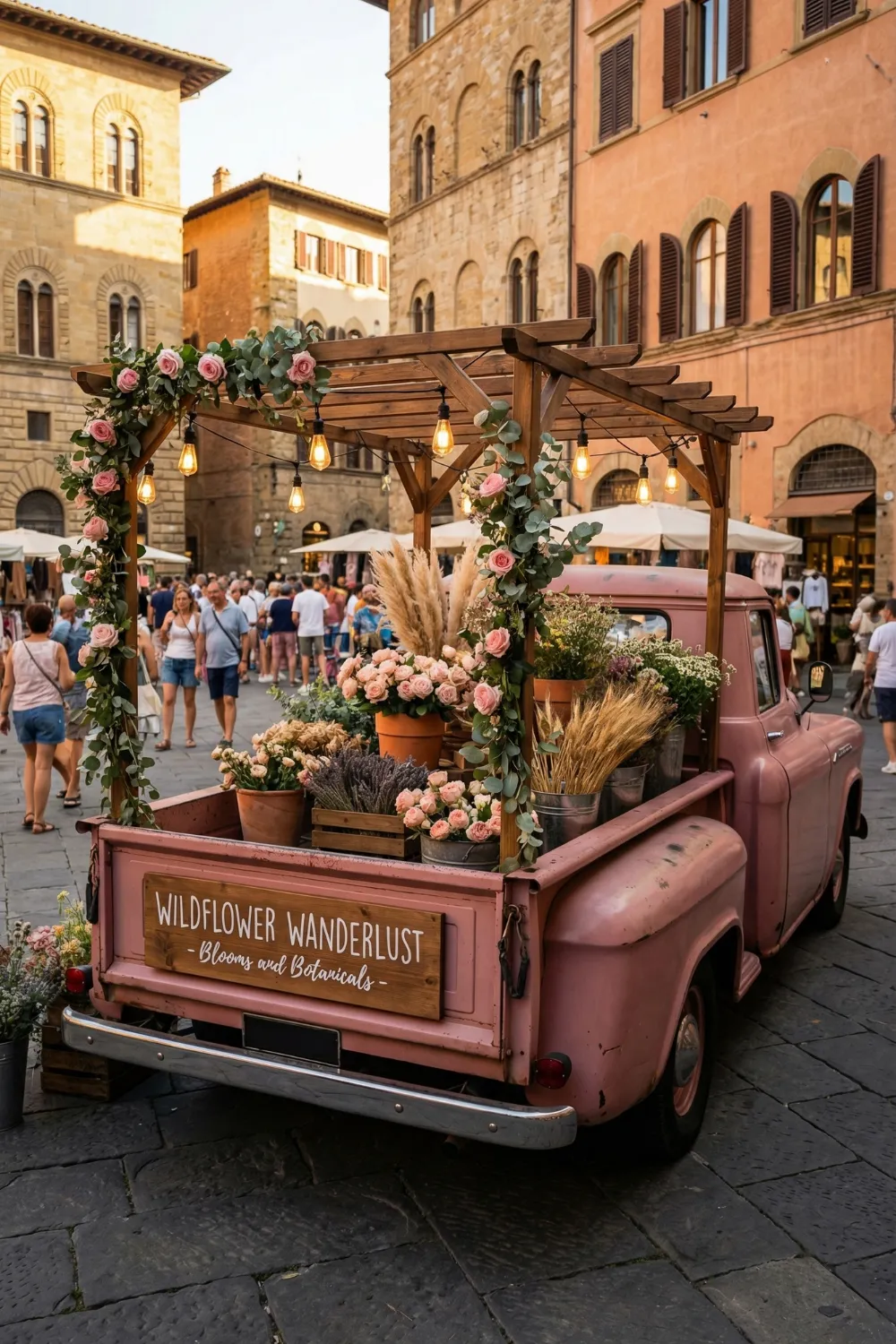
Here’s a design truth: the more personality your display vehicle has, the less work your flowers have to do.
A vintage truck turns a flower bar from a pretty display into a real story. Guests are not just picking stems; they are taking part in something that feels like a French flower market on the move or an auction for a country estate. That story is what makes the photos guests post, the memories that last, and the event that stands out from all the others they have been to.
You do not need a real old truck. The idea works for any structure that looks like a vehicle or a story, like a wooden market cart with trellis arches, a garden wagon with a canopy frame, or even a bar table with salvaged architectural parts on it. The goal is to make something that seems like it has a history, like it came from somewhere cool.
How to layer the visual weight:
- Hard structural materials (metal truck body, weathered wood) need softening agents — draping greenery, cascading vines, trailing flowers — to prevent the display from feeling heavy or industrial
- String lights woven through an overhead frame add warmth after sunset and create that “golden hour” quality of light that makes everything feel slightly more romantic
- Keep the flower styling itself relatively simple when the vehicle is statement-making — let the structure do the drama, let the blooms add color and softness
5. Minimalist Flower Shelf Bar — The Gallery Approach to Floral Design
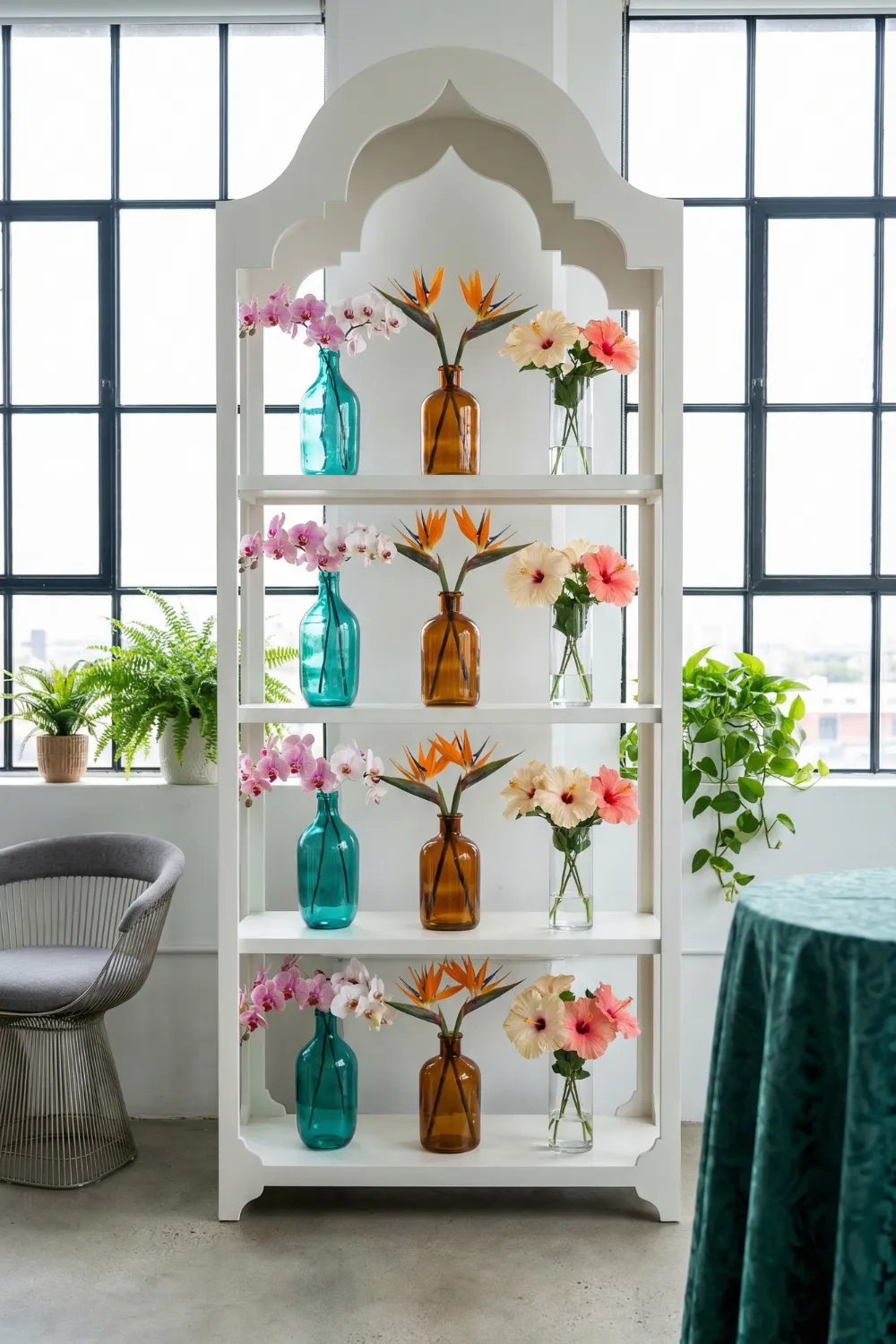
This is the flower bar for people whose aesthetic leans more Kinfolk magazine than country garden party. And it works beautifully.
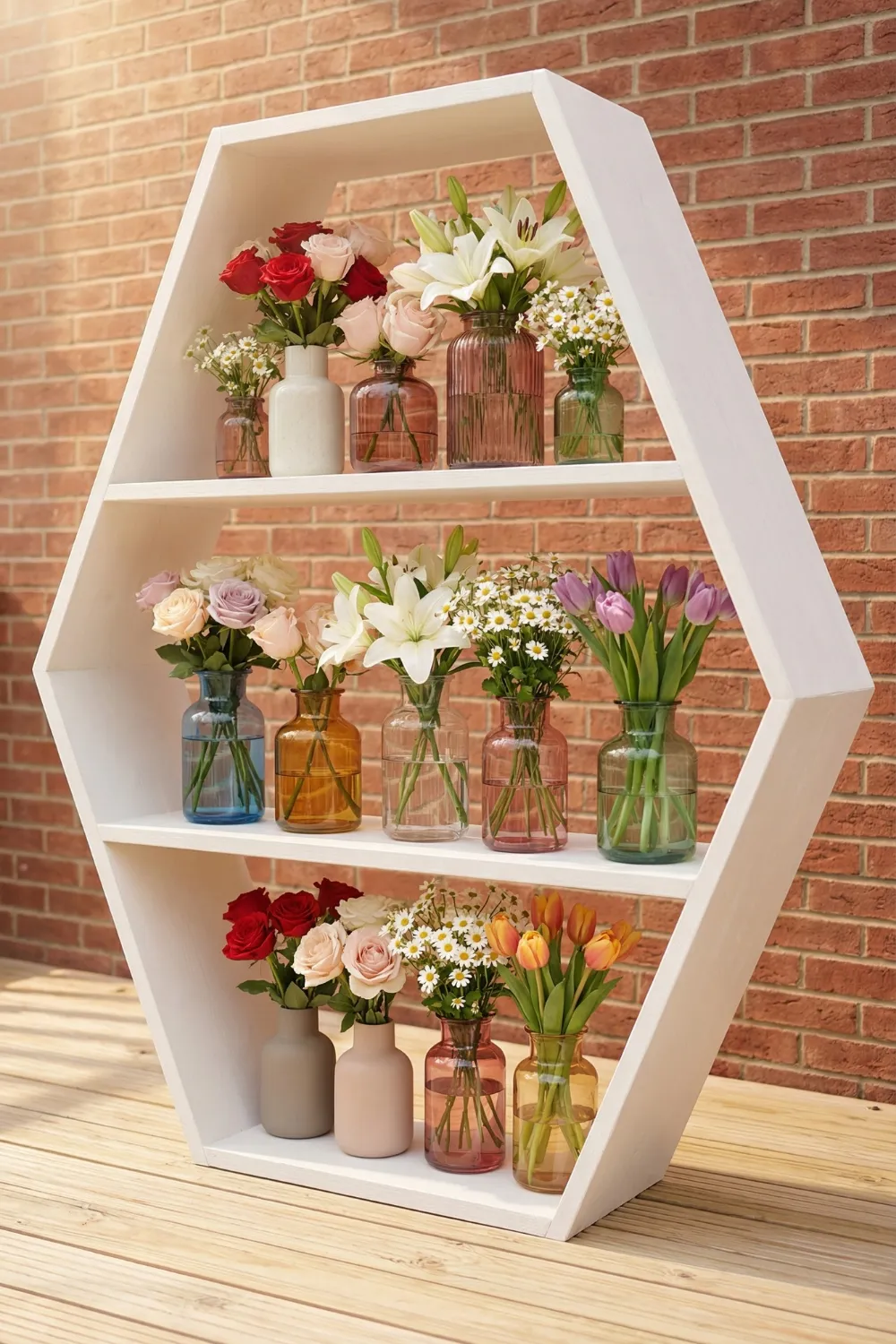
A tall shelving unit that acts as a gallery wall for flowers gives a whole new vibe to flower displays. Every vase turns into its own piece of art. People think that the space between arrangements is planned. The overall effect is editorial, like a flower display that looks like it should be in a home decor feature instead of a party setup.
Repetition with variation is the key to making minimalism work with flowers. Pick two or three shapes of vessels in two or three colors of glass, like amber, clear, or sage. Then, use the same shapes and colors on different shelves with different kinds of flowers. The vessels bring everything together, and the flowers add interest. This is how the display stays interesting without getting boring.
Lighting is non-negotiable here:
- Position the shelf in front of natural light if possible — sunlight through glass vases creates a jewel-like quality that no artificial lighting fully replicates
- If outdoors or in a venue without strong natural light, use warm white Edison bulbs placed at shelf level rather than overhead — this lights the flowers from within the display rather than casting harsh shadows from above
- Keep the backdrop clean and neutral: white wall, natural linen drape, or raw wood paneling works; anything patterned or busy will compete with the flowers
6. Rustic Harvest Flower Bar — Texture-First Styling
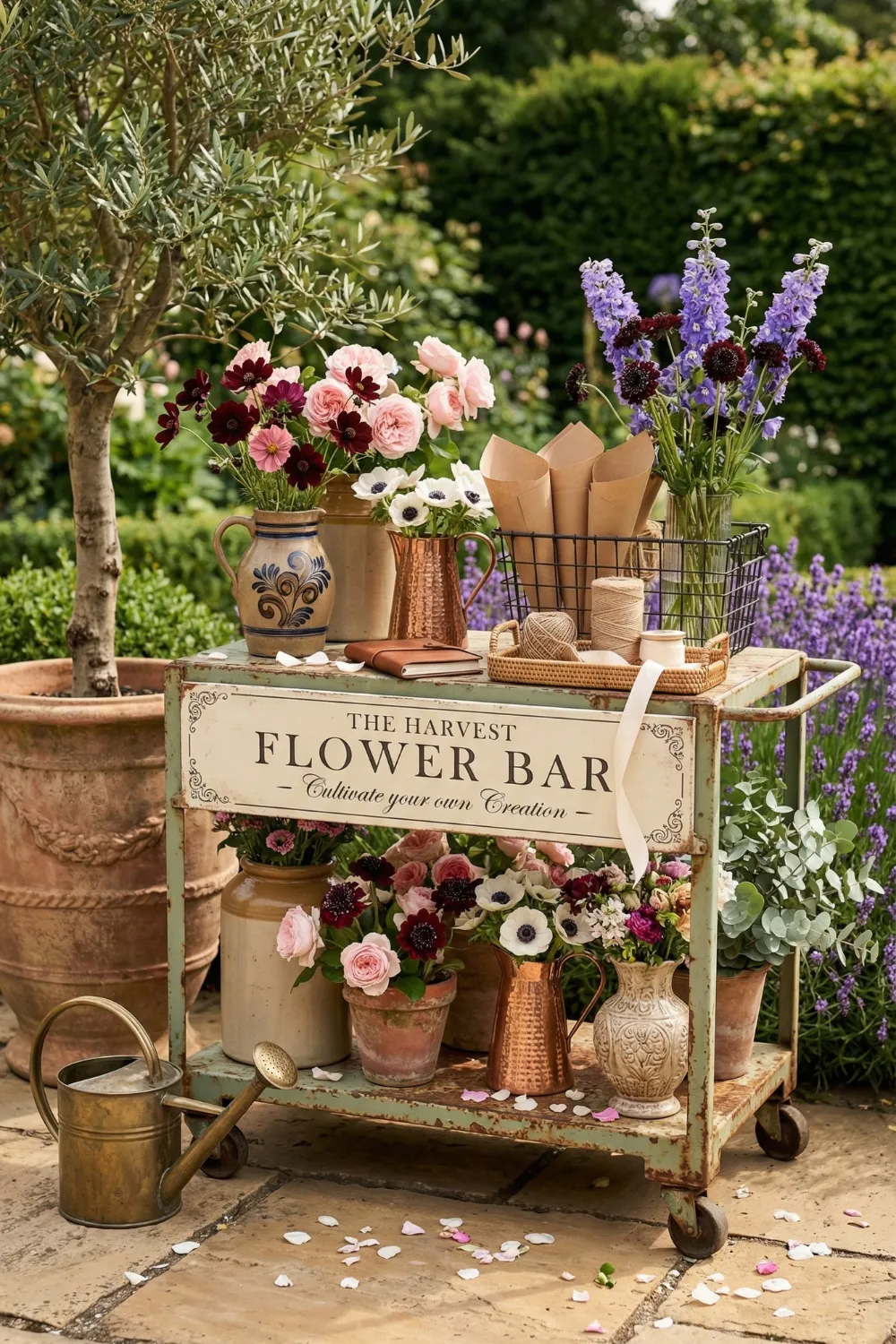
The best rustic flower bars aren’t just “wooden table with wildflowers.” They’re layered material studies that happen to also hold flowers.
Ceramic vessels, copper pitchers, terracotta pots, and galvanized metal containers all work together to make this format sing. Each material has its own surface quality, like being matte, shiny, rough, or smooth. When you put them all together, they make a texture that no single type of container could ever match. The flowers tell the color story, and the vessels tell the texture story.
A rolling metal cart makes the flower bars more interesting and mobile, and it also sets the scene for the “traveling florist” story that makes them feel more like an experience than just a decoration. The upper shelf becomes the visual command center, with tall statement stems setting the height. The lower shelf holds backup flowers, plants, and supplies for guests.
The operational design layer:
- Wrapping paper cones and ribbon spools visible on the cart communicate interactivity without a sign — guests instantly understand this is a place to participate, not just observe
- Keep scissors, twine, and tissue paper organized in a small crate or basket rather than scattered on the surface — organization reads as sophistication
- Stock the lower shelf with extra stems guests can’t see at first glance — when the cart looks full from every angle, it feels generous and abundant
7. Vintage Arched Flower Bar With Colored Glass — Architecture as the Starting Point
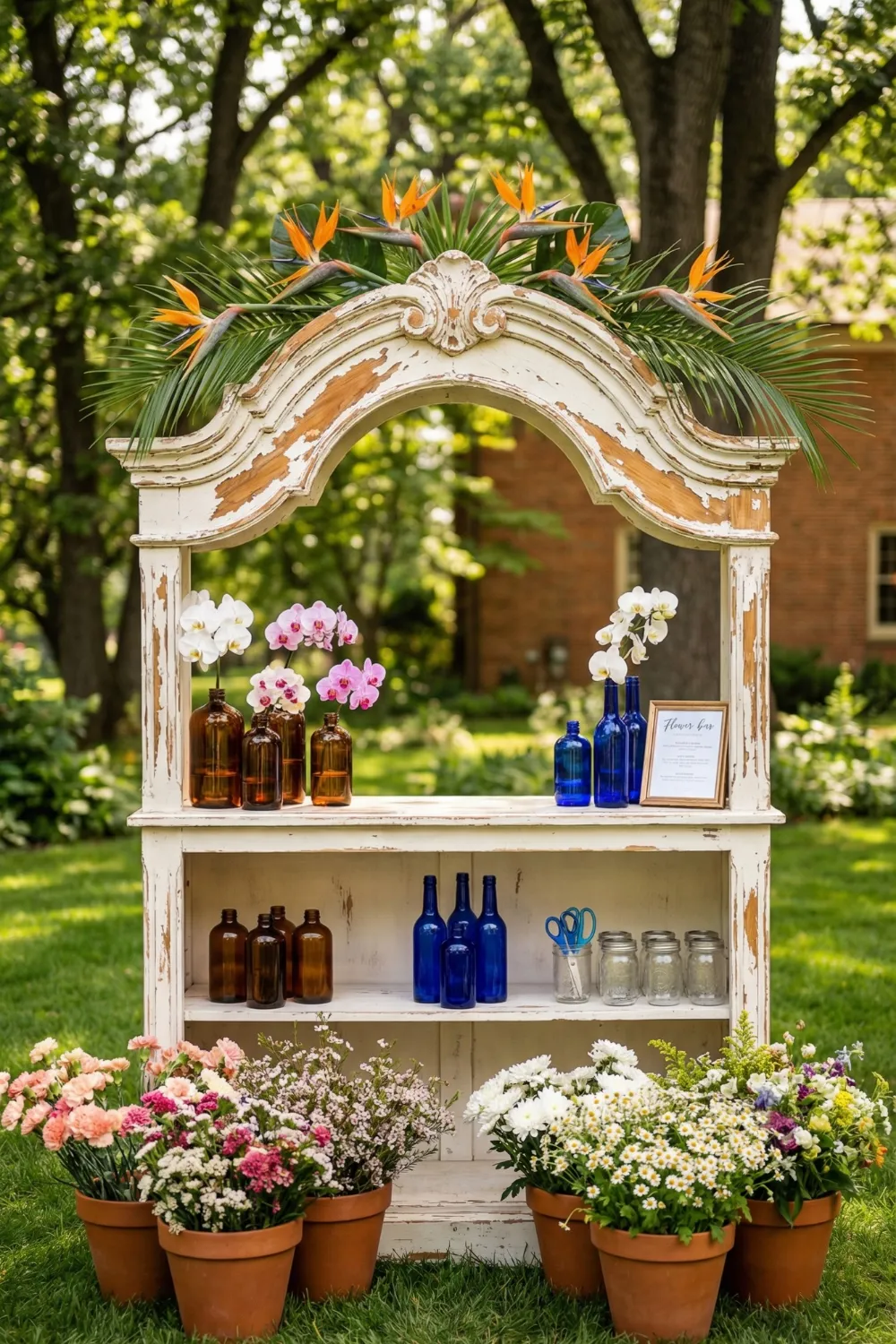
The arch is what makes this format work, and it’s worth understanding exactly why.
Architectural framing is one of the best ways to make something stand out in event design. An arch, a door, a trellis, or a canopy are all examples of vertical frames that tell the eye where to look. Without that arch, the colorful bottles and terracotta pots would look like a messy table. It makes the whole setup feel like it was thought out.
The color scheme for the glass bottles here is very smart. There are amber bottles on one end and cobalt blue bottles on the other, with clear glass in between. This is not random; it is controlled contrast that makes the picture look balanced without repeating the same thing over and over again. Even though no two shelves are the same, the eye sees it as organized.
The guest flow logic:
- Flowers displayed in lower pots while bottles sit above creates an intuitive use sequence: guests see the blooms at eye level, select their stems, then choose a bottle to take home — the design literally guides behavior
- This functional flow reduces confusion at busy events without requiring signage
- When recreating this, ensure the arch is proportioned generously — too narrow and it looks like an afterthought; wide enough to frame the full table, and it becomes the whole event’s focal point
8. Clean Coastal Flower Bar With Striped Canopy — Restraint as Sophistication
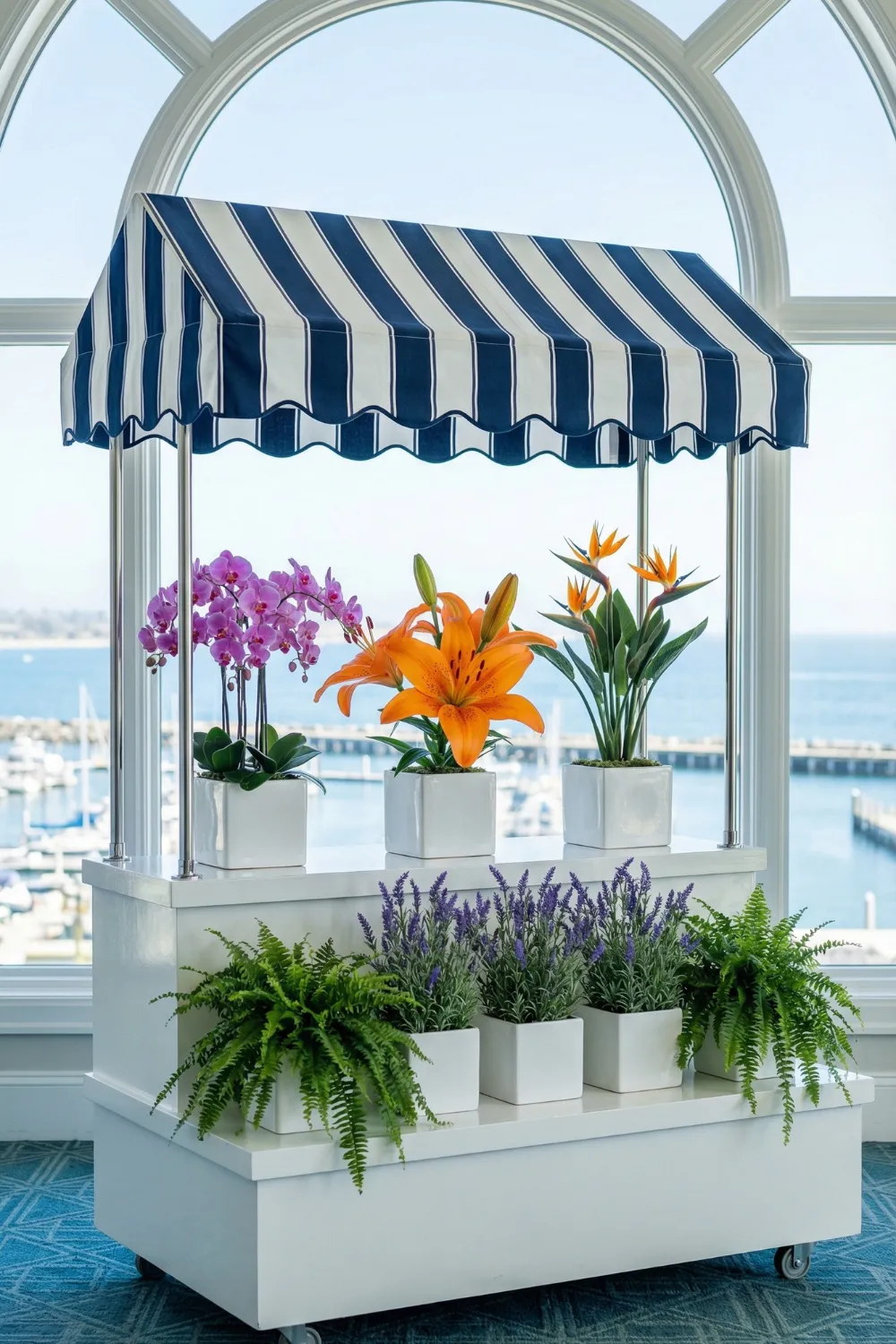
Not every flower bar needs to be maximalist. This coastal setup proves that a tight color palette and strong symmetry can create just as much visual impact as abundance.
A white structure with a blue striped canopy, white containers, and flowers in white, cream, lavender, and light green. That is the whole color story, and it works because it is strict. When everything in a display is the same color, the flowers stand out instead of blending in with the rest of the display.
The symmetry in this layout is intentional and soothing. Equal-height vessels spaced out evenly across the top shelf, with a lower row of smaller arrangements that are the same height. Symmetrical layouts look classy and are great for weddings and other fancy events where the look needs to be more refined than fun.
Container strategy:
- White pots and vessels that match the structure create visual continuity — the containers effectively disappear, leaving only the flowers visible
- This “invisible container” approach works best with a strong structural piece (the canopy, the shelving unit) to provide the visual interest that the vessels would otherwise provide
- Natural light from the side rather than overhead keeps shadows soft and the coastal, breezy feeling intact — avoid placing this format directly under harsh overhead event lighting
9. Minimal Porch Flower Bar — Small Footprint, Maximum Charm
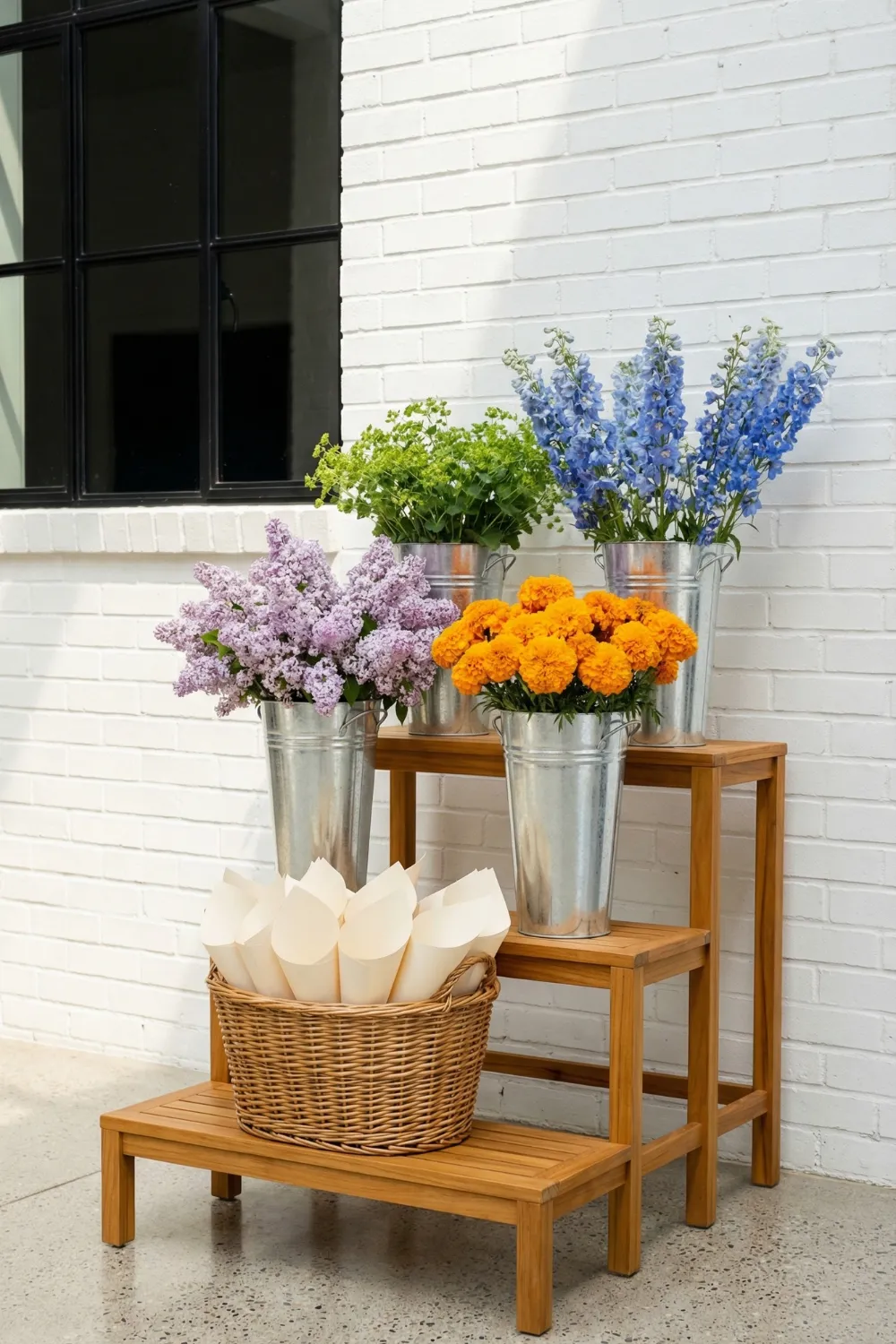
When space is limited but impact is still needed, this is the setup: a small, tiered wooden stand, galvanized metal buckets, and a carefully chosen selection of seasonal flowers. It all fits in about four square feet and looks like it was meant to be that way.
The difference between the galvanized metal and the fresh flowers is doing more than it looks like it is. When you put soft organic flowers next to industrial containers, they look more delicate. This principle of contrast—putting something a little rough or useful next to something soft and alive—works well in both event and home design.
The way things are organized here is clean and easy to teach: flowers on top and supplies (paper cones, rubber bands, and tissues) in a basket below. This separation keeps the display focused on the flowers while also making the station easy to use and useful.
Why this format works for smaller events:
- A compact flower bar on a porch, doorstep, or garden corner creates an intimate feel that a large installation can’t replicate
- Fewer variety options can actually improve the guest experience — decision fatigue is real, and a curated selection of three to five flower types feels like a thoughtful edit rather than a limitation
- Galvanized buckets in graduated sizes create vertical variety without requiring a formal tiered stand — a budget-friendly approach that maintains the same design effect
10. Romantic Garden Cart Flower Bar — Lush, Layered, Entirely Dreamy
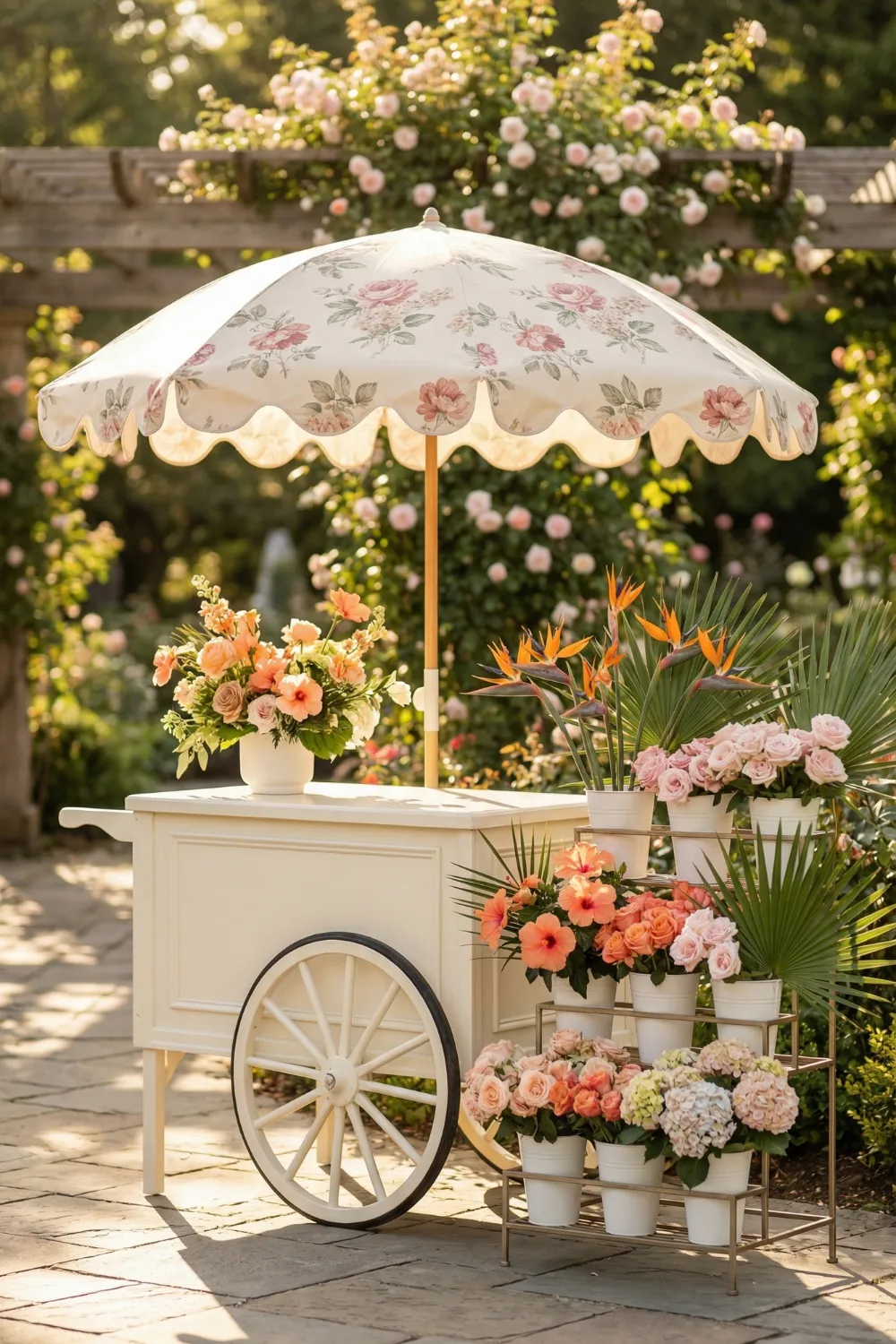
This is how to plan an outdoor wedding, a birthday party in the garden, or any other event where the words “lush” and “romantic” are in the planning brief.
A garden cart with a fabric umbrella, cascading tropical and garden flowers, and a tiered side rack makes the kind of flower bar that people take the most pictures of at outdoor events. The area is defined by the umbrella above. The side rack spreads out the extra stuff without making the workspace too crowded. The hibiscus, birds of paradise, and soft greenery create a tropical garden tension that feels full without being too busy.
The same “storefront” principle that makes retail displays work is used here: hero flowers at the top and center, supporting blooms on the sides and lower shelves, and supplies hidden below. There is a reason for every level. Even when it is at its most lush, the display looks organized.
Creating the romantic atmosphere:
- Natural sunlight is this format’s best friend — position the cart where afternoon light will hit the flowers from the side, creating that warm, golden glow that makes tropical blooms look almost luminous
- Don’t over-organize. This format benefits from slight visual looseness — flowers slightly overflowing their vessels, a few extra stems resting on the cart surface. Controlled imperfection reads as artful rather than messy
- The umbrella fabric color should complement, not match, the flowers — a warm cream or soft stripe against tropical brights creates contrast that photographs beautifully
The Design Principles That Make Every Flower Bar Work
After ten different formats, a few principles show up consistently. These are the ones worth memorizing before you build anything.
Height hierarchy above everything else.
Every strong flower bar has a clear tall-medium-low structure. Without it, the display reads flat regardless of how beautiful the individual flowers are. Think in three tiers minimum.
Color tells a story or it creates confusion.
Group similar tones together. Repeat color across levels. Limit your palette to three to five shades maximum. More colors feel like chaos unless they’re expertly organized.
Containers are part of the visual language.
Matching containers to the structure (white pots on a white cart) makes flowers the hero. Contrasting containers (terracotta and copper against raw wood) add texture and richness. Choose intentionally either way.
Design for the guest experience, not just the photograph.
The best flower bar photo is taken by a guest who genuinely enjoyed using the station. Intuitive organization, visible supplies, and clear “flow” (where to start, what to pick up, where to go next) make guests confident and happy — and confident, happy guests create beautiful photographs naturally.
One statement element always outperforms many decorative details.
A vintage truck, an arched trellis, an oversized umbrella — one strong focal structure does more visual work than a dozen small decorative touches. Lead with the statement; support it simply.
Frequently Asked Questions
Q: How many flower varieties should a flower bar include?
For most events, five to eight varieties strikes the right balance. Fewer feels sparse and limiting; more creates visual chaos and guest overwhelm. Include one or two statement flowers (peonies, dahlias, sunflowers), two or three mid-scale varieties (roses, ranunculus, cosmos), and one or two fillers or greenery options (eucalyptus, baby’s breath, ferns).
Q: How far in advance can I set up a flower bar?
Most cut flowers hold well for 12–24 hours out of water if kept in a cool environment. Set up the structure and containers the day before, but keep flowers in water until one to two hours before guests arrive. For hot outdoor events, reduce this window to 30–45 minutes and keep extra stems in buckets of water nearby for restocking.
Q: How do I keep the flower bar looking full throughout a long event?
Always purchase 20–30% more flowers than you think you need. Stage backup stems in water-filled buckets hidden behind or below the display cart. Designate one person (or a coordinator) to refresh the display every 45–60 minutes — removing wilted stems, repositioning remaining flowers, and restocking from your reserve.
Q: What’s the best vessel choice for an outdoor flower bar in warm weather?
Opaque containers (ceramic, terracotta, galvanized metal) perform better outdoors than clear glass because they keep water cooler and reduce algae growth in sunlight. Whatever vessels you choose, change the water if the event runs longer than four hours, and add floral preservative to extend stem life.
Q: Can a flower bar work for intimate events, not just large weddings?
Absolutely — and small-scale flower bars are often more memorable precisely because they feel intentional rather than obligatory. A simple tiered stand with three flower varieties on a birthday brunch table creates the same moment of delight as a full wedding installation, scaled appropriately for the gathering.
Final Thought — Design the Experience, Not Just the Display
A flower bar lives and dies on how it makes people feel. The most beautifully styled table full of flowers is just decoration if guests don’t know they can participate. The most generous selection of stems is just wasted inventory if the flow isn’t intuitive. Great flower bar design marries visual beauty with functional clarity.
Start with the structure. Build with height. Choose a color story and commit to it. Give guests what they need to succeed — scissors that actually cut, ribbons they can tie, stems they can reach. And then step back and watch them create something that becomes part of the memory of the day.
Because the best flower bars don’t just decorate an event. They become the event.

Pingback: 13 Lemon Centerpiece Ideas That Cost Almost Nothing - Decorly Nest | Modern Home Decor Ideas
Pingback: Moody Living Room Ideas That Feel Cozy, Not Claustrophobic - Decorly Nest | Modern Home Decor Ideas