
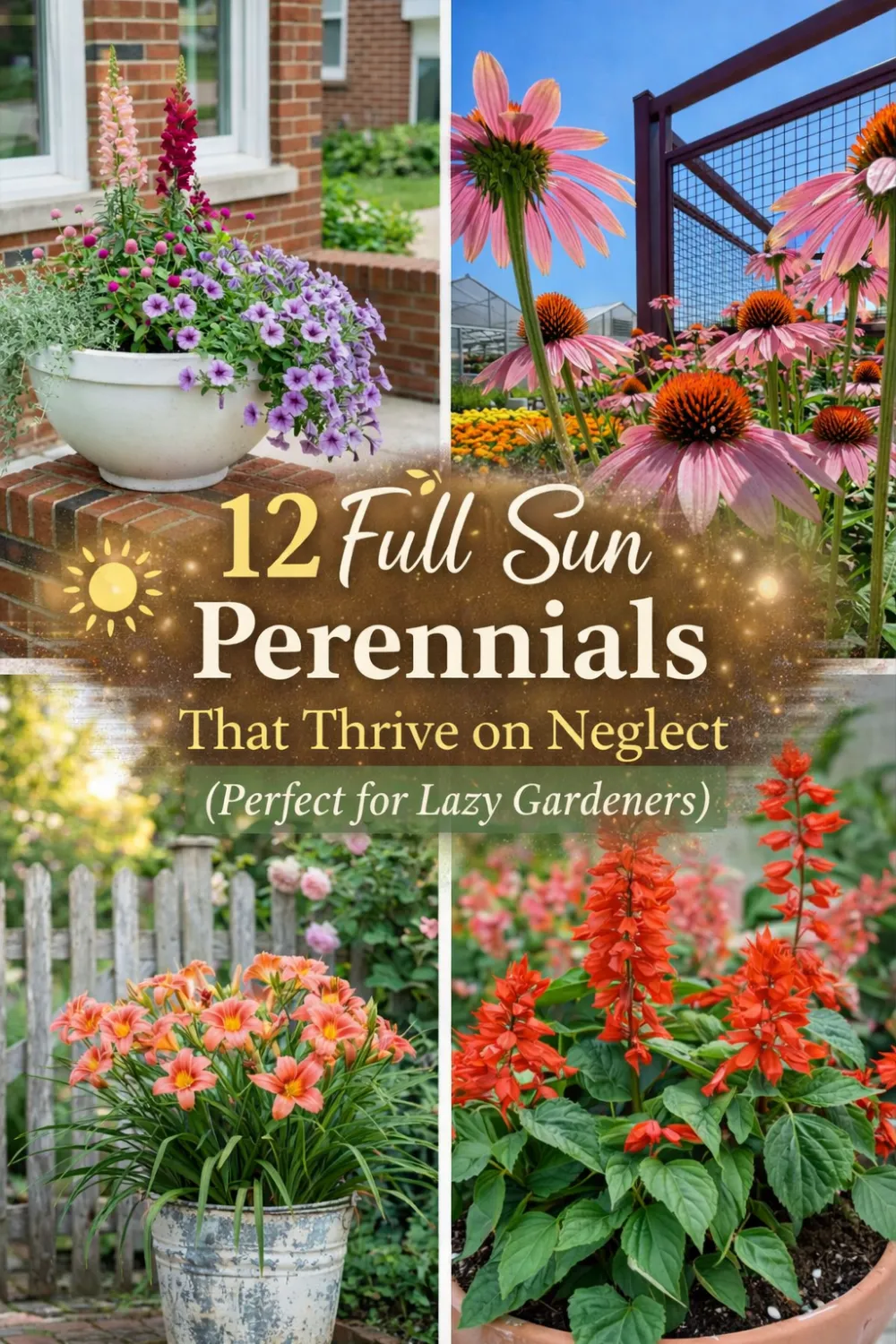
I have killed more container plants than I care to admit. Not from malice — from optimism. I would see something gorgeous at the nursery, bring it home, put it in a sunny pot on the patio, and watch it slowly decline over the following weeks while I tried increasingly desperate interventions. More water. Less water. Fertilizer. Shade cloth. Prayers.
The problem, I eventually understood, was not my technique. It was my plant selection. I kept choosing plants that looked beautiful at the nursery because they had been grown in ideal conditions and were currently at peak performance. What I needed were plants that would thrive in my actual conditions: a south-facing patio that bakes in full sun from 10am to sunset, a container environment that dries out faster than in-ground planting, and an owner who sometimes forgets to water for several days.
The ten perennials in this guide are the ones that actually work in those conditions. Not plants that tolerate neglect reluctantly, but plants that are genuinely adapted to heat, drought, and the occasional extended absence. Most of them are native to regions where these conditions are the norm, not the exception. They do not need you to compensate for their fragility. They need you to stop overcomplicating things.
— Written from actual experience, actual failures, and a patio that finally looks good because I stopped fighting the sun 🌱
1 • Why Container Gardening Often Feels Harder Than It Should
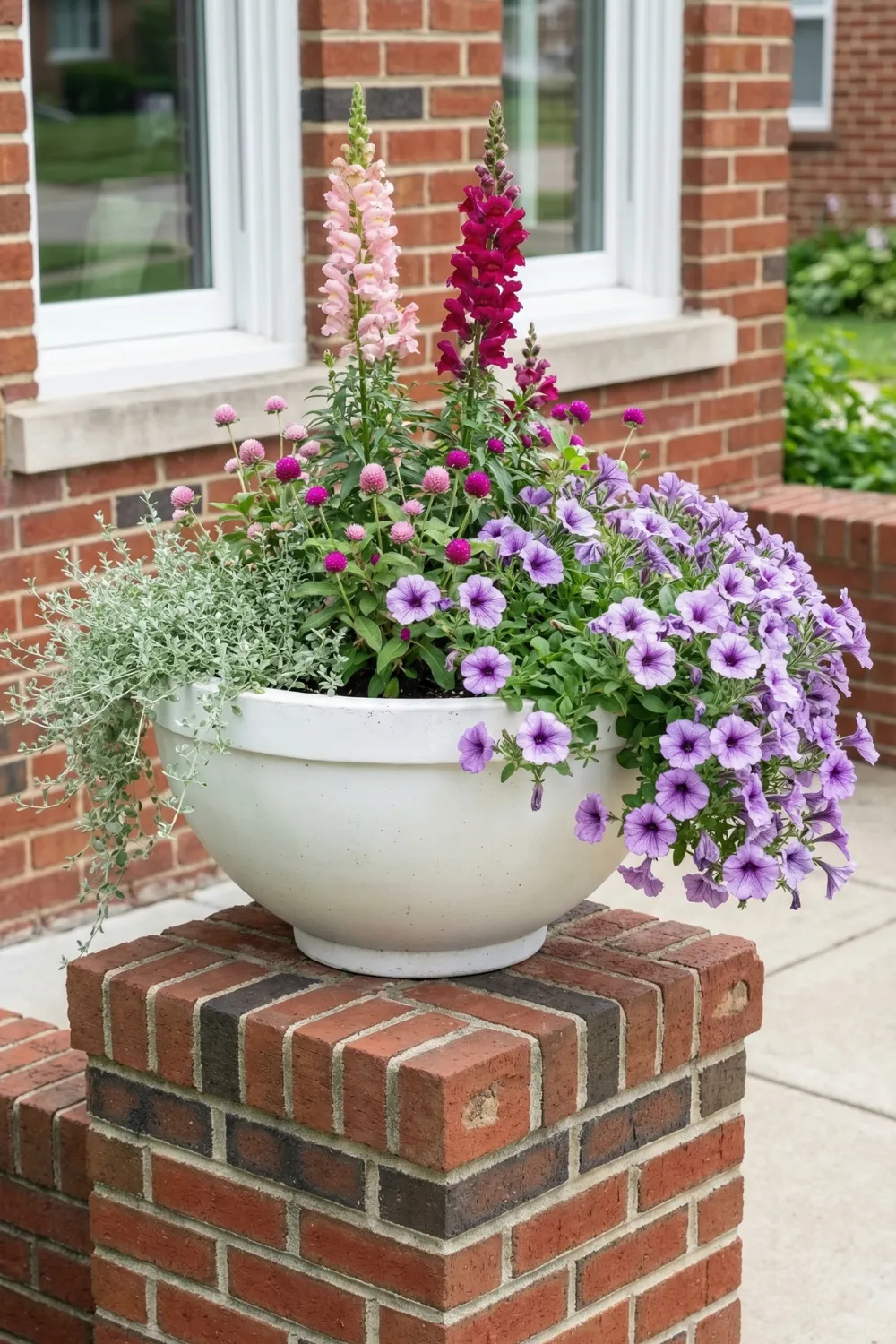
The conventional wisdom about container gardening is that it is easier than in-ground gardening. You control the soil. You can move things around. You can start small. All of this is technically true, and all of it misses the central challenge: containers are a more extreme environment than garden beds, not a gentler one.
A pot in full sun can reach soil temperatures that would damage roots in the ground. The limited volume of soil dries out far faster than an in-ground planting, which has access to moisture deeper in the soil profile. Nutrients wash out with every watering. The thermal mass of the container itself radiates heat back onto the plant. For plants that are not adapted to these conditions, a sunny container is genuinely difficult, regardless of how carefully the gardener manages it.
The solution is not better technique. It is better plant selection. A plant that evolved in a Mediterranean hillside or a North American prairie already knows how to handle heat, drought, and thin soil. Put that plant in a container in full sun and it will do what it has always done: thrive. Put a moisture-loving annual in the same container and watch it struggle regardless of how attentive you are.
Why Full-Sun Containers Are Challenging
- Soil dries out much faster than in-ground planting — sometimes within 24 hours in heat
- Container walls absorb and radiate heat back onto roots
- Limited soil volume means less thermal buffering and faster nutrient depletion
- Plants adapted to these conditions outperform careful management of unsuitable plants
2 • Sedum : The Plant That Thrives on Neglect
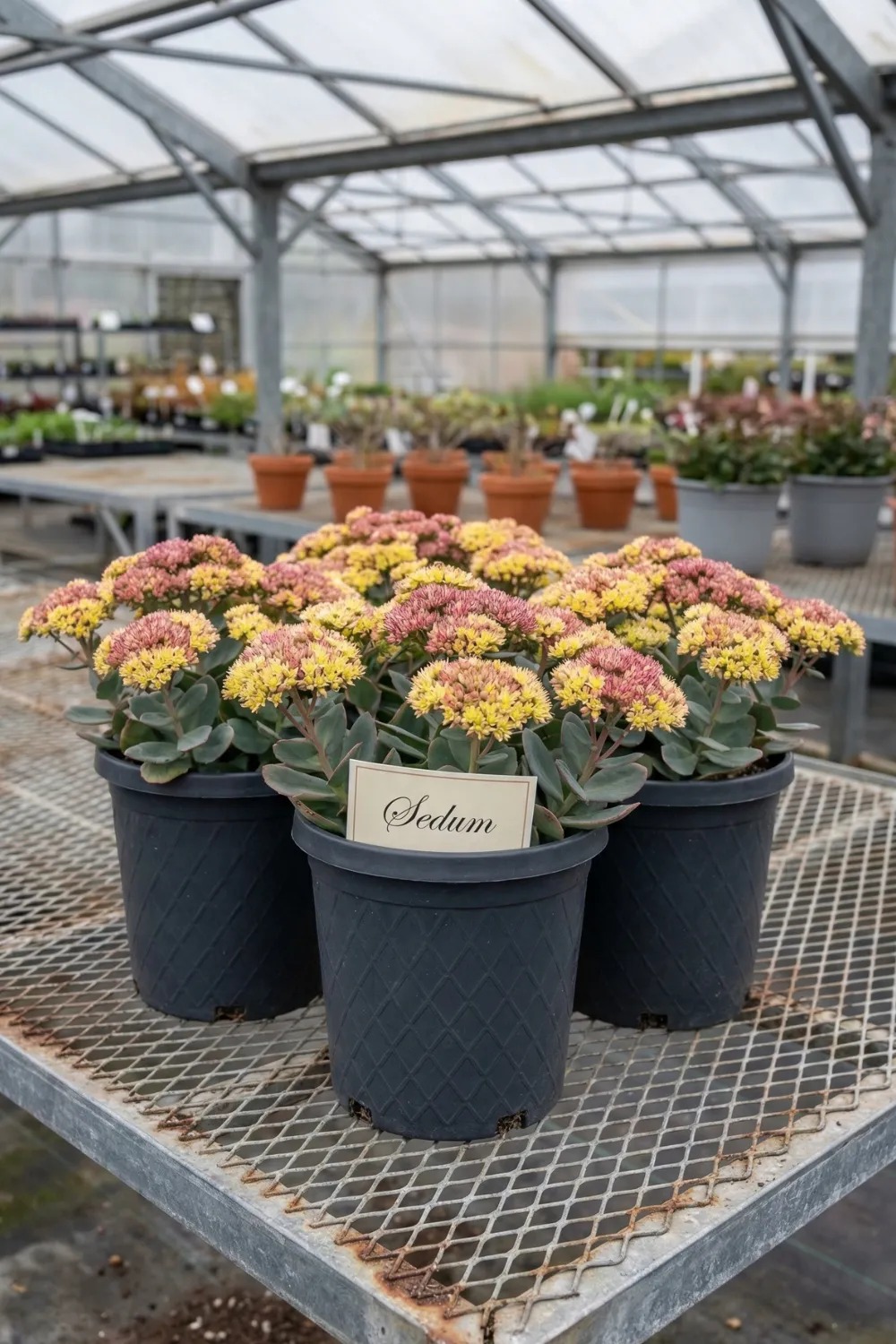
Sedum, also called stonecrop, is the plant I wish someone had recommended to me at the very beginning. It is, without qualification, the most forgiving plant I have ever grown in a container. The thick, fleshy leaves store water the way a cactus does — not because sedum is a cactus, but because it evolved in similarly demanding conditions where reliable rainfall is not something you can count on.
I have gone ten days without watering a sedum container in August heat and found the plant not just surviving but looking entirely indifferent to my absence. This is not an exaggeration. Sedum does not just tolerate drought; it is genuinely comfortable in it. Overwatering is actually the more common way to kill sedum — roots that stay wet too long will rot, which is the opposite problem from most container plants.
Beyond its toughness, sedum offers genuine visual interest across a long season. The foliage comes in a range of colors — deep burgundy, silver-green, chartreuse, blue-gray — and the late-season flower clusters in pink, white, or red attract pollinators and dry beautifully on the plant, giving you ornamental interest well into autumn. Autumn Joy and Lime Zinger are both excellent container varieties. Use a well-draining mix, water infrequently, and otherwise leave it alone.
“The plants that will actually make you look like a good gardener are the ones that do not need you to be one.”
3 • Dianthus : Fragrance and Color With Minimal Effort
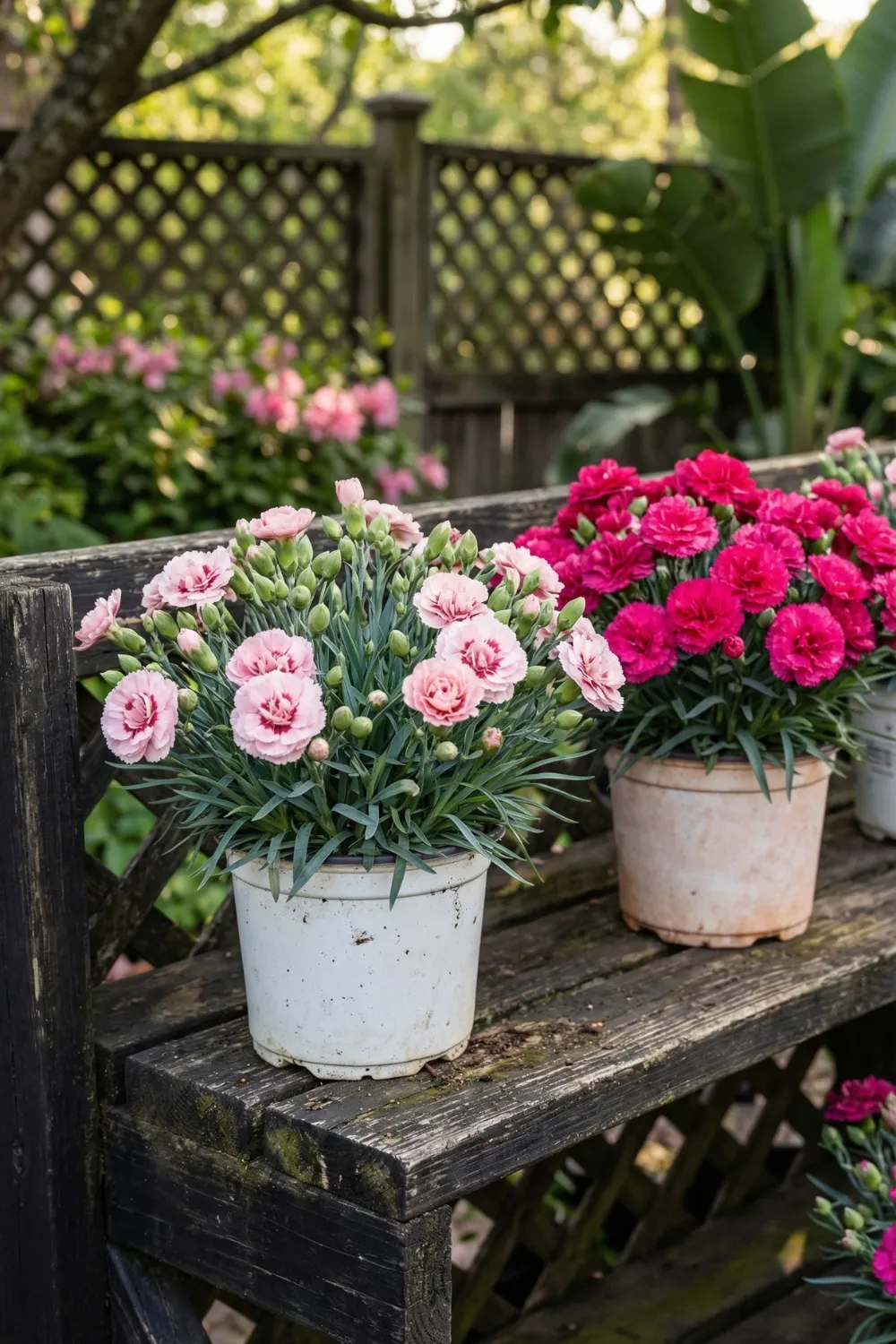
Dianthus earned the common name “pinks” not from its color — though many varieties are indeed pink — but from the fringed, pinked edges of its petals. It is one of those plants that has been in cultivation for so long that it has accumulated a lot of associations: cottage gardens, Victorian borders, grandmother’s windowsills. What those associations miss is how genuinely tough the plant is.
Modern dianthus breeding has produced varieties that handle heat much better than the traditional species, which tended to suffer in hot summers. These newer introductions maintain their compact mounding form, continue blooming through extended heat without giving up, and resist the powdery mildew that used to be a perennial problem with the genus. Many varieties bloom without requiring regular deadheading, which was always the most tedious part of maintaining them.
The fragrance is worth mentioning because it is genuinely lovely and not always expected from such a small plant. The sweet, spicy, clove-like scent is strongest in the evening and carries well across a patio or seating area. For a container placed near an outdoor dining table or beside a frequently-used door, dianthus adds a sensory dimension that purely visual plants cannot match. Good drainage and full sun are the main requirements. Beyond that, the plant largely manages itself.
4 • Coneflower: A Durable Plant That Supports Pollinators
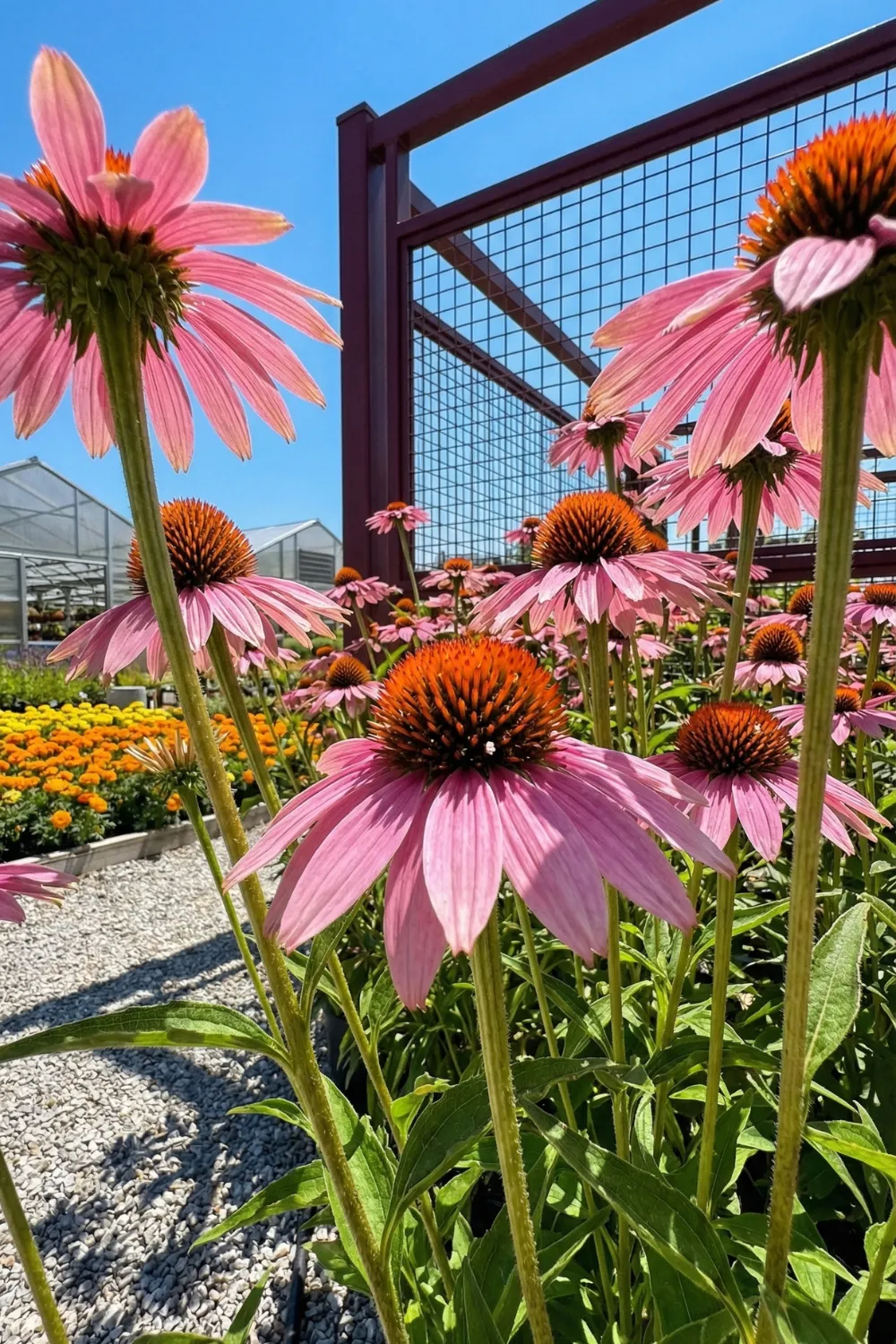
Coneflowers come from North American prairies, which tells you most of what you need to know about their environmental requirements. Prairies are hot, often dry, frequently exposed to intense sunlight, and periodically subjected to conditions that would stress most garden plants severely. Coneflowers evolved in those conditions, which means a sunny patio container is not a challenge for them — it is approximately their natural habitat.
The distinctive flower structure — drooping petals surrounding a raised, spiny central cone — is not just attractive to gardeners. It is specifically adapted to attract and support a range of pollinators. Bees work the central cone for pollen. Butterflies land on the petals to rest and feed. Goldfinches and other small birds pick at the seed heads in late season, which is an argument for leaving the spent flowers on the plant rather than deadheading them as the season winds down.
Container growing works well with coneflowers if you choose deep pots. Their roots are strong and benefit from having room to develop properly. Modern varieties have expanded the color range considerably beyond the original purple — white, yellow, orange, coral, and deep red are all available, along with double-petaled forms. Blooming seasons have also been extended through breeding, giving you flowers from early summer well into autumn with very little intervention required.
5 • Daylilies: Reliable Color With Very Little Maintenance
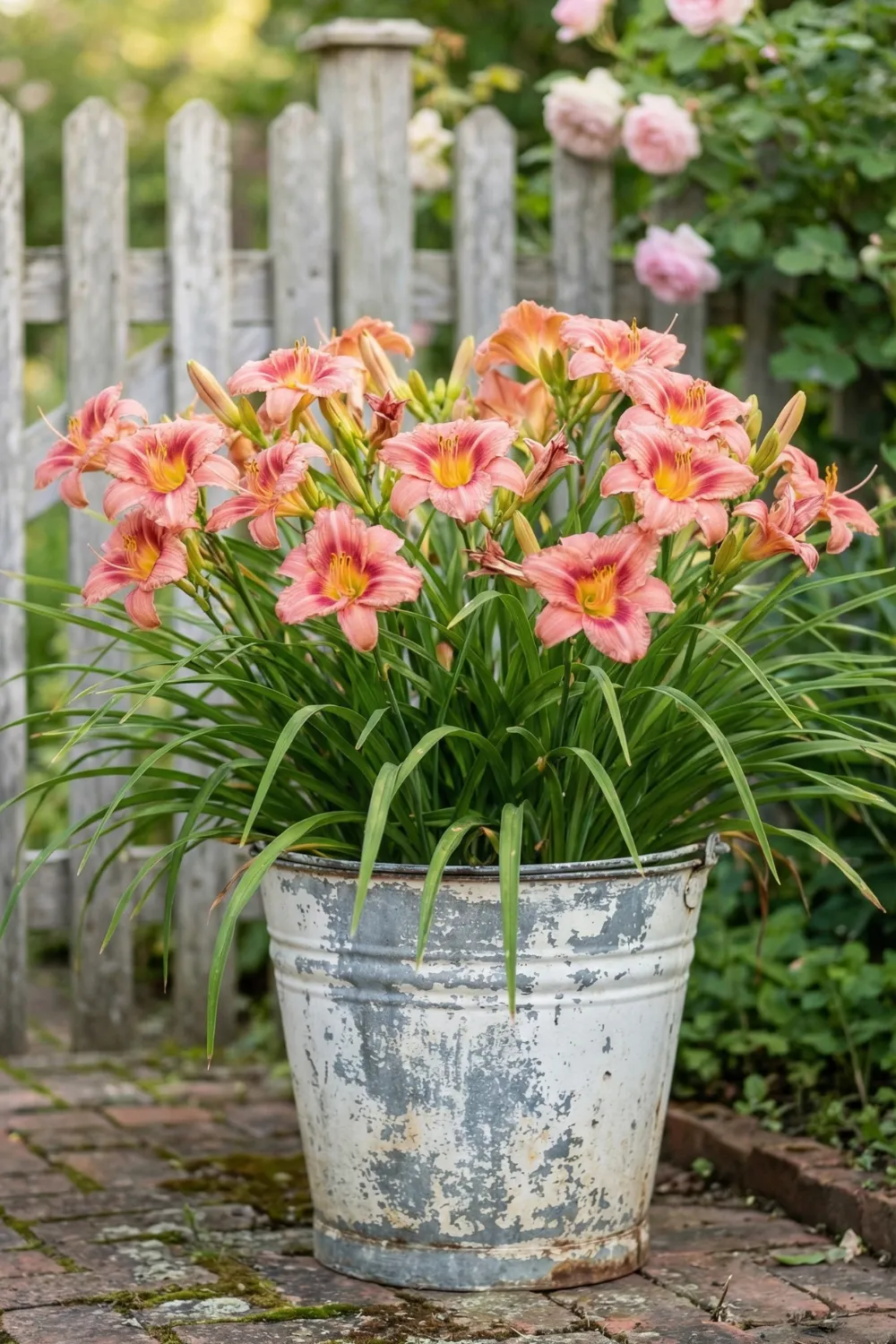
The daylily has a reputation for being virtually indestructible, and that reputation is earned. The common name comes from the flower’s lifespan — each individual bloom opens in the morning and closes by evening — but the plant compensates for this brevity by producing buds continuously over a period of weeks. The overall display is generous and sustained even though each individual flower is short-lived.
Heat, humidity, occasional drought, and general neglect are all conditions that daylilies handle without complaint. They were originally introduced to American gardens as tough, adaptable plants for difficult situations, and that heritage shows. For container gardening in full sun, they bring exactly the combination of attributes that makes a plant low-maintenance: strong root systems, efficient water use, and a flowering cycle that does not require human intervention to continue.
Re-blooming varieties are worth seeking out for container use because they produce a second flush of flowers later in the season after the primary bloom period. The foliage remains attractive after flowering — the grassy, arching leaves are a structural element in their own right, which prevents the container from looking bare between bloom cycles. Basic watering and occasional slow-release fertilizer are genuinely all the maintenance required.
6 • Lavender: Fragrance, Texture, and Drought Tolerance
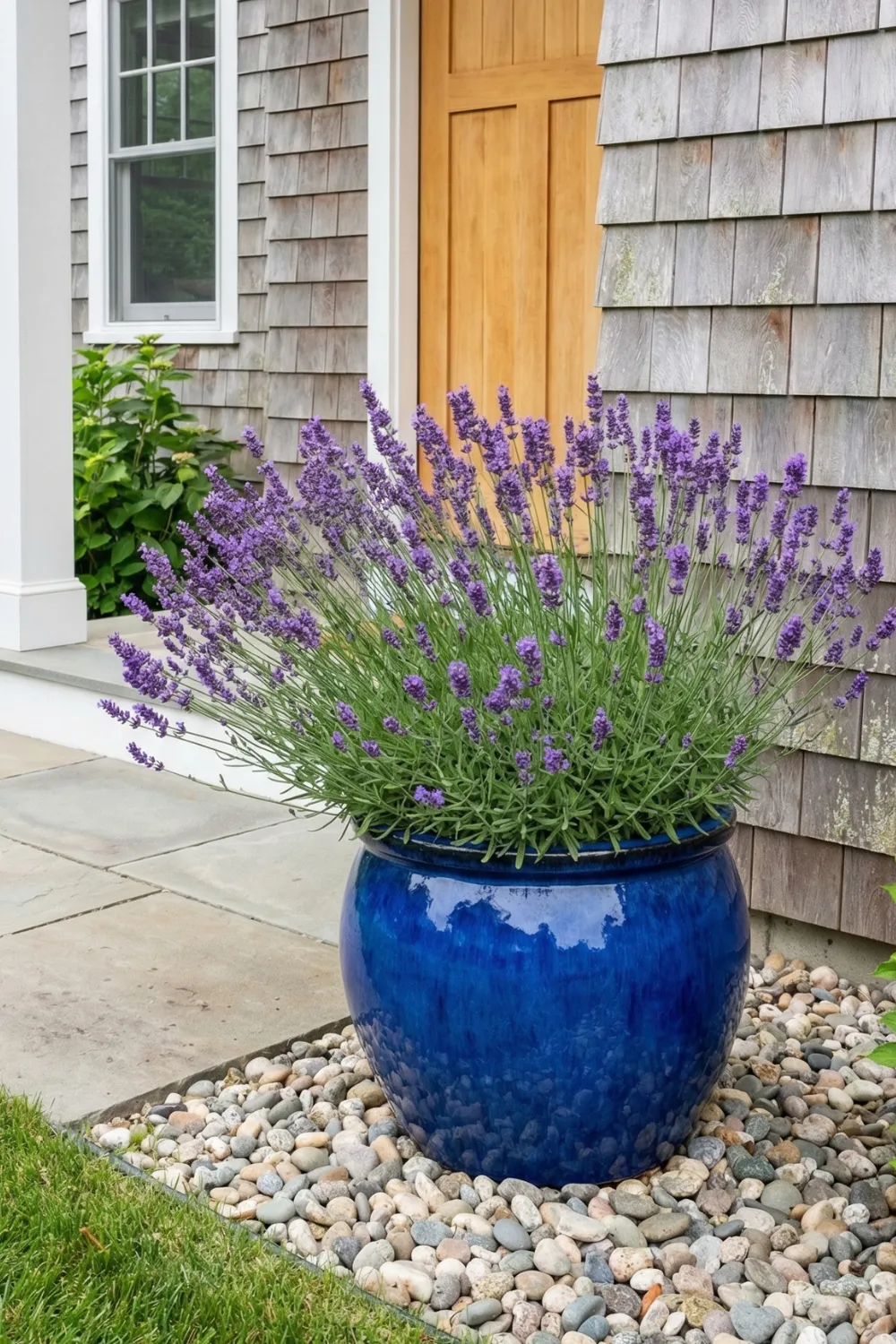
Lavender is one of those plants whose natural habitat explains its garden behavior perfectly. It comes from the rocky hillsides of the Mediterranean — thin soil, intense sun, minimal rainfall, excellent drainage. Every condition that makes container growing challenging for other plants is essentially what lavender grew up with. Put it in a pot in full sun with fast-draining soil and it is not stressed. It is home.
The most common mistake with lavender in containers is overwatering. Most of the lavender that dies in pots does not die from too little water. It dies from roots that stay wet too long in poorly-draining soil. Adding perlite, coarse sand, or grit to standard potting mix improves drainage significantly and brings the container environment closer to lavender’s natural conditions. Water thoroughly when the soil is dry, then leave it alone until it dries out again.
The plant contributes more to a container arrangement than just its flowers. The silver-gray foliage is attractive year-round and provides a color contrast that works well with almost anything planted nearby. The upright flower spikes add vertical structure. The fragrance — carried on warm air throughout the day and strongest when the foliage is brushed or disturbed — is one of the most reliably pleasant scents in the garden. Deer avoid it, and most insect pests do too, which is an additional benefit in gardens where these pressures are a problem.
7 • Salvia: Long-Blooming Color for Sunny Containers
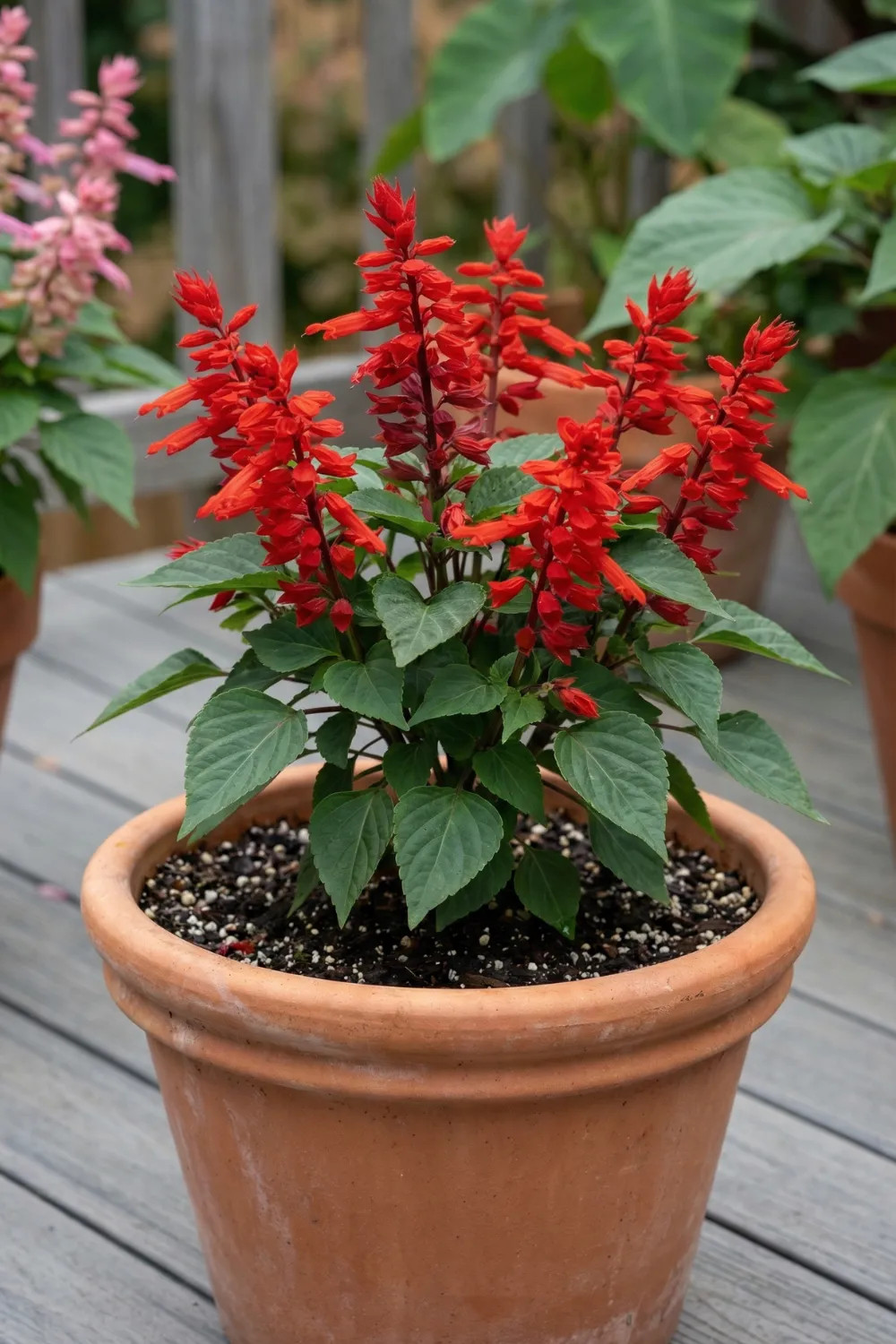
The salvia genus is enormous — there are hundreds of species — and the range of plants that fall under that name varies considerably. For sunny containers, the perennial salvias that produce upright flower spikes over a long season are the relevant category, and they are as close to a perfect low-maintenance container plant as I have found. The flowers come in purple, blue, red, pink, and white. The bloom season runs from late spring through fall. The plants handle heat and dry conditions without complaint.
One of the things that makes salvia particularly valuable for container gardening is its vertical form. Most perennials suitable for containers are rounded or spreading — they fill horizontal space but do not add much height. Salvia’s upright spikes create the vertical element that makes a container arrangement feel three-dimensional rather than flat. Paired with lower, spreading plants at the base of the same container, salvia provides the height that the overall composition needs.
The hummingbird attraction is a genuine bonus rather than a marketing point. Certain salvia species — particularly the red-flowered types — are among the most reliably effective hummingbird plants available. If your patio or balcony gets hummingbird traffic, a salvia container will concentrate it in one spot and give you the kind of close-up observation that is difficult to achieve otherwise. The plant does not require deadheading to continue blooming, which removes the main maintenance burden.
8 • Yarrow: A Resilient Plant With Unique Texture
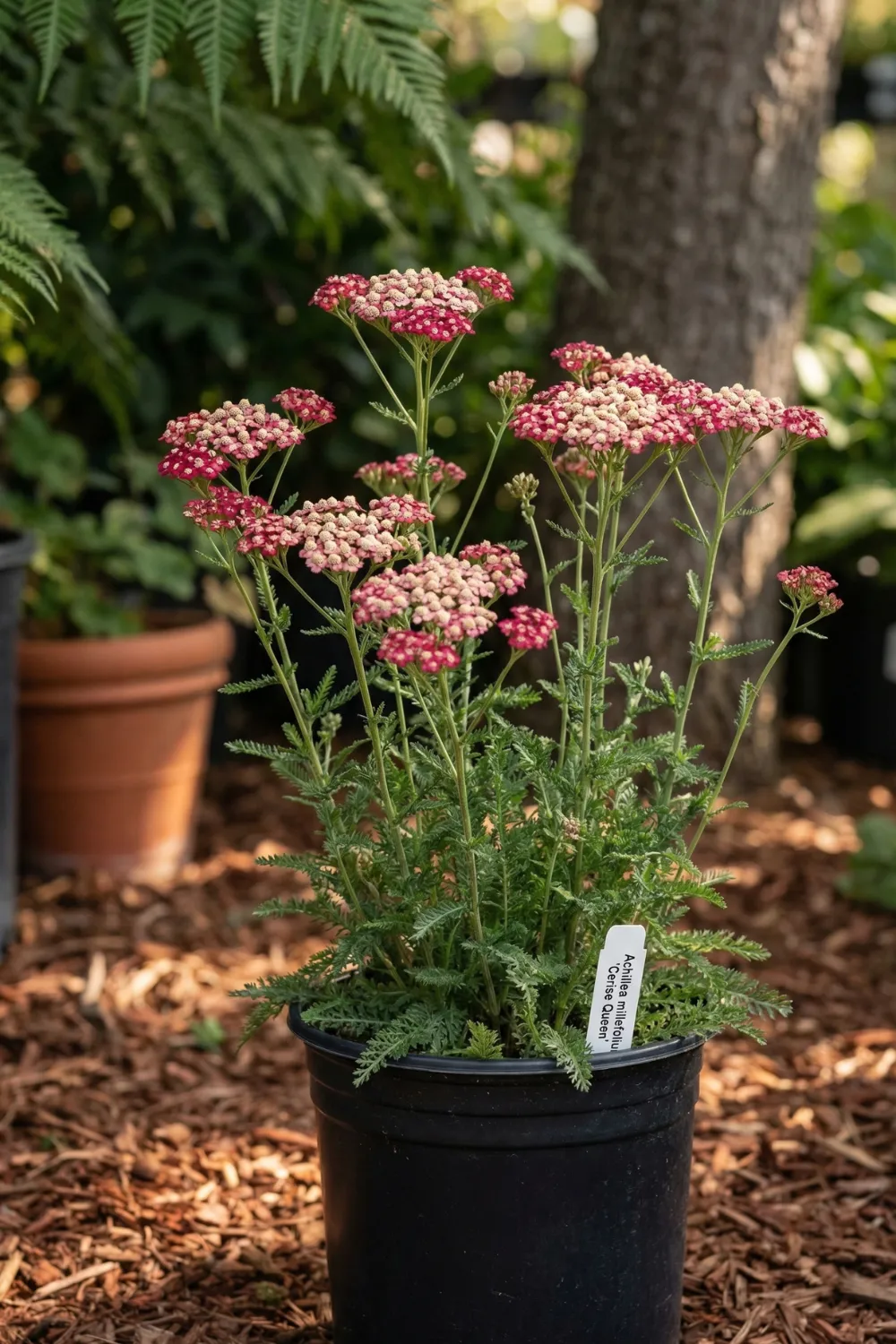
Yarrow is probably the least flashy plant on this list and one of the most useful. Its ferny, finely-divided foliage has a texture that most container plants simply do not offer — it catches light differently, moves in the breeze, and provides a visual contrast against the broader-leaved plants that typically dominate container arrangements. The flat-topped flower clusters in yellow, white, pink, or red have a structured quality that photographs well and dries beautifully for indoor use.
The plant’s toughness is almost embarrassing. Yarrow evolved in meadows and roadsides where thin soil, limited water, and intense sun are normal conditions. It spreads aggressively in garden beds, which is actually controlled by container growing — the pot limits its expansion and keeps it well-behaved. In containers, it produces its best foliage and flowers without the spreading tendency that makes it problematic in some garden situations.
After the flowers fade, the dried seed heads continue to look interesting on the plant and can be cut for arrangements. Many gardeners grow yarrow specifically for cutting and drying, which means a container of yarrow on the patio serves double duty as ornamental display and material for indoor decoration. Extremely well-draining soil, full sun, and infrequent watering are the conditions under which it performs best.
9 • Black-Eyed Susan: A Cheerful and Reliable Bloomer
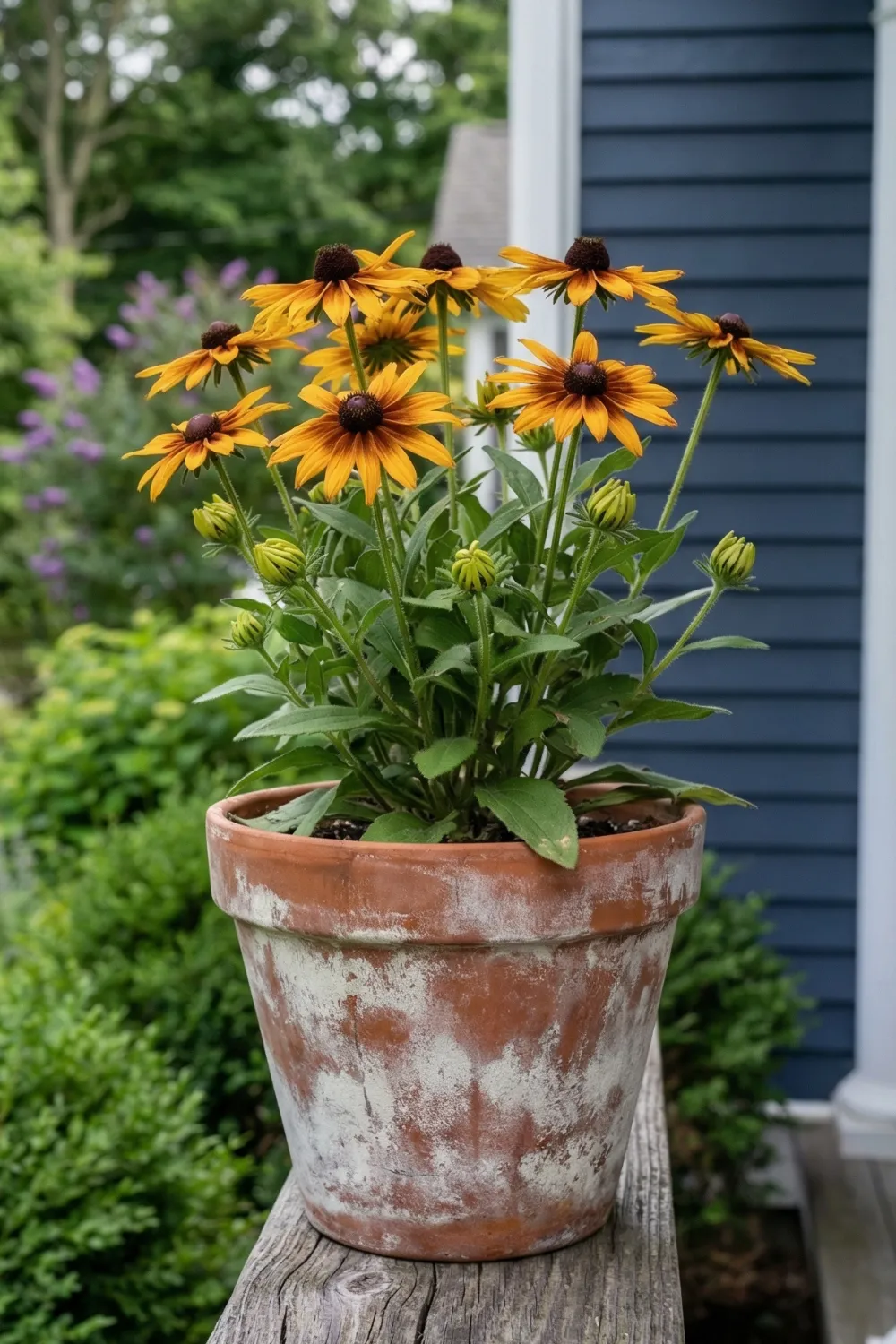
Black-Eyed Susans have been in American gardens for generations because they are one of those plants that simply works without requiring explanation or management. The bright yellow petals around a dark central disc are instantly recognizable and cheerful in a way that more sophisticated plants sometimes are not. They look like they are happy to be there, which is because they genuinely are — these plants evolved in North American prairies and meadows where the conditions they encounter on a sunny patio are essentially ideal.
The bloom season is long, running from midsummer through early fall, and the plants handle the heat of late summer without the stress response that affects many flowering perennials at that time of year. After the primary flush of bloom, many varieties continue to produce flowers sporadically through September and even into October in warmer climates. The seed heads that follow are attractive to birds and provide winter interest if you leave them on the plant.
For mixed container arrangements, Black-Eyed Susans combine well with almost everything on this list. The yellow color pairs naturally with the purple of salvia or catmint, the orange and red of blanket flower, or the silver of lavender foliage. They are generous in habit, filling a container without overwhelming it, and they do not require deadheading to maintain their bloom cycle. Beyond occasional watering, they need almost nothing.
10 • Blanket Flower: Vibrant Color Without High Maintenance
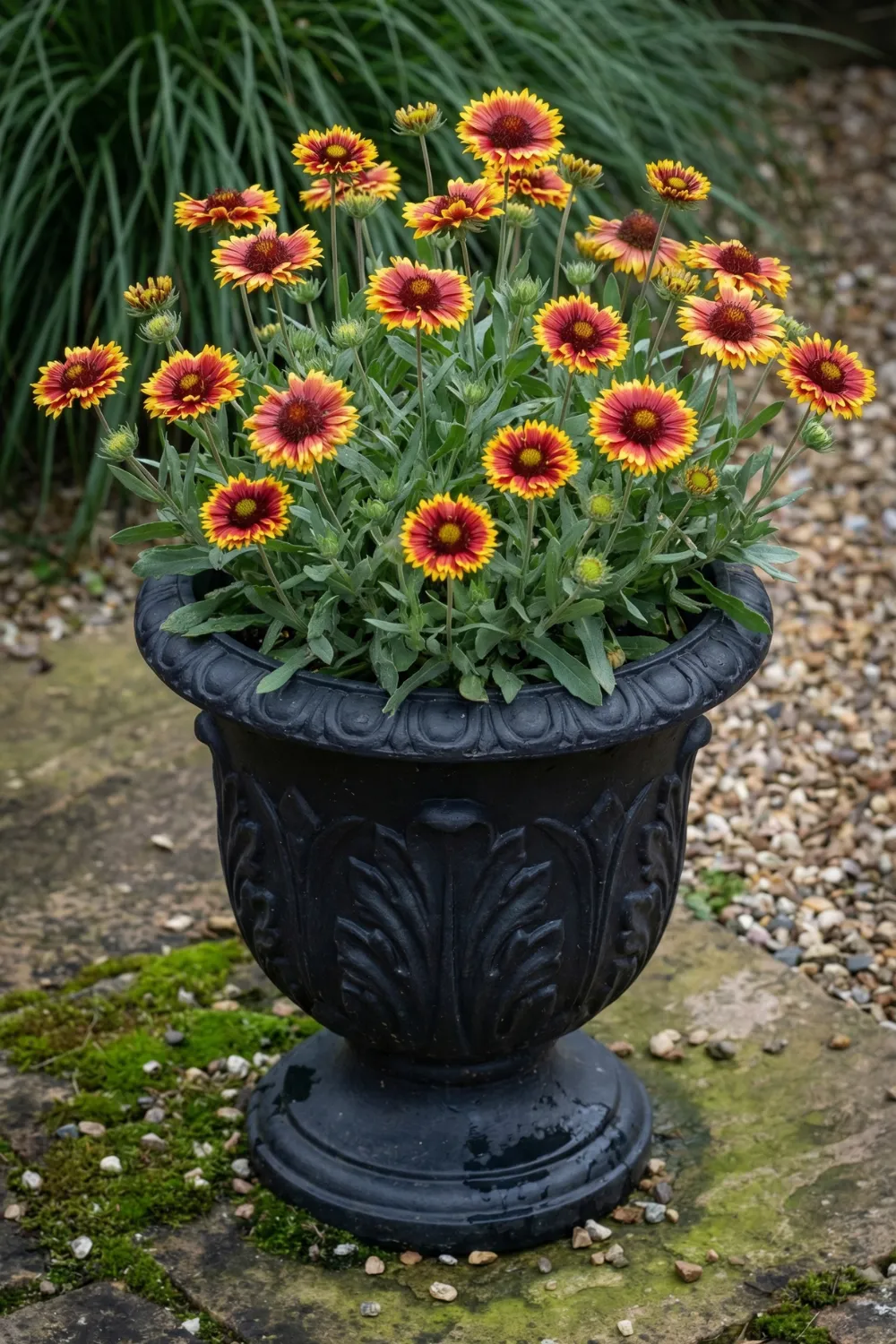
Blanket flower takes its common name from the warm, layered colors of traditional Native American blankets — reds, oranges, and yellows blending together in patterns that look almost painted. The individual flowers are striking by almost any standard: bold, warm-colored, and present in quantity over an exceptionally long bloom period. For a container that needs to provide color from late spring through the first frost, blanket flower delivers as reliably as anything I have grown.
The plant is native to the western prairies of North America, which means it was designed by evolution for exactly the conditions that challenge most container gardeners: intense sun, dry soil, and the kind of heat that builds up in a south-facing patio container over a long summer day. It does not just tolerate these conditions; it performs better in them than it does in cool, moist conditions that would suit many other plants.
Fast-draining soil is more important for blanket flower than for most of the other plants on this list. It is genuinely susceptible to root rot in poorly-draining containers, which is the one condition that will reliably damage a plant that handles almost everything else without difficulty. Get the drainage right and the plant will reward you with continuous color and consistent butterfly traffic from early summer through autumn.
11 • Catmint: Continuous Blooms With Minimal Effort
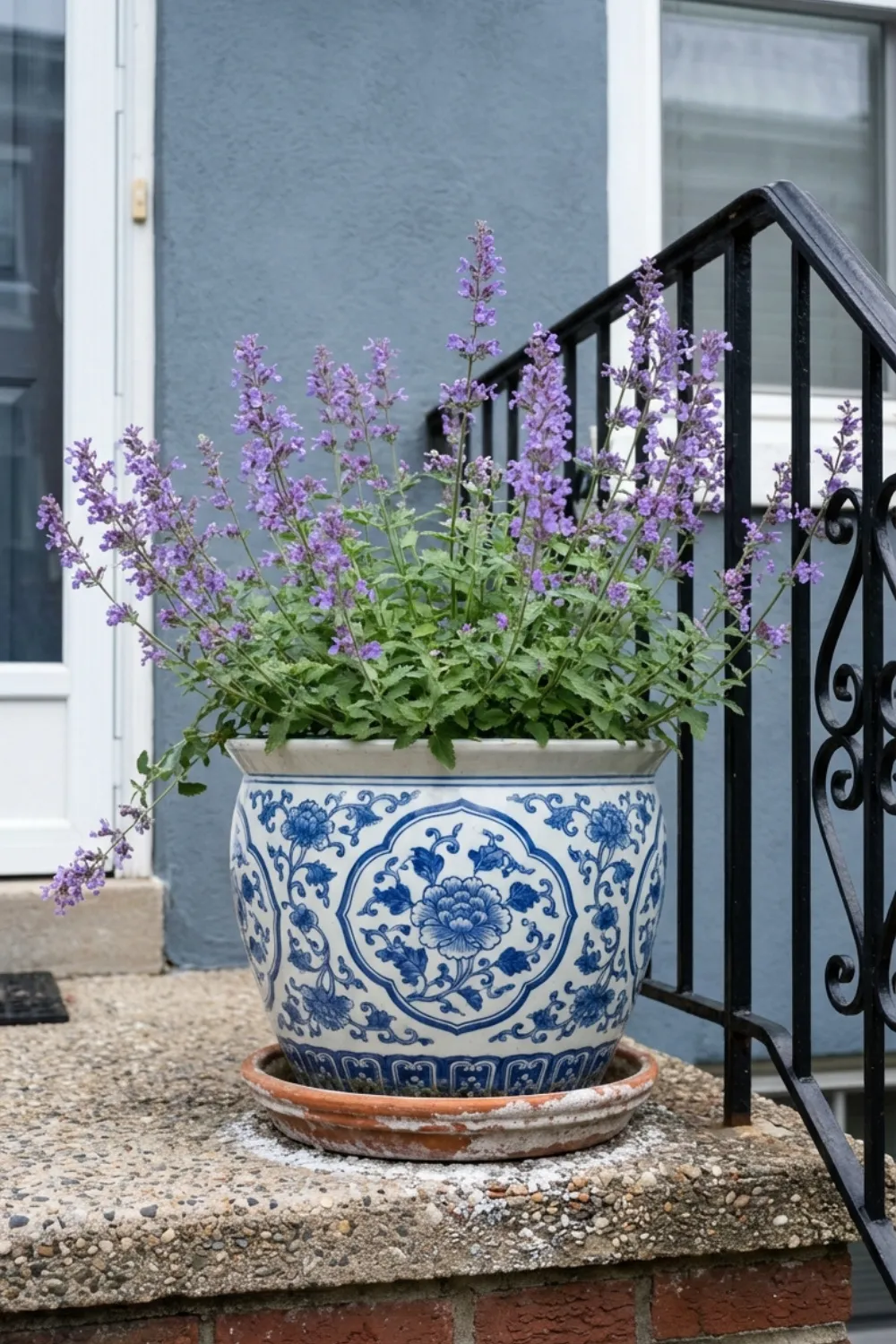
Catmint is the plant I recommend most often to gardeners who want the look of lavender without lavender’s strict drainage requirements. The two plants have a similar visual quality — soft gray-green foliage, upright purple flower spikes, a relaxed and slightly billowing overall form — but catmint tolerates a slightly wider range of moisture conditions and is generally more forgiving of the inconsistencies in a container watering routine.
The blooming season is one of the longest of any perennial suitable for containers. The plant typically produces its first flush of flowers in late spring, continues blooming through summer, and can be encouraged to repeat with a light shearing after the initial bloom period fades.
Even without the shearing, catmint maintains its attractive foliage and produces secondary bloom. It is one of those plants that looks good even when it is not actively flowering, which is not something that can be said for all of the plants on this list.
Cats are genuinely attracted to the plant, which is either a feature or a problem depending on your perspective and your neighbors. For container gardening purposes, the relevant attractions are the pollinators: bees and butterflies visit catmint consistently throughout its bloom period. The soft purple color pairs well with yellow, white, and silver plants, and the relaxed form fills the middle and lower portions of a container arrangement naturally, without requiring shaping or intervention.
12 • Setting Up Containers for Low-Maintenance Success
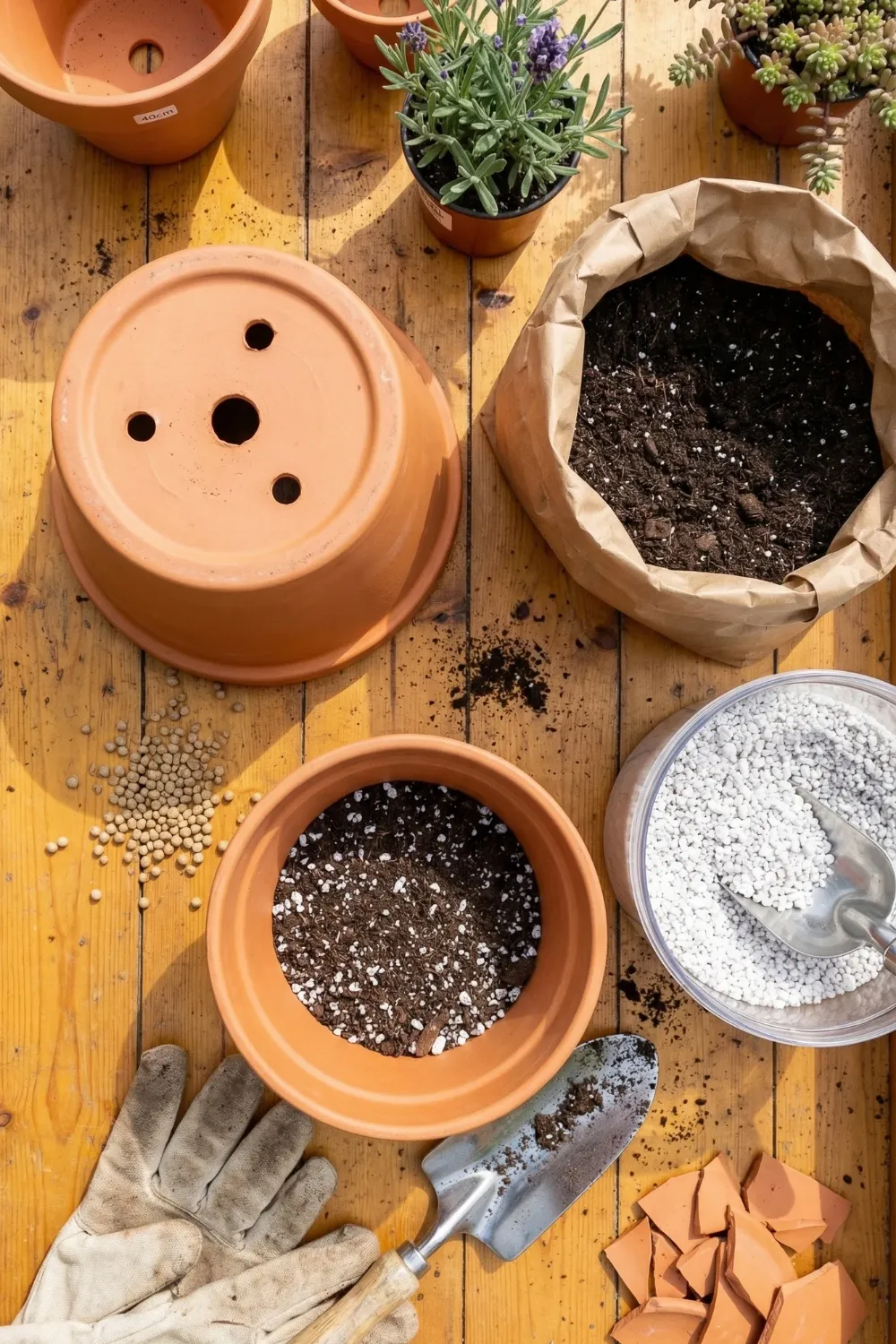
Even the toughest plants perform better in well-prepared containers, and the preparation is not complicated. The single most important decision is drainage. Containers without drainage holes will kill almost every plant on this list eventually — roots that cannot dry out between waterings will rot, and rot is not something that even drought-tolerant plants recover from. Every container needs holes. Multiple holes are better than one.
Potting mix matters more than most gardeners realize. Standard potting mixes hold more moisture than many sun-tolerant perennials prefer. Adding perlite — a quarter to a third of the total volume — improves drainage and air circulation around roots without reducing the structural support the mix provides. For lavender, yarrow, and sedum specifically, a mix that is closer to half perlite is appropriate.
Container size affects watering frequency significantly. Larger pots hold more soil volume, which means more moisture reserve and slower drying. For gardeners who travel or simply forget, larger containers are more forgiving than small ones. A slow-release granular fertilizer worked into the potting mix at planting provides nutrients throughout the season without requiring regular liquid feeding, which is the main ongoing maintenance task that most gardeners find tedious.
Container Setup Checklist
- Drainage holes are non-negotiable — multiple holes are better than one
- Add perlite to standard potting mix for better drainage and air circulation
- Choose larger containers for longer intervals between watering
- Work slow-release fertilizer into the mix at planting time
- Group containers to reduce wind exposure and slow moisture loss
A container arrangement built around sedum, lavender, salvia, coneflower, and catmint will look better in August — when heat peaks and watering schedules sl.
Related Home Decor Ideas
Pair your plants with heuchera coral bells for front yard design. Enhance your space using backyard corner ideas for landscaping inspiration, or decorate creatively with flower bar ideas for outdoor events.