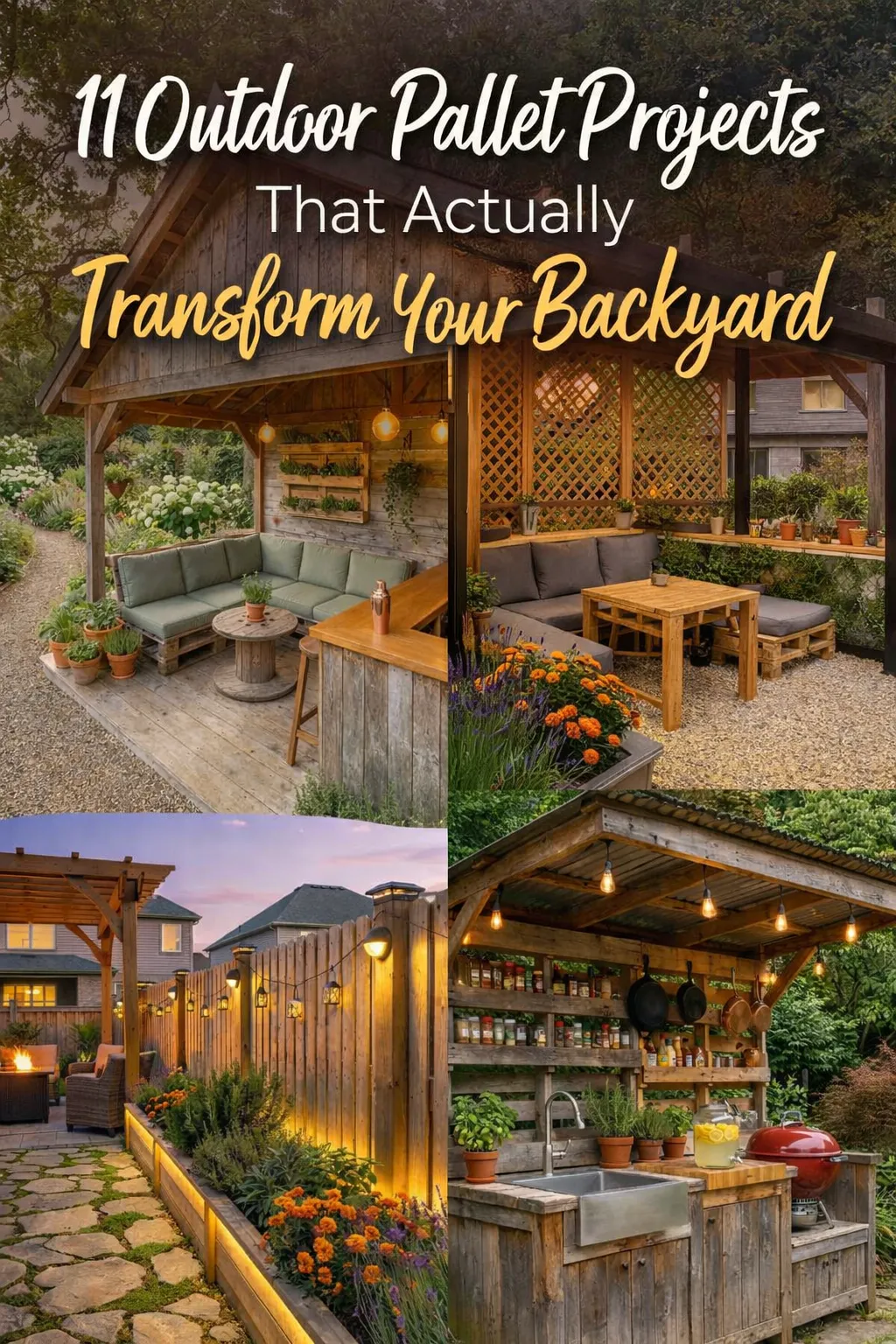
Your backyard has potential you haven’t unlocked yet — and the fix might be sitting in a hardware store parking lot for free.
Wooden pallets are one of the most underestimated materials in DIY outdoor design. Not because they’re trendy, but because when you approach them with real design thinking proportions, material layering, lighting, and scale they stop looking like recycled wood and start feeling like intentional outdoor furniture.
The difference between a pallet project that looks cheap and one that looks curated? It’s entirely in the execution.
This guide covers 11 pallet projects that genuinely improve an outdoor space, each with practical tips drawn from real design principles. Whether you have a sprawling backyard or a tiny city patio, there’s something here worth building this weekend.
1. U-Shaped Pallet Lounge Setup — The Backyard Conversation Zone
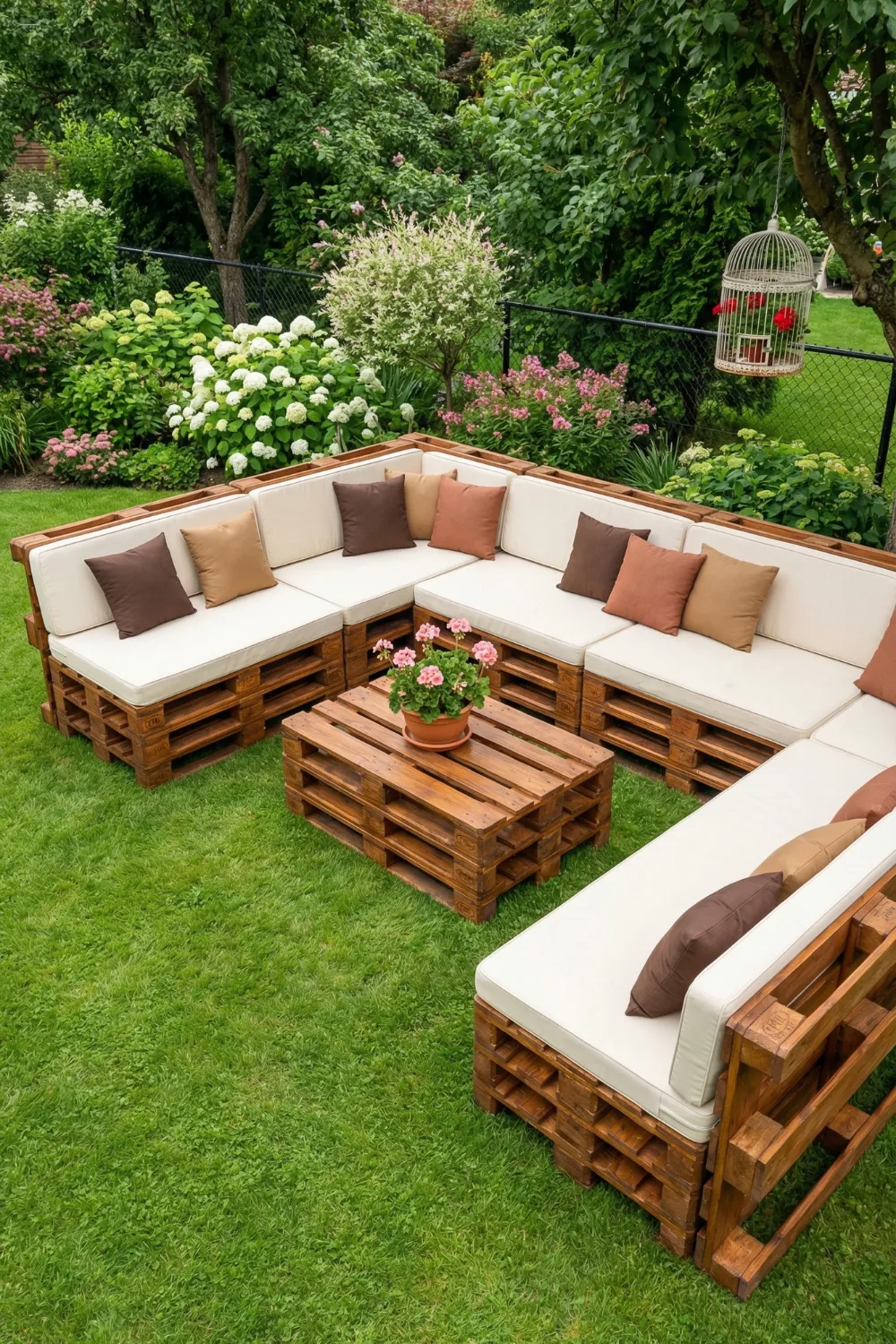
Patio sectionals look gorgeous in showrooms and painful on credit card statements. Pallet benches arranged in a U-shape solve both problems at once.
The real design secret here isn’t the pallets themselves — it’s the enclosure. When seating wraps around a central table, it creates a psychological “room” outdoors. Guests naturally face each other, conversations flow better, and the space feels like it was actually designed rather than assembled from whatever was on sale.
Making it look intentional
- Choose cushions in warm earthy tones — tan, terracotta, dusty sage. These shades work with raw wood instead of against it
- Layer pillow sizes (large lumbar + smaller square accents) to break the boxy pallet lines
- Keep the coffee table low — two pallet stacks high is the sweet spot — and center it to anchor the whole arrangement
- One statement plant in the corner. Just one. Let it breathe
The result should feel like a relaxed outdoor living room, not a construction site with pillows on it.
2. Rustic Pallet Outdoor Kitchen — Cookouts Without the Contractor Bill
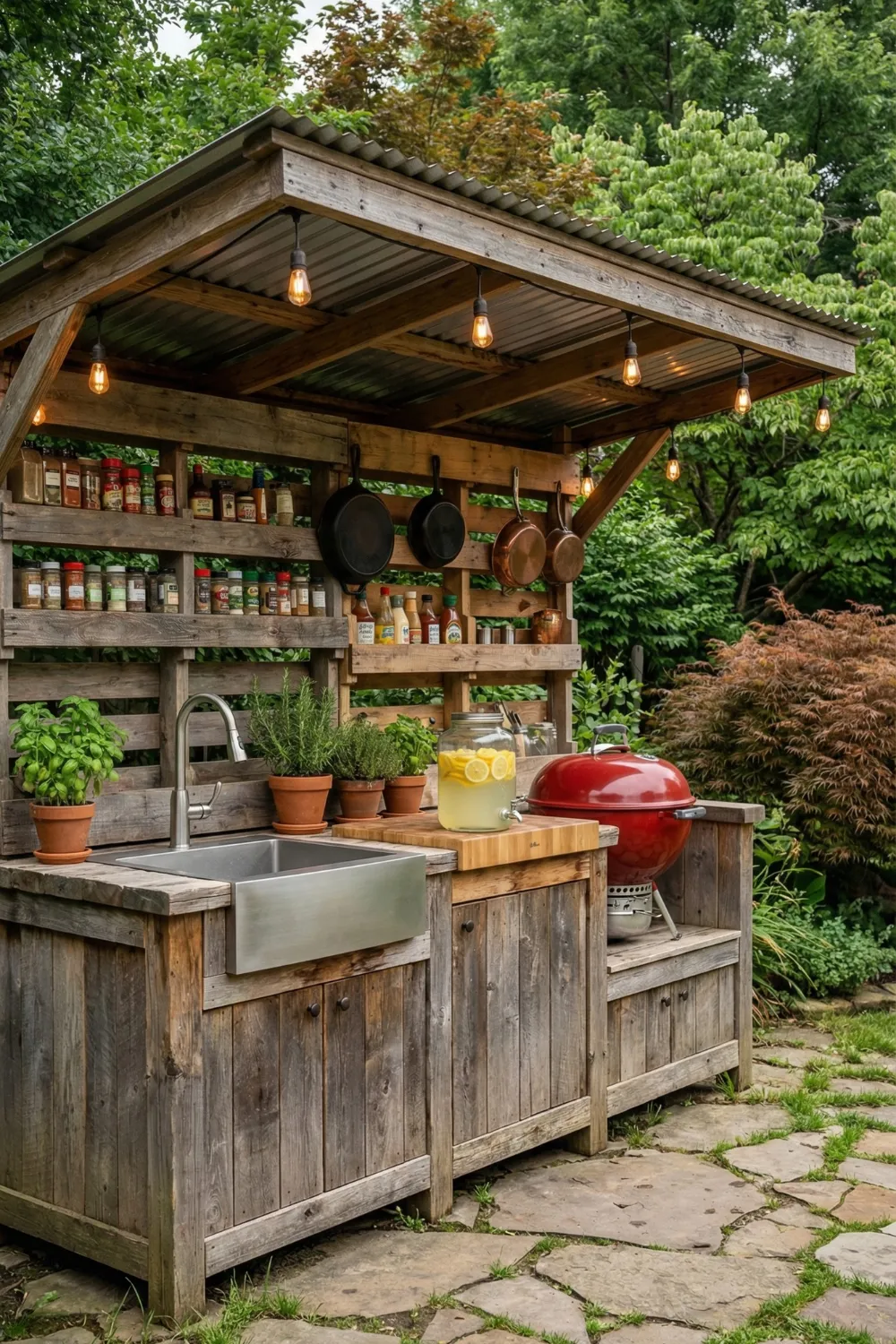
Most outdoor kitchen articles open with a $15,000 budget and a plumber’s number. This one doesn’t.
Stacked pallets create surprisingly sturdy modular counter structures — and the beauty is that you can reconfigure them as your needs change. Build one section as prep space, one as storage, add a third as a serving counter. Think of each pallet unit like a Lego brick for adults.
The vertical pallet wall section behind the counter is where things get clever. Mount hooks, hang cast iron pans, keep spice jars at eye level. This “functional display” approach isn’t just practical — it turns your cooking tools into décor, which any food blogger will confirm is a very specific kind of satisfying.
What actually makes it work outdoors:
- Seal all wood with exterior-grade sealant (at minimum two coats)
- Add a stainless or enamel basin sink — the contrast between raw wood and metal looks incredibly sharp
- Position your grill on the side with the least wind exposure — this is more about safety than aesthetics
- Keep the prep-wash-cook triangle within two comfortable steps
It’s not a Viking kitchen. But on a Saturday afternoon with guests over, the difference is invisible.
3. Pallet Console Table for Front Porch — Styled Without Trying Too Hard
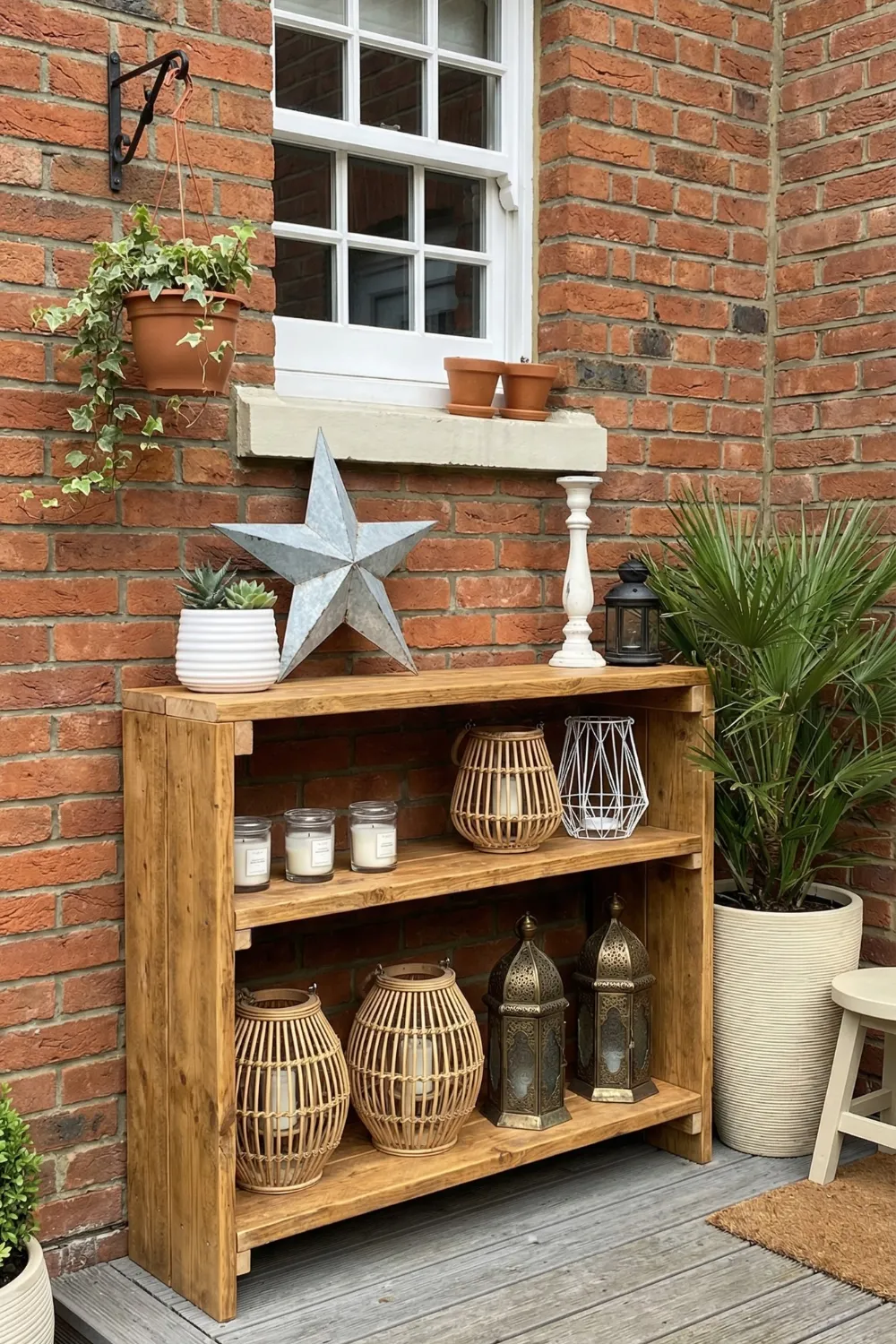
The front porch is the first conversation your home has with the street. A console table made from pallets can carry that conversation well — if built with the right proportions.
What makes pallet console tables work visually is the contrast between the open slatted structure and the visual weight of the raw wood. It looks grounded without feeling heavy. That’s a tricky balance to pull off with store-bought porch furniture, which tends to go too far in one direction or the other.
Styling the tabletop:
- Vary the heights of your objects — tall lantern, mid-height ceramic pot, one low sculptural accent
- Mix materials: aged metal + terracotta + wood = instant warmth
- Odd numbers feel more natural than even arrangements (three items always beats two)
Build the tabletop at roughly waist height so the vignette is readable from the sidewalk. Outdoor styling respects sightlines. When someone walking past can instantly “read” your porch styling — even at a glance — the whole exterior feels considered.
4. Backyard Pallet Garden Bar With Lounge Seating — Instant Upgrade to Any Gathering
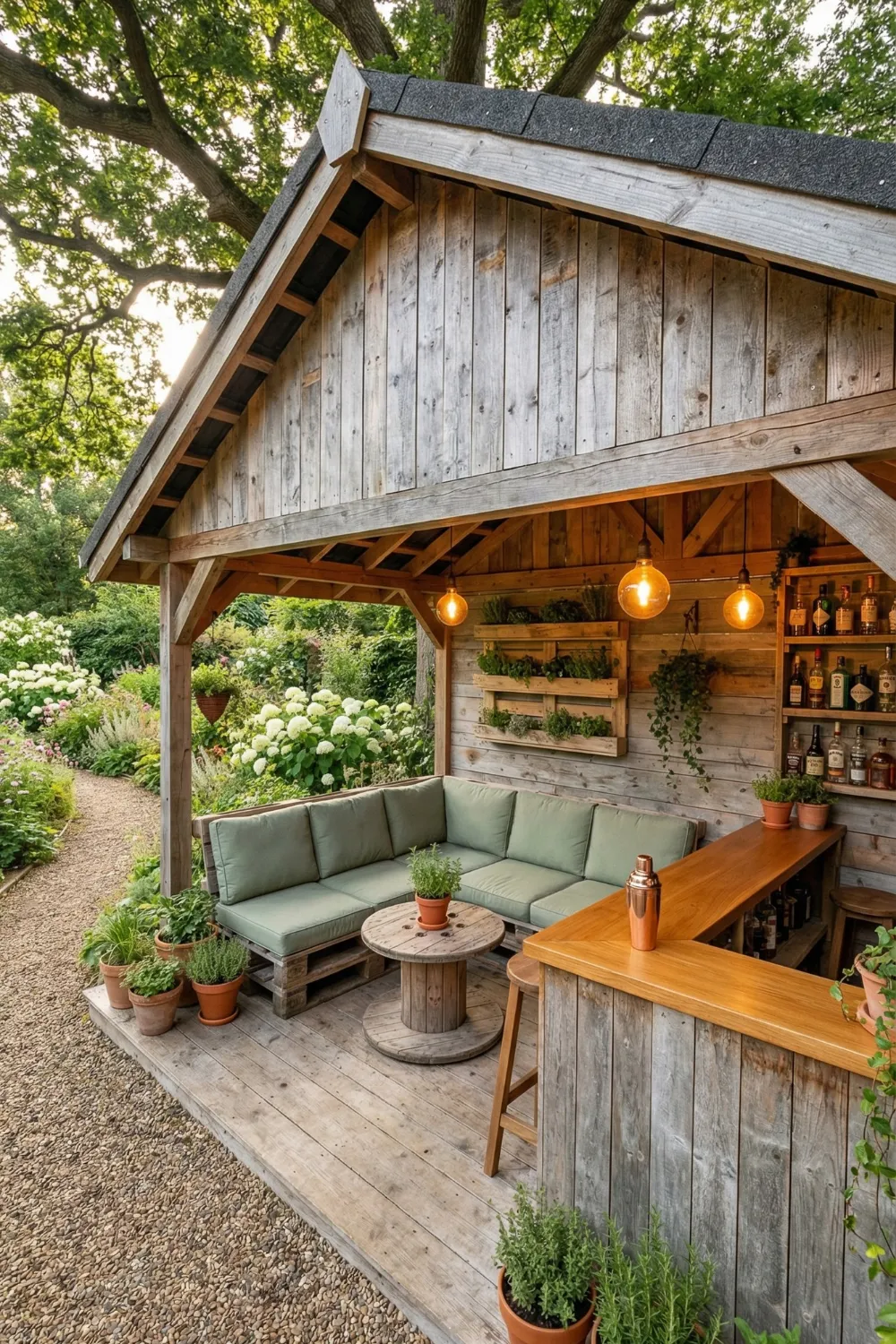
There’s a specific energy shift that happens when a backyard has a bar. Suddenly it feels like a destination rather than just outside.
Pallet bars work because of zoning. The bar counter defines one social edge — it’s where drinks get made and conversations start. A sofa or lounge corner nearby creates a relaxed pocket for people who want to sit back after the first round. Two zones, one compact footprint, entirely different energy.
The atmosphere detail most people miss: string lights. Run them across overhead beams so warm light washes over the wood. Under good string light, even raw unfinished pallet wood looks intentional and warm. Add a few trailing plants on the shelves — pothos, ivy, or herbs — and the whole structure suddenly looks like it grew there.
Practical build tips:
- Match bar height to 28–30 inch stools for comfortable seating
- Use weatherproof outdoor cushions — not indoor foam in ziplock bags, which is a tale as old as DIY time
- Keep the footprint compact. A 6×4 foot bar feels charming. An 8×6 foot bar starts feeling like a construction project that never quite finished
5. Cottage-Style Pallet Dog House — Because Pets Deserve Design Too
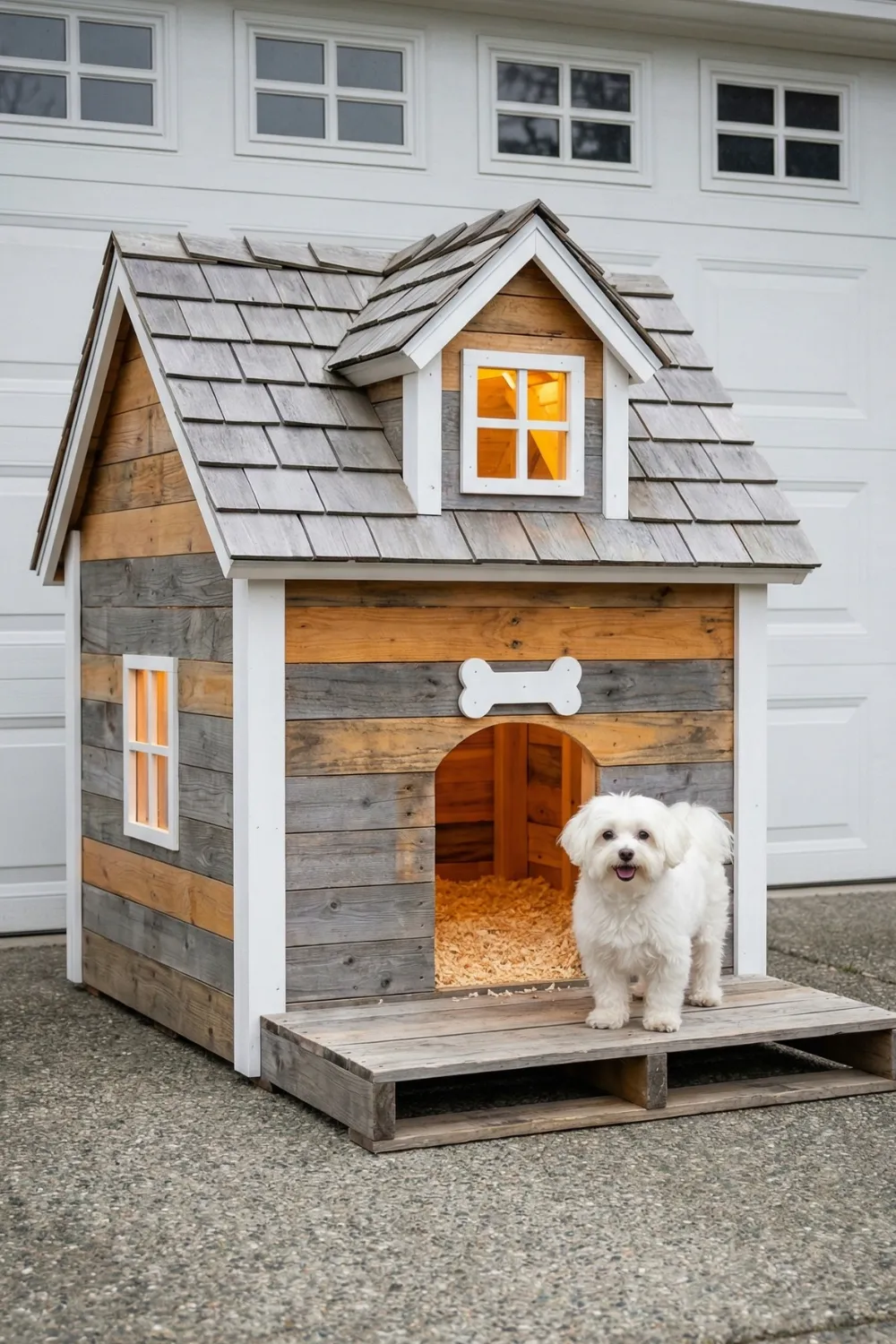
Dog houses are typically an afterthought — a plastic dome tucked behind the shed. This pallet dog house is the opposite of that.
The design key is mimicking residential architecture at small scale: pitched roof, layered horizontal boards, painted trim details. When a small structure uses the same design language as the main house, it reads as intentional rather than random. It becomes part of the yard’s visual story rather than something you’re vaguely embarrassed about during backyard parties.
Color and material tips:
- Soft gray boards + white trim + weathered wood accents = effortless farmhouse palette
- Elevate the base on pallet runners to improve airflow and protect the wood from ground moisture
- A small platform “porch” at the entry keeps muddy paws off the sleeping area and adds that final architectural charm
Your dog probably won’t notice. Your guests definitely will.
6. Vintage Pallet Tractor Planter — The Focal Point That Makes People Smile
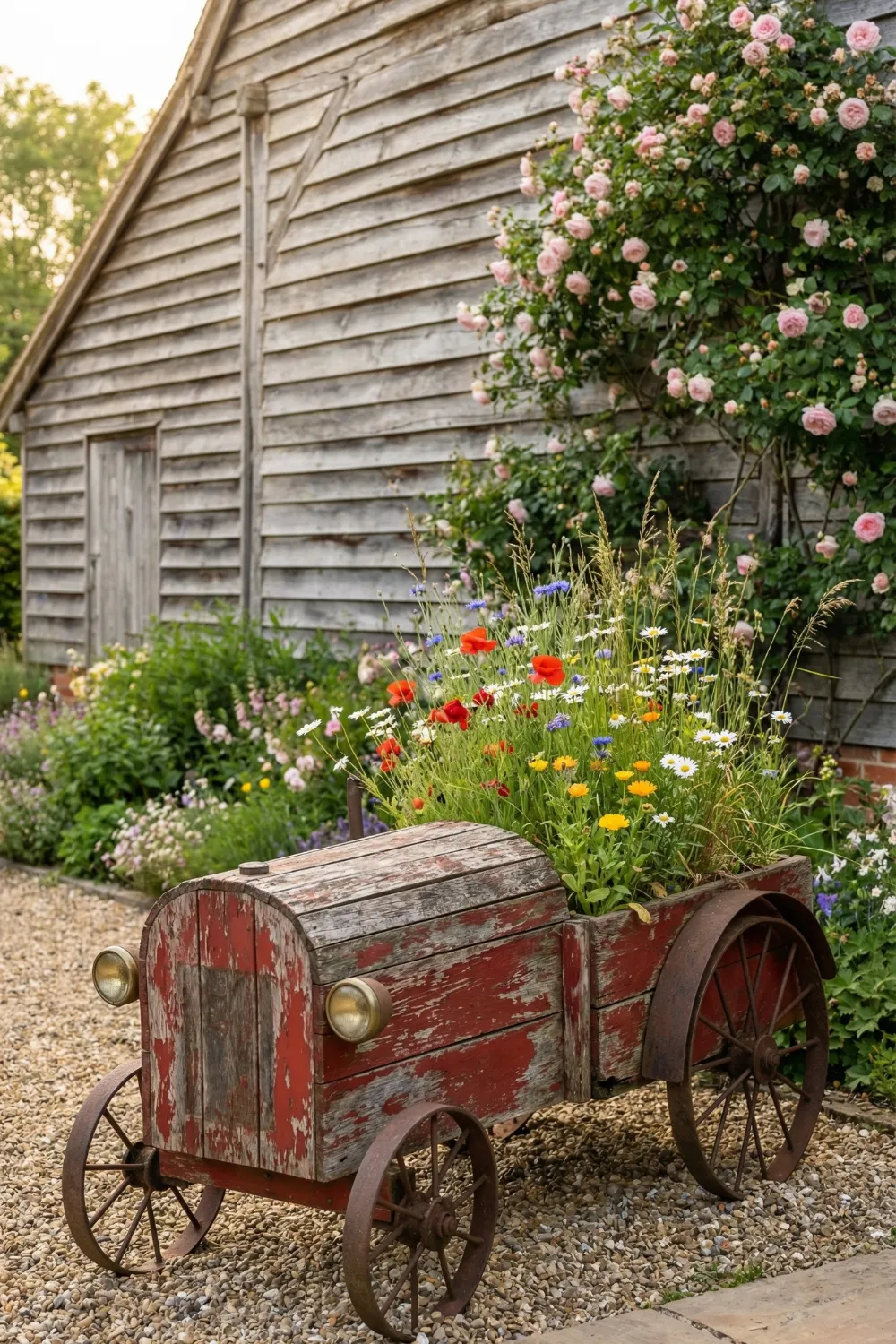
Every garden benefits from one piece that does something unexpected. Something that makes people slow down and actually look.
A pallet tractor planter does exactly that. It turns raw lumber into a storytelling object — the kind of thing that photographs well, prompts questions, and gives the yard genuine personality. That’s harder to achieve with conventional garden decor than most people realize.
The finishing details that make it authentic:
- Apply faded paint in rust-red or barn green, then dry-sand the edges once dry — this mimics natural weathering far better than painting it uniformly
- Skip the neat rows of seasonal flowers. Fill it with wildflowers or loose cottage blooms — the organic planting against the structured form creates a contrast that feels alive
- Place it near a gravel path or stone wall so the surrounding textures (wood, stone, organic plants) feel cohesive
The goal isn’t “rustic for rustic’s sake.” The goal is a piece that looks like it has a history, even if you built it last Thursday.
7. Round Pallet Daybed Gazebo — The Project That Changes How You Use Your Backyard
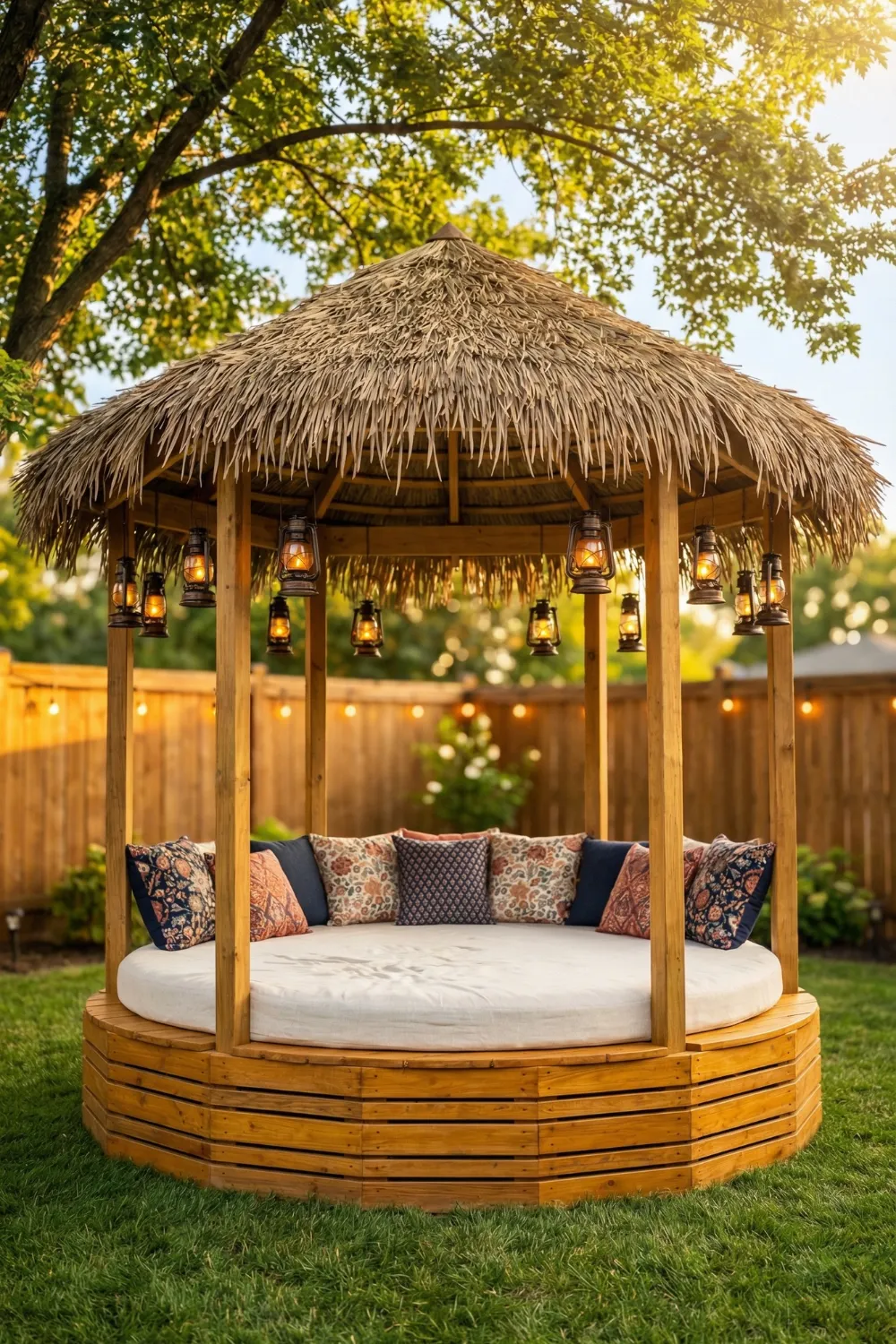
Most outdoor furniture is designed for sitting. This pallet daybed is designed for staying.
The circular platform raised from stacked pallets creates a defined lounging zone that feels separate from the rest of the yard. Add a round thick cushion (prioritize outdoor-rated foam, at least 4 inches thick — this is not where you compromise) and a thatched or bamboo canopy overhead, and the structure transforms into something genuinely immersive.
Curved layouts are psychologically relaxed in a way that rectangular furniture isn’t. Something about the shape signals “there’s no agenda here.” Guests sink in. Conversations slow down. It’s the most valuable 8 square feet in your backyard.
Materials and atmosphere:
- Neutral fabrics: oatmeal, sand, natural linen tones — keep the palette earthy so it blends with the landscape
- Hang two or three lanterns from the canopy frame for warm pooled light in the evening
- Woven texture on the canopy overhead adds a layer of visual interest that flat canvas roofing simply can’t match
8. Modern Pallet Pergola Dining Corner — Give the Backyard a Sense of Place
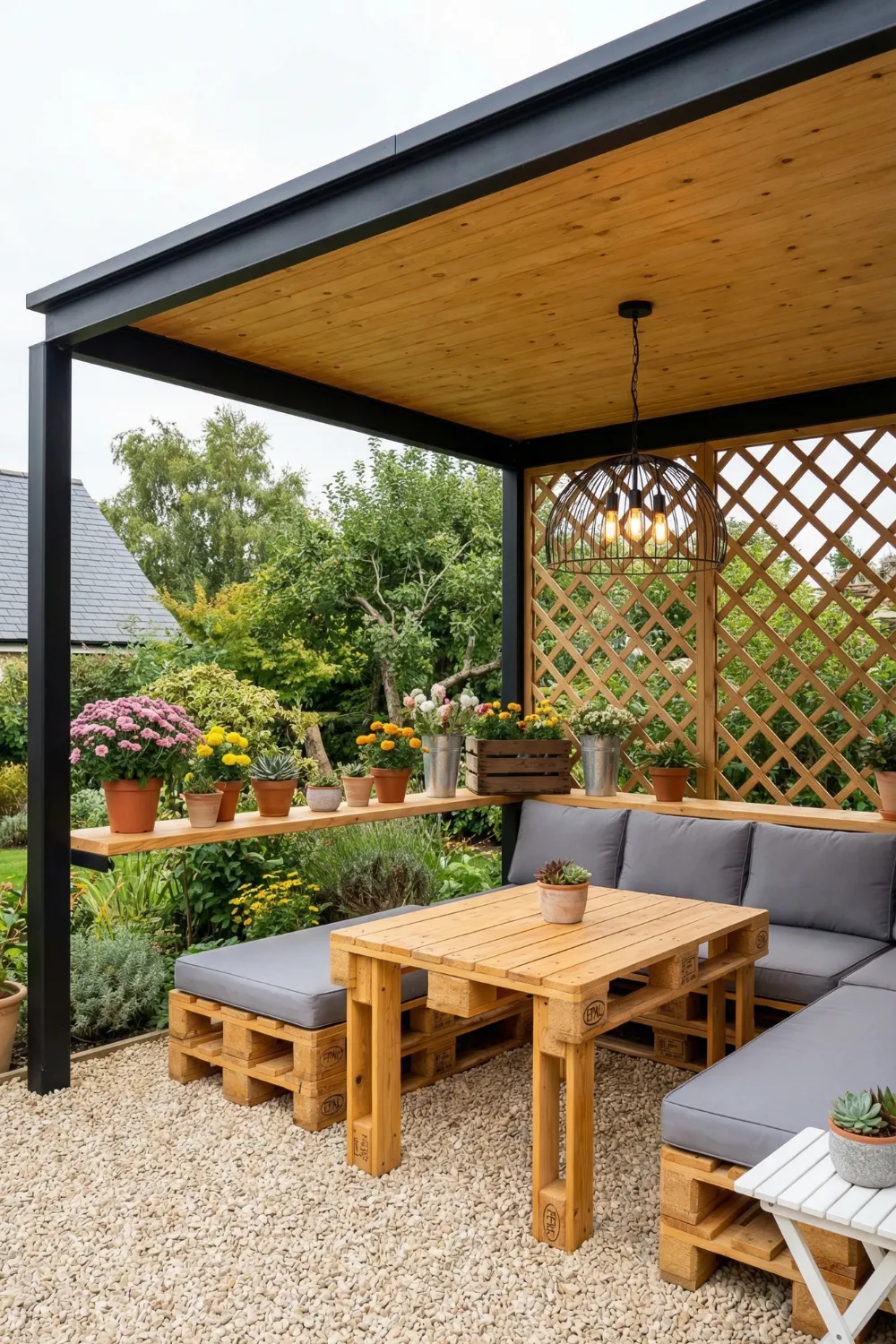
Undefined outdoor spaces are one of the most common backyard problems. The lawn goes in one direction, the furniture sits somewhere in the middle, and nothing feels quite intentional. A pallet pergola solves this by creating architectural framing — an “address” for your dining area within the larger yard.
The structural contrast does the visual heavy lifting. Light-toned wood furniture against darker structural beams creates depth without clutter. Add a crisscross lattice panel to one side and you suddenly have a wall — a real design element that separates the dining zone from everything else.
Layout tips:
- Push the table tight into the corner so the pergola frames it properly — floating it in the middle defeats the purpose
- Line the ledge with a row of potted herbs or small plants to soften the geometry
- One oversized pendant light centered over the table transforms the nook from “outdoor furniture arrangement” to “actual dining destination”
9. Compact Backyard Pallet Bar — Small Footprint, Big Entertaining Energy
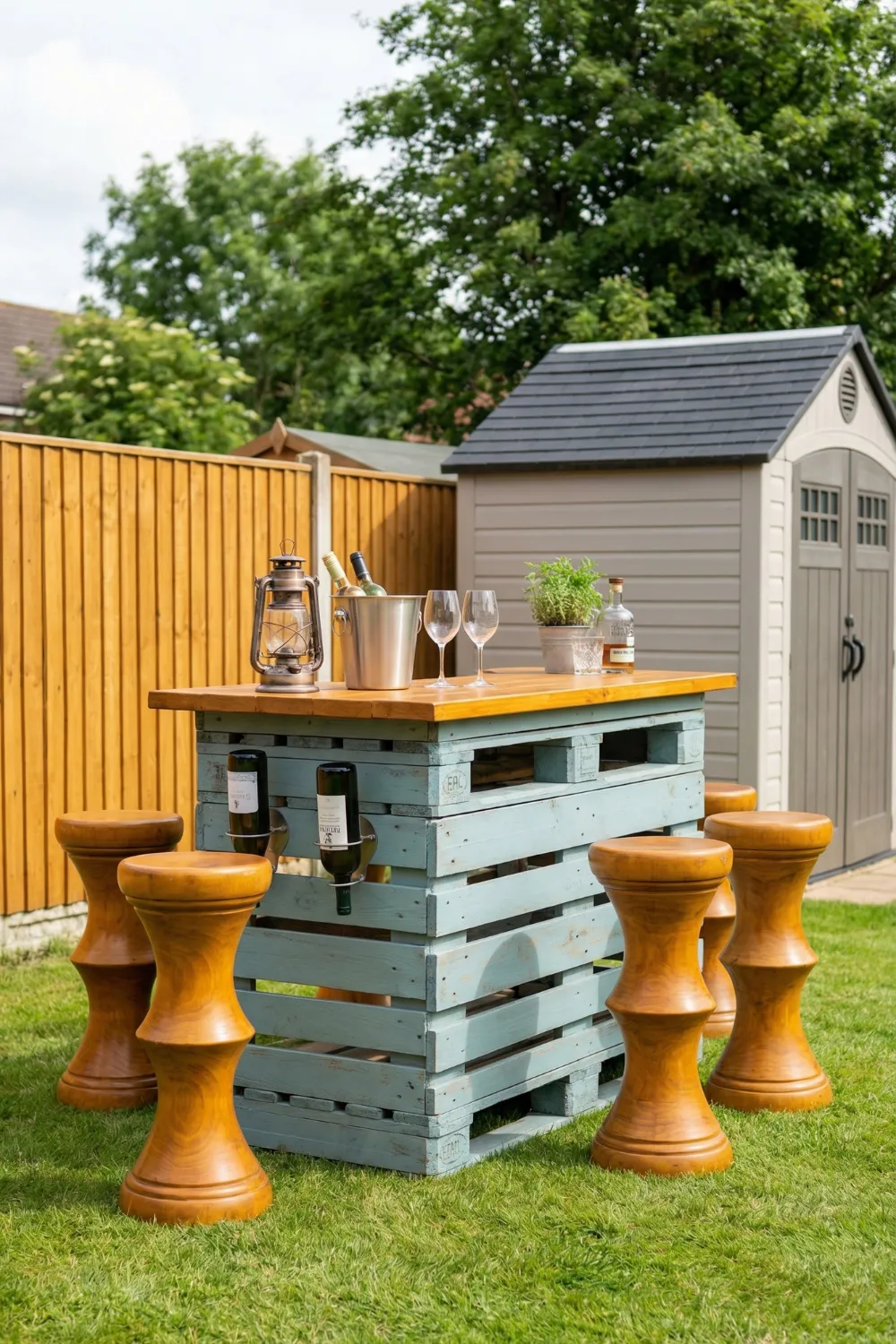
Not every outdoor bar needs to be a full structure. Sometimes a compact standalone bar — two pallets wide, finished properly — is exactly what a patio or deck needs.
Vertical slats on the bar face do two things simultaneously: they add visual texture and make the piece appear taller and more substantial than its actual dimensions. It’s a simple architectural trick that punches above the bar’s (literal) weight.
The two-tone color treatment is what separates a polished result from a project that looks unfinished. A soft painted frame — dusty blue, muted sage, or charcoal — paired with a natural wood countertop creates a visual break between structure and surface. It makes even a small piece look intentionally designed.
Build priorities:
- The countertop is the most important surface — use solid timber or thick plywood, sand it smooth, and apply 2-3 coats of exterior varnish
- Pair it with chunky wooden stools in a complementary tone
- Keep lighting simple: two lanterns on the counter is enough
10. Pallet Garden Fence With Built-In Planter — Two Problems, One Solution
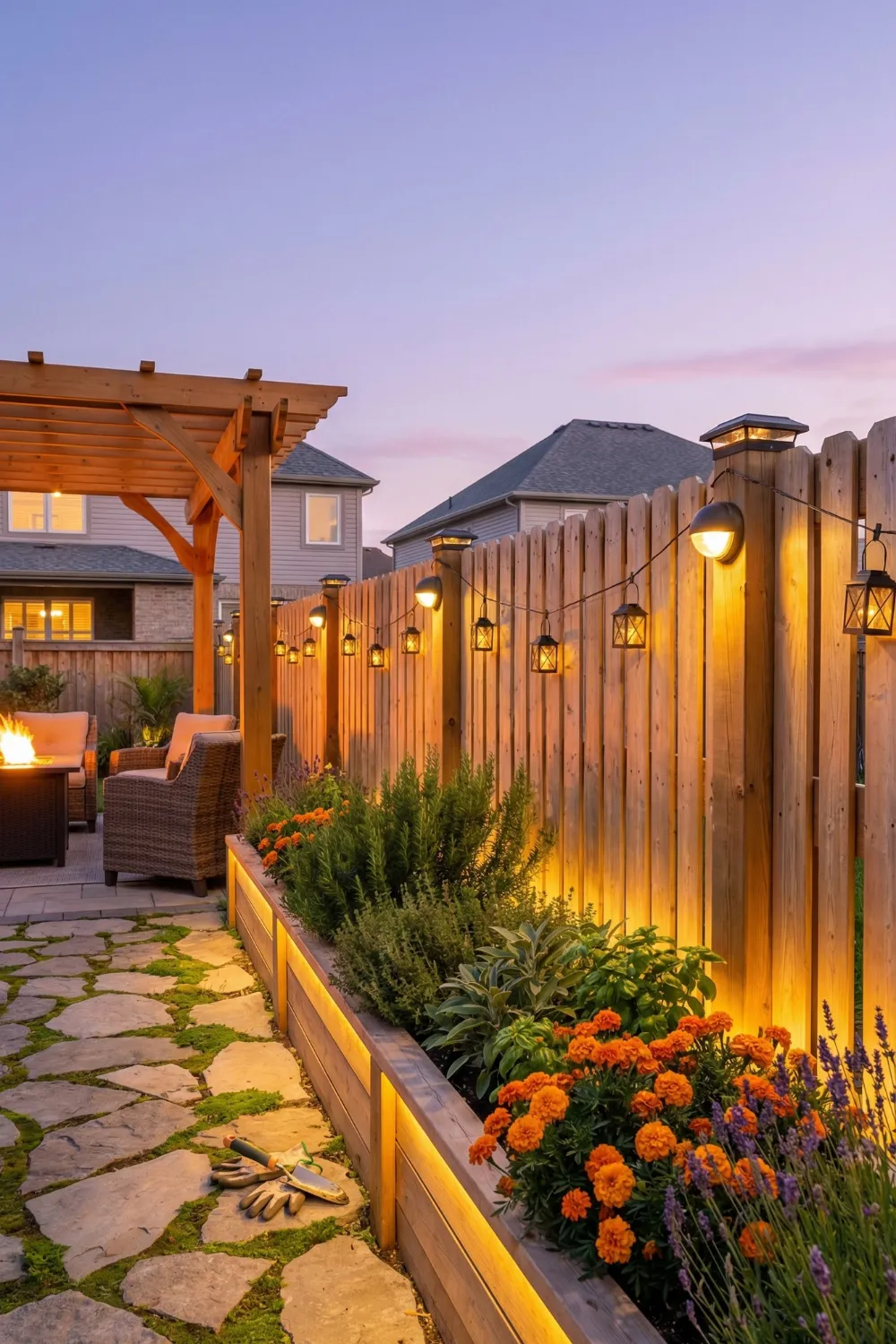
Here’s the thing about small backyards: every element needs to work harder than it would in a large space. A fence that just acts as a fence is wasted potential.
Horizontal pallet boards create a calm, structured fence face that reads as modern-rustic — not jagged or makeshift. Add a built-in planter box running along the base and suddenly the fence has a second purpose: growing herbs, flowers, or trailing greenery that anchors the structure into the garden.
The layering effect:
- Tall fence face → mid-height planter box → low ground planting below creates a tiered vertical garden effect that adds depth
- Plant soft, trailing varieties in the planter (lavender, creeping thyme, trailing nasturtiums) to contrast with the rigid wood lines
- String lights draped along the top rail at night highlight the wood grain and make the whole fence feel warm rather than utilitarian
This project works especially well as a visual divider between a patio and a lawn area — intimate without being enclosed.
11. What Makes All These Projects Actually Work — The Design Principles Behind the Wood
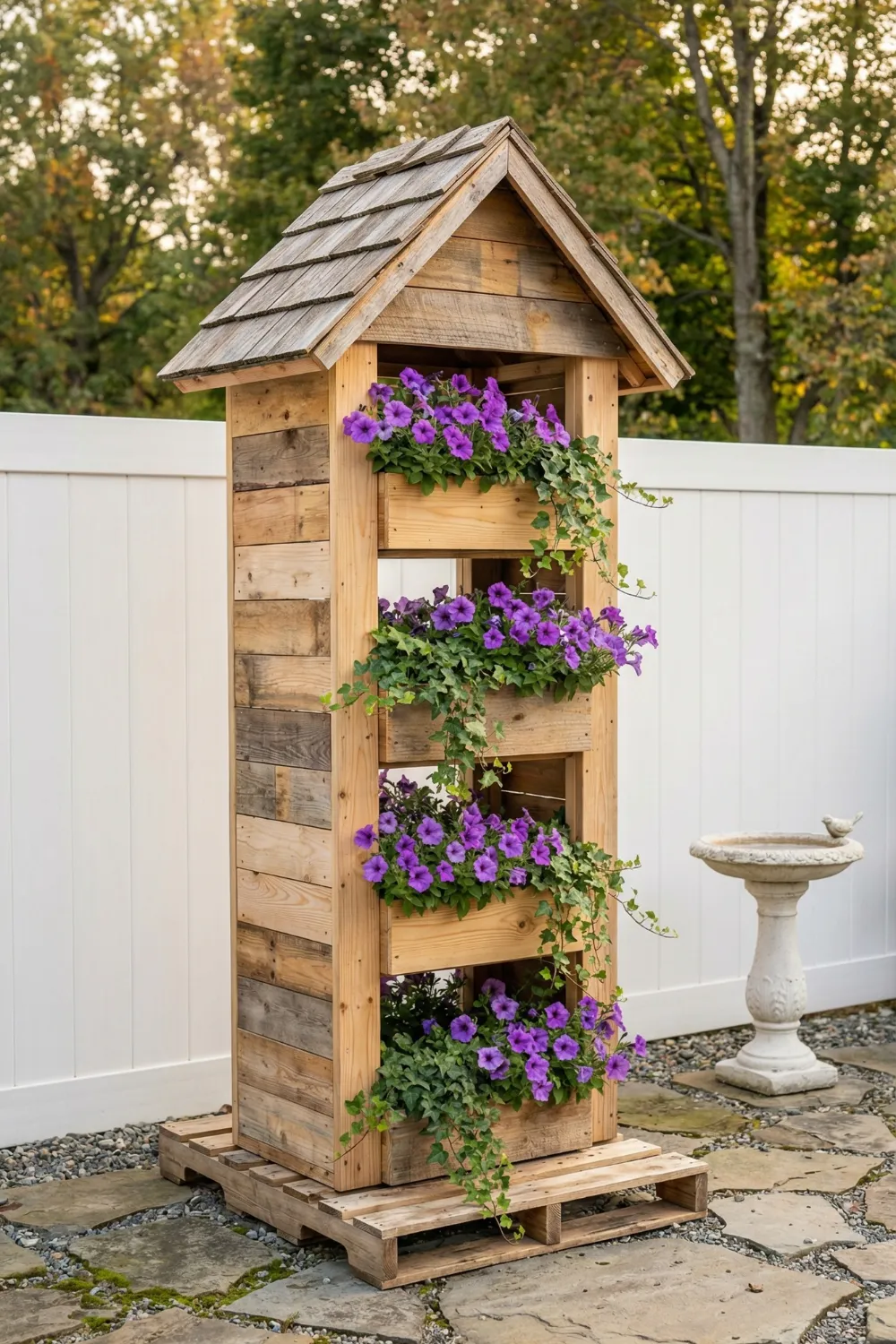
Good pallet projects aren’t really about pallets. They’re about applying the same design logic indoors to outdoor spaces.
Structure + softness:
Raw wood always needs a counterweight — cushions, plants, textiles, or warm lighting. Without softness, pallet furniture looks like a construction site. Without structure, it looks temporary. The balance is everything.
Scale matters more outdoors:
Outdoor elements disappear in open space if they’re undersized. Err toward slightly oversized — wider benches, thicker cushions, taller plants. The yard should feel furnished, not dotted with small objects.
Layering over adding:
Resist the urge to fill every corner. Add layers to existing elements instead — a second level of planting, an overhead canopy, ambient lighting. Layered spaces feel rich. Crowded spaces feel cluttered.
Durability is part of design:
Sand everything. Seal exterior wood before it goes outside. Weatherproof your cushions. A beautiful project that deteriorates in one season isn’t a good design — it’s a good idea that wasn’t finished properly.
Frequently Asked Questions
Q: Do pallets need to be treated before using them outdoors?
Yes — always. Sand the wood to remove splinters and rough edges, then apply an exterior-grade wood sealant or outdoor paint. This protects against moisture, UV damage, and wood rot. Untreated pallets left outside will begin deteriorating within one season.
Q: Are all wooden pallets safe to use for DIY projects?
Not all pallets are created equal. Look for the HT (Heat Treated) stamp on the pallet — this means it was treated with heat rather than chemicals and is safe for home use. Avoid pallets stamped MB (Methyl Bromide), as these were treated with a toxic pesticide and should never be used for furniture or planting.
Q: How long do outdoor pallet projects last?
With proper treatment and maintenance, 3–7 years is a reasonable lifespan. Sealing annually, keeping cushions dry, and elevating the base off direct ground contact significantly extends durability. Pallet furniture isn’t meant to be permanent — but with care, it outlasts most people’s expectations.
Q: What’s the best way to make pallet furniture look polished rather than DIY?
Three things: sanding (smooth wood reads as intentional), consistent color treatment (paint or stain everything the same tone rather than leaving raw), and styling (cushions, plants, and lighting do more work than the woodwork itself). The finishing layer is where most pallet projects either succeed or reveal themselves as unfinished.
Q: Can pallet furniture support adult weight safely?
Yes, when built correctly. A single pallet can support 1,000–3,000 lbs in static load. For seating, use at least two pallet layers, check for cracked boards before building, and replace any compromised slats. Add L-brackets or wood screws at joints for added stability.
Final Word — Build One Thing This Weekend
The projects above range from a single afternoon to a full weekend build. The starting point doesn’t matter nearly as much as starting. Pick the one that solves your most immediate backyard frustration — no seating, no privacy, no personality — and build toward that.
Pallets are forgiving material. If a board splits, replace it. If a proportion feels off, adjust it. Outdoor spaces are meant to evolve, and pallet projects embrace that flexibility better than almost any other building material.
The best backyard isn’t the most expensive one. It’s the one that feels most like it was made for the people using it.
Which of these projects are you tackling first? Drop a comment below — or pin this post for your next weekend build.